
African violets can grow without soil in two practical ways: true water culture, where roots sit in a dilute nutrient solution, and self-watering or wick pots, where a cord or porous inner pot draws water up from a reservoir. Both work because African violets (Saintpaulia, now classified as Streptocarpus sect. Saintpaulia) like evenly moist roots, room temperatures around 60–80°F (ideally near 70°F), and bright indirect light. The key rule for African violets in water is that the crown and leaves must stay dry and the water should be room temperature.
Key takeaway: Self-watering and wick pots are the easiest, most reliable soil-free method for African violets. Pure water culture works but needs closer attention to rot.
| Factor | Target for African violets |
|---|---|
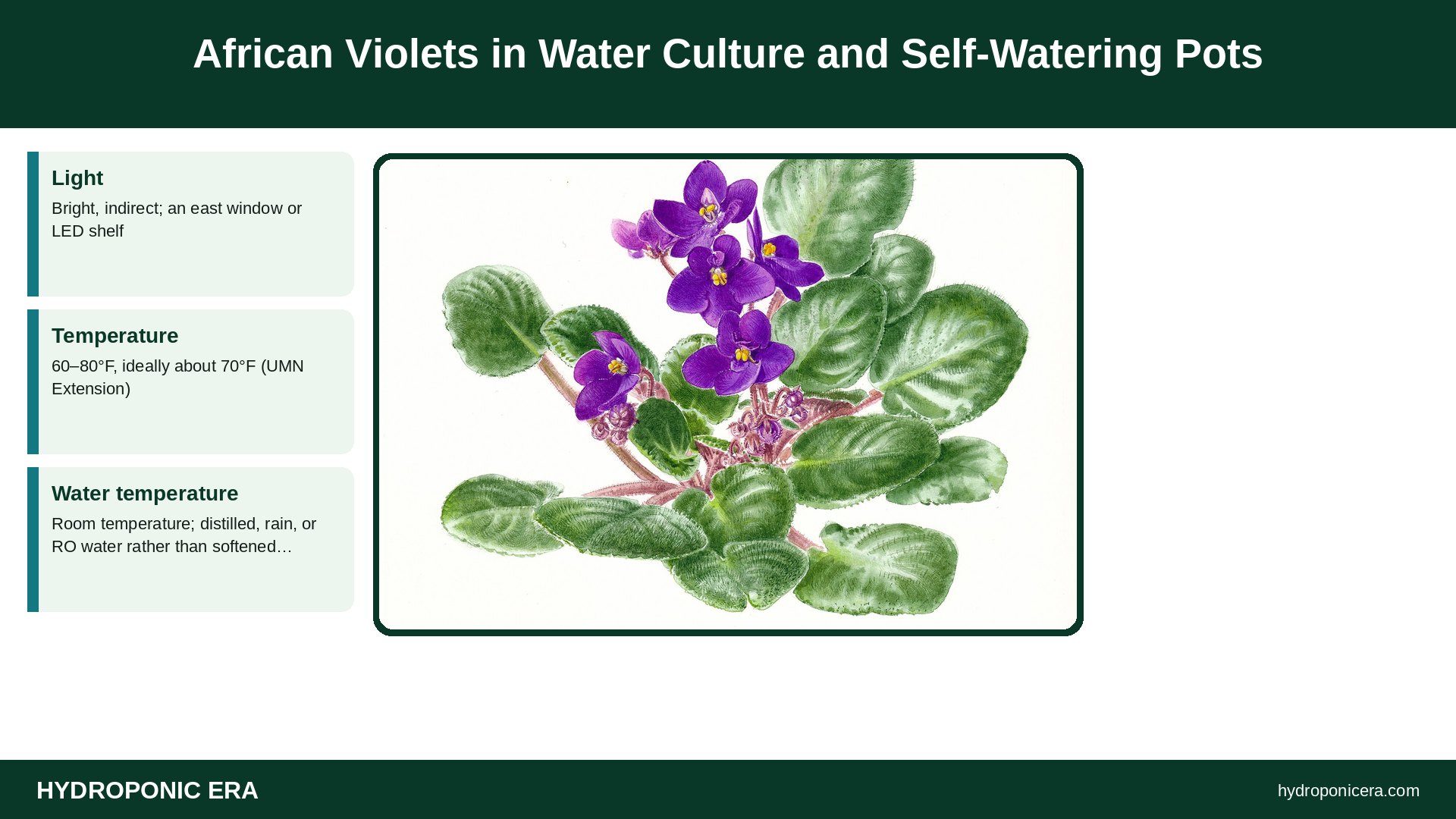
| Light | Bright, indirect; an east window or LED shelf |
| Temperature | 60–80°F, ideally about 70°F (UMN Extension) |
| Water temperature | Room temperature; distilled, rain, or RO water rather than softened or chlorinated |
| Best soil-free method | Wick pot or self-watering pot with a light, airy mix |
| Fertilizer | About 1/4 strength at each watering; about 1/8 strength in a wick reservoir (UMN) |
| Pets | Non-toxic to cats and dogs (ASPCA) |
Can African Violets Grow in Water?
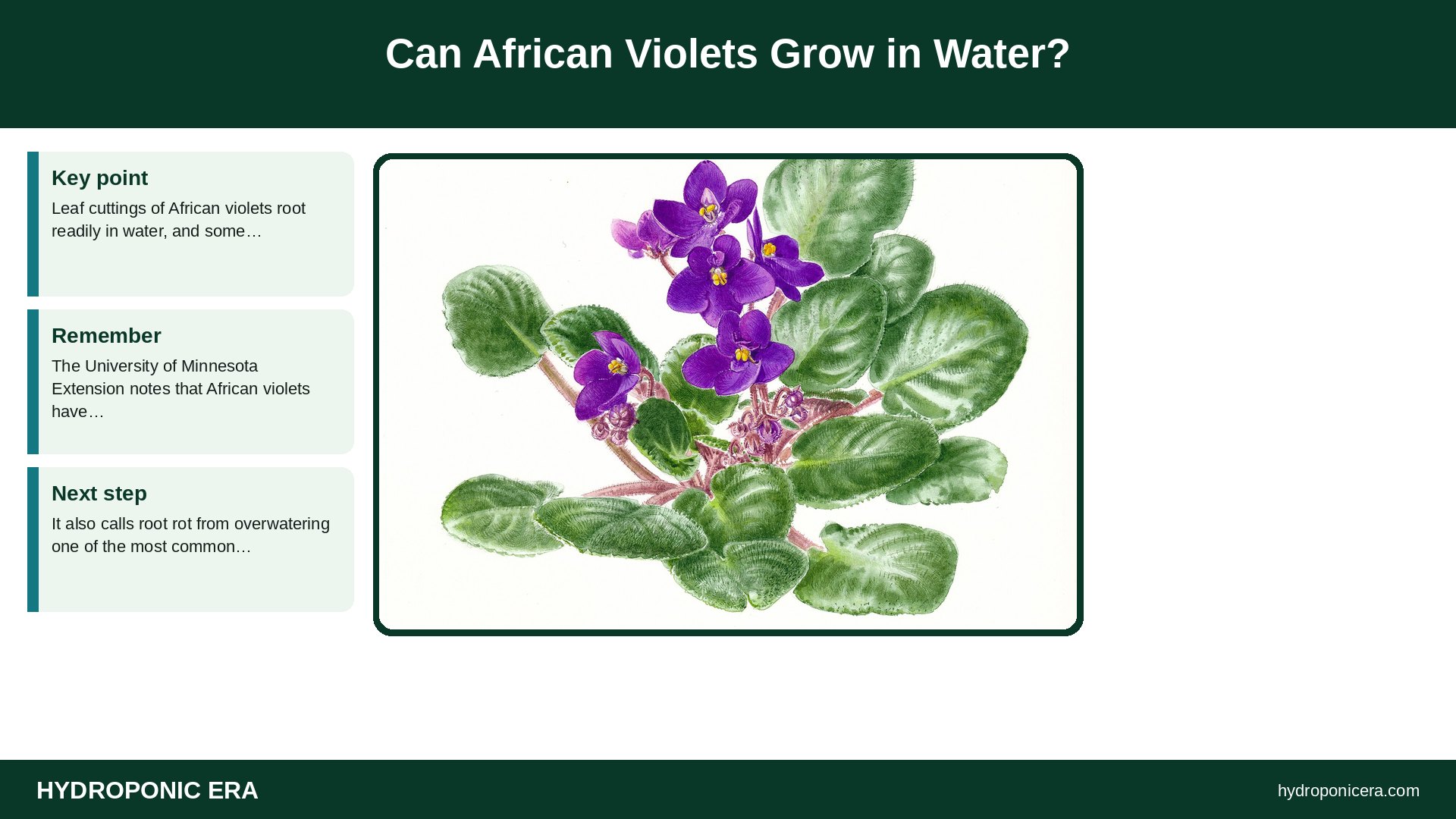
Yes. Leaf cuttings of African violets root readily in water, and some growers keep whole plants in water culture. The University of Minnesota Extension notes that African violets have fine roots, want mix that is moist but not soggy, and can develop leaf spots when water lands on the leaves. It also calls root rot from overwatering one of the most common reasons they die. That combination makes soil-free methods attractive if you control water temperature and keep foliage dry.
Because their roots are fine and fibrous, African violets are more prone to rot in stagnant water than vigorous vines such as pothos. That is why many hobbyists favor wick systems, which keep the root zone moist and airy at the same time.
Method 1: Wick or Self-Watering Pots
This is a simple form of passive hydroponics. A nylon or acrylic cord runs from the reservoir up into a very light potting mix, often a peat or coir mix with lots of perlite. Water and dilute nutrients wick up as the plant drinks.
- Use a light, airy mix with plenty of perlite or vermiculite.
- Thread a synthetic wick through the drainage hole and into the root zone.
- Set the pot over a reservoir so the wick touches the water but the pot base does not.
- Fill with room-temperature water plus mild fertilizer. UMN Extension suggests about one-eighth of the recommended strength in a wick reservoir.
- Flush the mix with plain water occasionally to prevent salt buildup.
Our wick system guide explains the physics and the best wick materials, and our perlite and vermiculite guide covers the media.
Method 2: True Water Culture for African Violets

- Start with a rooted leaf cutting or small plant rinsed free of soil.
- Support the crown above water with a small net pot, mesh, or clay pebbles.
- Keep only roots in the solution, never the crown.
- Use a weak nutrient solution and change it every one to two weeks.
- Use opaque containers to limit algae.
Water culture works best for small plants and leaf cuttings. Large, mature African violets usually do better in wick pots.
Light and Temperature
African violets bloom best with bright, indirect light. Too little light gives lush leaves and few flowers; too much direct sun bleaches and burns leaves. Many growers use LED shelves with timers so plants get a consistent daily light period. Our light schedule guide explains how to set timers, and our article on a grow light shelf shows a simple DIY rack.
Keep plants away from cold drafts and windowsills in winter. A spot that drops below 60°F at night slows growth and blooms.
Feeding African Violets Without Soil

Consistent, dilute feeding works better than occasional strong doses. UMN Extension recommends a fertilizer made for African violets at about one-quarter of the recommended amount each time you water, plus a monthly plain-water flush. In water culture, replace the whole solution regularly rather than topping off.
| Symptom | Likely cause | Fix |
|---|---|---|
| Pale ring spots on leaves | Water (especially cold water) landed on leaves | Use room-temperature water, keep leaves dry |
| Mushy crown | Crown rot from wet crown | Lower water, improve airflow, restart from a healthy leaf |
| Lots of leaves, no flowers | Too little light | Brighter indirect light or LED shelf |
| Crispy brown leaf edges | Fertilizer salt buildup | Flush with plain water, dilute feeding |
| Limp leaves with wet mix | Root rot | Check roots, repot in fresh airy mix |
Common Mistakes With African Violets
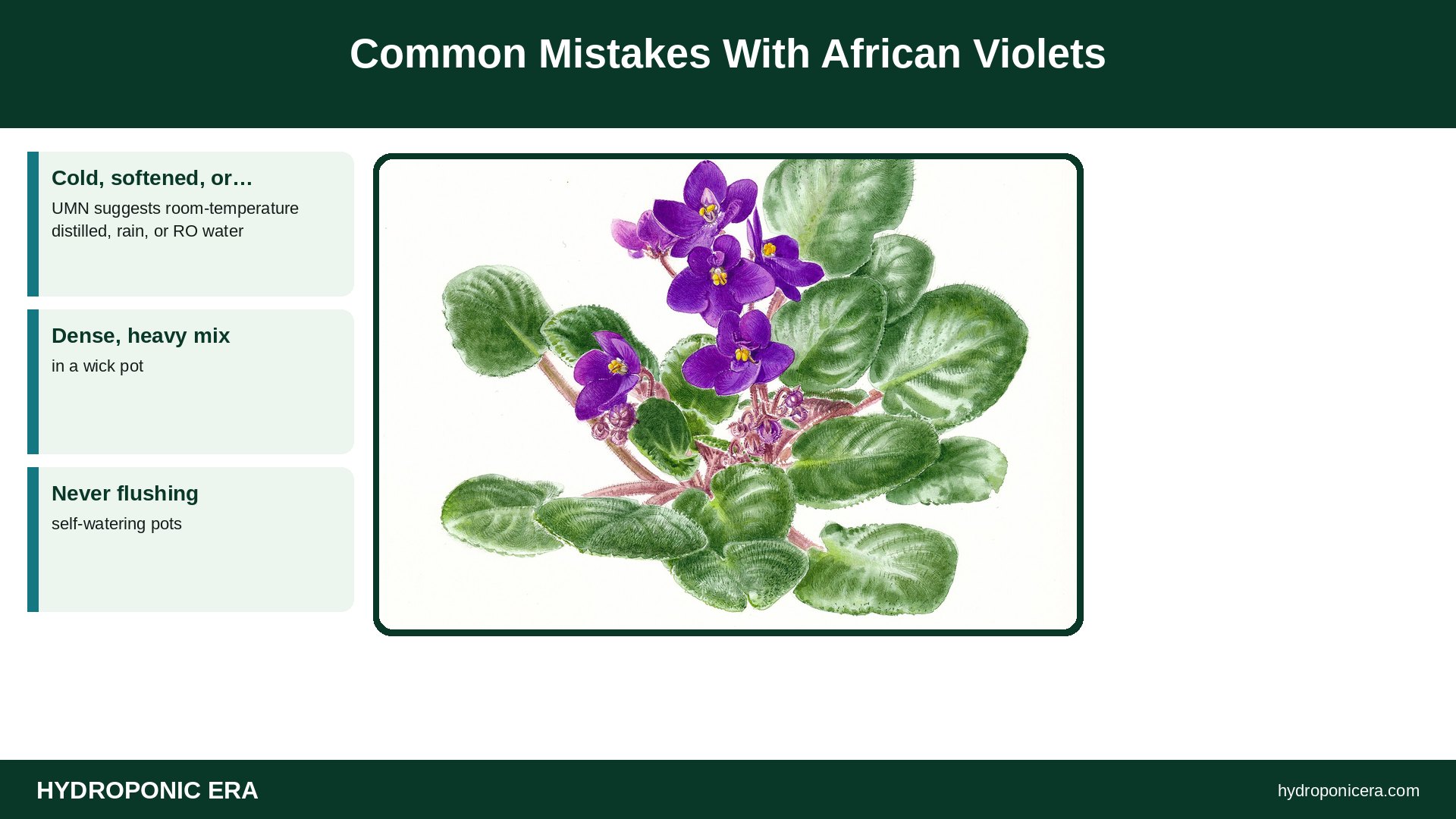
- Cold, softened, or chlorinated tap water. UMN suggests room-temperature distilled, rain, or RO water.
- Submerging the crown.
- Dense, heavy mix in a wick pot.
- Never flushing self-watering pots.
- Overfeeding to force blooms.
Variables That Change Results
| Variable | Effect | Adjustment |
|---|---|---|
| Wick material | Cotton rots; synthetic lasts | Use nylon or acrylic |
| Mix density | Dense mixes stay soggy | Add perlite |
| Humidity | Dry winter air slows growth | Group plants, pebble trays |
| Light hours | Short days reduce blooms | LED shelf on a timer |
Weekly Checklist for African Violets Without Soil
- Check the reservoir and refill with room-temperature water before the wick dries.
- Look at the crown for softness or dark spots.
- Remove spent blooms and damaged outer leaves.
- Rotate the pot so the rosette stays symmetrical.
- Flush monthly with plain water to clear fertilizer salts.
Many collectors grow dozens of African violets on lighted shelves with wick pots, because the system keeps watering consistent across many plants. That consistency is the main reason soil-free methods work so well for this plant.
Propagating African Violets in Water
Leaf propagation is the classic way to multiply plants. Choose a healthy, mature leaf from the middle ring of the rosette, cut the stem to about an inch, and suspend it so only the stem touches water. Roots usually appear first, followed by tiny plantlets at the base over several weeks. When plantlets have a few leaves, separate and pot them into a wick pot or small airy mix.
FAQs: African Violets in Water
Can African violets live in water only?
Small plants and leaf cuttings can. Mature African violets are usually more reliable in wick or self-watering pots.
How do I root an African violet leaf in water?
Cut a healthy leaf with an inch or so of stem, suspend the stem in water with the leaf blade dry, and keep it warm and bright. Roots and baby plantlets follow over several weeks.
Are African violets safe for cats?
Yes. The ASPCA lists African violets as non-toxic to cats, dogs, and horses.
Why are there spots on my African violet leaves?
Water on the leaves can cause spots, and cold water makes it worse. Water the mix or reservoir, not the foliage, and use room-temperature water.
Related HydroponicEra Guides
- Wick system hydroponics
- Water culture orchids
- Plants that grow in water
- Edible flowers in hydroponics
Sources
- University of Minnesota Extension — African violets
- Clemson HGIC — African Violet
- ASPCA — African Violet (non-toxic)
- NC State Extension Plant Toolbox — Streptocarpus ionanthus
- Photo credits (Wikimedia Commons, edited with titles): Saintpaulia ionantha (Claire Felloni) by Felloni claire (CC BY-SA 4.0); Led digital visuals-leds in grow box PNr°0082 by D-Kuru (CC BY-SA 3.0 at)