
Rise Gardens vs Gardyn comes down to layout, capacity, and how you like to grow. Gardyn Home 4 is a vertical column that grows 30 plants in about 2 square feet using proprietary yCube pods, with cameras, sensors, and an AI assistant. Rise Gardens’ full-size Rise Garden 3 is a horizontal, furniture-style unit with 1–3 levels (16 plants per level to start, expandable) that accepts any seeds in net cups. Gardyn suits small spaces and hands-off growers; Rise suits families and tinkerers who want more capacity and seed freedom.
Key takeaway: Choose Gardyn for the most plants per square foot and app guidance. Choose Rise Gardens for expandability, open seed choice, and room for taller plants on the bottom level.
Specs and prices below were checked on the manufacturers’ websites in October 2026 and change often, including frequent sales. Confirm current details before buying.
| Feature | Gardyn Home 4 | Rise Garden 3 |
|---|---|---|
| Layout | Vertical columns | Horizontal shelves, 1–3 levels |
| Plant sites | 30 | 16 per level standard; expandable to 36 per level with extra lids (up to 108) |
| Footprint | About 24″ W × 12″ D × 64″ H (2 sq ft) | Larger, furniture-style frame of wood and steel |
| Lights | 2 × 40W LED | 65W LED per level |
| Pods/seeds | Proprietary yCubes | Any seeds in net cups; Rise seed pods available |
| Smart features | Water level, humidity, temperature sensors; 2 cameras; AI assistant | App with plant guidance and schedules |
| Listed list price (Oct 2026) | $899 | Varies by level count and current promotion |

Design: Vertical Column vs Horizontal Shelves
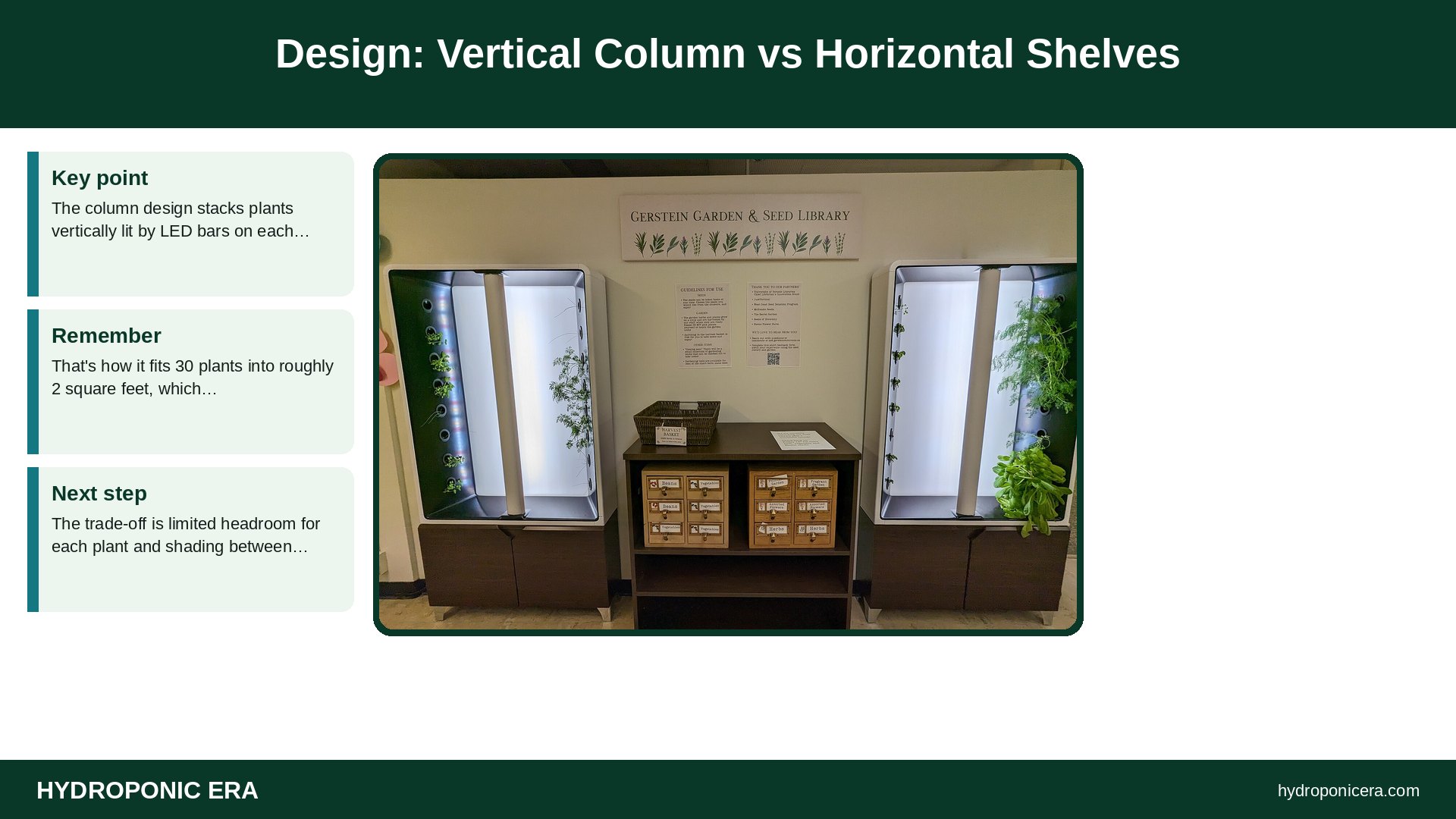
The column design stacks plants vertically lit by LED bars on each side. That’s how it fits 30 plants into roughly 2 square feet, which matters in apartments. The trade-off is limited headroom for each plant and shading between neighbors; leafy greens and herbs do best.
Rise Gardens uses flat trays above a water tank, more like a classic hydroponic shelf. According to Rise, the first level has about 17 inches of growing height, enough for kale and smaller fruiting plants, while upper levels have about 11 inches for lettuce and small herbs. The horizontal layout spreads light more evenly but takes more floor area.
Plant Capacity and Expandability
Gardyn Home 4 holds 30 plants and doesn’t expand within a single unit. Rise Garden 3 starts at one level with 16 plant sites and adds levels on the same footprint. Rise says swapping in higher-density tray lids lifts capacity to 36 per level, or up to 108 plants on a three-level unit. For lettuce-heavy households, that flexibility is the strongest argument for Rise Gardens vs Gardyn.
Seeds and Ongoing Costs
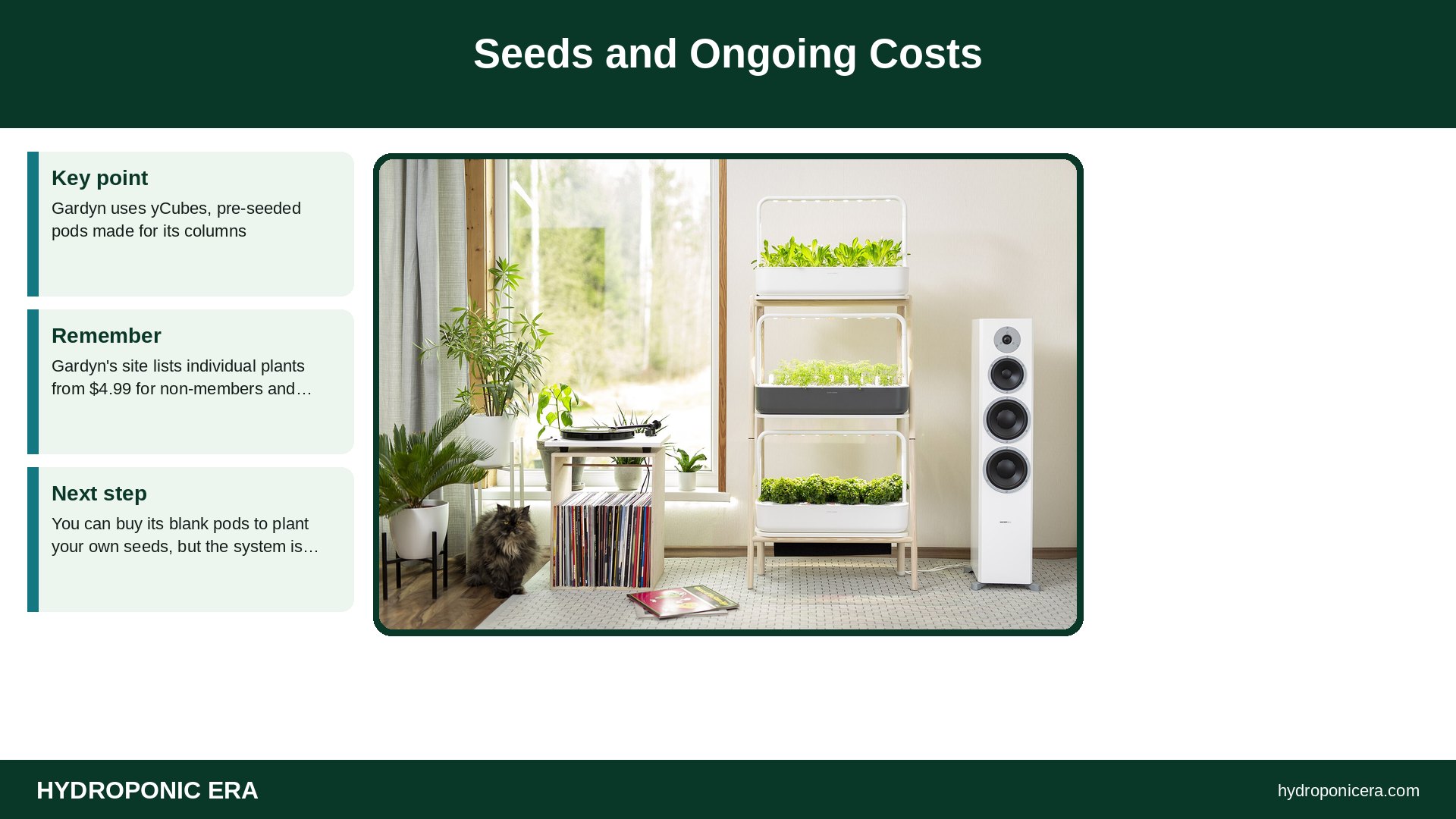
Gardyn uses yCubes, pre-seeded pods made for its columns. Gardyn’s site lists individual plants from $4.99 for non-members and lower prices with its membership, which also includes monthly plant credits. You can buy its blank pods to plant your own seeds, but the system is designed around its catalog.
Rise Gardens accepts any seed in net cups with a starter plug, so you can grow niche varieties from any seed company. That makes ongoing costs easier to control. Both companies sell nutrients and offer subscriptions; compare long-term costs with our cost tracking framework.
Smart Features and App
The column system leans hard into tech. The Home 4 includes sensors for water level, humidity, and temperature, plus two inward-facing cameras that feed its AI assistant. It requires a 2.4 GHz Wi-Fi network. Rise Gardens’ app handles light schedules, reminders, and plant-specific guidance. If you enjoy data and remote monitoring, Gardyn is the more connected system. If you prefer to learn by doing, the Rise app covers the essentials.
Lighting and Power
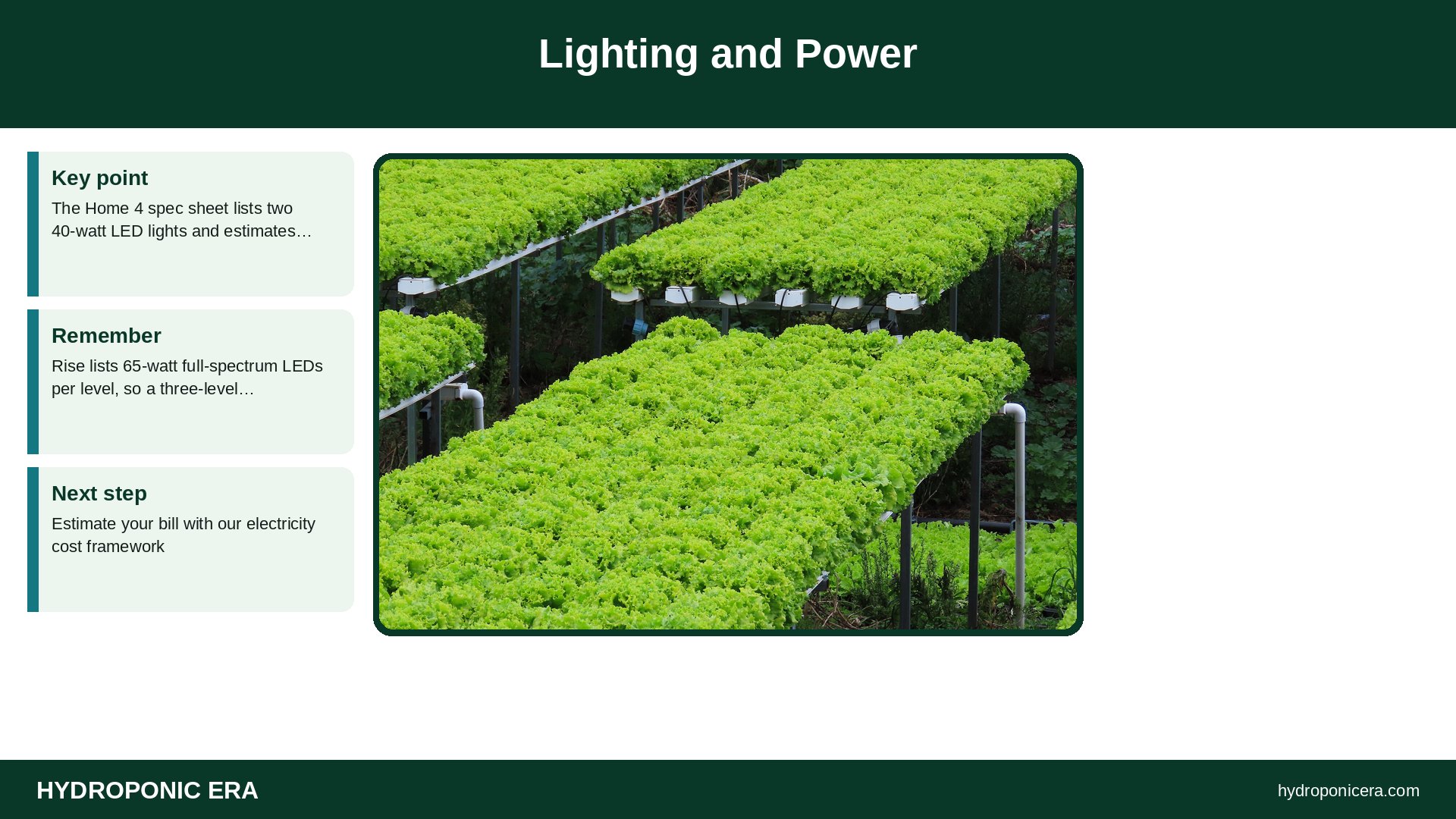
The Home 4 spec sheet lists two 40-watt LED lights and estimates about 47 kWh of energy per month. Rise lists 65-watt full-spectrum LEDs per level, so a three-level unit uses more power but also lights far more growing area. Estimate your bill with our electricity cost framework.
Water and Maintenance
Both systems pump nutrient solution from a base tank to the plants on a schedule. Rise lists a 9-gallon base tank, which buffers pH and EC changes. Gardyn’s water level sensor helps remind you to top off. In both cases, you’ll need to add nutrients, check pH occasionally, and clean the system between grows. Our cleaning and sterilizing guide applies to both.
Who Should Choose Which?
| Choose Gardyn if you… | Choose Rise Gardens if you… |
|---|---|
| Have under 2 sq ft of floor space | Have room for a wider, furniture-style unit |
| Want sensors, cameras, and AI tips | Want to start small and add levels later |
| Like a curated pod catalog | Want to plant any seeds you choose |
| Grow mostly herbs and greens | Want headroom for kale or small fruiting plants |
Alternatives to Consider
If neither fits, consider other options. For a different comparison, see Gardyn vs Lettuce Grow. For countertop units, see AeroGarden vs Click & Grow. A DIY tower garden or light shelf can deliver similar capacity for less money if you’re willing to build. Our guide on choosing a hydroponic kit lists questions to ask.
Bottom Line
In the Rise Gardens vs Gardyn decision, neither is objectively better. Gardyn maximizes plants per square foot with strong tech features. Rise Gardens maximizes flexibility, capacity, and seed choice. Match the system to your space, the crops you eat most, and whether you want a curated or open approach.
Questions to Ask Before You Buy
- Which crops do you eat every week, and how many plants does that take?
- Where will the unit stand, and how far is it from a grounded outlet?
- Will you pay for a seed or plant membership, or buy seeds yourself?
- Do you want app alerts, or would you rather check the garden in person?
- What are the return window and warranty terms right now?
FAQs: Rise Gardens vs Gardyn
Which grows more food, Rise Gardens or Gardyn?
A multi-level Rise Garden has more plant sites and growing area than a single Gardyn Home 4, so it can produce more. Gardyn grows more per square foot of floor space.
Can I use my own seeds in Gardyn?
Gardyn is built around its yCubes, but it sells blank pods for your own seeds. Rise Gardens accepts any seeds in net cups.
Does Gardyn need Wi-Fi?
Gardyn lists a 2.4 GHz Wi-Fi requirement for its connected features.
Can I grow tomatoes in either?
Small varieties are possible on Rise’s taller bottom level. Gardyn’s columns suit greens and herbs better than large fruiting plants.
Do prices change often?
Yes. Both brands run frequent promotions, so check current pricing and membership terms before buying.
Sources
- Gardyn — Gardyn Home 4 product page and specs
- Rise Gardens — Shop Rise Gardens
- Rise Gardens — The Rise Garden 3 product details
- Photo credits (Wikimedia Commons, edited with titles): Click & Grow Smart Garden 27 by Janar Raidla (CC BY-SA 4.0); Gerstein Science Information Centre aeroponics towers by Jason Zhang (CC BY-SA 3.0); Click & Grow Smart Garden 27 by Janar Raidla (CC BY-SA 4.0); Hydroponic lettuce @ Plaine des Cafres 03 by Rémih (CC BY-SA 4.0); Starr-080608-7435-Mentha spicata-leaves-Water plant Sand Island-Midway Atoll (41264499822) by Forest and Kim Starr (CC BY 3.0 us)