
Fulvic and humic acids are organic compounds from decomposed plant matter, sold as supplements that may improve nutrient uptake and root growth. In hydroponics, fulvic acid is the more practical choice because it stays soluble across a wide pH range, while humic acid can precipitate in acidic nutrient solutions (around pH 5.5–6.0) and cloud reservoirs. Research shows some positive effects on root growth and micronutrient availability, but results vary. They are optional additives, not essential nutrients.
Key takeaway: If you try one, pick a fulvic acid product made for hydroponics, dose low, and watch for cloudiness or biofilm. Skip humic acid in recirculating systems unless the product is specifically formulated for them.
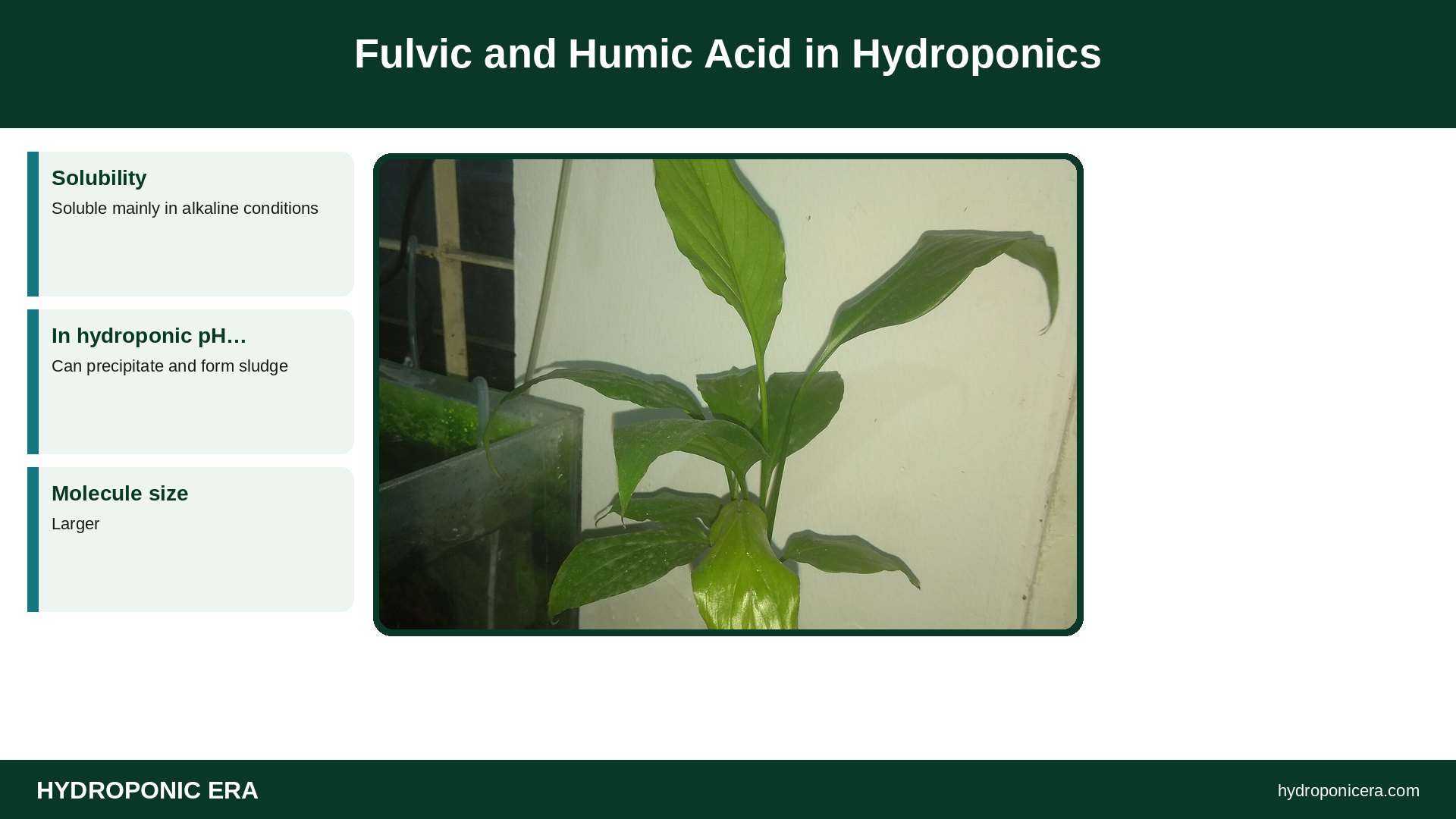
| Feature | Fulvic acid | Humic acid |
|---|---|---|
| Solubility | Soluble across acidic and alkaline pH | Soluble mainly in alkaline conditions |
| In hydroponic pH (5.5–6.5) | Stays in solution | Can precipitate and form sludge |
| Molecule size | Smaller | Larger |
| Claimed benefits | Micronutrient chelation, root growth | Soil structure, root growth, nutrient retention |
| Best use | Hydroponics, foliar, media | Soil, coco, drain-to-waste media |
What Are Humic Substances?
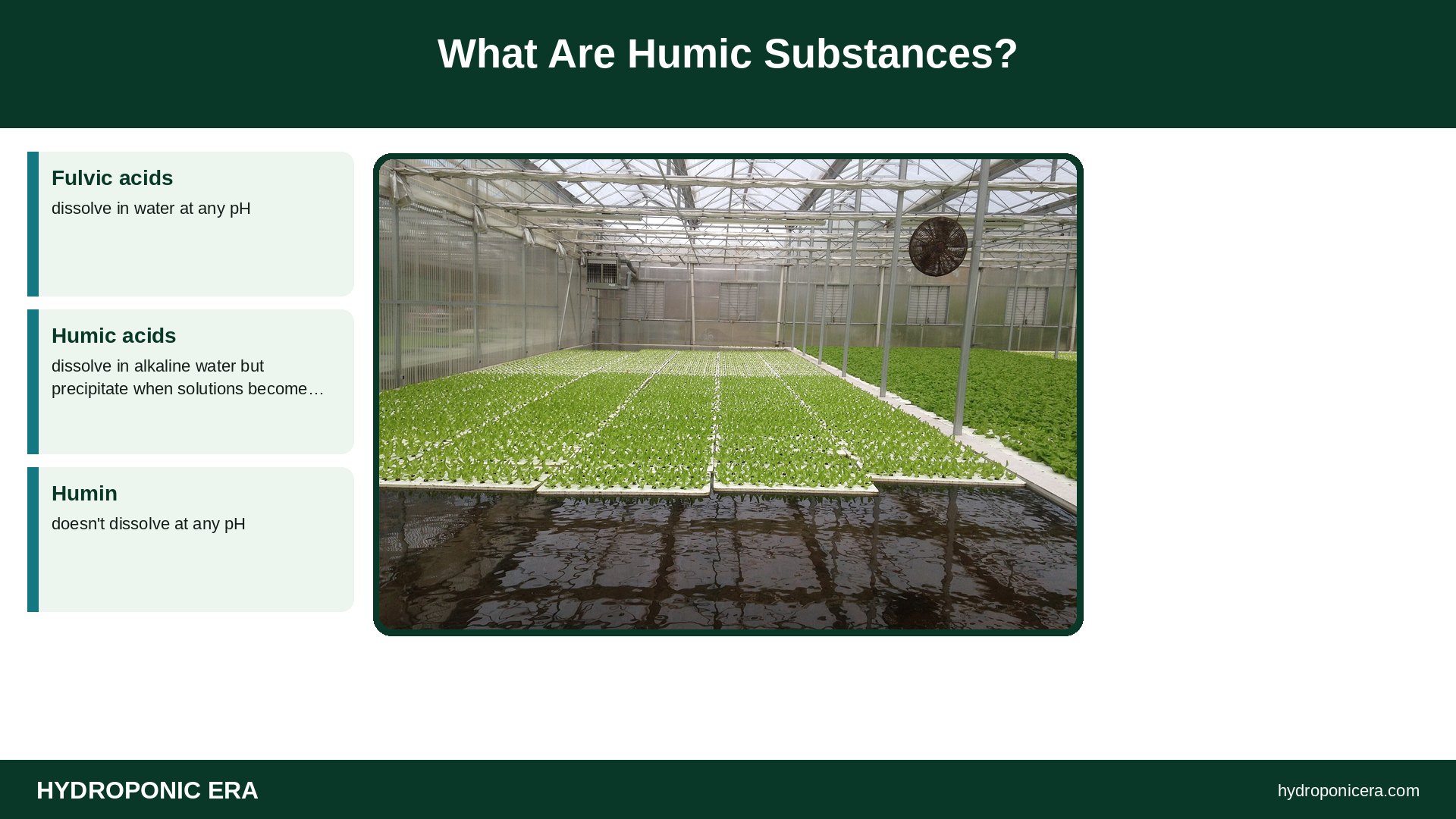
Humic substances form as organic matter breaks down in soil, peat, and deposits such as leonardite (a soft, oxidized lignite). Scientists group them by solubility:
- Fulvic acids dissolve in water at any pH.
- Humic acids dissolve in alkaline water but precipitate when solutions become acidic.
- Humin doesn’t dissolve at any pH.
Commercial products are extracted, usually from leonardite, and vary widely in concentration and purity.
How Fulvic Acid May Help
It can bind metal ions such as iron, zinc, and manganese, a process similar to chelation, which may keep micronutrients available. Some studies report improved root growth and nutrient uptake with humic substances, possibly through hormone-like effects on root cells. Reviews describe these effects as real but variable, depending on source material, dose, and crop.
Keep perspective: modern hydroponic nutrients already contain synthetic chelates like EDTA and DTPA that keep micronutrients available. See chelated vs non-chelated micronutrients. Adding it isn’t needed to correct deficiencies in a complete nutrient program.
Why Humic Acid Is Tricky in Hydroponics
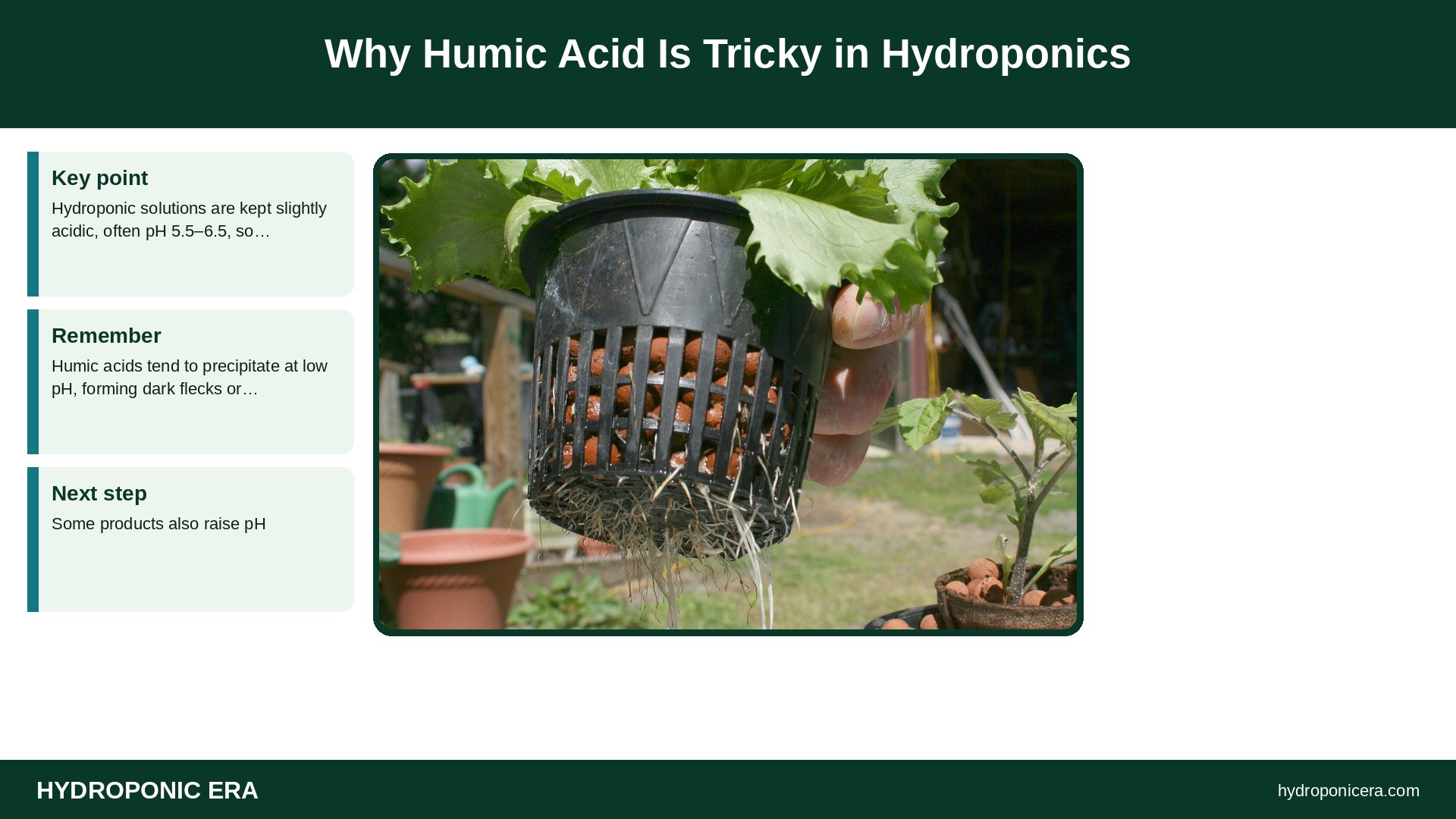
Hydroponic solutions are kept slightly acidic, often pH 5.5–6.5, so nutrients stay available. Humic acids tend to precipitate at low pH, forming dark flecks or sludge that can coat roots, clog emitters, and stain reservoirs. Some products also raise pH. In recirculating systems, the organic load can feed microbes. See cloudy nutrient solution and biofilm.
Humic acid fits better in coco, peat-based media, and soil, where it can interact with the media. See coco coir.
How to Use Fulvic Acid in Hydroponics
- Choose a product labeled for hydroponics with a stated fulvic acid concentration.
- Add it after base nutrients and mix well. See nutrient mixing order.
- Start at half the label rate or less.
- Check pH and EC. Fulvic products are usually acidic and may lower pH slightly. See fixing pH.
- Expect light brown tint. A tea-colored solution is normal; sludge or slime is not.
- Change solution regularly and keep it cool and aerated.
Fulvic Acid Dose and Timing
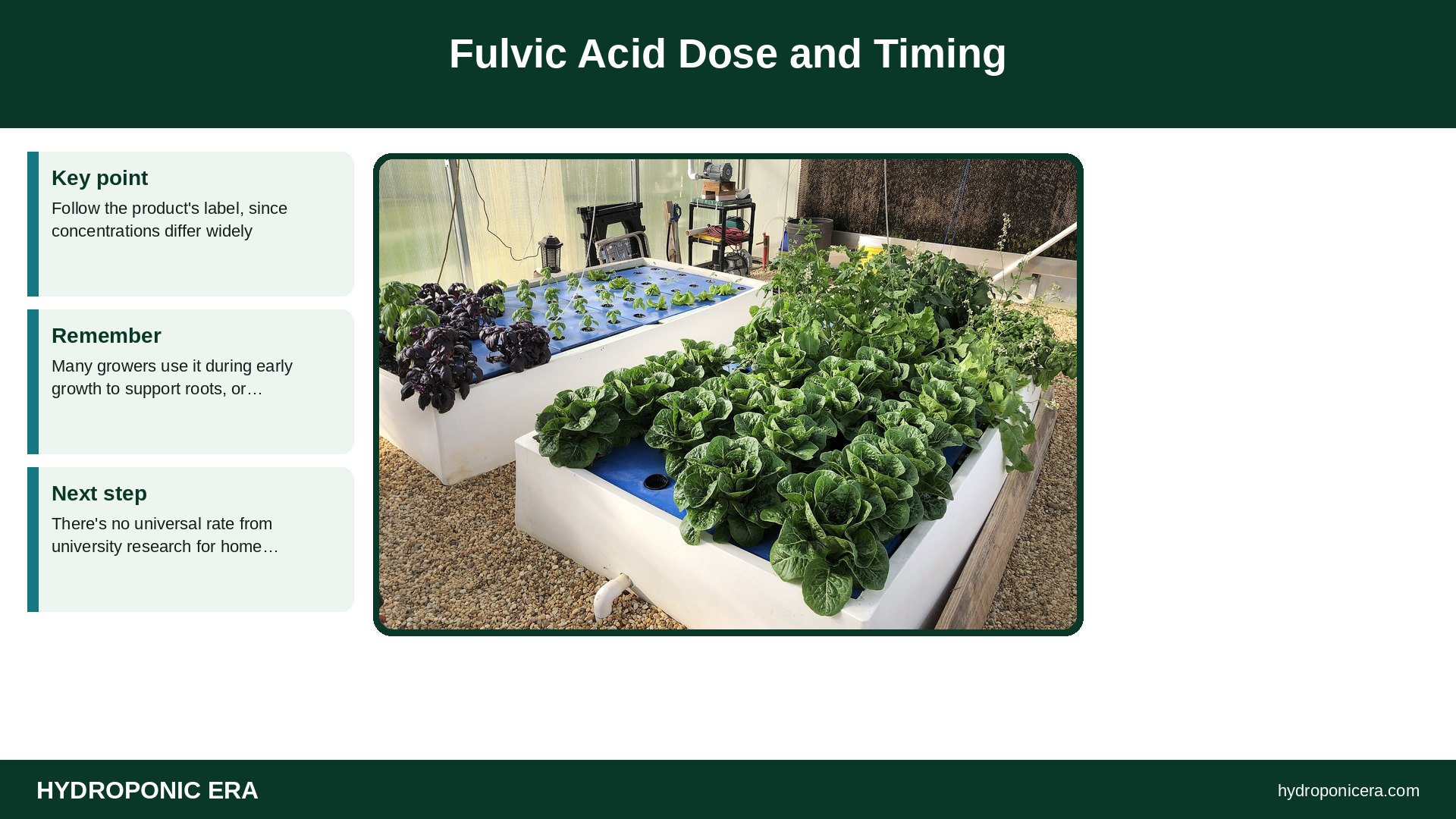
Follow the product’s label, since concentrations differ widely. Many growers use it during early growth to support roots, or continuously at a low rate. There’s no universal rate from university research for home hydroponics. More is not better: excess organic matter only increases cloudiness and microbial load.
Does Fulvic Acid Stain Roots?
Yes, roots may take on a light tan or brown tint. That’s cosmetic. Distinguish it from rot: healthy stained roots stay firm and smell clean, while rotting roots are slimy, mushy, and foul-smelling. See why hydroponic roots turn brown and Pythium root rot.
Fulvic and Humic Acid in Different Systems
| System | Fulvic acid | Humic acid |
|---|---|---|
| DWC / RDWC | Low dose, monitor | Avoid |
| NFT / aeroponics | Low dose, watch nozzles and channels | Avoid |
| Coco drip, drain-to-waste | Good | Possible |
| Kratky | Low dose only | Avoid |
| Soil and containers | Good | Good |
Fulvic vs Other Supplements
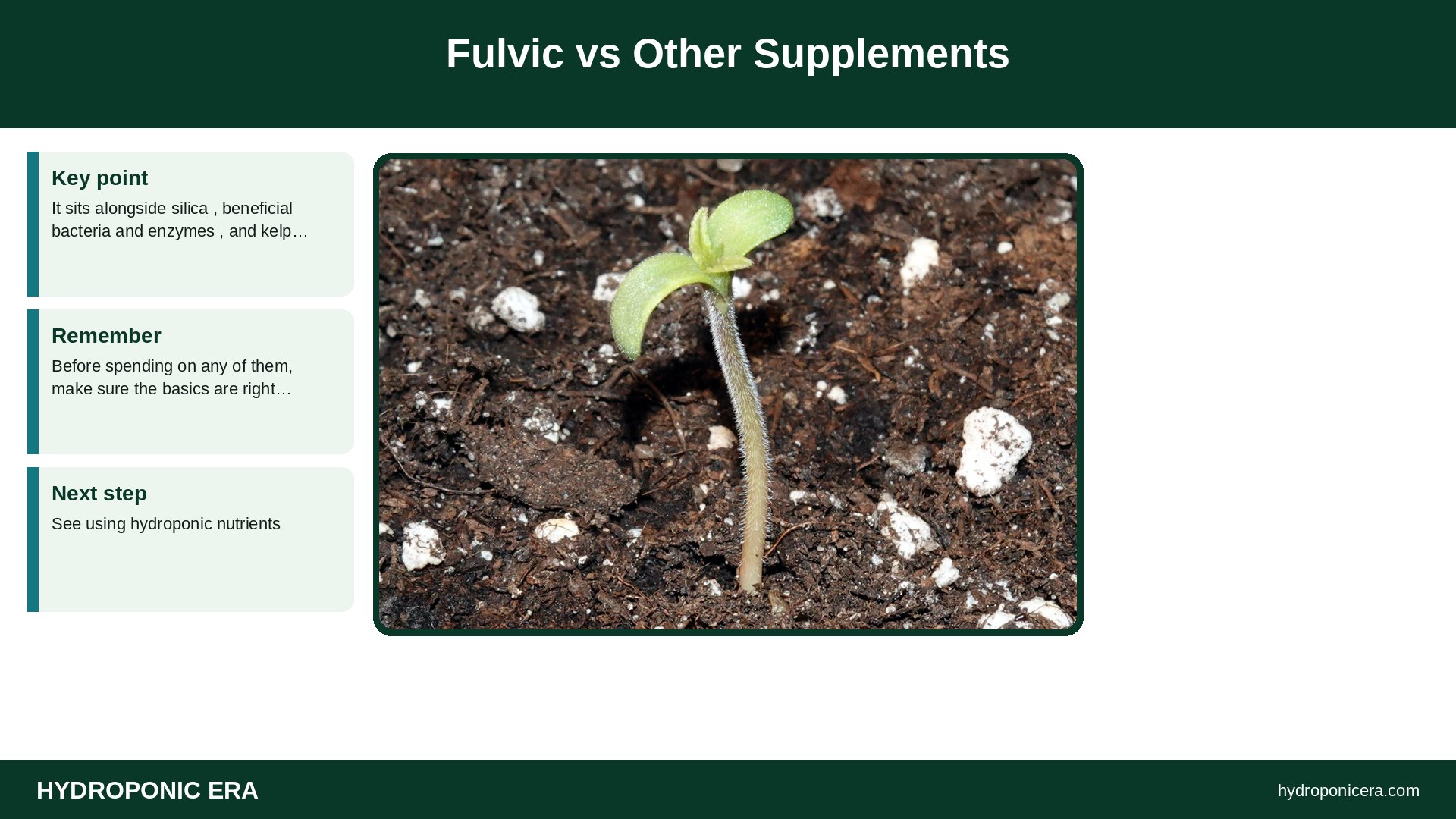
It sits alongside silica, beneficial bacteria and enzymes, and kelp extracts as optional extras. Before spending on any of them, make sure the basics are right: complete nutrients, correct pH and EC, cool and oxygenated water, and enough light. See using hydroponic nutrients.
Test It Yourself
Run two identical reservoirs with the same crop and nutrients, adding the supplement to one. Compare root mass, plant weight, and reservoir clarity at harvest, and repeat once more. This shows whether it’s worth buying for your system.
Reading Product Labels
Fulvic and humic products are labeled in different ways, which makes comparisons hard. Look for a guaranteed analysis listing the percentage of humic and fulvic acids and the source material, such as leonardite. Be cautious of products that don’t list concentrations or make broad claims without data. A product labeled for hydroponic use should state that it stays soluble at typical nutrient pH.
Also check whether the product contains added nutrients. Some “fulvic” supplements include potassium or micronutrients, which will raise EC and affect your mix. Measure EC before and after adding to know what you’re contributing.
Storage and Shelf Life
Store concentrates sealed, away from heat and sunlight. Shake before use, since some products settle. If a bottle develops a strong odor, mold, or heavy sludge, replace it. See stock concentrate shelf life for general storage tips.
Who Might Benefit Most
Growers using RO or very soft water, coco coir media, or drain-to-waste systems are the most likely to see a difference, and the least likely to have reservoir problems. Growers with DWC in warm rooms should be the most cautious.
Fulvic Acid and Water Quality
If your tap water is hard or high in bicarbonates, pH tends to rise during the week. Fulvic products won’t fix that on their own, and their small acidifying effect is not a substitute for proper pH control. See alkalinity and bicarbonate management for a reliable approach.
FAQs: Fulvic and Humic Acid in Hydroponics
Can I use humic acid in hydroponics?
It often precipitates at hydroponic pH and can clog systems. Fulvic acid is the safer choice for recirculating systems.
Does fulvic acid lower pH?
Many fulvic products are acidic and can lower pH slightly. Measure after adding.
Is fulvic acid necessary?
No. It’s optional. Complete hydroponic nutrients already include chelated micronutrients.
Why is my reservoir brown after adding fulvic acid?
A light tea color is normal. Dark sludge, slime, or foul smells point to precipitation or microbial growth.
Can I use fulvic acid as a foliar spray?
Some products are labeled for foliar use. Follow directions and test on a few leaves first.
Sources
- Canellas et al. (2015), Scientia Horticulturae — Humic and fulvic acids as biostimulants in horticulture
- International Humic Substances Society — About humic substances
- Photo credits (Wikimedia Commons, edited with titles): Spathiphyllum wallisii hydroponically grown by Kephalian (CC BY-SA 4.0); Deep water culture by ArcadiYay (CC BY-SA 4.0); 2009-03-30 Lettuce roots by Ildar Sagdejev (Specious) (CC BY-SA 4.0); Deepwater Aquaponics Floating Rafts Growing Lettuce, Basil and Arugula by Alabama Extension (CC0); Hanfsämling mit Wurzelhaaren am Stamm – Hemp seedling with root hairs on the stem by Vschlothauer (CC0)