
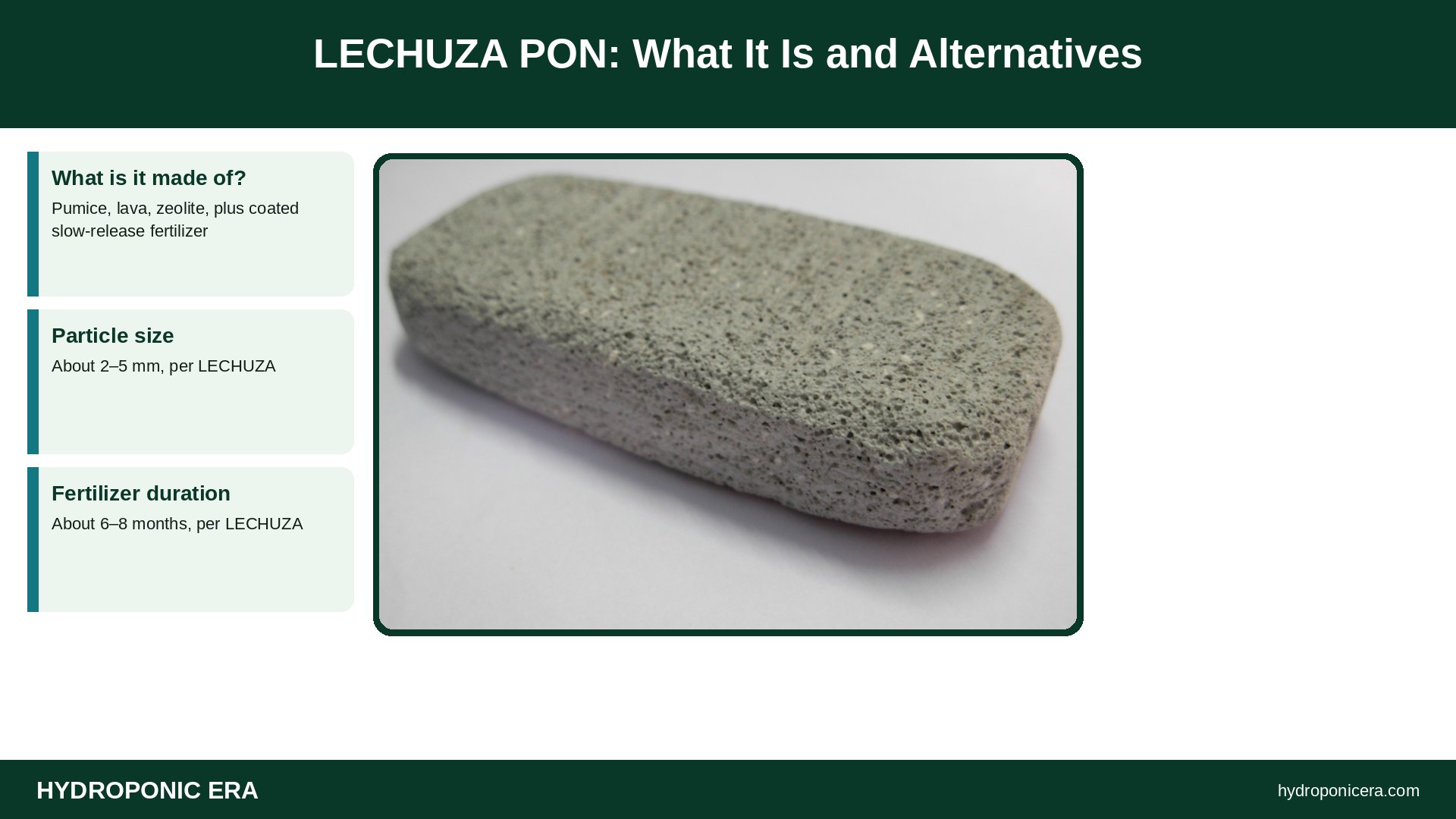
LECHUZA PON is a mineral, soil-free plant substrate made by the German planter brand LECHUZA. According to the manufacturer, it consists of pumice, lava, and zeolite with a coated slow-release fertilizer that feeds plants for roughly 6–8 months. It’s designed for LECHUZA self-watering planters but works in ordinary pots too. Popular alternatives include fertilizer-free LECHUZA BASICPON, pon-style mixes from other brands, DIY pumice-lava-zeolite blends, and LECA (clay pebbles) for semi-hydroponics.
Key takeaway: LECHUZA PON is basically semi-hydroponic mineral grit with built-in fertilizer. You can copy the idea with pumice, lava rock, and zeolite plus a gentle liquid feed.
| Question | Short answer |
|---|---|
| What is it made of? | Pumice, lava, zeolite, plus coated slow-release fertilizer |
| Particle size | About 2–5 mm, per LECHUZA |
| Fertilizer duration | About 6–8 months, per LECHUZA |
| Best for | Houseplants such as aroids, pothos, hoya, ficus |
| Fertilizer-free version | LECHUZA BASICPON |
What LECHUZA PON Is Made Of
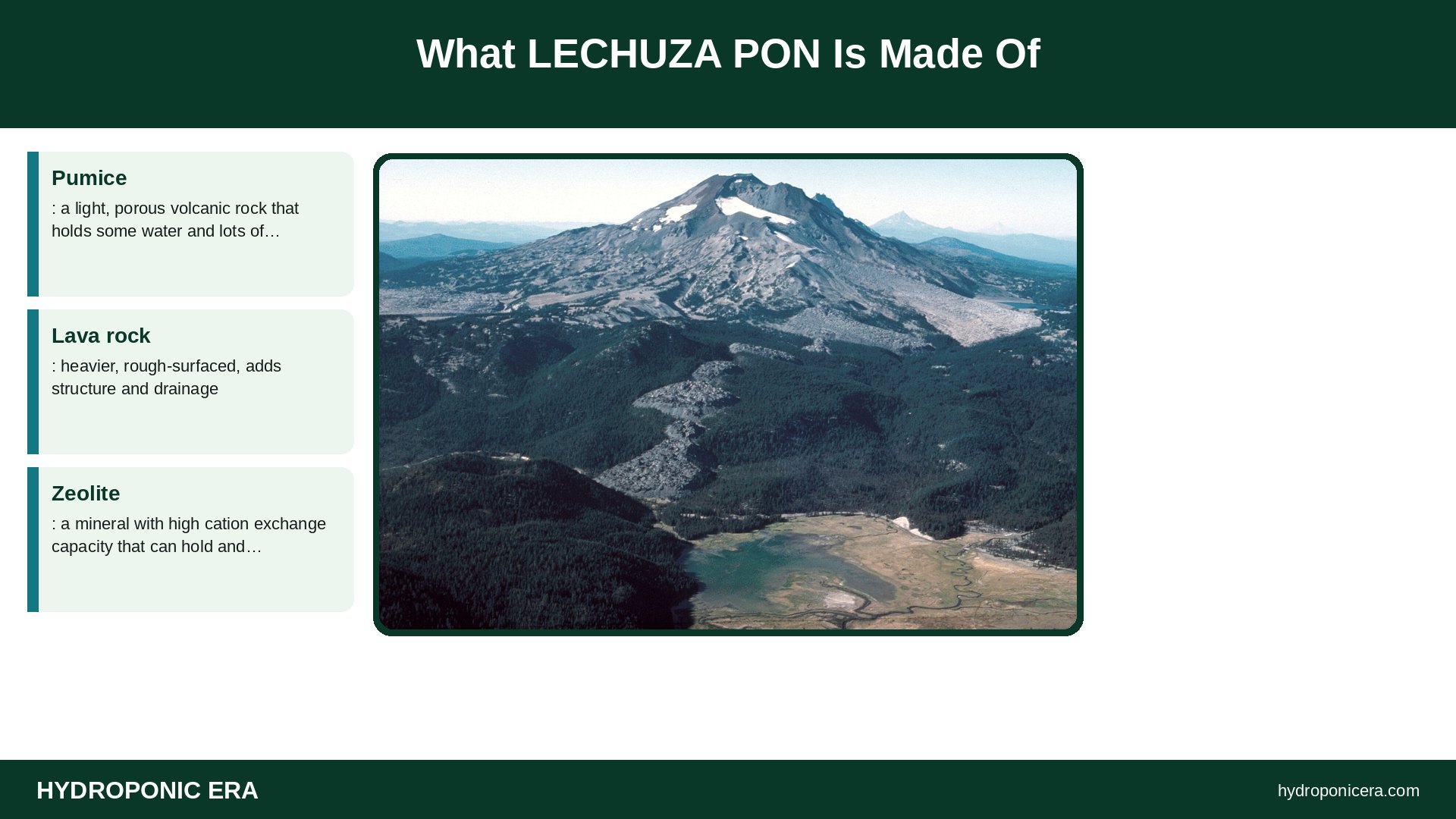
LECHUZA’s product declaration lists three mineral ingredients plus fertilizer:
- Pumice: a light, porous volcanic rock that holds some water and lots of air. See our notes on growing media.
- Lava rock: heavier, rough-surfaced, adds structure and drainage.
- Zeolite: a mineral with high cation exchange capacity that can hold and release nutrients such as potassium and ammonium.
- Slow-release fertilizer: coated pellets. LECHUZA’s declaration lists an NPK 15-11-14 fertilizer with micronutrients.
The declaration also lists a pH of about 8.2 in water for the substrate. That high starting pH is something to watch with acid-loving plants.
How LECHUZA PON Works
PON doesn’t compact like soil, so roots always get air. In LECHUZA’s self-watering pots, the bottom sits in a water reservoir and the mineral particles wick moisture upward. Because the particles are inorganic, fungus gnats and rot have less organic material to exploit, though no substrate stops pests completely. Zeolite buffers nutrients, and the fertilizer pellets release gradually.
LECHUZA PON Pros and Cons
| Pros | Cons |
|---|---|
| Doesn’t compact or break down quickly | Expensive per quart compared with DIY mixes |
| Good aeration and drainage | Heavy compared with LECA |
| Fewer fungus gnat breeding sites | Alkaline starting pH (about 8.2 per label) |
| Built-in fertilizer for months | Need to switch to liquid feed after it runs out |
| Reusable after rinsing | Fine particles can get dusty |
How to Move a Plant Into PON
- Water the plant the day before so roots are hydrated.
- Remove it from the pot and gently wash away all soil. Leftover soil can rot in a mineral substrate.
- Rinse the PON to remove dust.
- Place a layer in the pot, set the plant, and fill around the roots, tapping to settle.
- Water from the top for the first weeks while roots adapt, then use the reservoir if your pot has one.
Expect a short adjustment period. Our guide to converting soil plants to hydroponics explains why soil roots need time to grow new water-adapted roots, and transplant shock recovery helps if leaves droop.
Feeding After the Fertilizer Runs Out
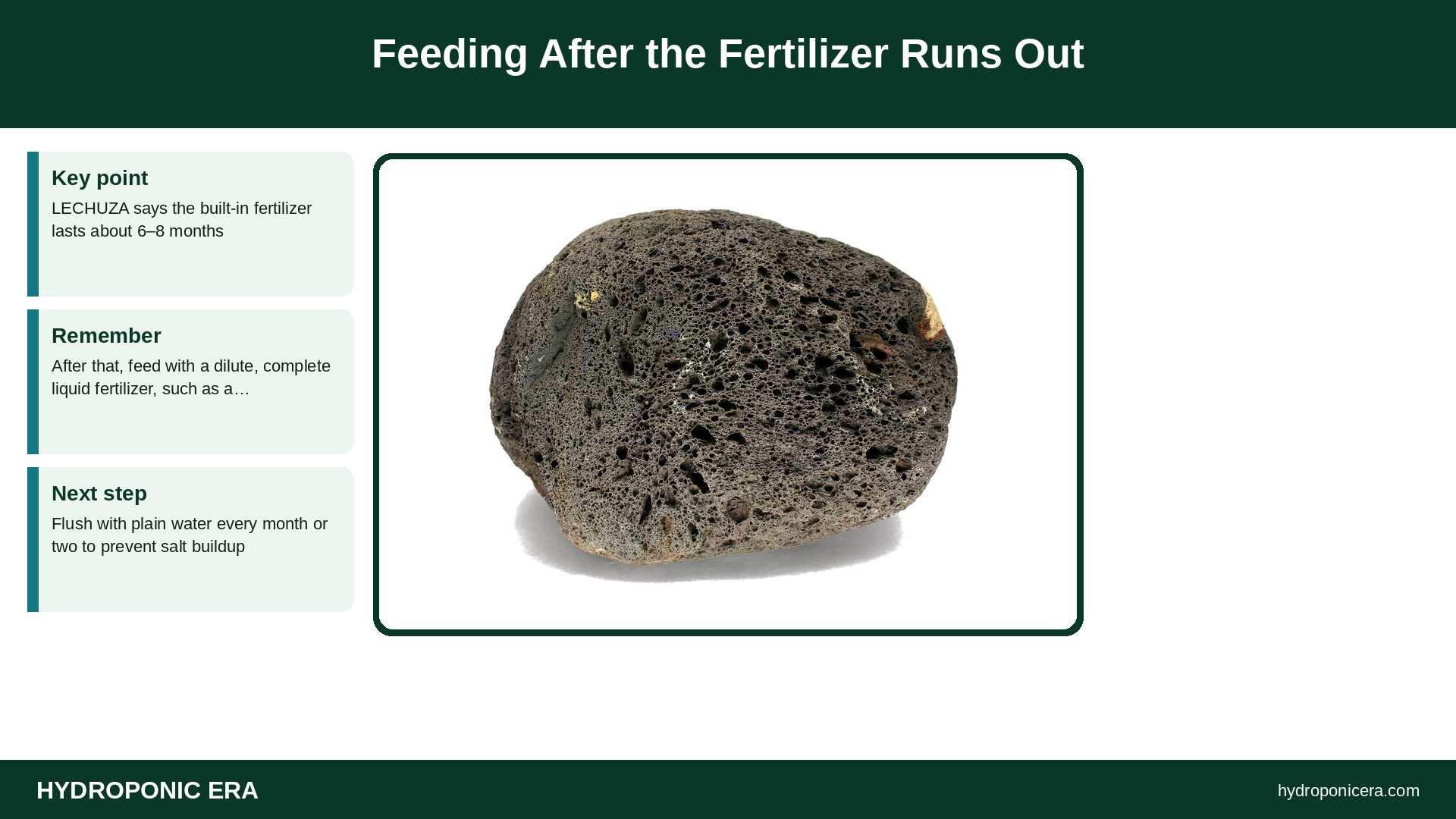
LECHUZA says the built-in fertilizer lasts about 6–8 months. After that, feed with a dilute, complete liquid fertilizer, such as a quarter- to half-strength houseplant or hydroponic nutrient. Flush with plain water every month or two to prevent salt buildup. See using hydroponic nutrients and salt crust on media.
LECHUZA PON Alternatives
- LECHUZA BASICPON: the same mineral base without fertilizer, useful for cuttings and sensitive plants, per LECHUZA.
- Other pon mixes: several brands sell similar pumice-zeolite blends; compare ingredients and particle size.
- DIY mineral mix: equal parts pumice and lava rock, with some zeolite (sold as a soil amendment or cat litter labeled 100% zeolite with no additives). Rinse well. See growing media for clay pebbles and other choices.
- LECA: clay pebbles in a reservoir pot. Lighter and cheaper, with less water retention.
- Coco coir and perlite: organic, holds more water, but breaks down over time. See coco coir.
Which Plants Like LECHUZA PON?
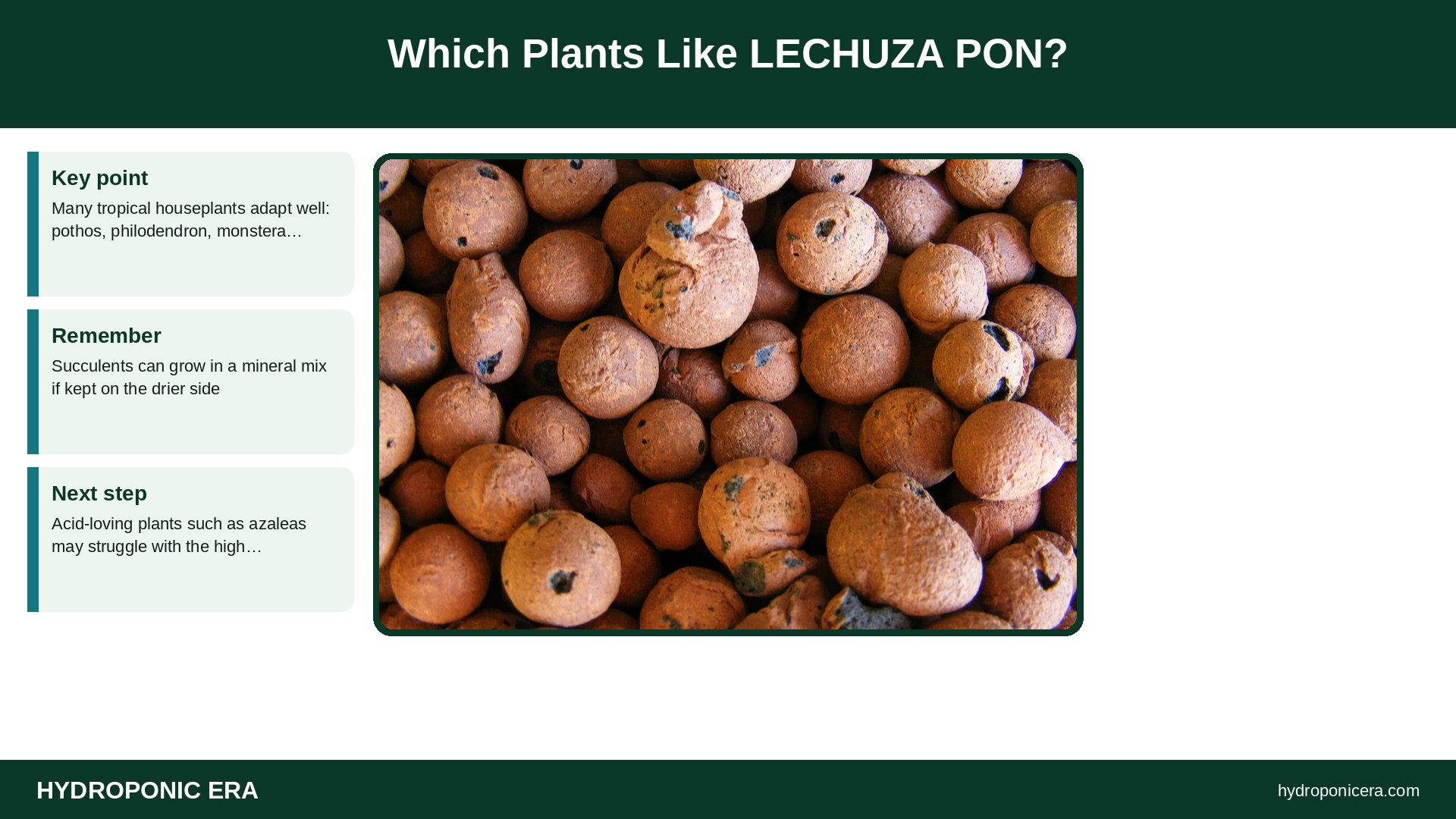
Many tropical houseplants adapt well: pothos, philodendron, monstera, hoya, peace lily, and ficus. Succulents can grow in a mineral mix if kept on the drier side. Acid-loving plants such as azaleas may struggle with the high starting pH. For water-loving houseplants, see pothos in water and plants that grow in water.
Can You Use LECHUZA PON for Vegetables?
You could grow herbs in it, but it’s an expensive way to grow food crops. For vegetables and herbs, standard hydroponic media like clay pebbles, coco, or rockwool in a proper system cost less and are easier to manage. PON’s strengths are long-term houseplant care and self-watering planters.
Is LECHUZA PON Worth the Price?
LECHUZA PON is worth it if you want a ready-to-use, tidy, low-maintenance mix for a few prized houseplants or LECHUZA planters. If you’re repotting a large collection, a DIY pumice-lava-zeolite blend or LECA gives similar benefits for less money.
Watering LECHUZA PON in Regular Pots
You don’t need a LECHUZA planter to use PON. In a pot with a drainage hole, water thoroughly until it runs out the bottom, then let the top layer dry slightly before watering again. Because the mineral particles drain fast, plants in regular pots may need water more often than in potting soil. In a cachepot without drainage, keep a shallow reservoir of about one-fifth of the pot height, similar to semi-hydro with clay pebbles, and let it dry out before refilling.
Use a water level indicator in larger planters so you don’t overfill. If leaves yellow and the bottom of the substrate stays soggy, reduce the reservoir height and check roots for rot. See wilting diagnosis for how to tell thirst from rot.
Managing the High Starting pH
LECHUZA lists a pH of about 8.2 for the substrate in water. Most houseplants tolerate this as the fertilizer releases and the substrate settles, but if new leaves come in pale between the veins, check the pH of water draining from the pot. A slightly acidic liquid fertilizer can help bring it down over time. See iron deficiency for symptoms.
FAQs: LECHUZA PON
Is LECHUZA PON hydroponic?
It’s a semi-hydroponic mineral substrate: no soil, with water wicking from a reservoir. It isn’t a recirculating hydroponic system.
How long does the fertilizer in PON last?
About 6–8 months, according to LECHUZA. Then switch to dilute liquid feeding.
Can I reuse LECHUZA PON?
Yes. Rinse it well, remove old roots, and sterilize if a plant had disease. The fertilizer will be spent, so feed afterward.
Does PON prevent fungus gnats?
It reduces their breeding sites because it contains no organic matter, but gnats can still appear if organic debris builds up. See fungus gnats.
What’s the difference between PON and BASICPON?
BASICPON uses the same mineral base without added fertilizer, per LECHUZA.
Sources
- LECHUZA — LECHUZA-PON product declaration (PDF)
- LECHUZA — LECHUZA-PON plant substrate
- LECHUZA — Substrate information sheet (PDF)
- Photo credits (Wikimedia Commons, edited with titles): Pumice Stone by Ambuj Saxena (CC BY 2.0); South Sister lava flows, USGS by C. Dan Miller, USGS/Cascades Volcano Observatory (Public domain); Scoria Macro Digon3 by “Jonathan Zander (Digon3)” (CC BY-SA 3.0); Hydroton by Lucis (CC BY-SA 3.0)