
Kiwi hydroponics is possible in principle but rarely practical: kiwi vines are large, long-lived, need a sturdy trellis, and most need separate male and female plants. Oregon State University Extension explains that kiwifruit plants are dioecious, with male and female vines, that males don’t fruit but are needed to pollinate females, and that you should plant a male and female of the same species. OSU adds that nurseries sometimes mislabel plants, so you may not know until bloom. If you try, use a self-fruitful hardy kiwi in a large drip-fed container with a strong trellis, and plan for a winter rest.
Key takeaway: Kiwi can grow in a big container of coarse media, but it needs a male and female vine (or a self-fruitful type), a strong trellis, and years before fruit.
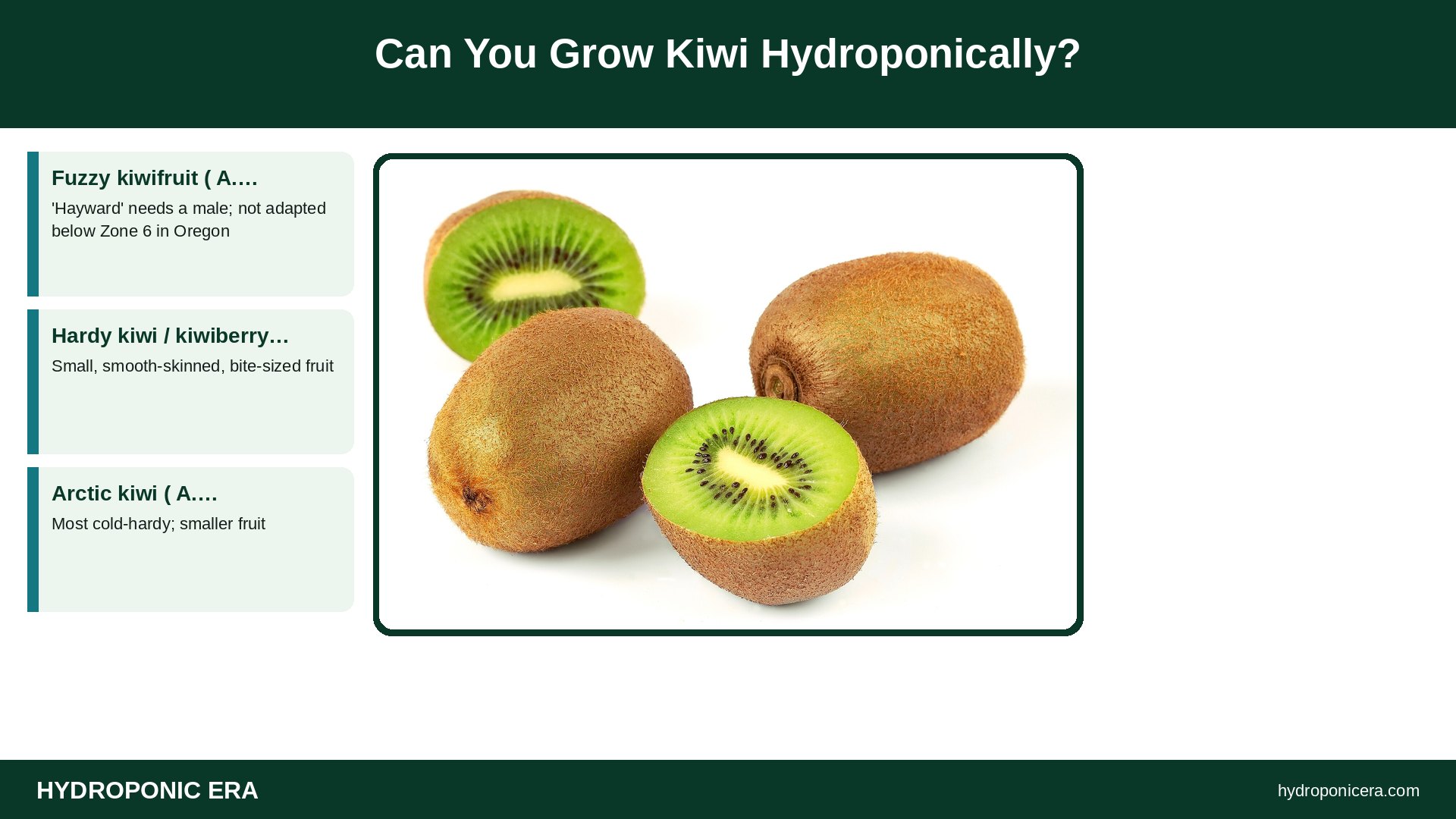
| Type | Notes (OSU) |
|---|---|
| Fuzzy kiwifruit (A. deliciosa) | ‘Hayward’ needs a male; not adapted below Zone 6 in Oregon |
| Hardy kiwi / kiwiberry (A. arguta) | Small, smooth-skinned, bite-sized fruit |
| Arctic kiwi (A. kolomikta) | Most cold-hardy; smaller fruit |
| Self-fruitful cultivars | Fruit without a male; a male can increase fruit size |
Is Kiwi Hydroponics Practical?
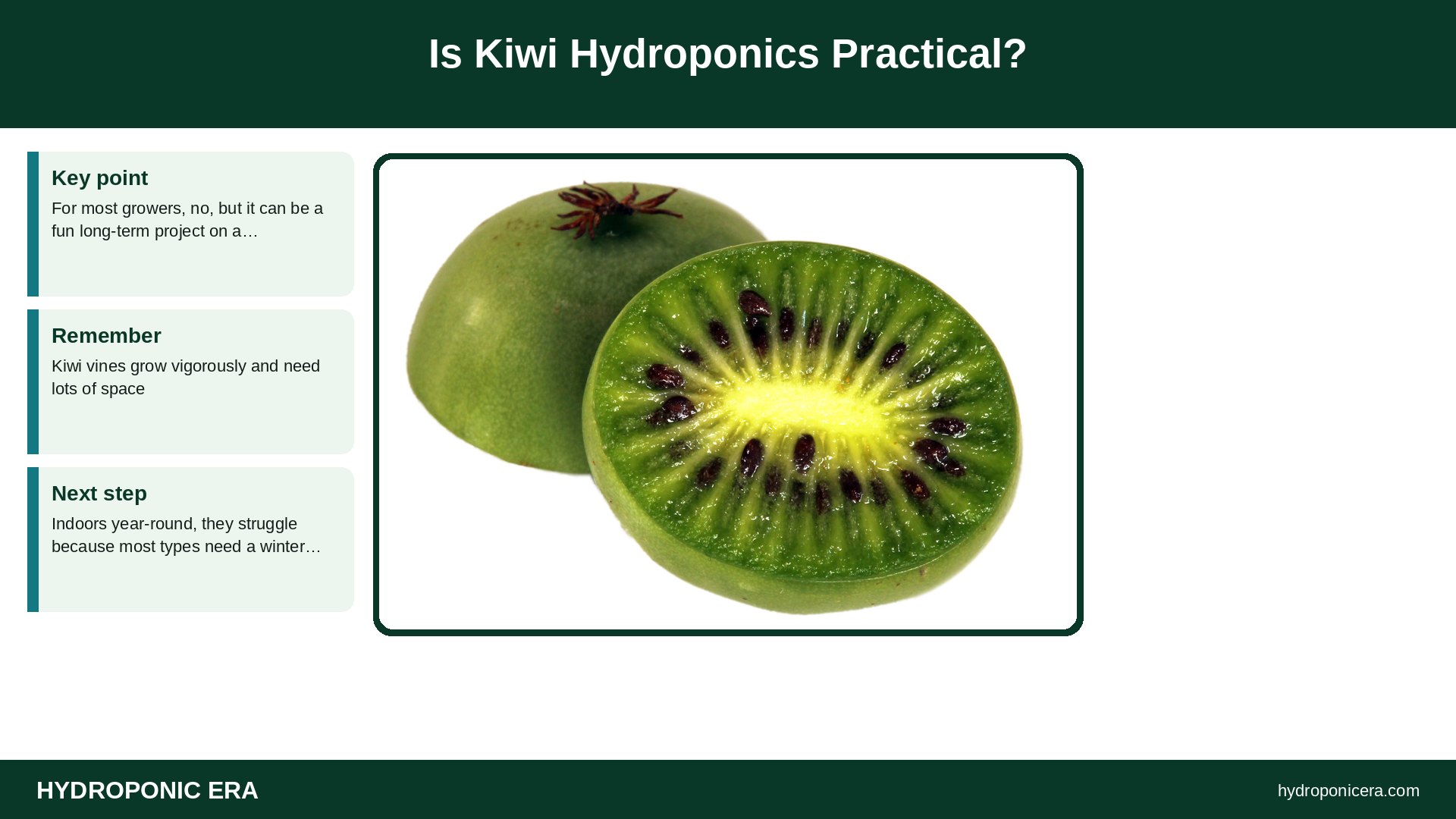
For most growers, no, but it can be a fun long-term project on a patio or in a large greenhouse. Kiwi vines grow vigorously and need lots of space. Indoors year-round, they struggle because most types need a winter dormant period. A container on a sunny patio, moved to a sheltered spot in winter, is the most realistic setup.
Male and Female Vines in Kiwi Hydroponics
OSU says male and female vines usually can only be told apart at bloom: male flowers have pollen-producing anthers, while female flowers have a central, multibranched pistil that becomes the fruit. OSU warns that mislabeled nursery plants can leave gardeners with two males or two females and no fruit. Some cultivars are self-fruitful, but OSU notes adding a male of the same species can still increase fruit size.
Best Systems for Kiwi Hydroponics
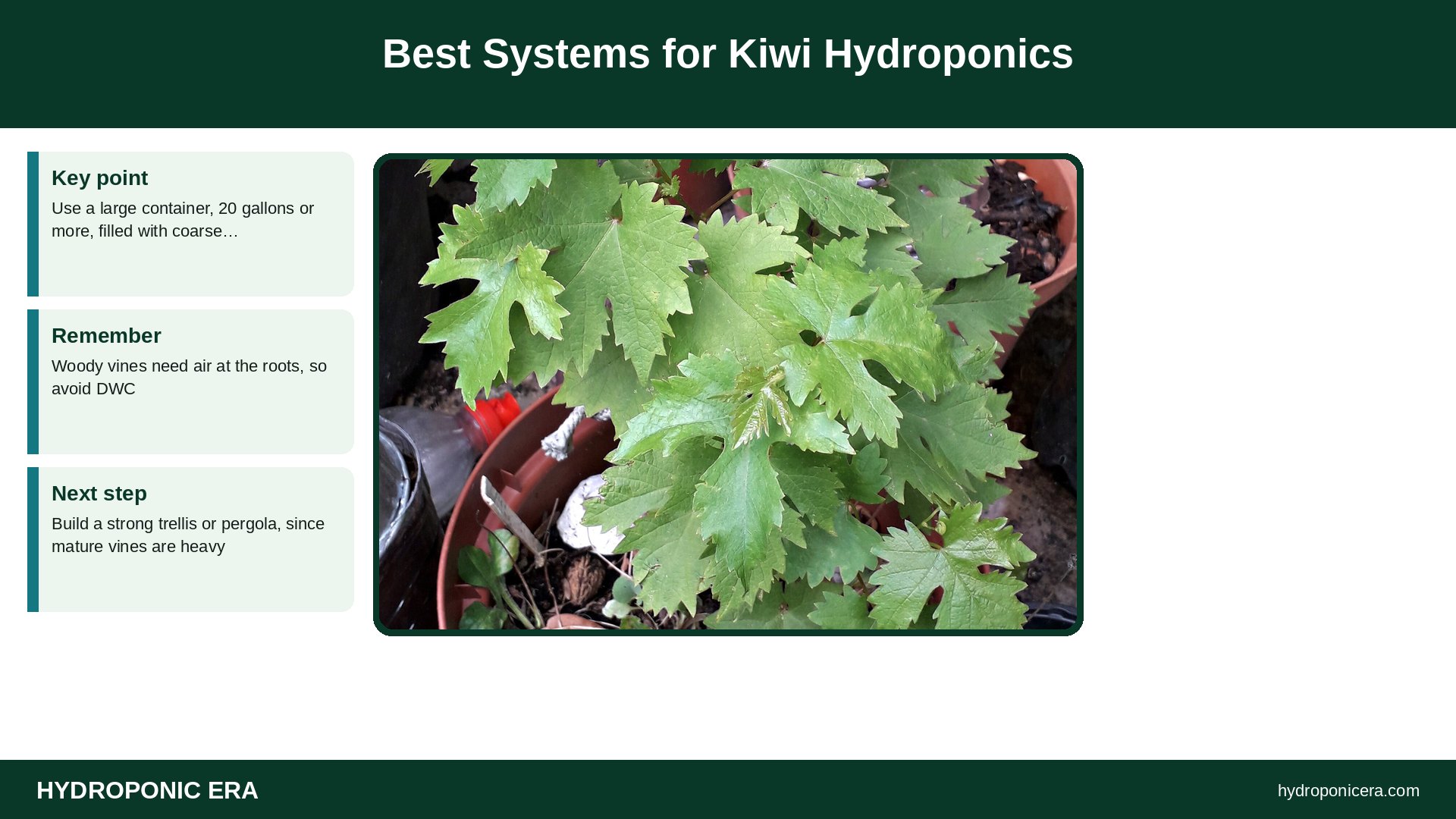
Use a large container, 20 gallons or more, filled with coarse perlite, coco, or clay pebbles, fed by drip with free drainage. Woody vines need air at the roots, so avoid DWC. Build a strong trellis or pergola, since mature vines are heavy. See Dutch buckets and growing media.
Choosing a Variety
OSU describes hardy kiwi (kiwiberries) as small, smooth-skinned, bite-sized fruit, and Arctic kiwi as the most cold-hardy type, with smaller, less flavorful fruit. Fuzzy ‘Hayward’ produces large fruit but, OSU notes, isn’t adapted to colder regions. For containers, hardy kiwi or a self-fruitful cultivar is the simplest choice.
Nutrients for Kiwi Hydroponics
There’s little published guidance for hydroponic kiwi, so use a complete fruiting-crop nutrient at moderate strength and keep pH about 5.5–6.5. Feed during active growth, reduce in late summer, and stop during dormancy. Flush media every few weeks to prevent salt buildup. See how to lower EC.
Winter Care
Kiwi vines lose leaves and go dormant in winter. OSU notes cold can damage trunks and fruiting wood, especially after a warm spell. In a container, roots are more exposed than in the ground, so move pots to an unheated garage or insulate them during hard freezes. Keep media barely moist while dormant.
Pruning and Training
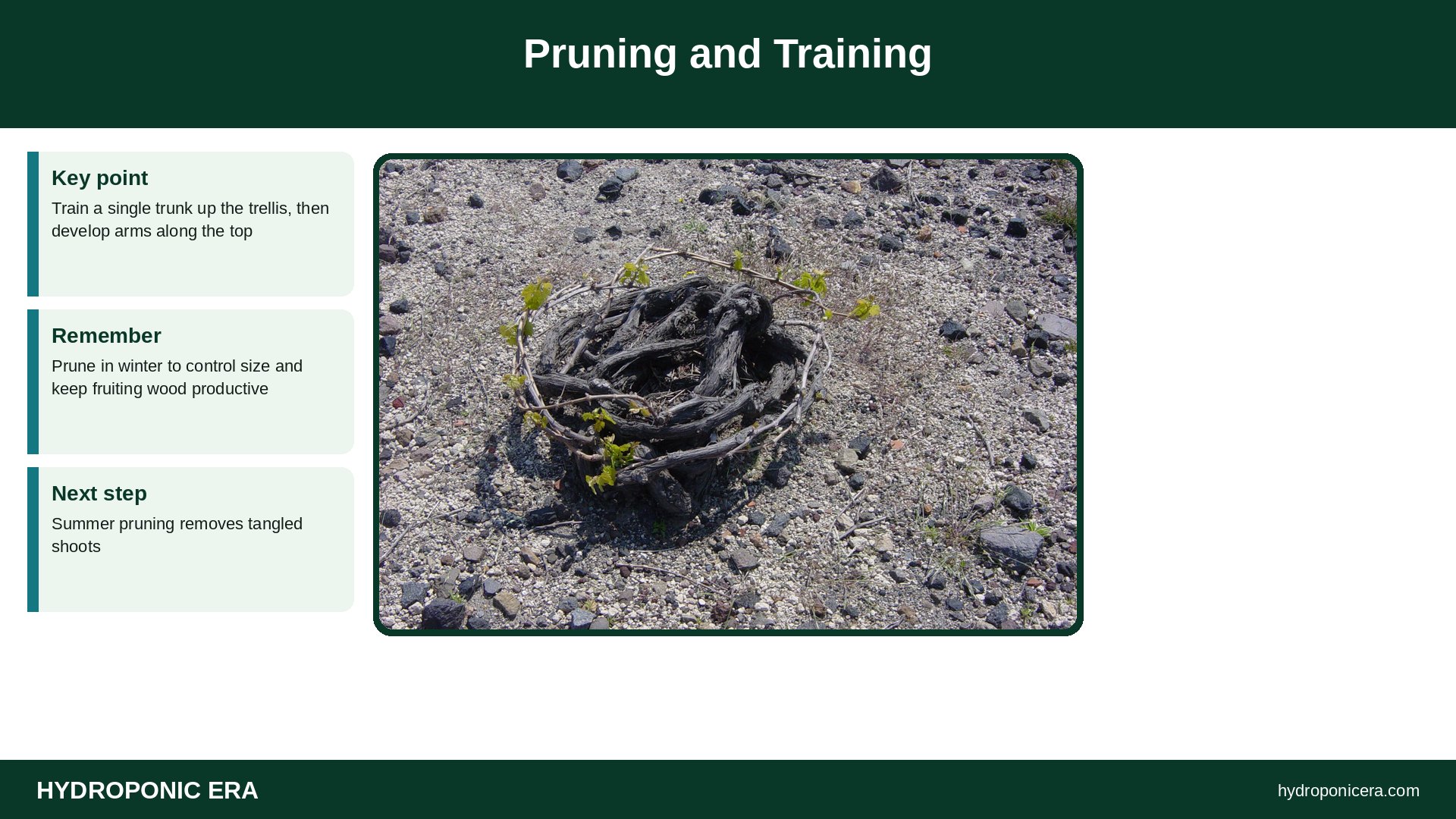
Train a single trunk up the trellis, then develop arms along the top. Prune in winter to control size and keep fruiting wood productive. Summer pruning removes tangled shoots.
Common Problems
- No fruit: no male, mislabeled plants, or vine too young.
- Root rot: media too wet.
- Frost damage: new shoots after an early warm spell.
- Weak growth: container too small.
Kiwi Hydroponics Pollination
Bees usually pollinate kiwi outdoors. In a greenhouse or protected area, hand-pollinate by brushing pollen from male flowers onto female flowers when both bloom. OSU notes bloom timing should overlap between male and female plants of the same species, so check bloom dates when buying.
Fruit Harvest
OSU notes that fuzzy ‘Hayward’ fruit doesn’t ripen on the plant and must be picked and ripened afterward. Pick carefully, since soft fruit bruises easily.
Is Kiwi Hydroponics Worth Trying?
If you have a sunny patio, space for a pergola, and patience, a container kiwi can be a fun, long-term project. If you want quick fruit, strawberries or dwarf citrus are far easier. Buy plants from a nursery that labels sex clearly, and confirm at first bloom.
Equipment Checklist for Kiwi Hydroponics
- A large container (15–25 gallons) with drain holes.
- Coarse media: perlite, coco, or clay pebbles.
- A drip pump, timer, and emitters.
- A pH and EC meter.
- A complete fruiting-crop nutrient.
- A stake or trellis for support.
Most of this gear is reusable from crop to crop, so the first setup costs the most. Buy reliable meters first; they prevent the majority of problems.
Beginner Mistakes With Kiwi Hydroponics
Common mistakes are buying two plants of the same sex, using too small a container, and keeping vines warm all winter.
Getting Started With Kiwi Hydroponics
Start small, change one thing at a time, and keep a simple log of pH, EC, temperature, and what you changed. Most hydroponic problems show up as patterns in those numbers before they show on the plant. Compare your notes with the sources below, and adjust slowly rather than chasing every small swing. A steady routine matters more than any single product or setting.
Kiwi Hydroponics Varieties by Cold Hardiness
OSU describes fuzzy kiwifruit (Actinidia deliciosa), including ‘Hayward’, as suited to Zones 7–9 and not adapted to colder parts of Oregon below Zone 6. Hardy kiwi (A. arguta) handles colder winters, and OSU calls Arctic kiwi (A. kolomikta) the most cold-hardy type available, though its fruit is smaller and less flavorful. For a patio container, match the species to your winter low, since container roots are more exposed to cold than roots in the ground.
FAQs: Kiwi Hydroponics
Can kiwi grow hydroponically?
Yes, in a large container of coarse media, but it’s a long-term project.
Do I need male and female kiwi plants?
Usually; OSU says plant a male and female of the same species.
Are there self-fruitful kiwis?
Yes, though a male can increase fruit size.
Can kiwi grow indoors year-round?
Not well; most need winter dormancy.
Which kiwi is best for containers?
Hardy kiwi or a self-fruitful cultivar.
How long until kiwi fruits?
Usually several years.
Sources
- Oregon State University Extension — Growing Kiwifruit in Your Home Garden (EM 9322)
- Photo credits (Wikimedia Commons, edited with titles): Kiwi (Actinidia chinensis) 1 Luc Viatour by Luc Viatour (CC BY-SA 2.5); Actinidia arguta fruit – hardy kiwi – Kiwibeere 05 by Rillke (CC BY 3.0); Vitis vinifera – 2-year-old grape vine grown from seed by Eiku (CC BY-SA 4.0); Drip irrigation (2552390830) by Dwight Sipler from Stow, MA, USA (CC BY 2.0); SantoriniGrapeVine06679 by User:Leonard G. (Public domain)