
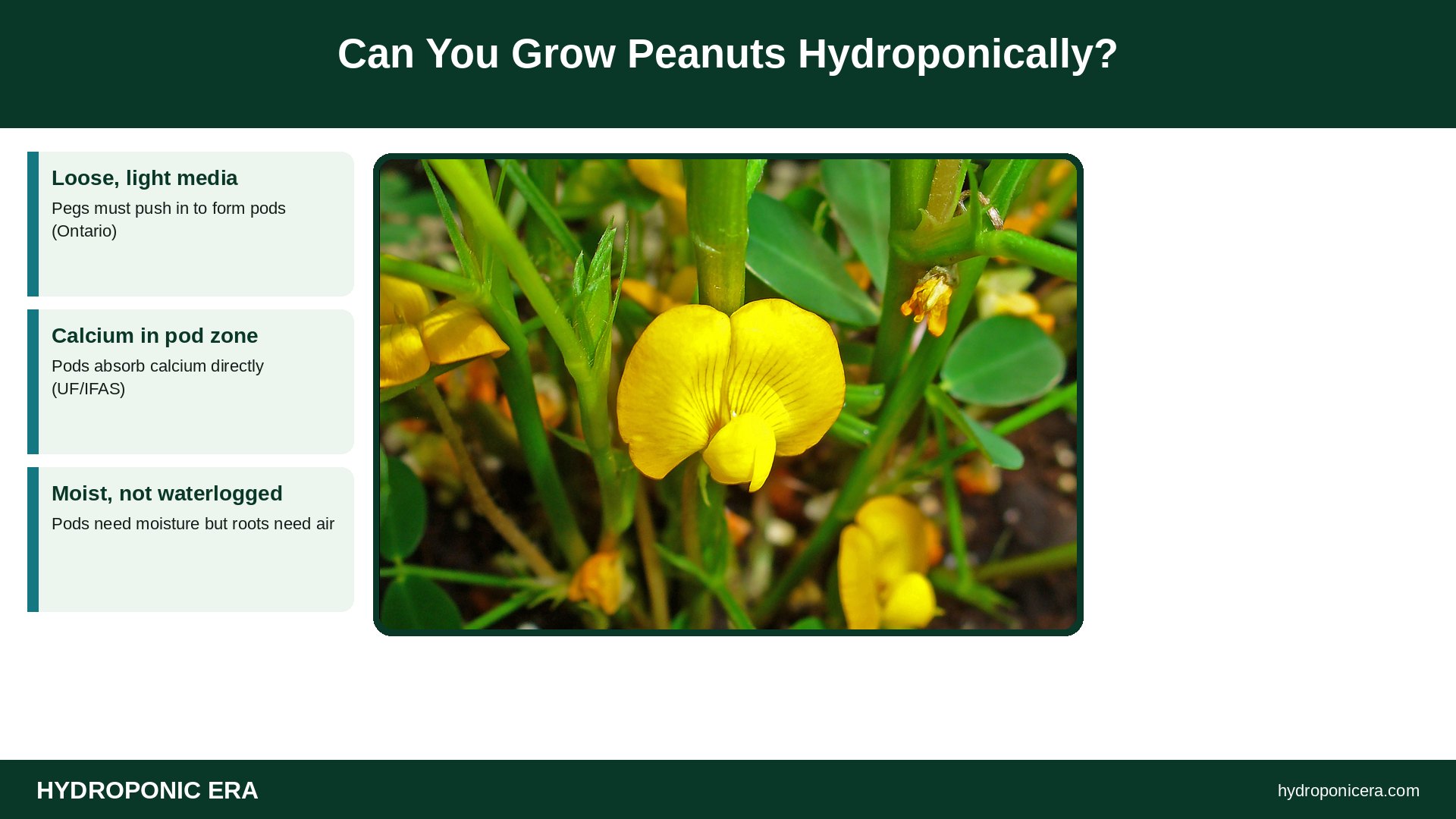
Peanuts hydroponics is mostly an experiment, because peanuts form their pods underground. After a flower is pollinated, a stalk called a peg grows down into the soil, then the tip swells into a pod, a process described in Ontario’s peanut production guide. A pure water system gives pegs nothing to push into. UF/IFAS also explains that developing pods absorb calcium directly from the soil around them, not just through the roots. If you try it, grow plants in a deep tray of loose, moist media like coarse sand, perlite, or coco so pegs can enter and pods can form, and add calcium to the pegging zone.
Key takeaway: Peanuts need loose media for pegs to bury into; pure DWC or NFT won’t produce pods. Use a deep, airy media bed with steady moisture and calcium.
| Need | Why it matters |
|---|---|
| Loose, light media | Pegs must push in to form pods (Ontario) |
| Calcium in pod zone | Pods absorb calcium directly (UF/IFAS) |
| Moist, not waterlogged | Pods need moisture but roots need air |
| Warmth and long season | Peanuts are a warm-season crop |
| Full sun | Strong light for growth and flowering |
Why Peanuts Hydroponics Is Hard
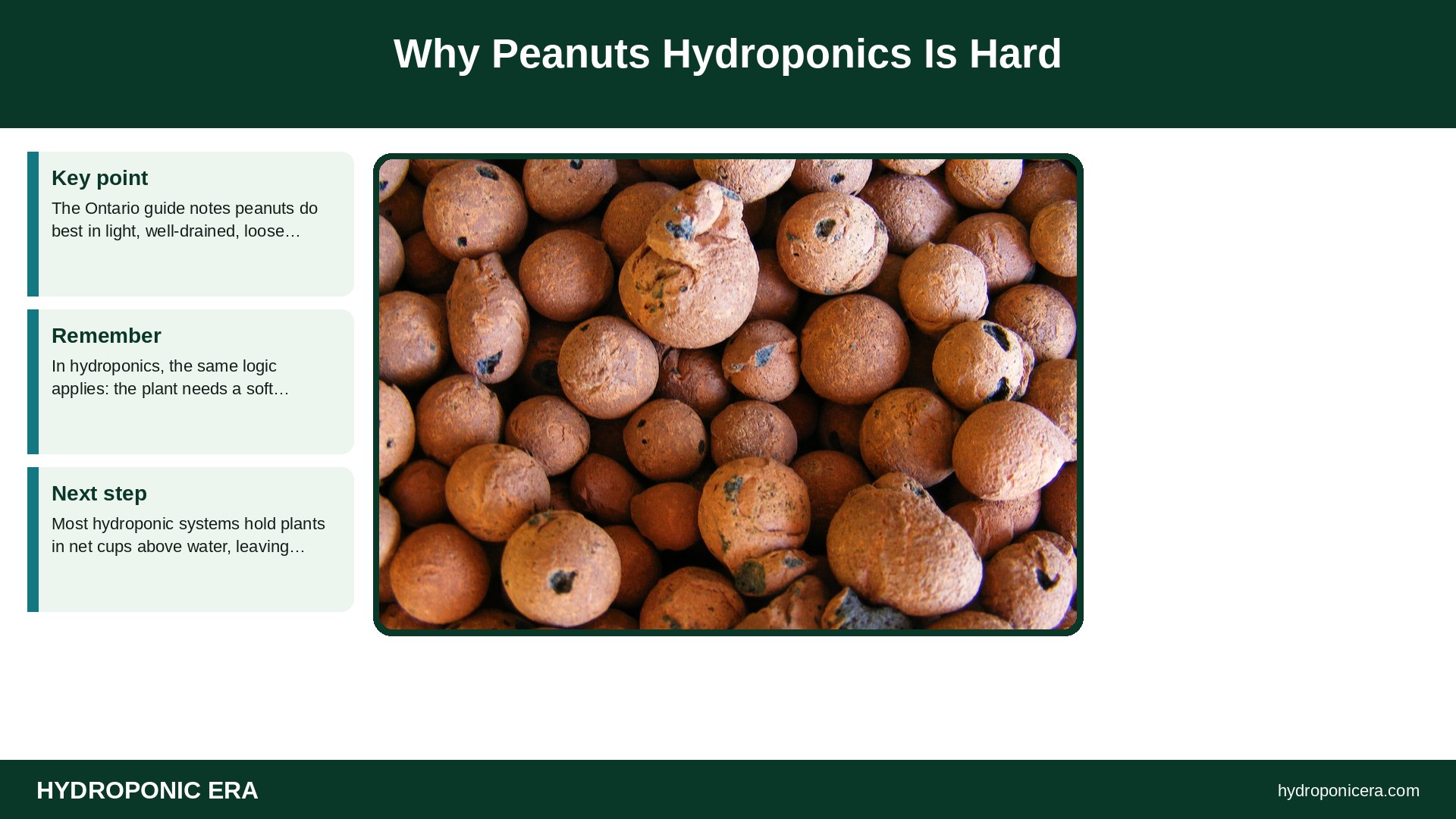
The Ontario guide notes peanuts do best in light, well-drained, loose sandy to sandy-loam soil and poorly in compacted or crusting clay, because pegs struggle to enter hard ground. In hydroponics, the same logic applies: the plant needs a soft surface layer around its base. Most hydroponic systems hold plants in net cups above water, leaving pegs dangling in air, where pods don’t form properly.
Best Systems for Peanuts Hydroponics
- Media bed or deep tray: 8–12 inches of coarse sand, perlite, or coco with drip or flood-and-drain feeding.
- Large containers: wide, shallow tubs give room for pegs to spread.
- DWC and NFT: grow leaves, but pods rarely form.
See growing media and Dutch buckets.
Calcium for Peanuts Hydroponics

UF/IFAS explains that peanut pods take up calcium directly from the soil solution around them during pod fill, so calcium must be present in the pegging zone, not only at the roots. Low calcium leads to empty pods (“pops”). UF notes gypsum is a common calcium source for the pod zone. In a media bed, a complete nutrient with calcium nitrate, kept moist in the top layer, helps supply it. See calcium and magnesium deficiency.
Peanuts Hydroponics: Starting Peanuts
Use raw, unroasted peanuts in the shell, or seed peanuts from a garden supplier. Shell them carefully without damaging the seed skin, and sow in warm, moist media. Keep seedlings warm and in strong light.
Nutrients and pH
Peanuts are legumes and can fix some nitrogen with the right bacteria, though in sterile media they rely more on supplied nutrients. Use a complete nutrient at moderate strength with calcium, and keep pH around 5.8–6.5. Excess potassium can interfere with calcium uptake, so avoid very high-potassium bloom formulas.
Light and Temperature
Peanuts are a warm-season crop that needs a long, warm growing season and full sun. Indoors, provide strong LED light and keep the room warm. Cold slows growth and flowering.
Harvesting
Harvest when leaves begin to yellow and the inside of most shells shows darkened veins. Lift the whole plant gently from the media, let pods dry on the plant in a warm, airy spot, then pick them off. Roast before eating.
Common Problems
- No pods: pegs couldn’t enter media.
- Empty pods: calcium shortage in the pod zone.
- Rot: media too wet.
- Spider mites: common indoors in dry air.
Peanuts Hydroponics Setup Step by Step
- Fill a wide tub with 8–12 inches of coarse sand, perlite, or coco.
- Install drip lines or a flood-and-drain cycle that drains fully.
- Sow raw peanuts in warm, moist media.
- Feed a complete nutrient with calcium at moderate strength.
- Keep the top layer loose and moist once flowering starts so pegs can enter.
- Harvest when leaves yellow and shells show dark veins inside.
Expect smaller harvests than in a garden. The project is mostly about learning how peanuts grow.
Is Peanuts Hydroponics Worth Trying?
As a learning project, yes: watching pegs grow down and pods form is fascinating, and it shows why media choice matters. For a real harvest, a garden bed of loose sandy soil in a warm climate is far easier. If you try it indoors, plant several seeds so you have enough plants to compare results.
Equipment Checklist for Peanuts Hydroponics
- A deep tray or wide tub.
- Loose media: coarse sand, perlite, or coco.
- A drip or flood-and-drain pump.
- A calcium-containing nutrient.
- A strong light.
Most of this gear is reusable from crop to crop, so the first setup costs the most. Buy reliable meters first; they prevent the majority of problems.
Beginner Mistakes With Peanuts Hydroponics
The biggest mistake is growing peanuts in net cups over water. Pods need loose, moist media, and calcium in that zone.
Getting Started With Peanuts Hydroponics
Start small, change one thing at a time, and keep a simple log of pH, EC, temperature, and what you changed. Most hydroponic problems show up as patterns in those numbers before they show on the plant. Compare your notes with the sources below, and adjust slowly rather than chasing every small swing. A steady routine matters more than any single product or setting.
Peanuts Hydroponics Media and Moisture
Ontario’s peanut guide recommends light, well-drained, loose soils and warns against compacted, crusting, or poorly drained clay, because pegs struggle to enter hard ground. In a media bed, avoid letting the surface crust: keep the top inch moist and loose once flowering begins, and don’t let fine particles wash down and pack. UF/IFAS notes calcium uptake by pods depends on moisture in the pod zone, so dry surface media can reduce calcium reaching pods even when the nutrient supplies plenty.
FAQs: Peanuts Hydroponics
Can peanuts grow hydroponically?
Plants can, but pods need loose media to form.
Why don’t my peanuts form pods?
Pegs need to bury into moist media.
Do peanuts need calcium?
Yes; UF/IFAS says pods absorb calcium directly.
Can I plant store-bought peanuts?
Only raw, unroasted ones.
What media works best?
Loose, coarse sand, perlite, or coco.
Are peanuts legumes?
Yes.
Sources
- Government of Ontario — Commercial Peanut Production in Ontario
- UF/IFAS — Calcium Fertilization in Peanuts: Importance, Sources, and Considerations
- Photo credits (Wikimedia Commons, edited with titles): Arachis hypogaea 003 by H. Zell (CC BY-SA 3.0); Hydroton by Lucis (CC BY-SA 3.0); Drip irrigation (2552390830) by Dwight Sipler from Stow, MA, USA (CC BY 2.0); Lettuce Plugs by Apapac at English Wikipedia (Public domain); Terramera scientists working in a climate-controlled growth chamber located in Vancouver, BC. The space uses LED lighting, which supports plant growth. (50188965171) by Simon Fraser University – Communications & Marketing (CC BY 2.0)