
The best pepper varieties for hydroponics are compact, early, and productive plants that stay under about 3 feet. For sweet peppers, snacking types such as ‘Lunchbox’ and early bells such as ‘Ace’ and ‘King of the North’ fruit reliably indoors. For hot peppers, jalapeños, ‘Thai Hot’, cayenne, and shishito are easy and heavy-yielding. Greenhouse bell hybrids give the biggest blocky fruit but need tall trellises and strong light. Peppers grow slowly at first, so choose varieties that mature in 60–80 days from transplant.
Key takeaway: Small indoor systems: snacking, shishito, and Thai types. Greenhouses and tents with strong light: early bell and jalapeño hybrids.
Best Pepper Varieties for Hydroponics at a Glance
| Variety | Type | Height | Days from transplant | Best for |
|---|---|---|---|---|
| ‘Lunchbox’ | Sweet snacking | 2–3 ft | 60–75 | Tents, buckets |
| ‘Ace’ | Early bell | 2 ft | 50–60 (green) | Short seasons, indoors |
| ‘King of the North’ | Bell | 2–3 ft | 65–70 | Cool rooms |
| ‘Mini Belle’ | Mini bell | 18–24 in | 60–70 | Small DWC |
| ‘Shishito’ | Mild frying pepper | 2 ft | 60 | Heavy picking |
| ‘Early Jalapeño’ | Hot | 2 ft | 60–65 | Beginners |
| ‘Thai Hot’ | Very hot | 12–18 in | 75–80 | Windowsills, kits |
| Cayenne | Hot | 2 ft | 70 | Drying |
| Greenhouse bell hybrids | Blocky bell | 6+ ft trained | 70–90 | Greenhouse Dutch buckets |
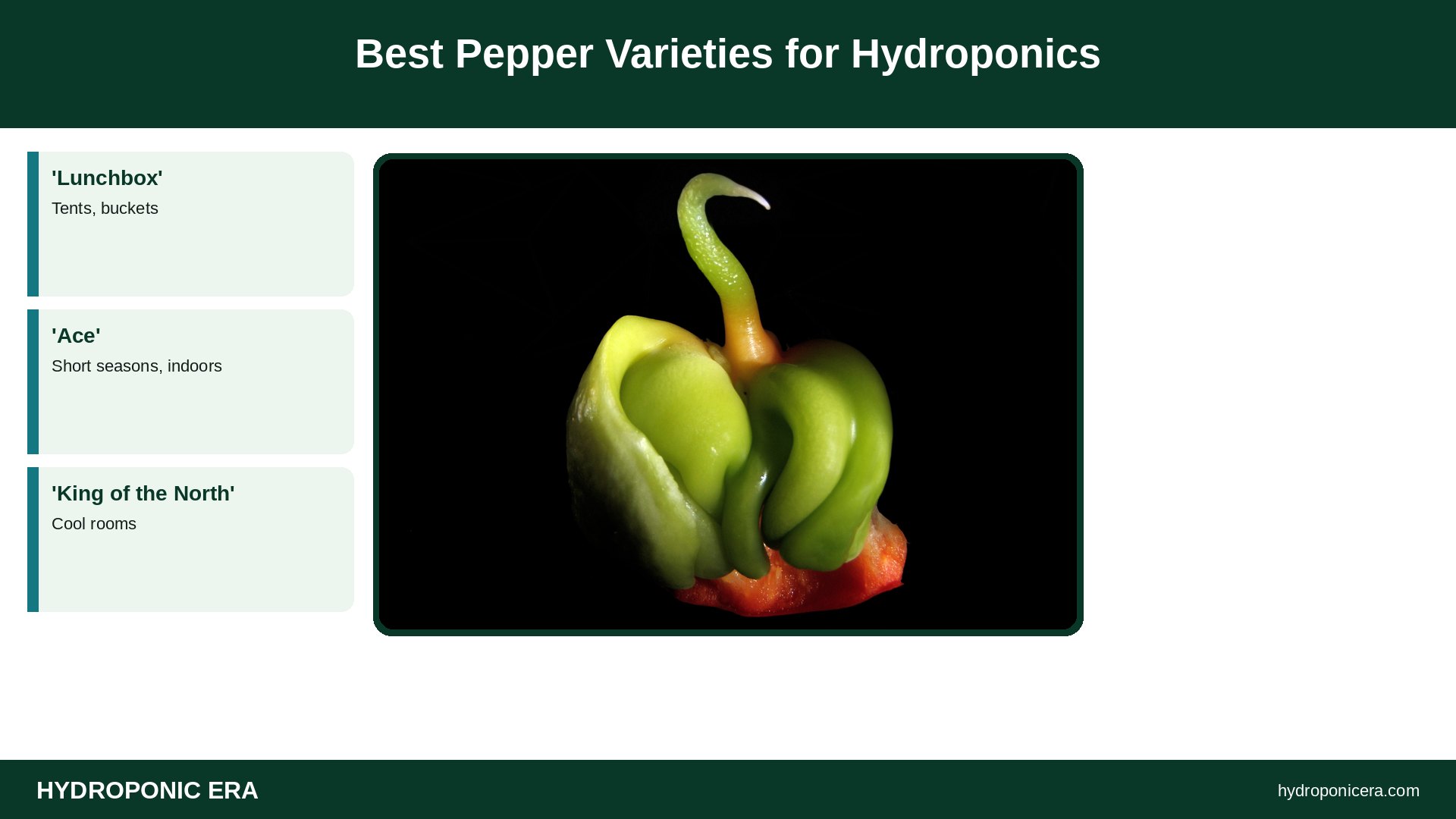
How to Pick the Best Pepper Varieties for Hydroponics

Peppers are slower than tomatoes and cucumbers. They need warm roots, strong light, and time. The best variety is the one that fits your space and finishes before the plant becomes too big for your light. Look at three numbers on the seed packet: mature height, days to maturity, and fruit size. Smaller fruit sets more readily under LEDs.
UF/IFAS notes that greenhouse bell pepper growers use specialized hybrids trained to two stems on a high trellis. These are excellent but demand space, a long season, and high light. Home growers usually get more peppers per watt from compact types.
Sweet Peppers for Indoor Systems
- ‘Lunchbox’: small, sweet, colorful snacking peppers that keep coming for months.
- ‘Ace’: one of the earliest bells, sets fruit even in cool conditions.
- ‘Mini Belle’: small, round bells on a short plant.
- ‘Carmen’: an Italian frying pepper that turns red early and tastes sweet.
- ‘Shishito’: mild, thin-walled, and very productive; most fruit is not hot.
For full growing details see how to grow peppers hydroponically.
Hot Peppers for Hydroponics

Hot peppers are often easier than bells because they set lots of small fruit. Jalapeños are quick and forgiving. ‘Thai Hot’ and other ornamental-type peppers stay tiny and work in countertop kits. Cayenne and serrano produce heavily for drying. Habaneros and superhots take longer, often 90–120 days from transplant, and need warmth. See hot peppers hydroponically.
Best Pepper Varieties for Hydroponics in Greenhouses
In a heated greenhouse with Dutch buckets or slabs, blocky greenhouse bell hybrids in red, yellow, and orange give the highest value per plant. They are trained to two or three stems and can grow taller than 6 feet in a long season. Look for resistance to tobamoviruses, which spread easily in recirculating water. See Dutch bucket hydroponics.
Growing Conditions for Any Pepper
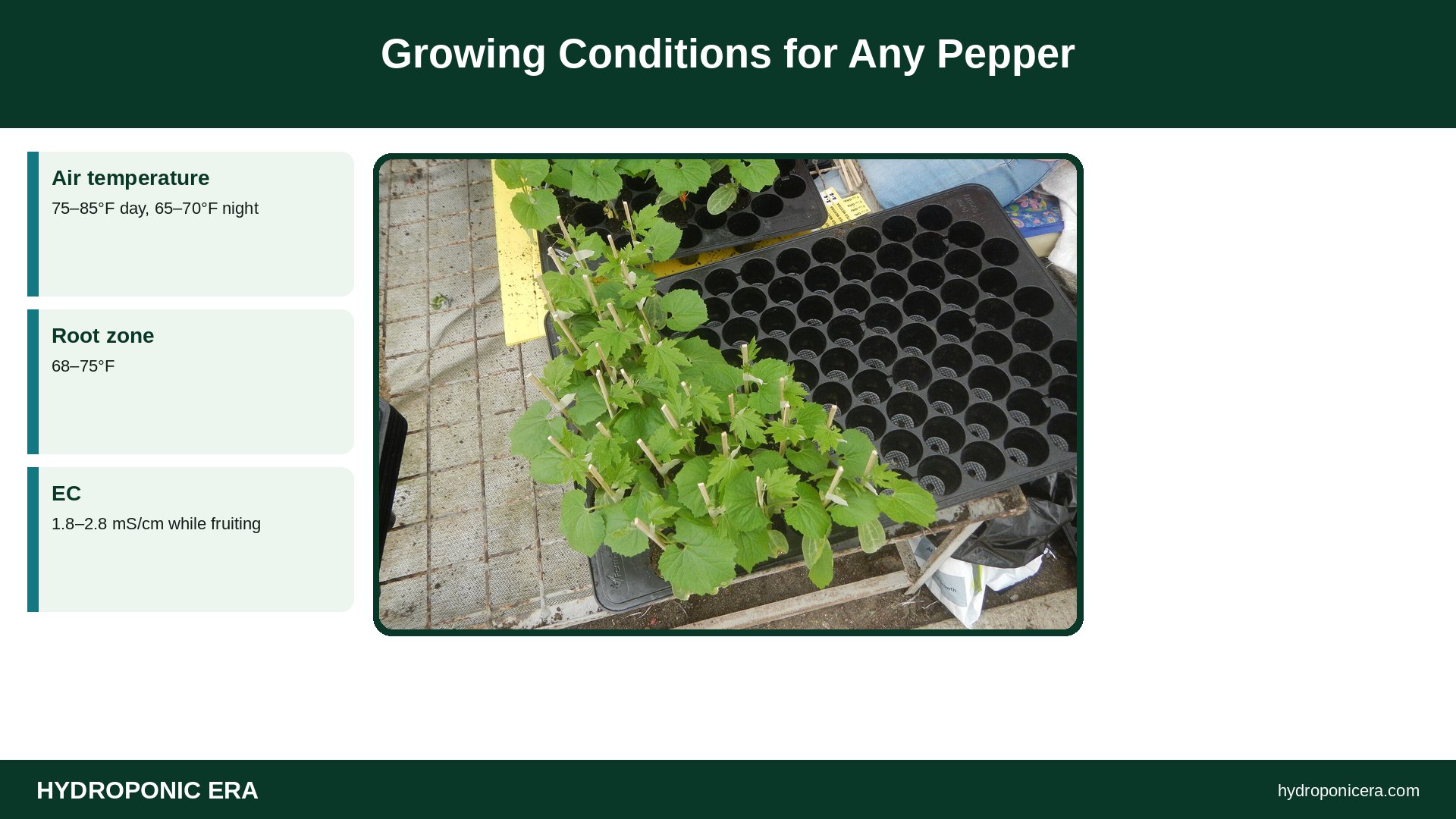
| Factor | Target |
|---|---|
| Air temperature | 75–85°F day, 65–70°F night |
| Root zone | 68–75°F |
| EC | 1.8–2.8 mS/cm while fruiting |
| pH | 5.8–6.3 |
| Light | 14–16 hours, high intensity |
See nutrients for peppers and the hydroponic ppm chart.
Pollination and Fruit Set
Peppers are self-pollinating, and flowers often set fruit without help. Indoors, a fan or a gentle shake of the plant each day improves fruit set. Flowers drop when nights fall below about 60°F or days exceed about 90°F, and when plants are stressed by low light or uneven feeding. See blossom drop.
Matching Pepper Type to System
- Countertop kit: ‘Thai Hot’ or other dwarf ornamentals.
- Kratky tub: compact sweet or hot types; use a large tub because peppers grow for months.
- DWC bucket: ‘Lunchbox’, jalapeño, shishito, ‘Ace’.
- Dutch buckets: greenhouse bell hybrids or any large type.
- NFT: possible for compact types, but roots can block channels.
Common Problems by Variety Type
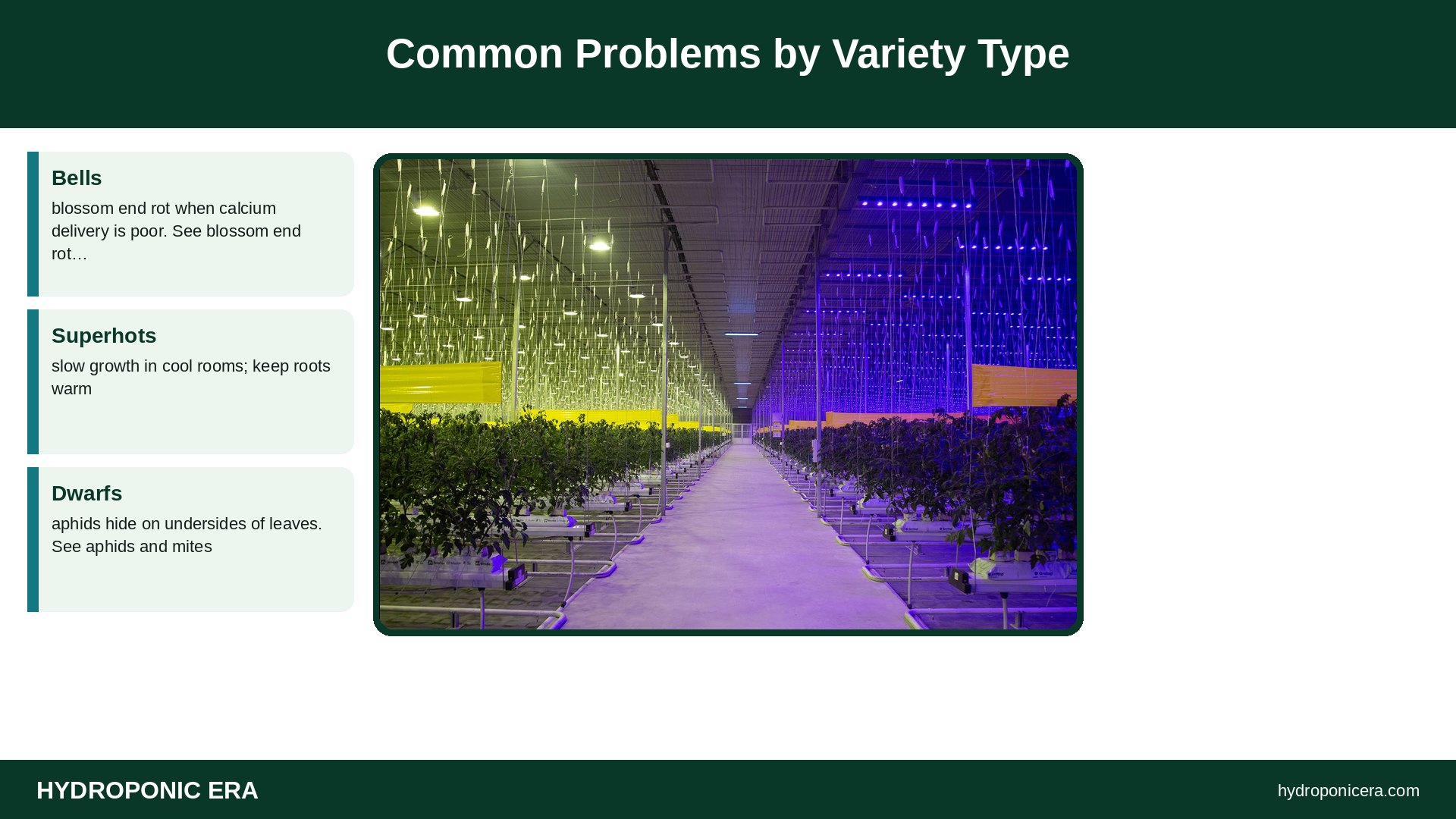
- Bells: blossom end rot when calcium delivery is poor. See blossom end rot and calcium nitrate in hydroponics.
- Superhots: slow growth in cool rooms; keep roots warm.
- Dwarfs: aphids hide on undersides of leaves. See aphids and mites.
- All types: leaf curl from heat or light stress.
Starting Pepper Seeds
Pepper seeds germinate slowly, often in 7–14 days, and best at 80–85°F. Use a heat mat under rockwool cubes and keep them evenly moist. Start feeding at quarter strength once the first true leaves appear. Transplant at 4–6 weeks. Start peppers 2–3 weeks before tomatoes if you want them to fruit at the same time. See heat mats and domes.
Yields You Can Expect
A compact snacking or jalapeño plant in a 5-gallon bucket under a good LED can give dozens of peppers over 4–6 months. A greenhouse bell can produce 8–12 large fruits or more over a long season. Pick the first fruits early, even green, to encourage the plant to set more. Colored bells take an extra 2–4 weeks to ripen from green.
Testing the Best Pepper Varieties for Hydroponics at Home
Pick one sweet and one hot variety for your first crop. Grow both in the same system, track days to first harvest and total fruit, and taste them. The best pepper varieties for hydroponics in your home are the ones that fit your light and get eaten. Save notes for the next season.
Support and Pruning by Variety
Compact pepper varieties usually need only a small stake once fruit loads up. Greenhouse bells need strings or a trellis and are pruned to two or three main stems. Removing the first flower (the “crown set”) on large varieties lets the plant grow bigger before fruiting. On compact varieties, leave it. Remove yellow lower leaves and anything touching the water. See trellising and pruning.
FAQs
What are the best pepper varieties for hydroponics beginners?
Jalapeño, shishito, and ‘Lunchbox’ snacking peppers.
Can bell peppers grow hydroponically?
Yes. Early bells like ‘Ace’ work indoors; greenhouse hybrids need more space.
What pepper fits an AeroGarden?
Small ornamental types such as ‘Thai Hot’.
Do peppers need pollination indoors?
They self-pollinate, but a fan or shake improves fruit set.
What EC do peppers need?
About 1.8–2.8 mS/cm while fruiting.
Why are my pepper flowers falling off?
Heat, cold nights, low light, or uneven feeding.
Sources
- UF/IFAS Extension — Pepper Production
- UF/IFAS Extension — A Summary of N, P, and K Research with Pepper in Florida
- UF/IFAS Extension — Crop Production — Florida Greenhouse Vegetable Production Handbook
- Photo credits (Wikimedia Commons, edited with titles): Baby Bell pepper ”Capsicum annuum” by Brocken Inaglory (CC BY-SA 3.0); Pepper No. 30 by Edward Weston (Public domain); PepperFlower4K by Bst9jkj (CC0); 5670Farm Ready Seedling Facility East West Seed Philippines 20 by Judgefloro (CC0); Greenhouse in Kazakhstan by Gakon Netafim (CC BY-SA 4.0)