
Quick Answer
Blossom end rot (BER) in hydroponics is a dark, sunken lesion on the blossom end of tomatoes, peppers, and some other fruit—caused by localized calcium shortage in the fruit, usually from uptake and transport problems, not merely an empty calcium bottle. Unstable moisture delivery, high EC, root stress, extreme humidity patterns, and high growth rates all raise BER risk. Stabilize irrigation and moderate salts before endlessly adding calcium supplements.
Use with the tomato guide, peppers guide, Ca/Mg guide, Dutch bucket guide, and EC/TDS guide.
Key Takeaways
- Virginia Cooperative Extension’s tomato home-garden publication discusses blossom end rot as a calcium-related disorder influenced by watering consistency in soil systems—the transport logic carries into hydroponics.
- UF/IFAS greenhouse vegetable fertilizer management (CV265) frames nutrient management for fruiting crops in protected culture.
- Calcium moves with water flow; fruits transpire less than leaves, so they lose the competition when transport is disrupted.
- High EC reduces water uptake and can worsen BER even when calcium is present in the recipe.
- Root damage, oxygen failure, and wild dry/wet cycles in media systems are classic BER setups.
- Damaged fruit will not heal; prevention protects the next fruits.
- pH extremes can limit nutrient availability—measure before guessing.
Related HydroponicEra guides
- Hydroponic tomatoes
- Hydroponic peppers
- Calcium/magnesium deficiency
- Tip burn in hydroponics (related calcium transport theme in leafy crops)
- Indoor pollination
- Nutrient lockout
What Blossom End Rot Looks Like
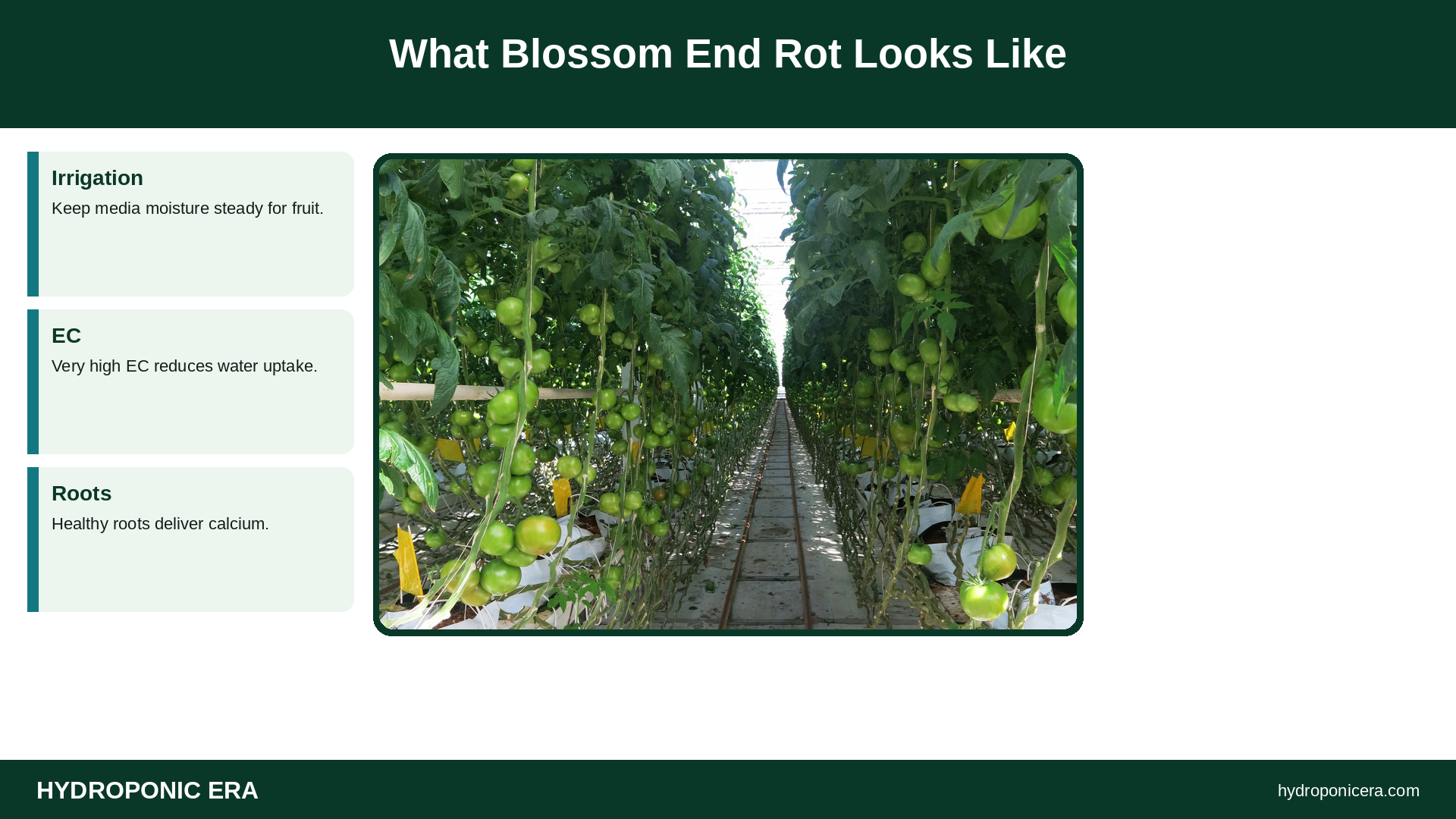
BER typically starts as a water-soaked spot on the blossom end that turns dark brown to black and sinks. It can appear on green or ripening fruit. Secondary microbes may invade damaged tissue, but the initiating problem is physiological.
Do not confuse BER with sunscald (bleached patches on sun-exposed shoulders) or with blossom drop from heat/pollination issues. Pollination problems prevent fruit set; BER damages fruit that already set. See HydroponicEra’s indoor pollination article if flowers fail to set fruit at all.
Why Transport Matters More Than Folklore
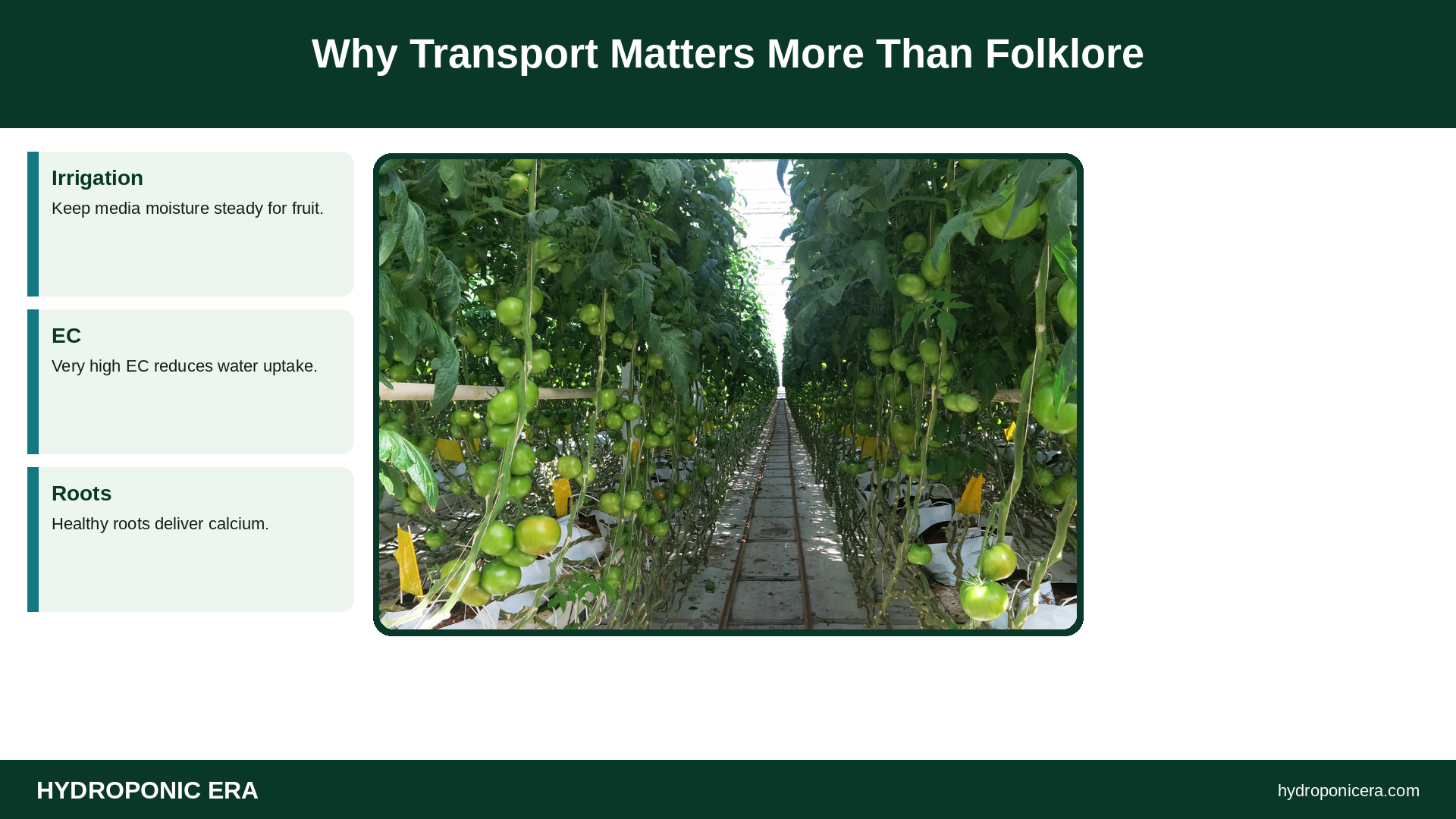
Calcium is not highly mobile inside the plant the way nitrogen is. Once deposited, it is not freely redistributed to fruits on demand. Fruits receive calcium primarily through the xylem stream tied to water movement. Anything that interrupts steady water supply to developing fruit—root stress, oscillating moisture in coco/rockwool, extreme EC—raises BER risk.
NC State’s plant nutrient handbook and Penn State’s hydroponic nutrition overview describe calcium’s structural role. University of Florida greenhouse vegetable fertility materials remind growers that balanced nutrition and environment interact. None of these sources replace measuring your own EC, pH, and irrigation consistency.
Prevention Framework for Hydroponic Fruiting Crops
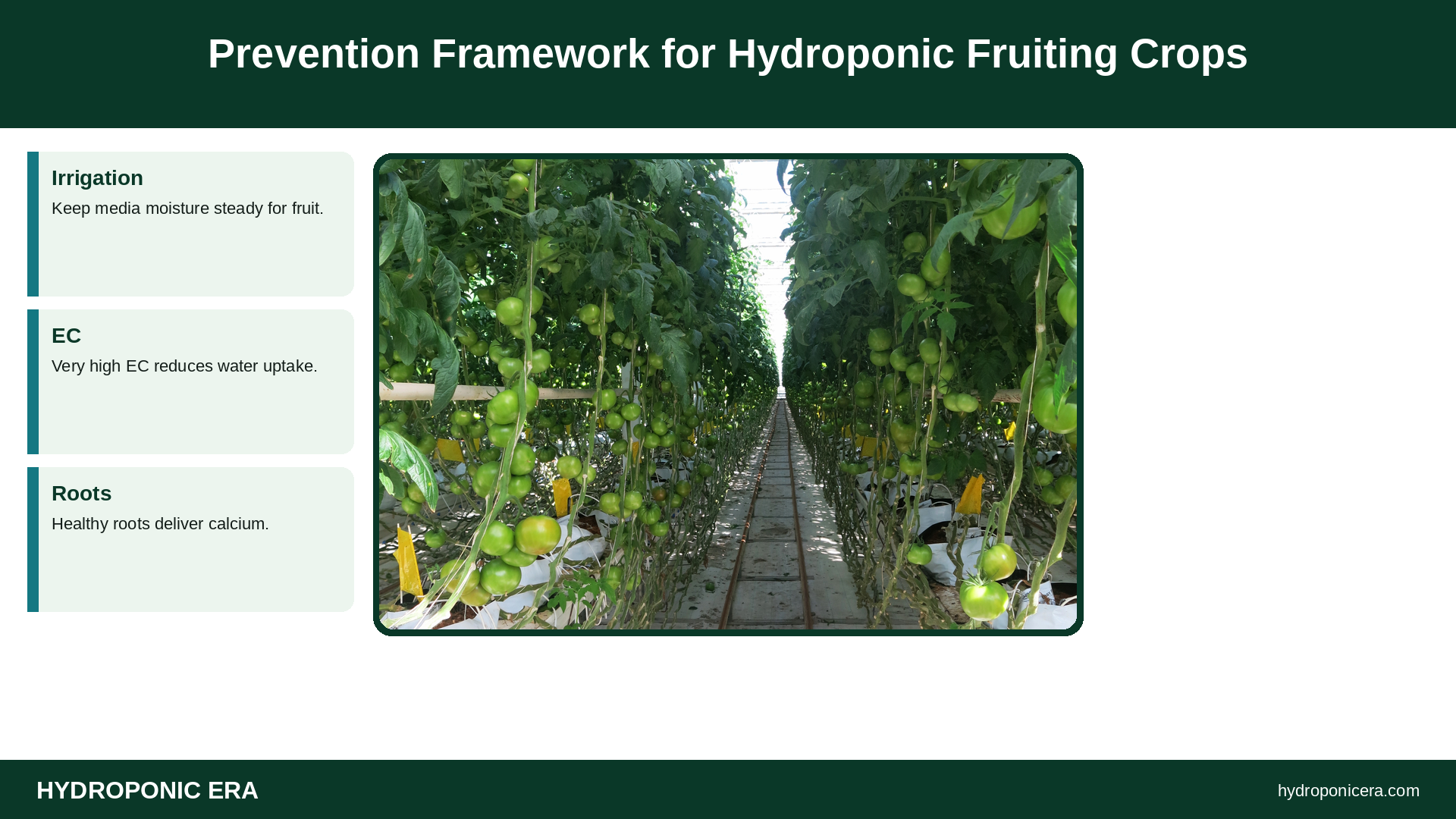
- Choose a system with stable root moisture for tomatoes/peppers—Dutch bucket or well-managed drip/media often suits fruiting better than tiny passive jars.
- Keep irrigation consistent in media: avoid hard drybacks followed by floods during early fruit sizing.
- Moderate EC during early fruit development; pushing salts “for flavor” too early can backfire on BER.
- Maintain healthy roots—oxygen, temperature, hygiene (DO, reservoir temp).
- Hold pH in a soilless band (~5.5–6.5 per Oklahoma State hydroponic guidance) with calibrated meters.
- Use a complete fertilizer that includes calcium; do not rely on myths about random foliar sprays as the only plan.
- Manage canopy humidity extremes that either stall transpiration or stress plants—steady beats wild swings.
- Remove BER fruit to reduce mess and focus energy on healthy fruit—cosmetic damage remains.
Cause and Response Table
| Factor | How it raises BER risk | Response |
|---|---|---|
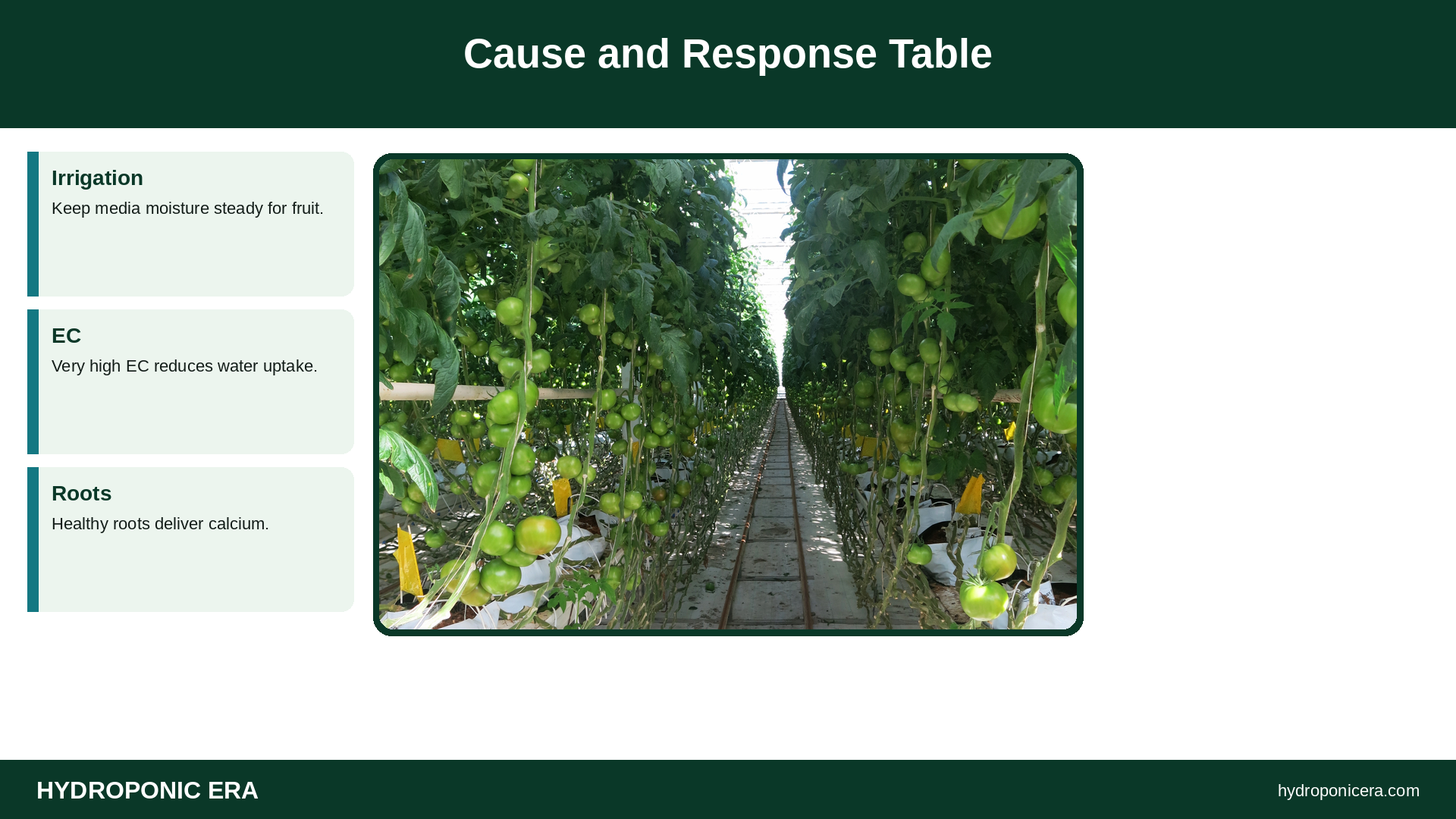
| High EC | Reduces water uptake | Dilute; review feed chart vs stage |
| Irrigation swings | Interrupts Ca delivery to fruit | Stabilize timer/drip; check emitters |
| Root disease / low O₂ | Uptake failure | Aerate; cool; sanitize between crops |
| pH out of range | Availability issues | Adjust gradually; calibrate meters |
| Excess nitrogen push | Very soft rapid growth can worsen disorders | Balance vegetative vigor |
| Damaged roots after transplant | Temporary supply gap | Gentler transplant; see seedlings guide |
Step-by-Step When BER Shows Up
- Confirm the lesion is on the blossom end pattern—not sunscald.
- Measure EC, pH, and reservoir temperature today.
- Inspect media moisture pattern across a full irrigation cycle.
- Inspect roots in a representative plant.
- Correct the biggest instability (EC or irrigation) first.
- Keep calcium in the complete program; avoid panic megadoses that unbalance other ions without fixing transport.
- Log which fruit clusters were affected for the next cycle’s environment tweaks.
Common Mistakes

- Only adding calcium sprays while EC stays extremely high
- Letting Dutch buckets dry hard between floods during fruit sizing
- Ignoring brown roots because “the leaves look green”
- Blaming seeds exclusively when irrigation is chaotic
- Running fruiting crops in undersized passive systems with no oxygen plan
BER and Tip Burn Share a Theme
Leaf tip burn and fruit blossom end rot are different symptoms, but both often involve calcium distribution under rapid growth and environmental stress. If your lettuce tips burn and your tomatoes BER in the same room, look for shared themes: high EC, poor airflow or wild humidity, and root stress. The HydroponicEra tip-burn article covers the leafy side of this story.
Virginia Tech’s tomato publication and DLI materials help you think in whole-plant terms: light drives growth; growth without transport capacity creates disorders. Measure light and solution, then adjust.
Deeper Practical Notes
Fruiting hydroponic crops reward steady hands. If your irrigation timer fails overnight and media goes bone dry, then floods, you created a classic BER setup even with perfect fertilizer labels. Check emitters weekly for clogs. Dutch bucket growers should confirm each bucket drains and refills as designed.
Nitrogen management influences canopy softness. Extremely lush vegetative growth under high N and high light can increase disorder risk when water relations wobble. UF/IFAS greenhouse vegetable fertility framing encourages balanced thinking rather than single-element obsession.
Keep records of which truss or fruit set showed BER. Patterns after a heat wave or after an EC bump teach faster than memory. Share notes across crop cycles—especially if multiple people manage the room.
Pollination stress and BER can appear in the same season without being the same problem. If fruit never sets, fix pollination. If fruit sets then rots at the blossom end, fix calcium transport factors. Use both HydroponicEra guides.
FAQs
Can BER happen if my fertilizer contains calcium?
Yes. Presence in the bottle does not guarantee delivery into fruit tissue under stress.
Should I discard the whole plant?
Usually no. Fix environment and keep harvesting healthy fruit. Remove badly rotted fruit.
Does BER mean I have a disease outbreak?
BER starts as a physiological disorder. Rot organisms may colonize afterward. Still sanitize tools and avoid smearing soft rot through the canopy.
Is BER more common in peppers or tomatoes?
Both can show it. Large fruited types under aggressive feeding and unstable irrigation are frequent candidates.
Will lowering lights stop BER?
Extreme light/heat can worsen stress, but the primary levers are usually irrigation stability, EC, and roots—not simply dimming into unproductive territory.
Sources
- Virginia Cooperative Extension — 430-010: Tomatoes in the Home Garden
- University of Florida IFAS — CV265: Fertilizer Management for Greenhouse Vegetables
- NC State Extension — Soils and Plant Nutrients
- Penn State Extension — Hydroponics Systems and Principles of Plant Nutrition
- Oklahoma State University Extension — Hydroponics
- Oklahoma State University Extension — Electrical Conductivity and pH Guide for Hydroponics
- Penn State Extension — Hydroponics Systems and Principles of Plant Nutrition
- Virginia Cooperative Extension — SPES-720: Calculating and Using Daily Light Integral (DLI)