
Hydroponic tomatoes reward patience more than speed. If you already grow lettuce in a jar or tower, you already know how to mix a reservoir and read a meter. Learning how to grow tomatoes hydroponically means adding stronger light, plant support, a fruiting nutrient plan, and a simple pollination habit.
This beginner’s guide explains what makes fruiting harder than salad greens, which varieties fit a home room, which systems work, and how to manage light, EC, pH, and pollination without hype. You will also see the problems that show up first—especially blossom end rot and yellow leaves.
You do not need a commercial greenhouse on day one. You need one healthy plant, enough root volume, and a calm weekly routine. That is how a first crop stays practical instead of overwhelming.
Table of contents
- Why Hydroponic Tomatoes Are Harder Than Lettuce
- Best Varieties of Hydroponic Tomatoes for Home Growers
- Systems That Work for Hydroponic Tomatoes
- Light and Support for Hydroponic Tomatoes
- Nutrients, EC, and pH for Hydroponic Tomatoes
- Pollination for Hydroponic Tomatoes Indoors
- Common Problems with Hydroponic Tomatoes
- Frequently Asked Questions About Hydroponic Tomatoes
- Final Thoughts
Why Hydroponic Tomatoes Are Harder Than Lettuce

Lettuce is a leaf crop. A tomato is a fruiting crop. That single difference changes almost every part of the setup.
Leafy greens finish in weeks, stay compact, and do not need pollination. Fruiting plants run for months. They want more light intensity, more root space, a different nutrient balance as flowers form, and something to climb. They also punish a neglected reservoir faster because a long season leaves more time for salt buildup and pH drift.
University extension work on soilless fruiting crops makes the same split beginners notice at home: tomatoes and peppers need stronger management than salad greens. If your first system was a small countertop kit built for herbs, treat fruiting as the next project, not an add-on plant in the same lid.
Start with greens if you are brand new. When meters, water changes, and light height feel routine, move one tomato into its own bucket so it does not rewrite the diet for every lettuce plant nearby. That is the calm path into hydroponic tomatoes.
Best Varieties of Hydroponic Tomatoes for Home Growers
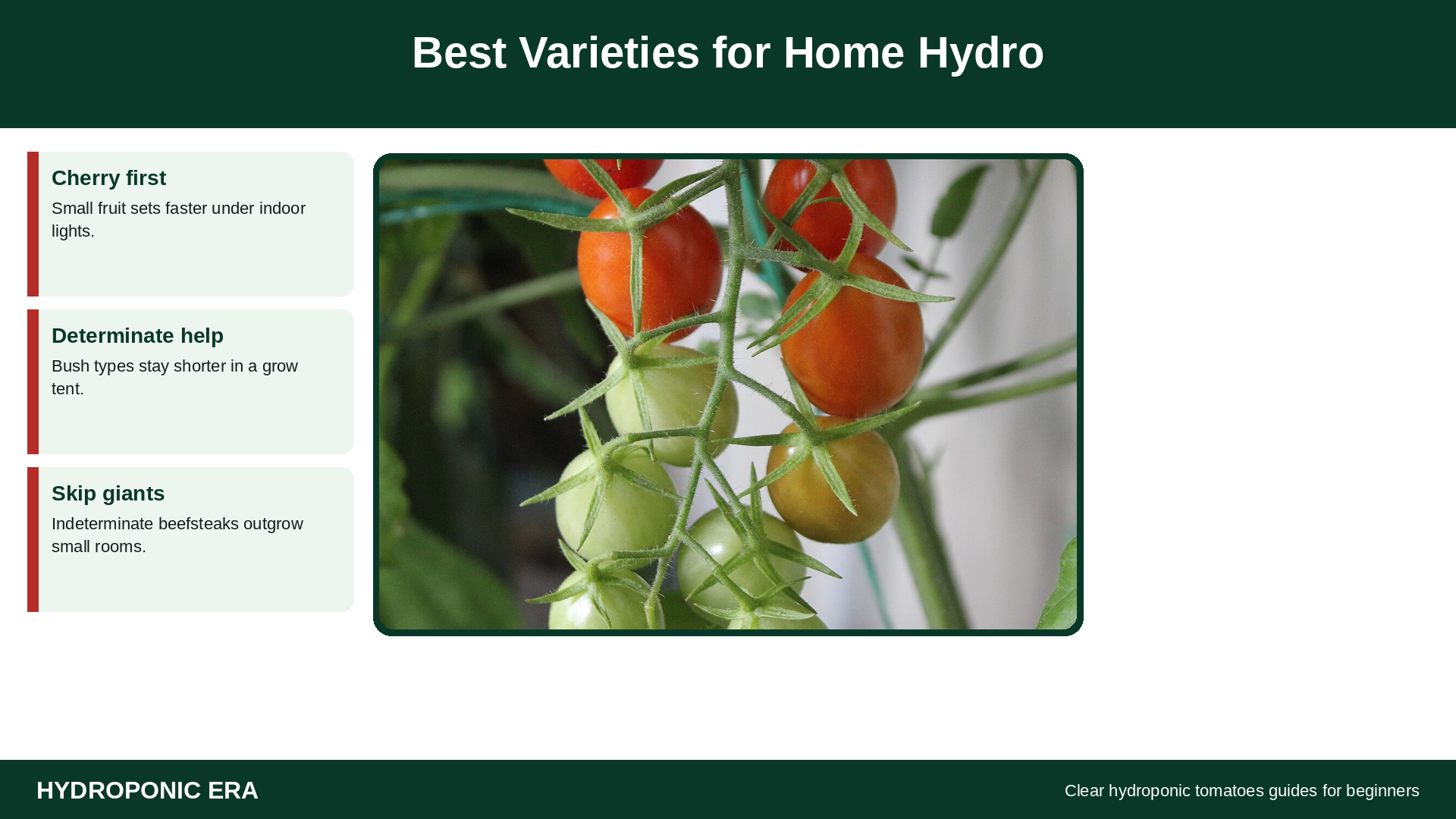
Variety choice decides whether the plant stays manageable indoors. Look for compact, determinate, or patio-labeled plants, and prefer cherry or grape types for a first crop.
Good beginner choices include:
- Cherry and grape cultivars with short internodes
- Determinate or “patio” bush types for tents and balconies
- Disease-resistant greenhouse types if your seed packet lists them
Large indeterminate beefsteak vines can work in a tall greenhouse with Dutch buckets and a trellis. They are a poor first teacher in a spare bedroom. Small fruit sets earlier under limited indoor light, so cherry types usually teach flowering and harvest sooner.
Buy seed or starts labeled for containers or greenhouse production when you can. Avoid the tallest field varieties unless you already have height, airflow, and pruning confidence. Matching the variety to the room is half of how to grow tomatoes hydroponically successfully.
Systems That Work for Hydroponic Tomatoes
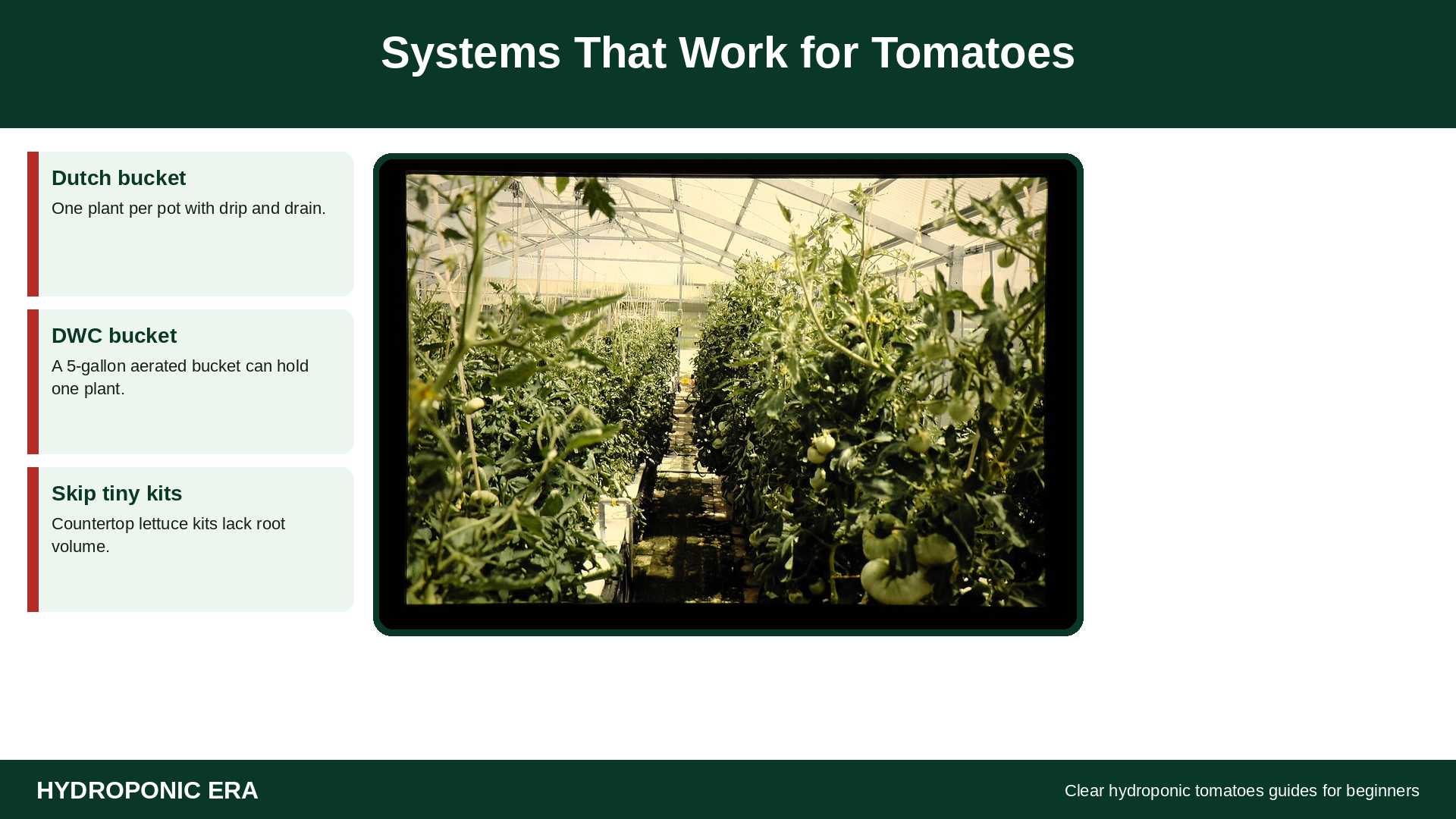
Fruiting plants need root volume and support. Tiny decorative kits rarely offer either.
Dutch bucket (Bato bucket). One plant sits in an inert medium such as clay pebbles or perlite. A drip line feeds the pot, and excess solution drains back to a reservoir or to waste. This is a classic home and greenhouse method because each plant has its own pot and stake.
Deep water culture (DWC). A single plant in a 5-gallon (about 19 L) bucket with a strong air stone can work. Keep the lid light-proof, the solution cool, and the stem supported above the net pot. Virginia Tech’s hydroponic crop comparisons show tomatoes managed with fruiting-crop EC and pH rather than leafy-green settings.
What to skip at first. Ultra-small desktop kits, crowded tower pockets meant for lettuce, and shared lids that mix tomatoes with salad greens. Fruiting plants shade neighbors and often want a stronger feed. Focus on a bucket or Dutch-bucket layout before you buy more gadgets.
One plant per reservoir is the calmest learning setup. Expand only after you have harvested once. That keeps hydroponic tomatoes from turning into a crowded rescue project.
Light and Support for Hydroponic Tomatoes

Windowsill light that keeps basil alive is usually too weak for reliable fruit set. Fruiting needs higher intensity and a long, steady day length.
Use a full-spectrum LED sized for the canopy, hang it at the maker’s recommended distance, and run about 14 to 18 hours indoors unless your room already gets strong sun. Raise the fixture as the plant grows so leaves do not bleach. For fixture choice and coverage basics, see our guide to the best grow lights for hydroponics.
Support the stem early. Add a stake, string trellis, or cage while the plant is still young. Prune suckers on indeterminate vines if you want a single leader. Remove yellow lower leaves that touch wet media. Airflow from a small oscillating fan reduces stagnant humidity around flowers and fruit.
Without enough light and support, plants stretch, flop, and set poorly even when the reservoir numbers look fine. Strong light is non-negotiable for hydroponic tomatoes.
Nutrients, EC, and pH for Hydroponic Tomatoes
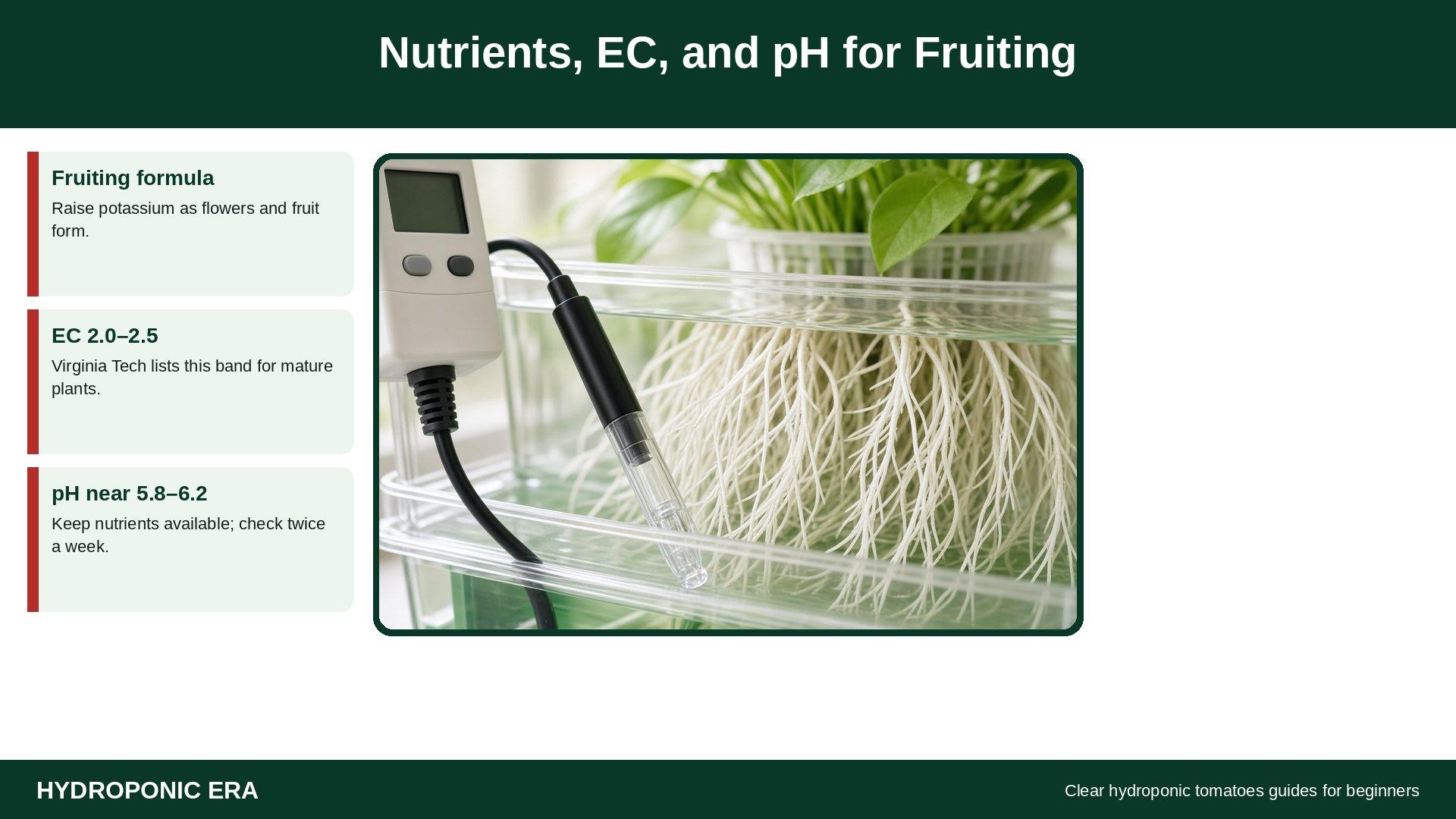
Use a complete hydroponic formula, not garden soil fertilizer. Many growers start on a vegetative mix, then shift toward higher potassium as buds and fruit appear. Always follow the label for your two- or three-part nutrients, and keep calcium available to reduce blossom end rot risk.
Practical targets many home growers use:
- Seedling to early vegetative EC: about 1.3 to 1.8 mS/cm
- Mature fruiting EC: about 2.0 to 2.5 mS/cm (Virginia Tech lists this band for mature tomato and pepper trials)
- pH: commonly held near 5.5 to 6.5; many tomato recipes aim around 5.8 to 6.2
Ohio State University’s greenhouse tomato nutrient guidance stresses that solution pH affects nutrient availability, and that root-zone pH matters as much as the drip reading. Check EC and pH at least twice a week in a recirculating bucket. Top up with plain water when the level drops, then remixed feed when EC climbs or the tank looks tired.
For meter habits and safe adjustments, use how to control pH in hydroponics for beginners. Steady numbers beat dramatic daily swings. Balanced nutrition is what lets hydroponic tomatoes finish clean fruit instead of soft, stressed clusters.
Pollination for Hydroponic Tomatoes Indoors
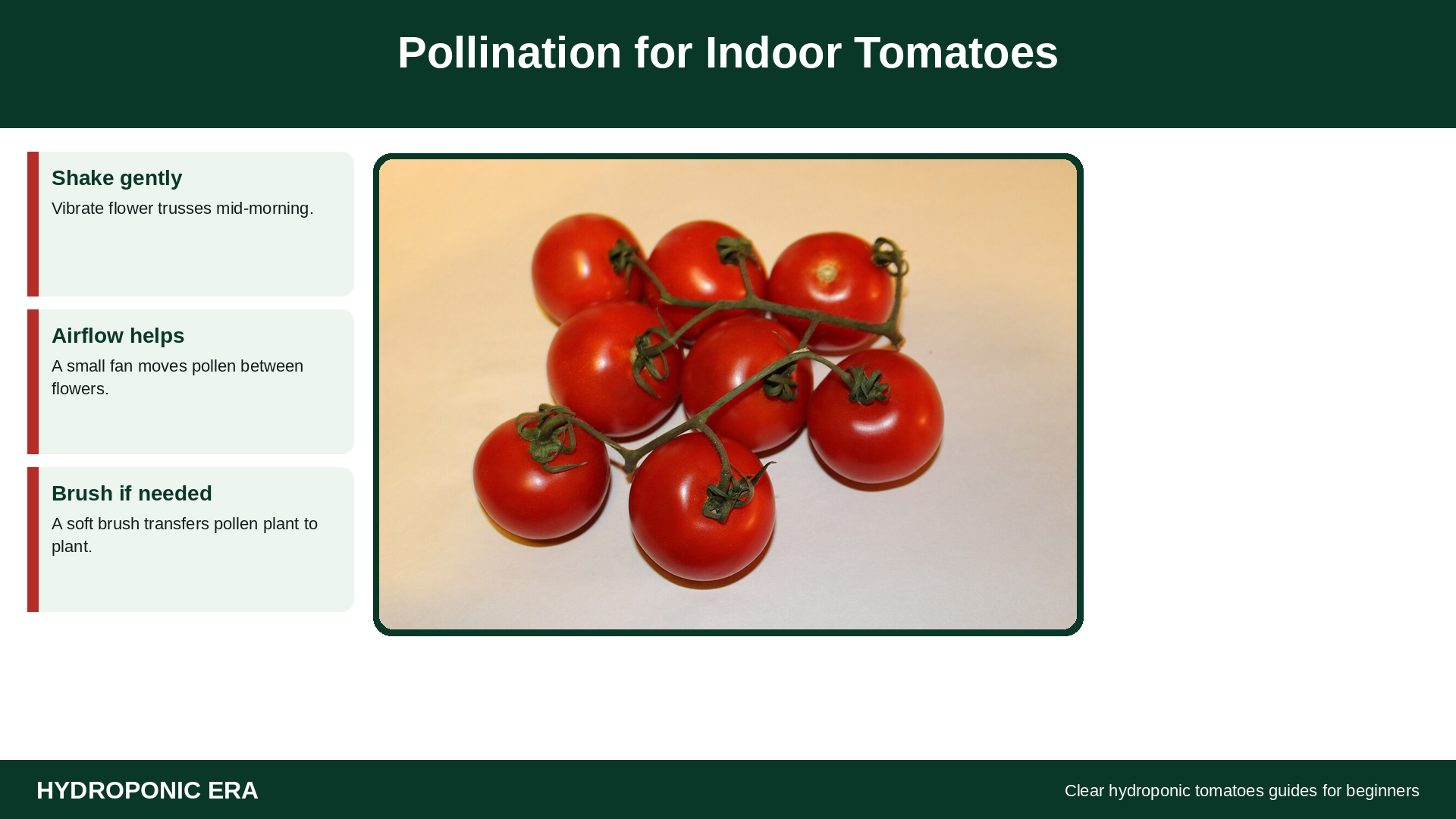
Tomato flowers are mostly self-fertile, but indoor rooms lack wind and bees. Pollen still needs to move inside the flower for fruit to form.
Mid-morning, when flowers are open and the room is warm, gently shake each flowering truss or tap the support string. A soft artist’s brush or electric toothbrush on the flower stem also works. Keep a fan moving air across the canopy so pollen does not sit still.
If flowers drop without fruit, check light intensity first, then humidity and nutrition. Weak light is a common reason plants bloom but fail to set. Peppers have a similar indoor fruit-set routine; when you are ready for another fruiting crop, see how to grow peppers hydroponically.
Two minutes of pollination help each day often matters more than buying another gadget. Make it part of how to grow tomatoes hydroponically indoors.
Common Problems with Hydroponic Tomatoes
Blossom end rot shows as a dark, sunken patch on the flower end of the fruit. Extension educators link it to calcium delivery inside the fruit during uneven water supply—not simply “no calcium in the bottle.” Keep EC stable, avoid letting the reservoir swing from empty to overfull, maintain pH in range, and ensure your formula includes calcium. Damaged fruit will not heal; prevent the next cluster. Penn State Extension’s tomato production resources are a useful soil and soilless reference for disorder patterns.
Yellow leaves have several causes: nitrogen running low, EC too high, pH lockout, weak light, or old leaves naturally senescing. Read the pattern. Uniform pale new growth suggests a different issue than yellowing only on the oldest leaves. Walk through the checklist in why hydroponic leaves turn yellow before you dump the whole tank in a panic.
Other common issues include algae in clear reservoirs, root browning from low oxygen, and powdery mildew in still, humid air. Cover the tank, keep air stones working, and give leaves moving air. Catching problems early is easier than restarting a three-month plant.
Frequently Asked Questions About Hydroponic Tomatoes
Can beginners grow them indoors?
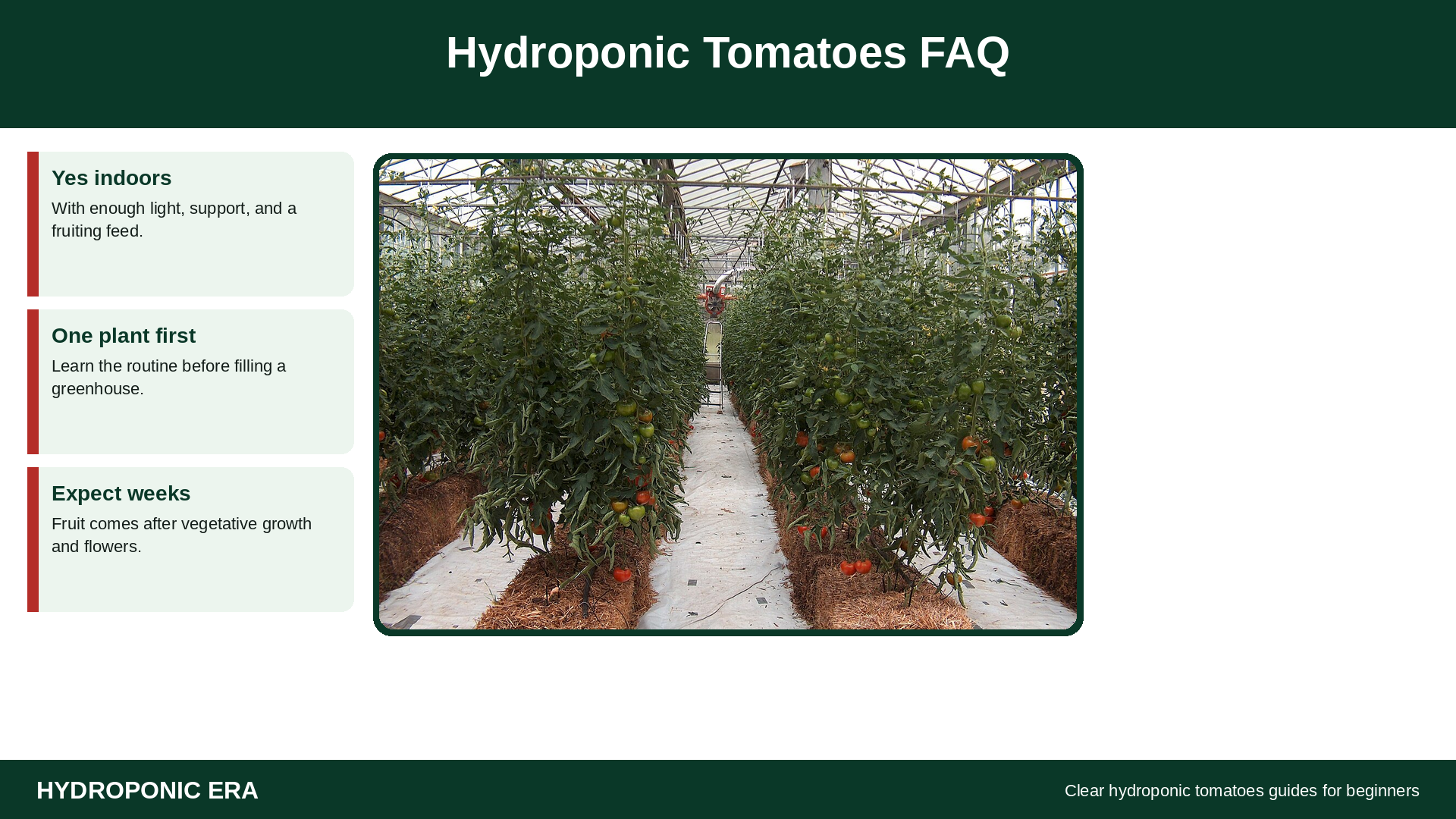
Yes, if you give them a real bucket or Dutch-bucket system, strong light, support, and time. Start with one compact plant.
How long until fruit?
Many cherry types flower within two to three months from transplant under good light, then ripen a few weeks later. Large fruit takes longer.
What EC should I use?
Many home and university references land near 2.0 to 2.5 mS/cm for mature plants, with a lower EC for seedlings. Watch the plant, not only the number.
Do indoor plants need pollination help?
Yes. Shake trusses or use a brush and a fan so pollen moves.
Are countertop kits enough?
Usually not. They lack root volume and support. Use DWC or Dutch buckets instead.
Should I mix tomatoes with lettuce in one tank?
Prefer separate reservoirs. Fruiting crops and greens often want different EC and potassium levels.
Related reading
- Aeroponics for Beginners
- Hydroponic Tower Garden
- Indoor Hydroponic Garden
- How Often to Change Hydroponic Water
- Hydroponic Garden: Beginner’s Guide
Final Thoughts
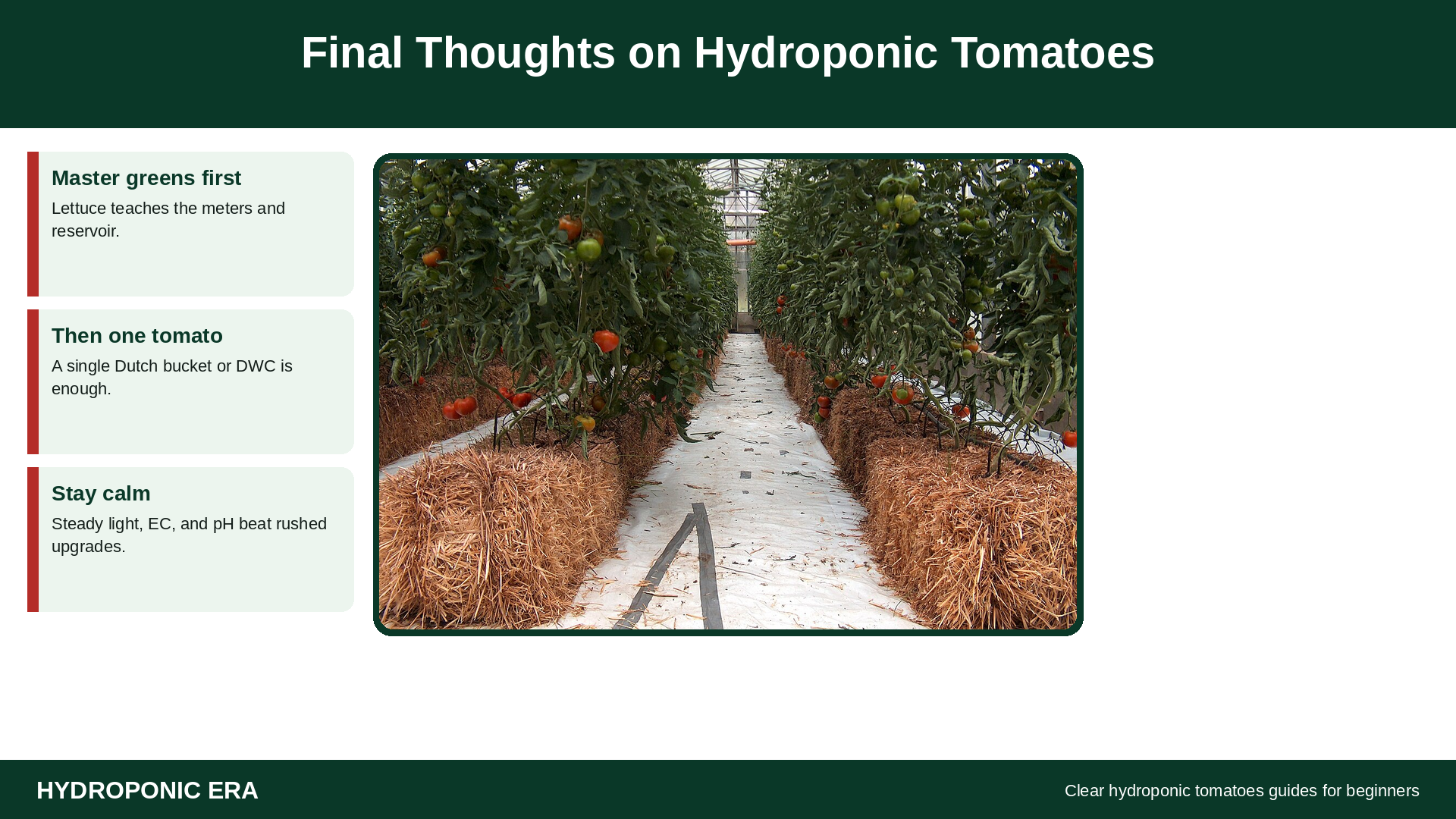
Fruiting in water is a fair second or third crop, not the easiest first lesson. Choose a compact variety, give it a bucket-scale system, strong light, a fruiting nutrient plan, and a simple pollination habit.
Keep notes on EC, pH, and harvest dates. One calm plant teaches more than a crowded shelf of struggling vines. When the first cluster ripens, you will understand how to grow tomatoes hydroponically with far less guesswork—and you will be ready to grow hydroponic tomatoes again with confidence.
External reading for deeper numbers: Virginia Tech’s hydroponic crop comparison (SPES-466), Ohio State University’s hydroponic greenhouse tomato nutrient fact sheet (HYG-1437), and Penn State Extension’s tomato production overview.
12 thoughts on “How to Grow Tomatoes Hydroponically: Complete Beginner’s Guide”