
Quick Answer
NFT Channel Clogs Dry-out Failures (NFT channel clogs dry-out failures) is the practical focus of this guide for home growers.
NFT channel clogs and dry-out failures happen when the thin nutrient film stops reaching roots—because of root mats, debris, bad slope, weak pumps, or film interruptions. Plants wilt fast in NFT because there is little buffer media. This is distinct from DWC dissolved-oxygen problems.
Related: NFT beginners, pump sizing, wilting, leaks.
Key Takeaways
- NFT depends on continuous thin-film flow—minutes of dry channel can wilt lettuce.
- Root mats at net pots are a top home-system clog source as plants mature.
- Slope and level channels matter; belly sections puddle or go dry.
- Filters and screen intakes protect pumps from debris.
- Oversized root systems in narrow channels need pruning or wider gullies.
- Pump failures and power blips are high-severity—consider backups.
- Leaks that drop film height mimic clogs—inspect returns.
- Design for access: you must be able to open channels and clear roots.
Related HydroponicEra guides
NFT Channel Clogs Dry-out Failures: How NFT Fails Differently
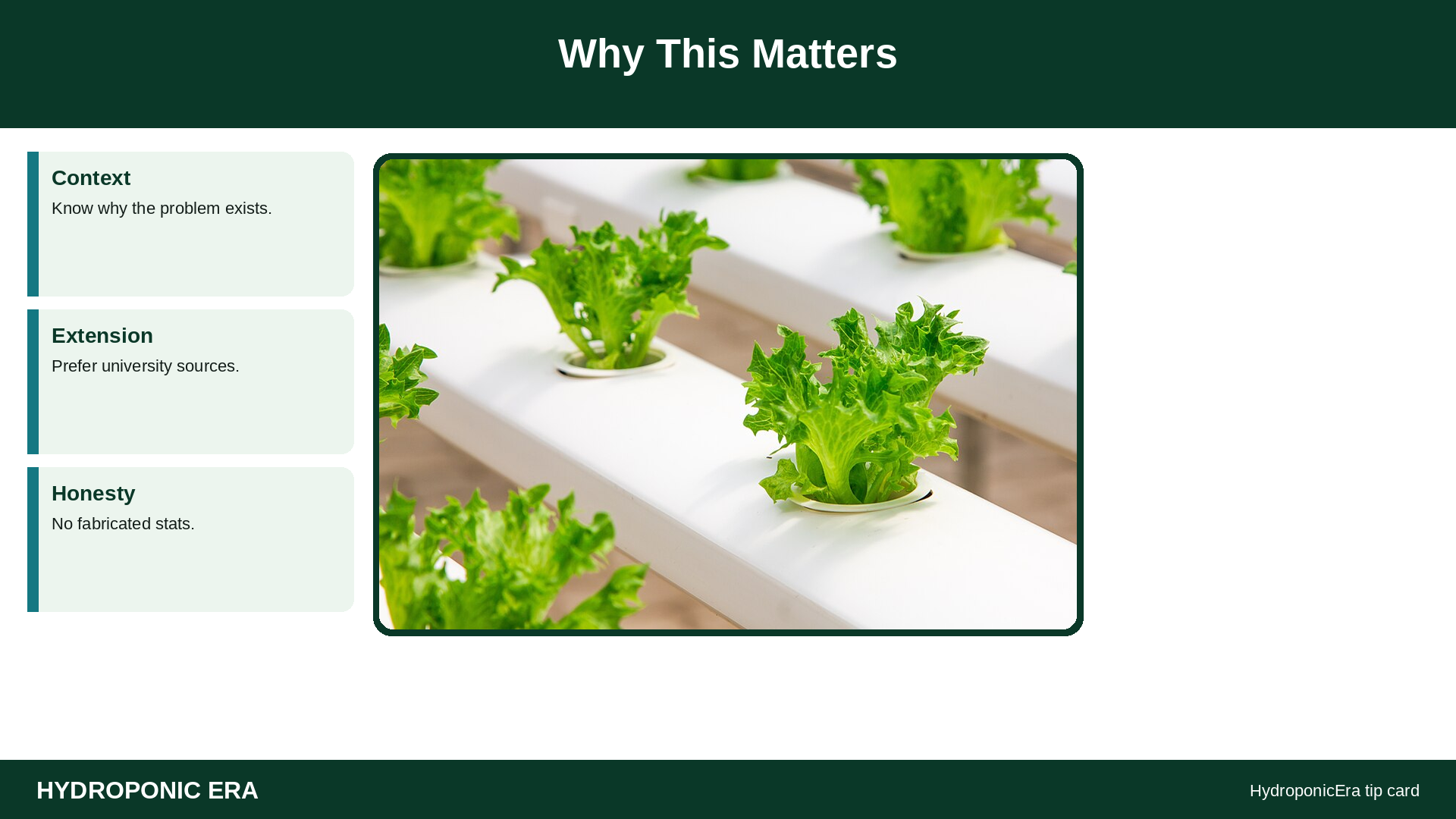
In NFT, roots sit in a shallow flowing film. If flow stops, roots dry quickly—wilting looks sudden compared with media systems. Oklahoma State and other hydroponic extension overviews emphasize matching system design to crop and management intensity. Home PVC gullies clog where roots dam the channel under net cups.
NFT Channel Clogs Dry-out Failures: Failure Mode Table
| Failure | Symptom | Fix |
|---|---|---|
| Root mat dam | Wilting downstream of a cup | Open channel; trim roots |
| Debris/slime | Uneven film; emitters spit | Clean; filter |
| Bad slope | Puddles + dry spots | Re-level; consistent fall |
| Weak pump | Whole-line wilt | Size pump; clear intake |
| Leak/return issue | Reservoir drop + dry film | Leak guide |
NFT Channel Clogs Dry-out Failures: Step-by-Step Recovery
- Confirm wilt is channel-dry vs root disease (roots still white?)
- Check pump, power, and intake screen immediately
- Open lids/gullies and clear root dams carefully
- Verify slope with a level—no mid-channel bellies
- Flush lines to remove sludge
- Restore flow and watch recovery within hours for mild dry-outs
- Add strainer discipline and scheduled root checks on mature crops
- Consider fewer plants per channel or wider gullies next build
- Add backup power/alarm if outages are common
- Log which net-pot positions clog first
NFT Channel Clogs Dry-out Failures: Common Mistakes
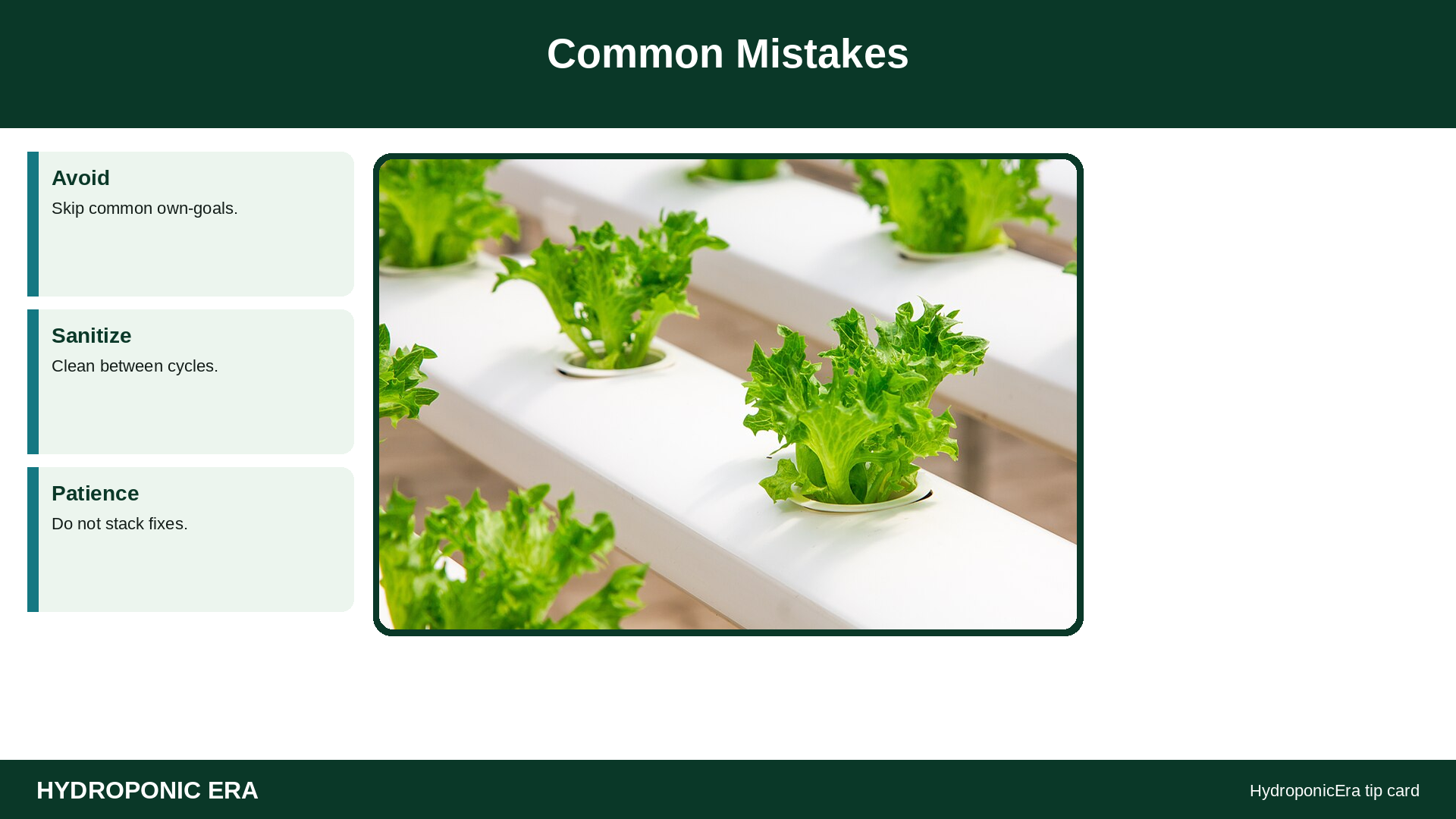
- Running NFT like a set-and-forget DWC tub
- Never opening channels until plants collapse
- Ignoring slope because “it looked fine”
- No screen on pump intakes
- Planting large fruiting crops in tiny NFT troughs without a plan
NFT Channel Clogs Dry-out Failures: Troubleshooting Table
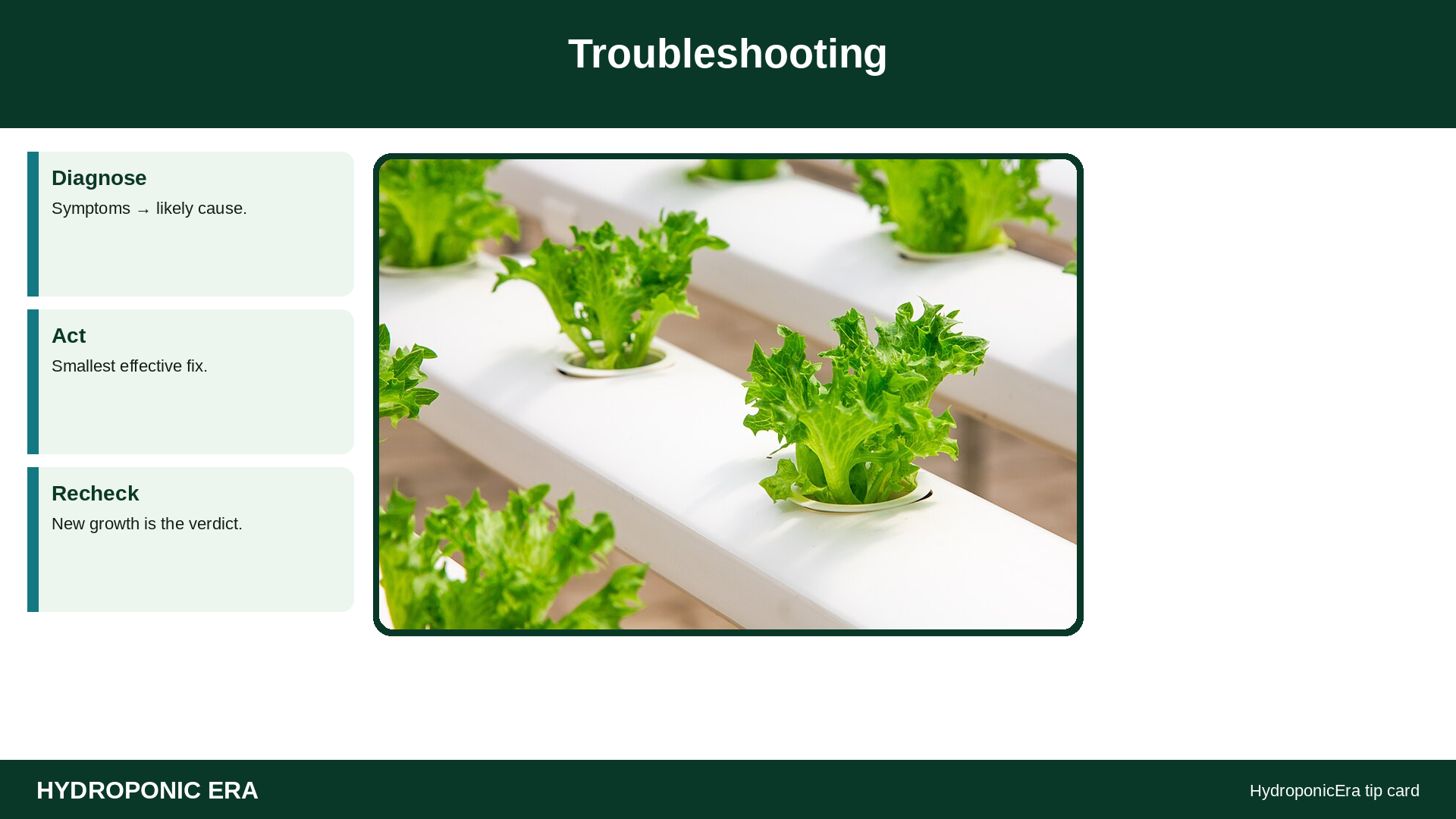
| Observation | Likely | Next |
|---|---|---|
| One plant wilted, neighbors OK | Local root dam | Clear at that cup |
| Entire line wilted | Pump/power/main clog | Pump + inlet |
| Film only on one side | Twist/level issue | Re-seat channel |
| Roots brown + slime | Disease overlap | Pythium guide |
Prevention Framework
Prevention: correct slope → screened intakes → accessible channels → root maintenance → pump reliability/backup. Pair with NFT, pumps, and backup power.
What to Check Before You Escalate
- Pump running?
- Channel opened and inspected?
- Slope checked with a level?
- Intake screened?
- Root mats trimmed?
- Leak ruled out?
NFT Reliability Kit: Slope, Screens, and Access
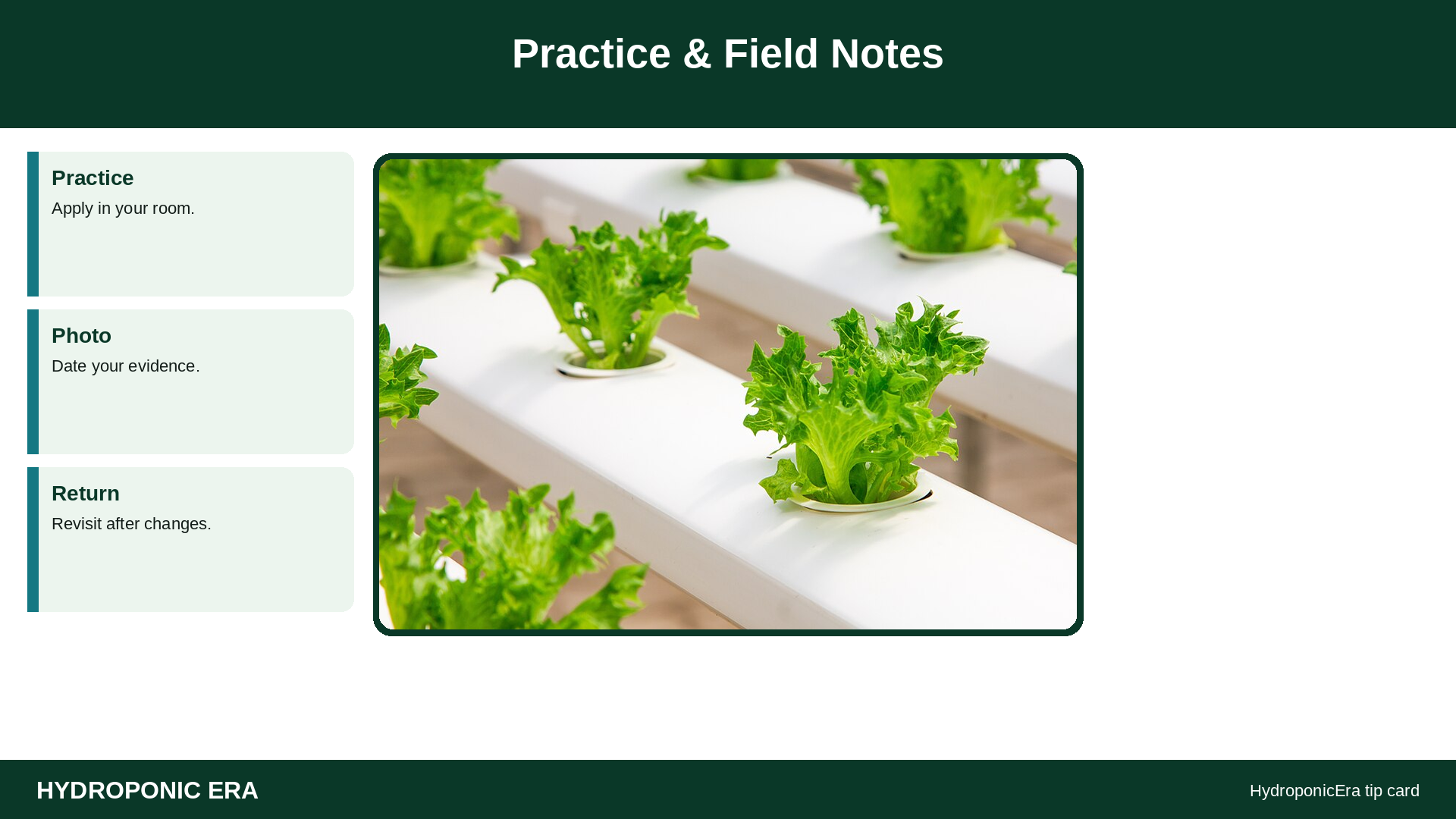
Build NFT as if you will open it monthly—because you will. Accessible lids beat sealed pretty PVC you fear cutting. Root mats under net pots are normal biology; design for clearing them. Oklahoma State and other hydroponic overviews assume management intensity—NFT is not a neglect-tolerant system.
Original flow test: with plants in place, drop a food-safe dye or simply watch film continuity from inlet to outlet. Dry patches reveal slope errors or dams. Re-level with a spirit level on the channel, not by eye (NFT beginners).
Reliability kit: screened pump intake | spare pump or backup power plan | strainer cup | brush for gullies | labeled slope direction. Outages wilt NFT fast—see backup power and pump sizing.
Match crops to channel size. Long-cycle fruiting roots in tiny troughs invite chronic dams; leafy short cycles fit better for many home NFT builds (lettuce, system comparison).
Leak vs clog: falling reservoir volume with dry film may be a leak on the return (leaks). Check floors and fittings before only blaming roots.
Practice closer: schedule a mid-cycle “open channel Sunday” on mature NFT. Clear dams early, sanitize tools, and log which positions clog first. Sudden wilt triage still starts with wilting plus a finger check for wet film.
Field Notes: Designing for the Mid-Cycle Open
If opening the channel requires disassembling half the rack, you will not open it until plants wilt. Redesign lids and plant spacing for access. NFT reliability is a human-factors problem as much as a hydraulic one (NFT).
Practice root-mat clearing on a non-critical run first. Sanitize tools between channels. Watch for brown slime that indicates disease overlap (Pythium) versus clean white mats that simply dam flow.
Power blips deserve alarms or backups. A 30-minute outage on a hot day is a crop event (backup power, pumps). Test your alert path once.
Original inlet-outlet photo pair each month documents film health. Combine with wilting triage: finger-check film before dosing nutrients into a dry gully.
FAQs
Why so fast to wilt?
Little media buffer—film interruptions dry roots quickly.
Can I run NFT without a backup plan?
Risky; outages equal crop loss.
Root trimming safe?
Careful pruning of excessive mats is common in NFT—sanitize tools; don’t shred everything.
Is wider channel better?
Often yes for longer cycles/larger roots.
Same as DWC wilt?
DWC wilt more often oxygen/heat/roots; NFT often flow.
Sources?
OSU hydroponics, MSU hydro overview, pump/reservoir practice guides.
How often should I open channels?
More often as roots mature—don’t wait for mass wilt.
Is a steeper slope always better?
Too steep can starve upper cups; follow design guidance and verify film at each site.
Measurement and Logging Habits That Keep Advice Honest
Every troubleshooting or equipment claim on HydroponicEra should collapse to something you can measure or photograph. Write the date, the meter reading, and one photo when you change a variable. That habit prevents stacking five fixes overnight and then inventing a success story. Use calibrated pH/EC meters where nutrients are involved, and canopy-level climate sensors where humidity and heat are involved (humidity/VPD).
When you link outward to university extension pages in the Sources section, treat them as anchors—not as promises that your exact tent will match a greenhouse trial. Translate ranges into your room with logs. If a fix works, keep it; if not, revert one step and retest. That methodology is the expertise signal search and AI systems can trust without fabricated statistics.
Internal next reads stay in-cluster: problems pages cross-link to cleaning, airflow, and crop guides like tomatoes or lettuce when symptoms live on those plants. Equipment pages cross-link to reservoir setup, pumps, and grow tents so purchases match the system you already run.
NFT Channel Clogs Dry-out Failures: Practical Checklist
NFT Channel Clogs Dry-out Failures matters every week in a home system. Recheck NFT channel clogs dry-out failures after transplants, heat spikes, and canopy fill-in. Strong NFT channel clogs dry-out failures habits beat one-time guesses. When NFT channel clogs dry-out failures drifts, leaves crowd, roots stress, or harvest quality drops. Write NFT channel clogs dry-out failures targets into your log so you do not rely on memory. Teach helpers your NFT channel clogs dry-out failures checklist before you leave town. Improve NFT channel clogs dry-out failures in small steps—measure, adjust, then wait a day.
Sources
- Oklahoma State University Extension — Hydroponics
- Michigan State University Extension — Hydroponics as an agricultural production system
- University of Florida IFAS — HS184: Building a Floating Hydroponic Garden
- University of Florida IFAS — HS1279: Leafy Greens in Hydroponics and Protected Culture for Florida
- Penn State Extension — Hydroponics Systems and Principles of Plant Nutrition
- University of Kentucky Greenhouse Horticulture — Root disease management in hydroponic systems (PDF)