
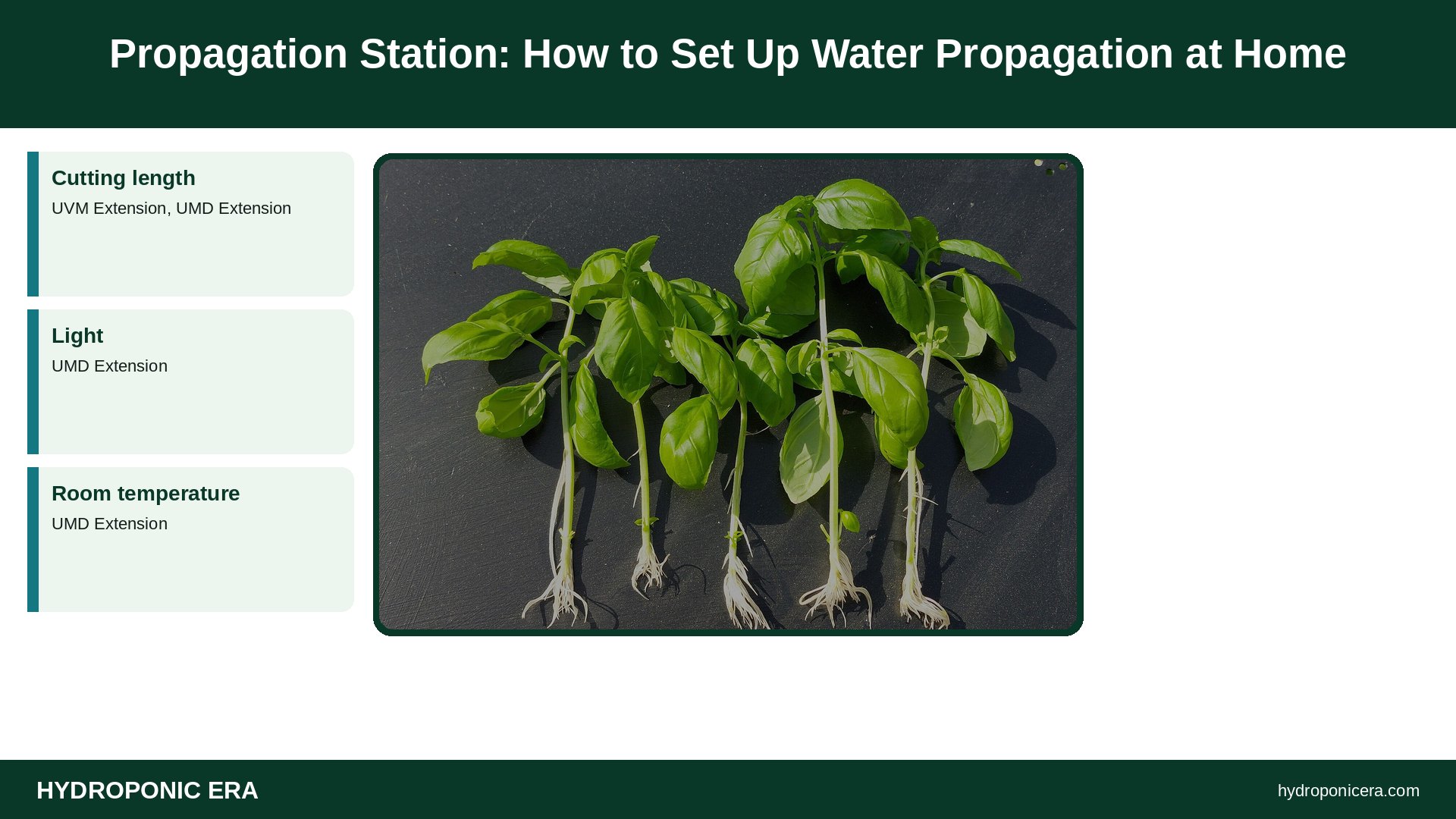
What is a propagation station? A propagation station is a stand or rack that holds clear glass vessels of water so you can root plant cuttings and watch the roots grow. It works best for easy rooters like pothos, philodendron and coleus. Use 3–6 inch (8–15 cm) cuttings with at least one node underwater, bright indirect light, and fresh water at least twice a week.
Key takeaway: A propagation station is a tidy way to do water propagation. The glass is the easy part; clean water, the right cutting and timely potting decide whether it works.
| Setup detail | Good starting point | Source |
|---|---|---|
| Cutting length | 3–6 inches (8–15 cm), at least one node | UVM Extension, UMD Extension |
| Light | Bright light, no direct sun | UMD Extension |
| Room temperature | About 70°F (21°C), away from cold drafts | UMD Extension |
| Water changes | At least twice a week, or when cloudy | UMD Extension |
| When to pot up | Roots 2–3 inches (5–8 cm) long | UVM Extension |
How Does a Propagation Station Work?
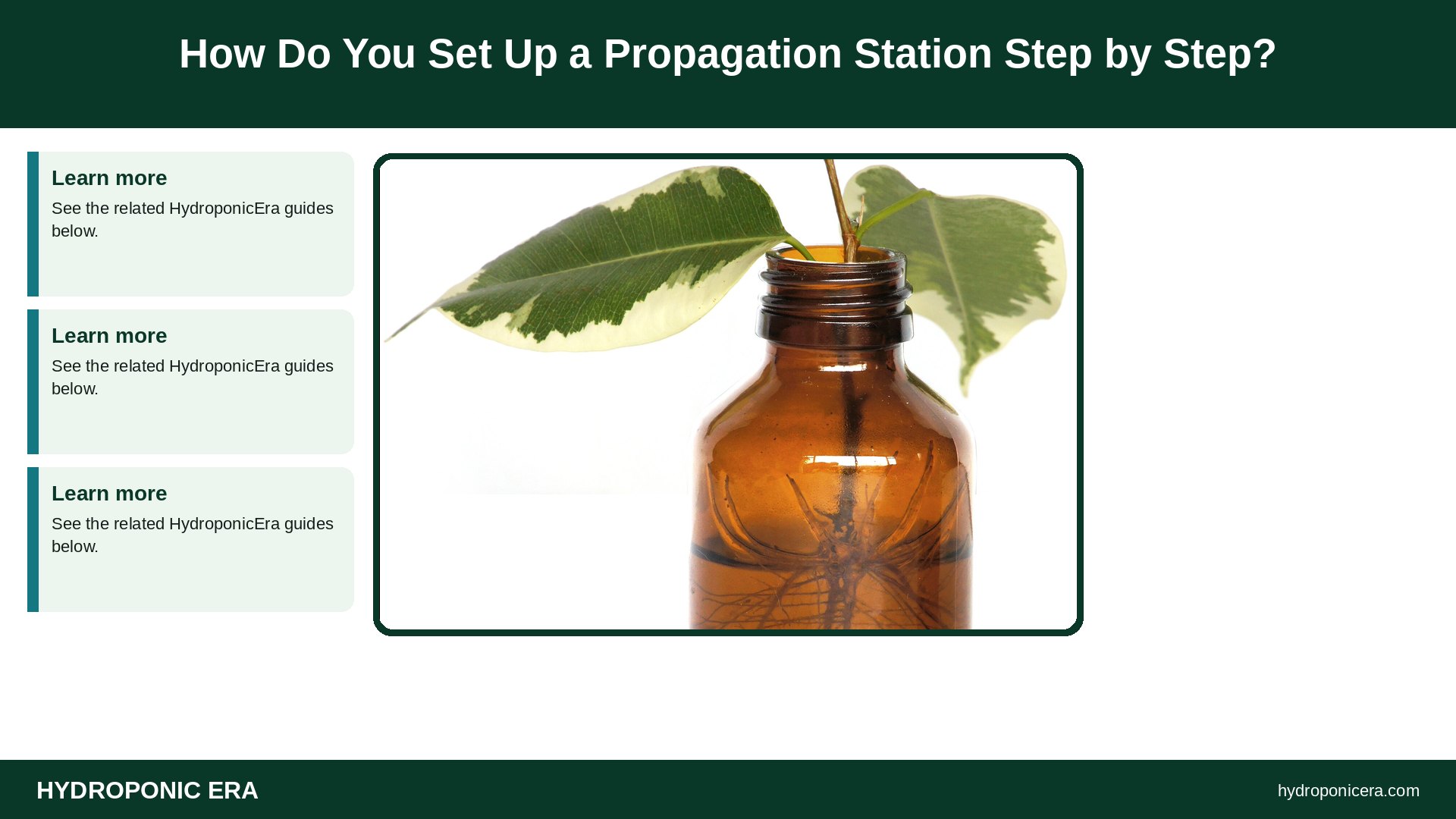
It holds cuttings upright in water so roots can form from the nodes. A node is the bump where a leaf meets the stem. When you cut a stem, the wound starts a series of cell-level changes that can lead to adventitious roots, meaning roots that grow from a stem rather than from the original root system. University of Maryland Extension notes this can take several weeks.
The station itself is just furniture. Most designs use test tubes, bud vases or bulb-shaped glasses held in a wood, metal or acrylic frame. Some hang on a wall; others sit on a shelf or windowsill. Clear glass lets you see roots and check water clarity at a glance.
What Should You Look for in a Propagation Station?
Pick one with vessels you can remove and scrub, openings wide enough for your stems, and enough depth to keep a node underwater without soaking leaves.
- Removable glass: You will be emptying and refilling often. Fixed tubes are hard to clean.
- Opening size: Narrow test tubes suit pothos and tradescantia. Thick stems such as dracaena or rubber plant need wider vases.
- Depth: About 2–3 inches (5–8 cm) of water covers a node or two on most cuttings.
- Stable base: Water and glass are heavy; a wobbly frame tips easily.
- Placement: A spot with bright, indirect light. Hot, direct sun on clear glass warms the water and feeds algae.
Which Plants Root Well in a Propagation Station?
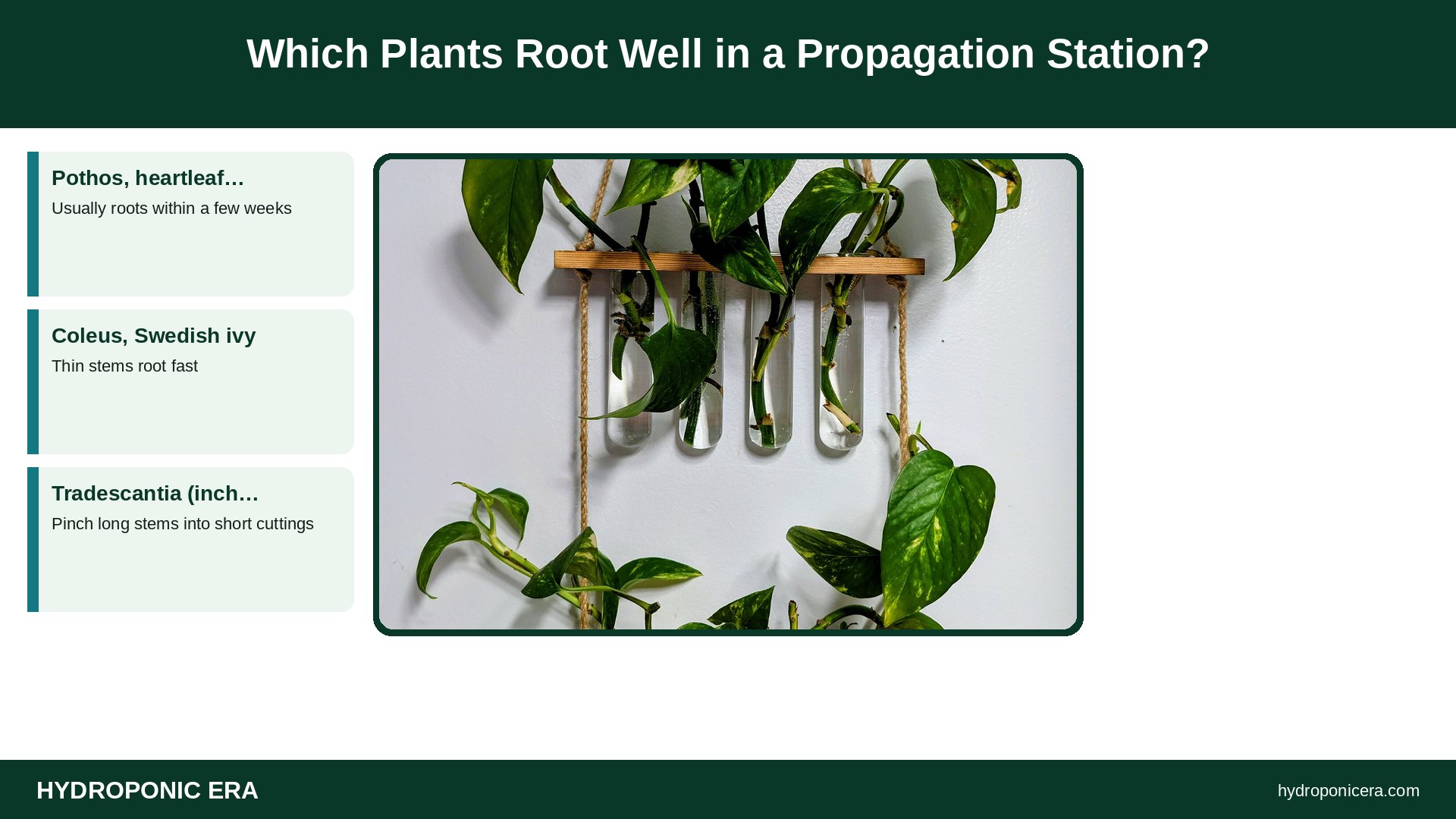
Vining and soft-stemmed houseplants are the most reliable choices for a propagation station. Maryland Extension lists heartleaf philodendron, golden pothos, coleus, Swedish ivy and arrowhead plant as good choices for rooting in plain tap water. University of Vermont Extension adds English ivy, jasmine, inch plant and even holiday cactus as easy water rooters.
| Plant | How it does in water | Notes |
|---|---|---|
| Pothos, heartleaf philodendron | Very easy | Usually roots within a few weeks |
| Coleus, Swedish ivy | Very easy | Thin stems root fast |
| Tradescantia (inch plant) | Very easy | Pinch long stems into short cuttings |
| Arrowhead plant | Easy | Keep leaves out of the water |
| Holiday cactus | Moderate | Use 2–5 segment pieces |
| Succulents like jade | Poor | Usually better in dry, gritty mix |
For a longer list, see our guide to plants that grow in water, and our step-by-step on pothos in water.
How Do You Set Up a Propagation Station Step by Step?
Take a healthy cutting, strip the lower leaves, set it in clean room-temperature water and keep it in bright, indirect light.
- Clean the glass. Wash vessels with hot soapy water and rinse well.
- Take the cutting. Cut 3–6 inches (8–15 cm) from a healthy stem tip with clean, sharp scissors, just below a node. Illinois Extension recommends sterilizing tools between cuts.
- Remove lower leaves. Strip leaves from the bottom 1–2 nodes so no foliage sits below the waterline.
- Fill with room-temperature water. Tap water works for most plants; Maryland Extension uses plain tap water.
- Place the cutting. Submerge at least one node. Thin stems usually root faster than thick ones.
- Choose the spot. Bright light, no direct sun, about 70°F (21°C), away from drafts and heater vents.
- Change the water. At least twice a week or whenever it looks cloudy, to keep it clean and oxygenated.
How Long Do Cuttings Take to Root in a Propagation Station?
In a propagation station, easy plants usually root in 1–4 weeks, but some take months. Vermont Extension says it can take days, weeks or sometimes months, and to stay patient as long as the cutting looks healthy. Illinois Extension notes tender, water-filled stems may root within about a week, while tougher stems take 10–14 days or longer. Warmth helps: Penn State Extension gives 75–80°F (24–27°C) as the best rooting temperature range for media.
When Should You Move Cuttings From a Propagation Station to Soil?
Pot cuttings from your propagation station when roots are about 2–3 inches (5–8 cm) long. Vermont Extension uses that length as the cue. Maryland Extension suggests letting roots grow another week or two after they first appear, then planting into a small, well-draining container and keeping the mix moist until new leaves start.
Don’t leave cuttings in the glass for months. Roots formed in water are adapted to water, and Illinois Extension cautions that water roots are often weak and don’t adapt as easily to potting mix. Potting sooner gives the plant less to relearn. If you want to keep plants in water long term, follow a dedicated water-culture approach like our Kratky method guide, with nutrients.
What Goes Wrong With a Propagation Station?
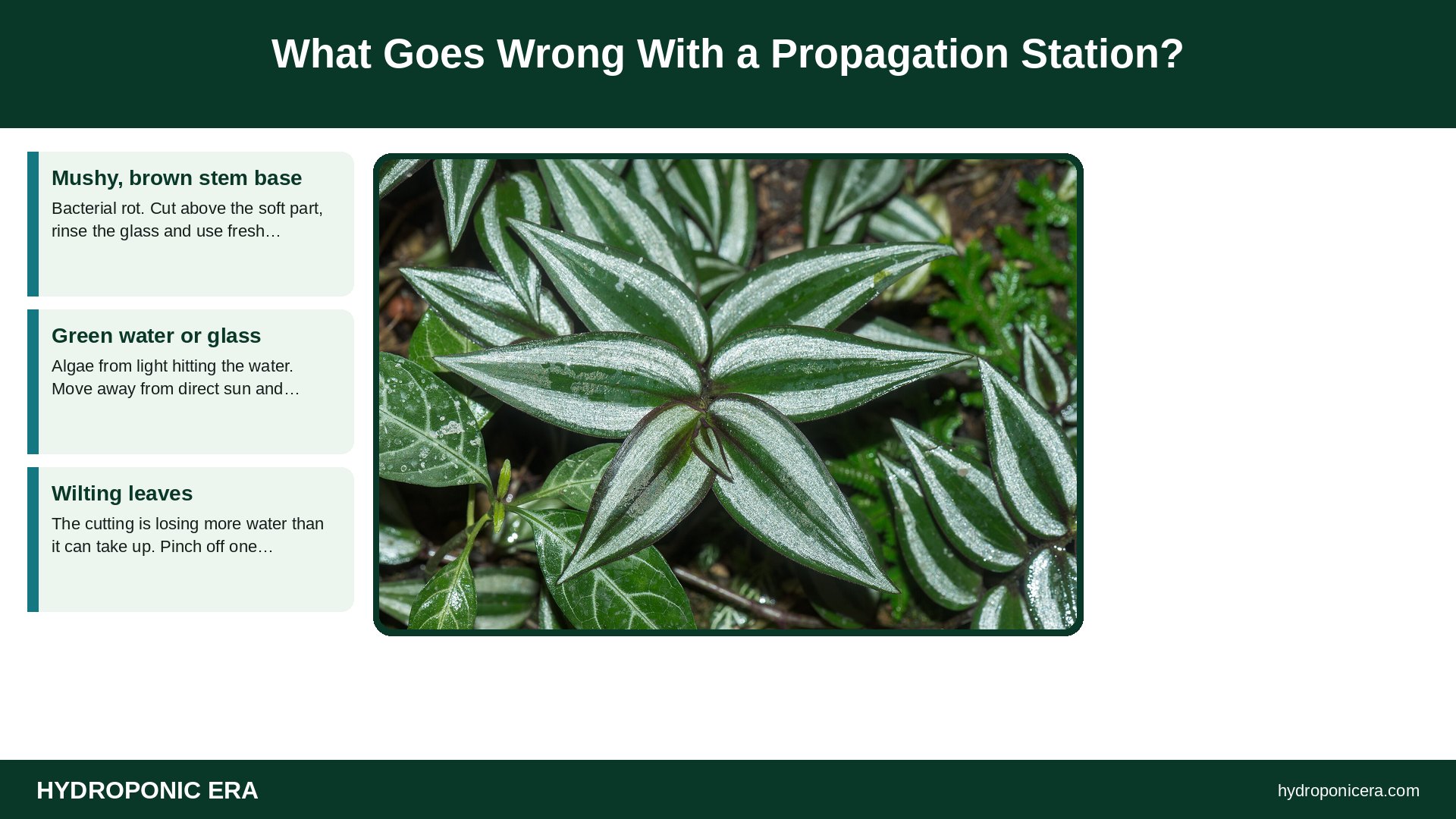
Most failures come from dirty water, too much heat or light, or the wrong kind of cutting.
- Mushy, brown stem base: Bacterial rot. Cut above the soft part, rinse the glass and use fresh water. Maryland Extension links bacterial growth in water to rotting.
- Green water or glass: Algae from light hitting the water. Move away from direct sun and scrub the glass. Our page on algae in reservoirs explains why light feeds it.
- Wilting leaves: The cutting is losing more water than it can take up. Pinch off one or two large leaves.
- White fuzz on roots: Often harmless root hairs. Compare with our guide to white fuzz on roots in water.
- No roots after a month: Check that a node is underwater, add warmth, and confirm the plant actually roots from stem cuttings.
Is Water Propagation Better Than Soil?
It’s easier to watch, but not always better. Vermont Extension calls it a matter of personal preference: water lets you see roots develop, while soil avoids the transplant step. Illinois Extension does not recommend water rooting because water roots can be weak. For tough or high-value cuttings, a moist propagation mix under a humidity dome is often more reliable. For more on clones, see hydroponic cuttings and cloning.
FAQs
Do I need rooting hormone in a propagation station?
Not for easy rooters. Penn State says hormone can speed rooting but too much slows it.
Can I use tap water?
Yes for most plants. Let very cold water warm to room temperature first.
How many cuttings per glass?
One or two. Crowding fouls the water faster and tangles roots.
Should leaves touch the water in a propagation station?
No. Submerged leaves rot and cloud the water.
Does a propagation station need a grow light?
Only if your room is dim. Bright, indirect window light is usually enough.
Sources
- University of Maryland Extension — Make More Plants From Cuttings: 5 Plants That Root Easily in Water
- University of Vermont Extension — More, Please: Propagating Houseplants
- University of Illinois Extension — Houseplant Propagation
- University of Illinois Extension — Cuttings
- Penn State Extension — Propagating Houseplants
- Photo credits (Wikimedia Commons, edited with titles): Basilikum (Ocimum basilicum) Stecklinge — Josef Schlaghecken by Schlaghecken Josef (CC BY-SA 4.0); Pothos plant on water by Joli Rumi (CC BY-SA 4.0); Ficus cuttings with roots in a bottle, White background by Biusch (CC BY-SA 3.0); 20260317 Tradescantia zebrina 01 by Flocci Nivis (CC BY 4.0); Coleus (71543) by Rhododendrites (CC BY-SA 4.0)