
Aquaponics in the classroom turns biology, chemistry and math into something students can see, measure and eat. A small system, often a 10–20 gallon (38–76 L) aquarium with a grow bed on top, a pump, an air stone, a grow light, hardy fish such as goldfish, and fast plants like lettuce or basil, is enough to teach the nitrogen cycle, water testing, plant needs and ecosystems.
Free, standards-aligned lessons are available from National Agriculture in the Classroom (grades 3–5) and Illinois-Indiana Sea Grant (10 lessons for older students). Before you start, plan for daily care, weekends and school breaks, a fishless or slow start, and simple hygiene: CDC advises washing hands after touching fish, tank water or equipment.
Key takeaway: The system is the textbook. Keep it small, simple and well-supervised, and build lessons around what students observe and measure.
| Item | Recommendation | Source |
|---|---|---|
| Elementary lesson | Exploring Aquaponics, grades 3–5, about 2 hours | National Agriculture in the Classroom |
| Secondary curriculum | Aquaponics: Farming Fish, Growing Greens, 10 lessons, NGSS-aligned | Illinois-Indiana Sea Grant |
| Basic parts | Fish tank, grow bed, media, pump, tubing, grow light, fish cave, water, fish, plants | National Agriculture in the Classroom |
| Fish load rule of thumb | About 1 inch (2.5 cm) of fish per gallon (3.8 L) of water | CDC |
| Hygiene | Wash hands after contact; gloves for tank cleaning | CDC |
| Classroom snails | Interstate shipping may need a USDA permit | USDA APHIS |
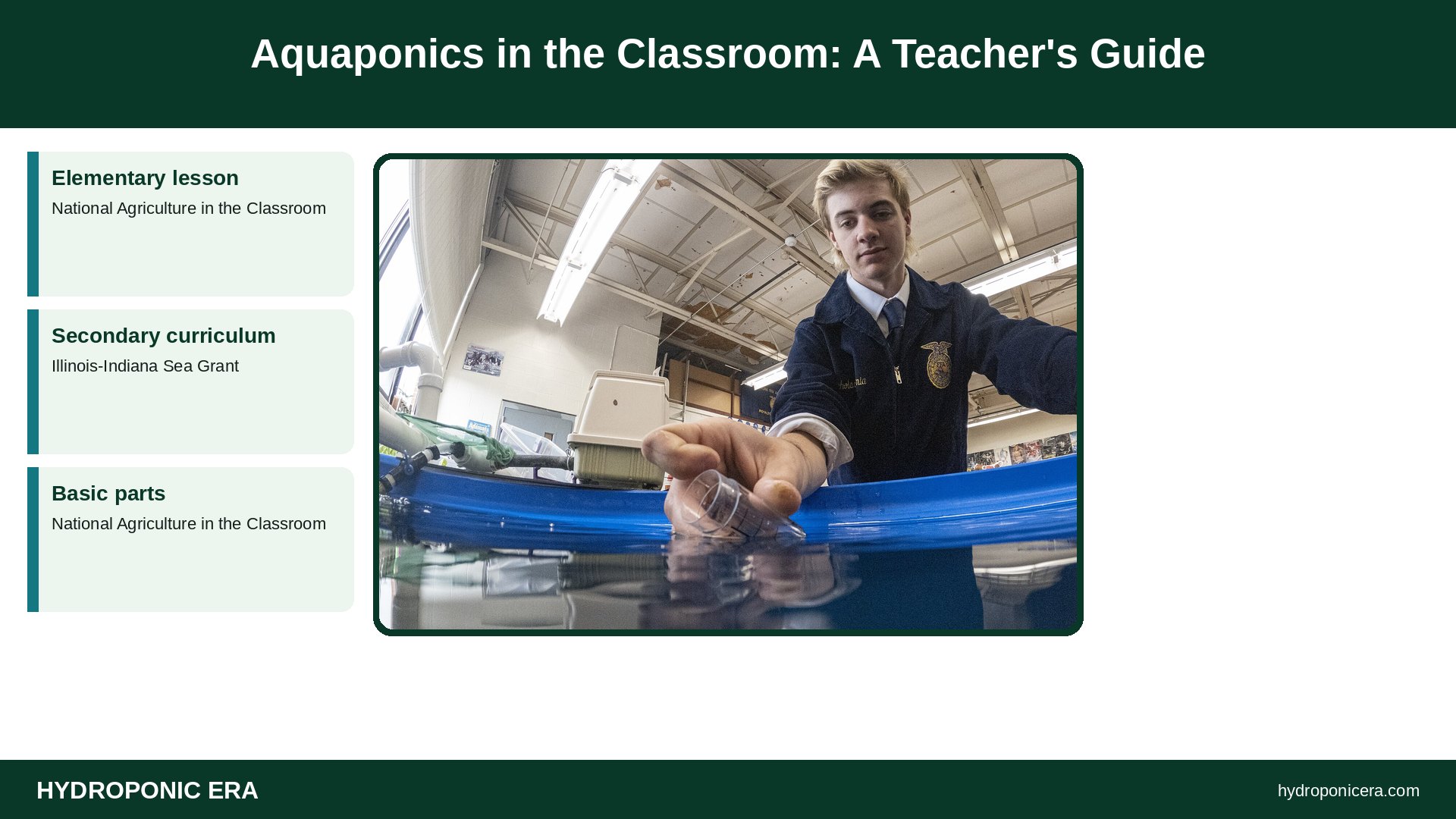
Why Teach Aquaponics in the Classroom?
Illinois-Indiana Sea Grant (IISG) describes aquaponics as a hands-on way for students to learn scientific concepts while being introduced to sustainable agriculture. Its curriculum, Aquaponics: Farming Fish, Growing Greens, covers STEAM topics such as science, technology, engineering, agriculture and math, and includes reading comprehension, data analysis and basic math activities. IISG says it’s aligned with Next Generation Science Standards and designed so teachers can pull out a single lesson to support other classwork.
A classroom system makes abstract ideas concrete:
- Life science: needs of plants and fish, food webs, symbiosis and photosynthesis.
- Chemistry: pH and the nitrogen cycle, from ammonia to nitrite to nitrate.
- Math and data: graphing water tests, plant growth and fish feeding.
- Engineering: designing, building and troubleshooting the system.
- Careers: IISG frames its curriculum as preparation for careers in sustainable agriculture.
Choosing a System for Aquaponics in the Classroom
National Agriculture in the Classroom’s Exploring Aquaponics lesson lists ten basic components for a small system: a fish tank, a grow bed, a growing medium, a water pump, tubing, a grow light, a fish cave, water, fish and plants. It provides a Classroom Aquaponics System Assembly and Maintenance Guide, and a classroom kit is sold through its store.
Whether you buy or build, look for:
- A tank of 10 gallons (38 L) or more. Bigger water volumes are more stable than tiny desktop tanks.
- A sturdy, waterproof spot near an outlet, away from heaters and direct sun.
- A GFCI-protected outlet for the pump and light.
- An LED grow light on a timer. See aquaponics grow lights.
- A lid to keep curious hands and objects out of the water.
Compare kit options in how to choose an aquaponics kit and aquarium aquaponics.
Best Fish and Plants for a Classroom
Goldfish are a popular classroom choice because they’re hardy, cheap, tolerate room temperature and are easy to find. IISG’s cycling activity even suggests using one goldfish to build bacteria in a small demonstration tank. Avoid large species that outgrow the tank. CDC suggests a starting standard of about 1 inch (2.5 cm) of fish per gallon (3.8 L), and goldfish grow, so stock lightly. See goldfish aquaponics.
For plants, choose quick, forgiving crops: lettuce, basil, mint, green onions and other leafy greens. Students see changes within days and can harvest within a few weeks.
Teaching the Nitrogen Cycle
The nitrogen cycle is the heart of aquaponics in the classroom, and it’s easy to measure. Fish release ammonia, bacteria turn it into nitrite and then nitrate, and plants absorb the nitrate. IISG suggests letting students create real cycling data with a small fishbowl, either using ammonium chloride for a fishless cycle or one goldfish with food, plus gravel or bioballs and an airstone. Students measure nitrogen levels every 2–3 days and graph the rise and fall of ammonia, nitrite and nitrate.
Adding water or bioballs from an established system speeds the process by introducing nitrifying bacteria. See aquaponics cycling and ammonia, nitrite and nitrate.
Health and Safety Rules for Aquaponics in the Classroom
CDC notes that fish, tank water and tank items can carry germs that make people sick, though illness is rare. Its advice translates into simple classroom rules:
- Wash hands with soap and water after feeding fish, touching tank water or handling equipment, and before eating.
- Wear gloves when cleaning the tank, especially with cuts or scrapes.
- Don’t dump tank water in a sink used for food; CDC suggests a utility sink or outside.
- Keep children under 5 away from tank cleaning, as CDC recommends.
- Never release fish, snails or plants outdoors. CDC says released fish can threaten wildlife.
Snails need extra care. USDA APHIS regulates interstate movement of many snails and offers a Mollusk Decision Matrix to help educators choose classroom snails. Check before ordering any. If students eat what they grow, follow aquaponics food safety practices and your school’s policies.
Daily Care, Weekends and Breaks
Aquaponics in the classroom needs a plan for days when no one is there.
- Daily: feed lightly, check that the pump and air are running, and look at fish and plants.
- Weekly: test pH, ammonia, nitrite and nitrate; top up evaporated water with dechlorinated water.
- Weekends: healthy adult fish can usually skip a day or two of food; an automatic feeder can help.
- Long breaks: arrange for a staff member or family to check the system, or take it home.
- Power: a battery air pump protects fish during outages. See aquaponics power outages.
Student job charts make care part of the lesson, with roles for feeding, testing, recording and plant care.
Lesson Ideas by Grade
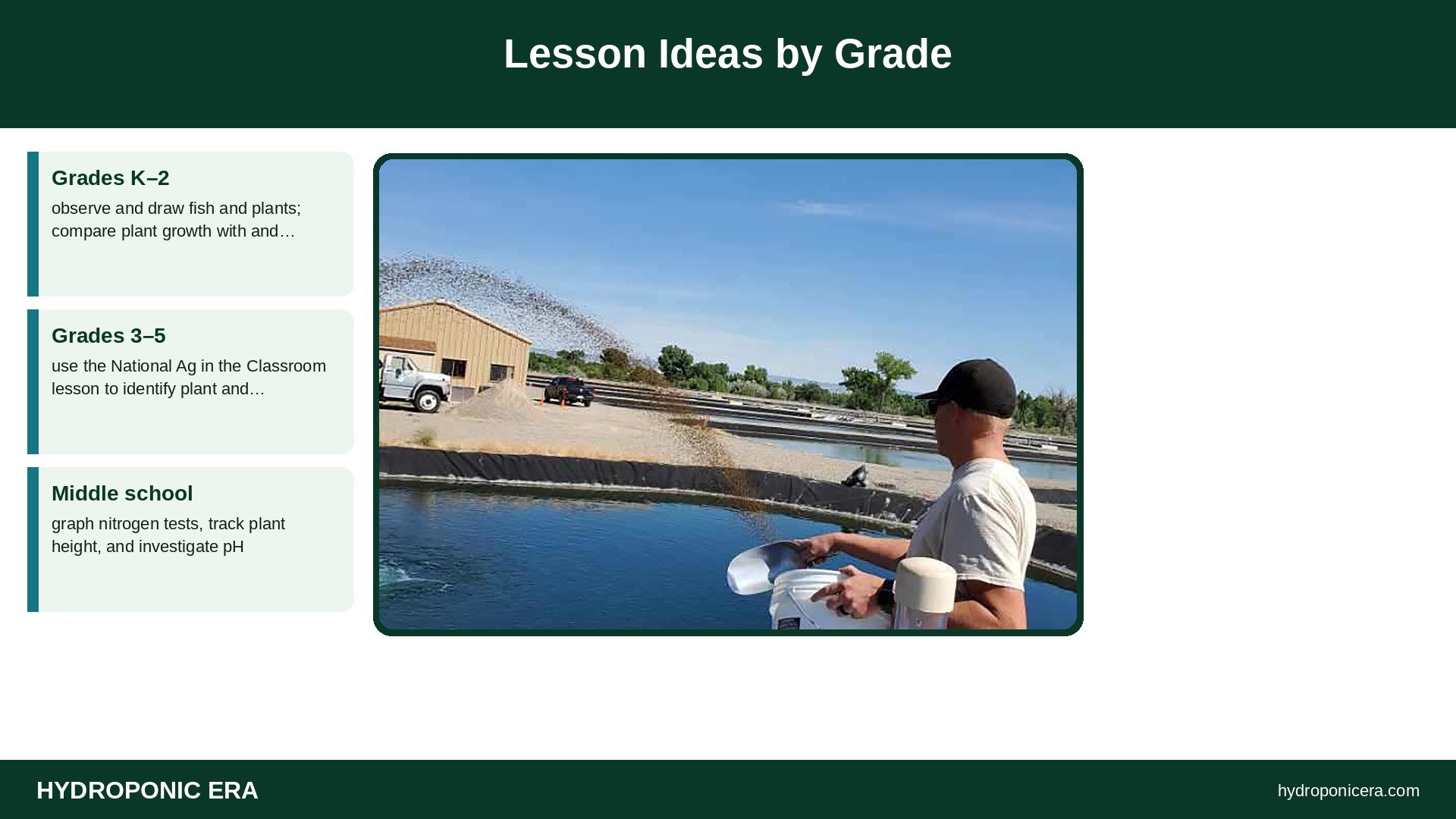
- Grades K–2: observe and draw fish and plants; compare plant growth with and without the system.
- Grades 3–5: use the National Ag in the Classroom lesson to identify plant and fish needs and design a system that meets them.
- Middle school: graph nitrogen tests, track plant height, and investigate pH.
- High school: use IISG’s ten lessons on system anatomy, water quality, population dynamics, plants and fish; run experiments on light or stocking.
For more hands-on ideas, see hydroponics with kids and aquaponics for beginners.
FAQs
What is the best fish for aquaponics in the classroom?
Goldfish are hardy, cheap and handle room temperature.
How big should a classroom system be?
A tank of about 10–20 gallons (38–76 L) is stable and manageable.
Are there free aquaponics lesson plans?
Yes, from National Agriculture in the Classroom and Illinois-Indiana Sea Grant.
Is aquaponics in the classroom safe?
Yes with handwashing, gloves for cleaning and adult supervision.
What happens over school breaks?
Arrange a caretaker, use an automatic feeder, or take the system home.
Can students eat the plants?
Often yes, if you follow food safety steps and school policy.
Sources
- Illinois-Indiana Sea Grant — New aquaponics curriculum brings STEM and sustainable agriculture to the classroom
- Illinois-Indiana Sea Grant — Aquaponics: Farming Fish, Growing Greens (curriculum PDF)
- National Agriculture in the Classroom — Exploring Aquaponics (Grades 3–5)
- Centers for Disease Control and Prevention — Fish: Healthy Pets, Healthy People
- USDA APHIS — Snails and Slugs
- Photo credits (Wikimedia Commons, edited with titles): FNS-Farm to School at Royalton-Hartland SD in Niagara County, NY (20220525-FNS-LSC-0796) by USDAgov (Public domain); Somers Middle School Planting Native Garden (8952713158) by Forest Service Northern Region from Missoula, MT, USA (Public domain); Living with the Land entrance by Michael Rivera (CC BY-SA 4.0); Fountain with goldfish in Jardí del Bisbe 03 by Kritzolina (CC BY-SA 4.0); Feeding fish (51250565367) by USFWS Mountain Prairie (Public domain)