
Can you root rose cuttings in water? Sometimes, but it’s the least reliable method. Extension guides from UC and Iowa State root roses in a moist, soilless mix under a humidity cover, where roots form in about 6–8 weeks. If you try water, use a 4–8 in (10–20 cm) current-season stem, keep leaves dry, change the water often and pot once roots appear.
Key takeaway: Rose cuttings in water are a fun experiment, but for the best odds, start the same cutting in a perlite or vermiculite mix with rooting hormone and a clear cover.
| Factor | Recommendation | Source |
|---|---|---|
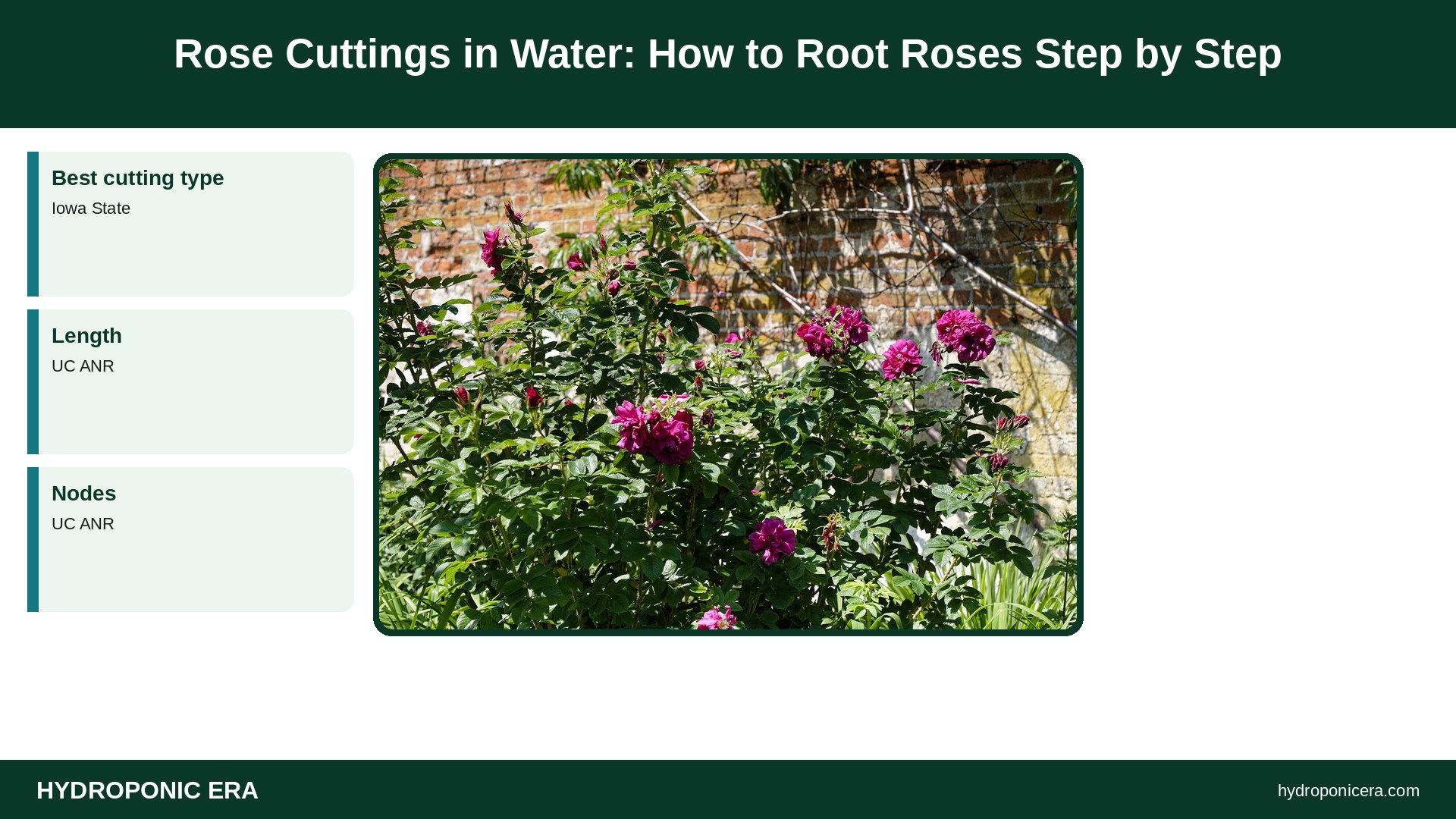
| Best cutting type | Semi-hardwood, mid to late summer (July–August) | Iowa State |
| Length | About 8 in (20 cm) hybrid tea; 4–5 in (10–13 cm) smaller roses | UC ANR |
| Nodes | Ideally 4–5 leaf nodes | UC ANR |
| Rooting time | About 6 weeks, more often about 8 | UC ANR |
| Rooting hormone | Not essential but gives better results | UC ANR |
| Easiest roses to root | Miniature roses | UC ANR |
Do Rose Cuttings in Water Actually Root?
Some do. Roses are woody shrubs, and woody stems sitting in still water are prone to rot before roots form. None of the extension guides we reviewed recommend water as the main method for roses. Iowa State Extension calls cuttings the most effective way for home gardeners to propagate roses and says semi-hardwood cuttings are easiest, while UC Agriculture and Natural Resources roots them in moist compost with vermiculite or perlite. Illinois Extension adds a general caution: roots formed in water are often weak and don’t adapt easily to potting mix.
Which Roses Are Best for Rose Cuttings in Water?
UC ANR says some roses respond better to cuttings than others, and that miniature roses are usually successful and a good place to learn. Most modern roses are grafted onto a hardier rootstock, which UC notes can give vigor and disease resistance that the flowering variety may lack on its own roots. That means a cutting from a grafted rose grows on its own roots and may be less vigorous than the parent. NC State Extension lists grafting as its first recommended propagation strategy for roses, followed by seed and stem cuttings, which reflects how the nursery trade produces most garden roses.
Is It Legal to Take Rose Cuttings?
Check the label first. UC ANR explains that plant patents last 20 years and it’s illegal to asexually propagate a patented plant during that time. Rose labels and catalogs usually show if a cultivar is patented or patent pending, sometimes as “PPAF.” Old garden roses and roses whose patents have expired are fair game.
How Do You Start Rose Cuttings in Water?
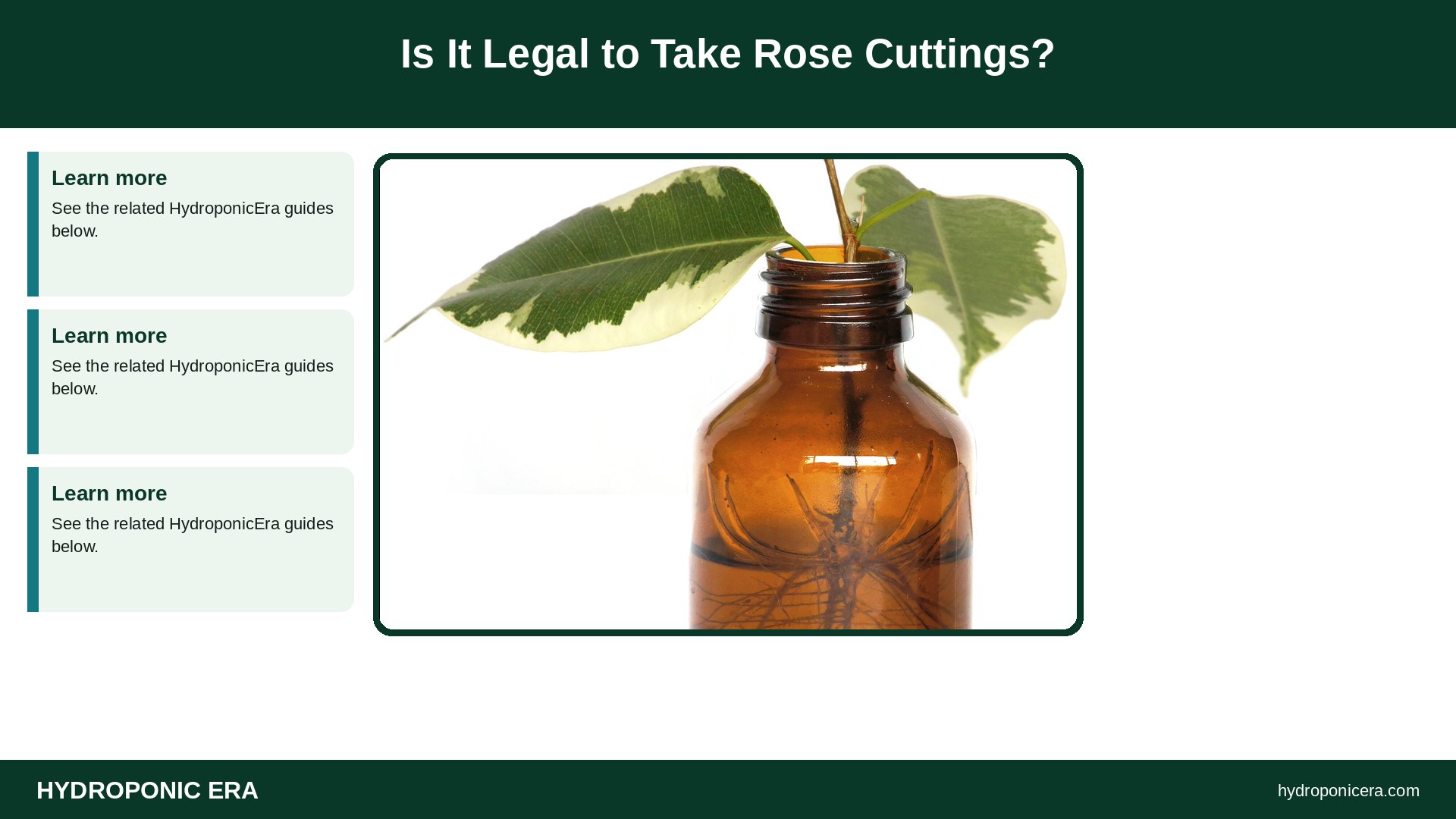
- Pick a healthy stem of this year’s growth that has just finished flowering; UC says it should be green and slightly flexible, not floppy.
- Cut about 8 in (20 cm) for a hybrid tea or 4–5 in (10–13 cm) for smaller roses.
- Drop it into water right away, as UC advises, so the stem doesn’t dry.
- Trim the base straight across just below a node with sterilized pruners.
- Remove leaves from the bottom three nodes and halve any large top leaves.
- Remove spent flowers and buds.
- Stand it in a clean jar with the bottom one or two nodes under water.
- Place in bright light out of direct sun.
- Change the water every 2–3 days and rinse the jar.
How Long Do Rose Cuttings in Water Take to Root?
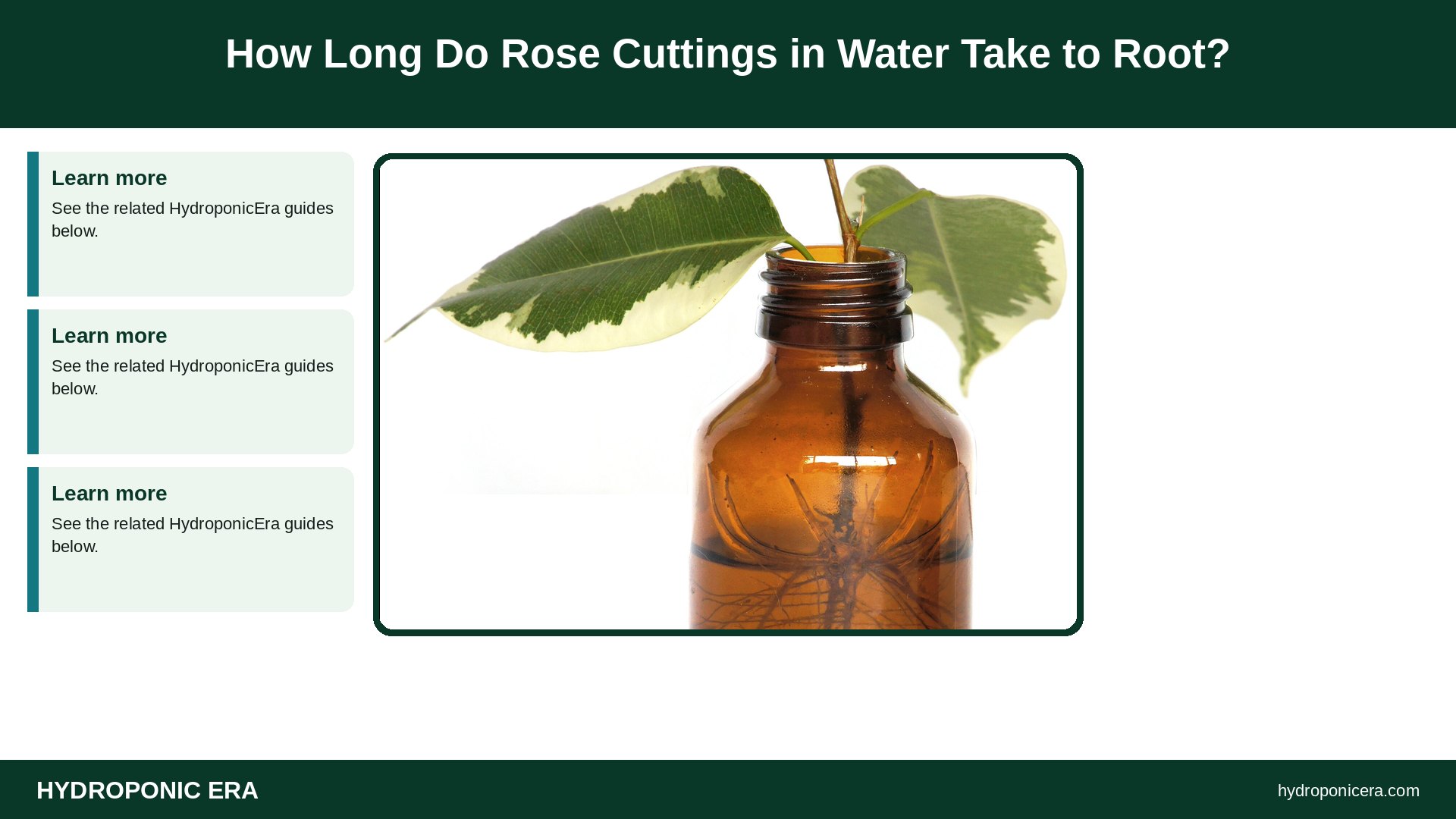
Expect weeks, not days. UC ANR says rose cuttings in a soilless mix may root in about 6 weeks but more often take about 8. In water, timing varies widely, and many cuttings rot first. Check the base at each water change: a firm green stem with white bumps is promising; a black, soft base means start again.
| Sign | What it means | Action |
|---|---|---|
| Firm, green stem base | Still alive | Keep going |
| White callus or bumps | Root initials forming | Pot once roots appear |
| Black, soft or slimy base | Rot | Discard; try a new cutting in mix |
| Leaves drop, stem green | Stress; may still root | Wait, keep water fresh |
What Is the Better Method Than Rose Cuttings in Water?
UC ANR’s soil method gives better odds.
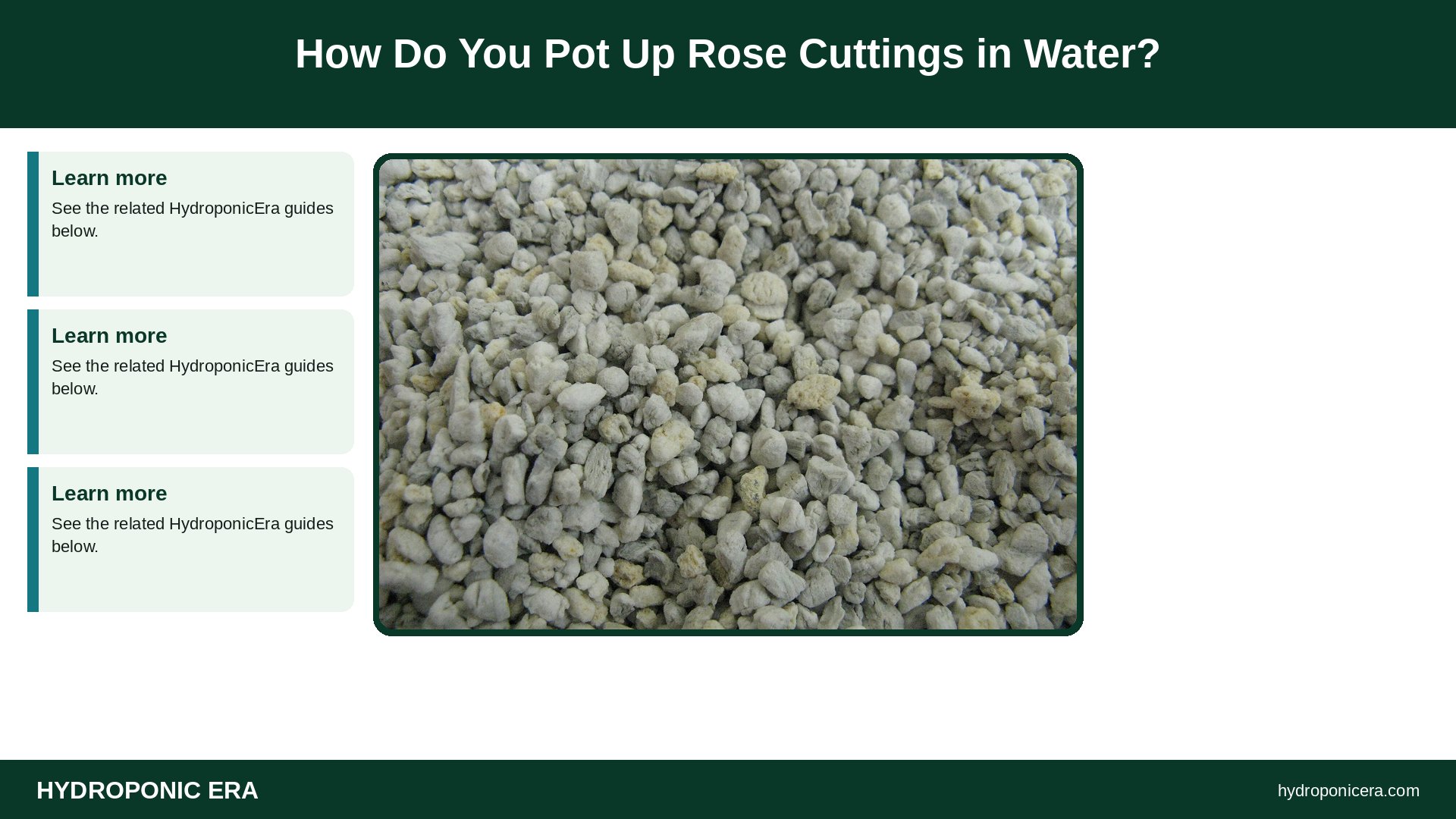
- Fill a large, clean pot with seed-starting compost rich in vermiculite or perlite, or a loose soilless mix, and water until evenly moist.
- Make a hole 3–4 in (8–10 cm) deep.
- Dip the damp base in rooting hormone powder.
- Bury the bottom two nodes and firm the mix.
- Cover with a clear soda bottle, bottom cut off and cap removed, or a closed plastic bag.
- Keep it moist, bottom-watering so hormone doesn’t wash off.
- Remove the cover once new growth starts.
Our guides to perlite and vermiculite and a humidity dome for cuttings cover the setup in detail.
When Should You Start Rose Cuttings in Water?
Iowa State recommends semi-hardwood cuttings from mature new growth in mid to late summer, July and August. Roses can also be rooted from hardwood cuttings of the previous year’s growth, gathered in late winter while dormant. UC ANR’s cuttings are recently flowered stems, so after a bloom flush is a natural time.
Why Do Rose Cuttings in Water Fail?
- Old, woody stems: UC says these are challenging to root.
- Stale water: bacteria build up and rot the base. See pythium root rot for root-zone hygiene.
- Too much leaf: large leaves lose water faster than a rootless stem can replace it.
- Heat or direct sun: warms the jar and stresses the cutting.
- Chlorinated tap water: let it stand or read our guide to chlorine and chloramine.
How Do You Pot Up Rose Cuttings in Water?
Don’t wait for a long root mass. Once a few short roots appear, plant in a small pot of moist, well-draining mix and cover for a week or two so the new roots can adapt. UC ANR, in its high-desert climate, holds rooted starts until the following spring before planting out. For a soilless option, see hydroponic cuttings and cloning.
FAQ About Rose Cuttings in Water
Can a rose from a bouquet root in water?
Occasionally, but florist stems are often old and treated, so success is low.
Do rose cuttings in water need rooting hormone?
UC ANR says it’s not essential but gives better results.
How long do rose cuttings take to root?
About 6–8 weeks in mix, per UC ANR.
What’s the easiest rose to propagate?
Miniature roses, according to UC ANR.
Should rose cuttings sit in direct sun?
No. UC ANR roots them in bright light out of direct sun, such as a north-facing window.
Can I grow roses from seed instead?
Yes, but Iowa State says seedlings won’t match the parent and need cold stratification.
Sources
- University of California Agriculture and Natural Resources — Growing Roses From Cuttings
- Iowa State University Extension — How to Propagate Roses
- University of Illinois Extension — Houseplant Propagation
- NC State Extension Gardener Plant Toolbox — Rosa
- Photo credits (Wikimedia Commons, edited with titles): Dark pink rose bush Easton Lodge Gardens walled garden Little Easton Essex England 01 by Acabashi (CC BY-SA 4.0); Ficus cuttings with roots in a bottle, White background by Biusch (CC BY-SA 3.0); Ficus cuttings with roots in a bottle, White background by Biusch (CC BY-SA 3.0); Perlite1 by KENPEI (CC BY-SA 3.0); Basilikum (Ocimum basilicum) Stecklinge — Josef Schlaghecken by Schlaghecken Josef (CC BY-SA 4.0)