
Does eggshell water for plants work? Not much. Eggshell water for plants sounds like a free calcium boost, but eggshells are mostly calcium carbonate, which barely dissolves in plain water. Illinois, NC State and Mississippi State Extension say shells release calcium too slowly to fix blossom end rot.
Key takeaway: Eggshell water is harmless in small amounts but is not a real fertilizer. If you suspect a calcium problem, test your soil or water, keep watering even, and use a balanced fertilizer or a calcium product made for plants. In hydroponics, calcium comes from the nutrient mix, not eggshells.
| Claim | What extension experts say |
|---|---|
| Eggshell water feeds plants calcium | Very little dissolves in water, so little calcium reaches roots |
| Eggshells stop blossom end rot | No; it is usually linked to uneven watering, not low soil calcium |
| Crushed shells break down fast | Composters see months, often more than a year |
| Grinding helps | Yes, fine powder breaks down faster than chunks |

What Is Eggshell Water for Plants?
Eggshell water for plants is made by soaking or boiling rinsed eggshells in water, then pouring the liquid on houseplants or garden beds. The idea is that calcium from the shells moves into the water. Some recipes leave shells soaking for days; others boil them for minutes and let the water cool before use.
Eggshells are mostly calcium carbonate, the same mineral in limestone and chalk. That is why gardeners expect a calcium boost. The problem is solubility: calcium carbonate dissolves very poorly in neutral water, so the liquid carries only a tiny amount of calcium.
Does Eggshell Water Give Plants Calcium?
Only a trace. Illinois Extension notes that eggshells add very little immediate calcium to plants, and NC State Extension says eggshells will not make calcium available fast enough to help with blossom end rot. Eggshell water for plants may contain a little dissolved material, but not enough to correct a deficiency.
- Most garden soils already contain enough calcium; a soil test tells you for sure.
- Acidic water dissolves more calcium carbonate, which is how lime works slowly in soil.
- Plain tap water may already contain more calcium than a homemade eggshell soak.
Can Eggshells Prevent Blossom End Rot?
No. Mississippi State University Extension says using eggshells “really doesn’t fix anything” for blossom end rot. The disorder usually happens when uneven watering stops calcium from moving into fast-growing fruit, even when soil calcium is fine. Steady moisture, mulch and correct fertilizing work much better than eggshell water for plants.
- Water evenly: avoid cycles of very dry then soaked soil.
- Mulch: keeps moisture steady around tomatoes and peppers.
- Avoid excess nitrogen: heavy leafy growth can pull calcium away from fruit.
- Test soil: lime only if a test shows low pH or calcium.
In hydroponics, read our guide to calcium and magnesium deficiency.

How Long Do Eggshells Take to Break Down?
Crushed eggshells break down slowly. Illinois Extension notes that composters often see shells take several months, often more than a year, to break down, and it recommends grinding shells to make calcium available faster. Big pieces in a pot or garden bed can stay visible for a long time.
If you want to use eggshells, dry them, grind them to a fine powder in a blender or coffee grinder, and mix the powder into compost or soil. That gives a slow, gentle liming effect over time rather than a quick feed.
How Do You Make Eggshell Water if You Still Want to Try It?
If you want to try eggshell water for plants, keep it simple and clean. Rinse shells to remove egg residue, dry them, crush or grind them, then soak about 10–12 shells in 1 gal (3.8 L) of water for a day or two. Strain before using, and use it only as a plain watering, not a replacement for fertilizer.
- Rinse well: leftover egg white can smell and attract pests or bacteria.
- Don’t let it sit for weeks: stagnant water can grow bacteria and smell bad.
- Use outdoors or on hardy plants first to see how they respond.
- Never add it to a hydroponic reservoir: it adds organic residue and changes pH.
Is Eggshell Water Safe for Houseplants?
Usually yes, in small amounts, but it offers little benefit. The main risks come from poor hygiene, such as unrinsed shells that rot and smell, or fungus gnats drawn to organic residue. Raw egg can carry Salmonella, so wash your hands after handling shells and avoid using eggshell water for plants on herbs you eat raw.
For houseplants, a diluted balanced fertilizer during active growth does far more. Plants grown in water, such as pothos in water, also need a complete nutrient source, not just calcium.
What Are Better Calcium Sources for Plants?
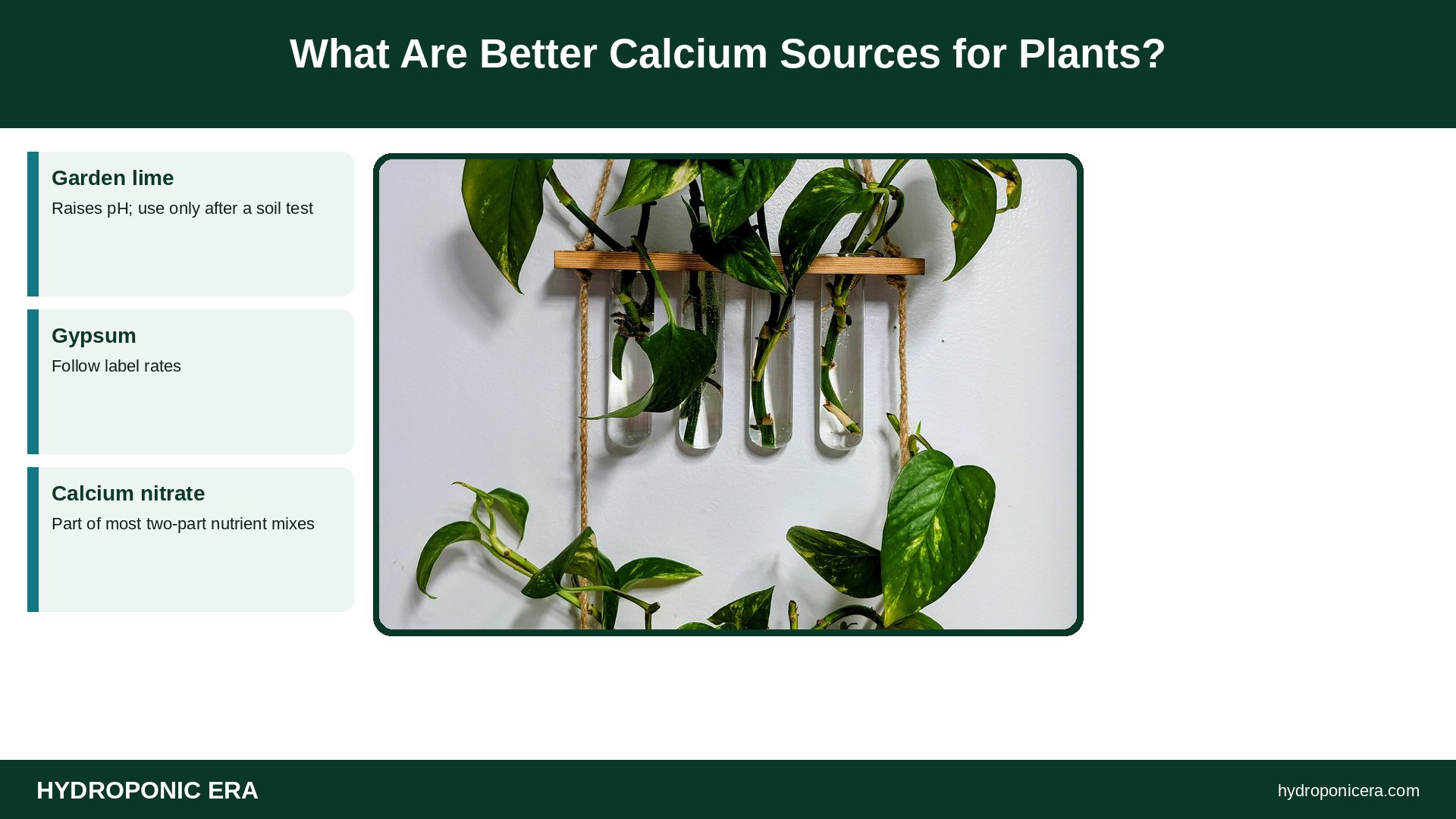
Better options than eggshell water for plants include garden lime or gypsum guided by a soil test, a complete fertilizer that lists calcium, or calcium nitrate in hydroponics. These products dissolve or act in a predictable way, so you know what plants receive. Compost adds small amounts of many nutrients, including calcium.
| Source | Best for | Notes |
|---|---|---|
| Garden lime | Acidic soils low in calcium | Raises pH; use only after a soil test |
| Gypsum | Adding calcium without raising pH | Follow label rates |
| Calcium nitrate | Hydroponics and fertigation | Part of most two-part nutrient mixes |
| Compost with ground shells | Slow soil improvement | Gentle, long-term effect |
Also see our guide to banana peel water, another popular kitchen-scrap tip.
Should You Test Before Using Eggshell Water for Plants?
Yes. Before reaching for eggshell water for plants, get a soil test through your state’s Cooperative Extension office. A test shows pH and calcium levels, so you only add lime or gypsum when soil truly needs it. Many gardens already have plenty of calcium, and extra lime can push pH too high for crops like blueberries.
For containers, look at the fertilizer label instead. Many potting mixes include lime, and many liquid feeds list calcium. If leaves on new growth look distorted or fruit tips turn dark and sunken, check watering habits first, then nutrients. Keeping notes on watering, feeding and weather makes it easier to see what actually changed.
FAQ About Eggshell Water for Plants
Does boiling eggshells release more calcium?
Slightly more may dissolve, but the amount is still small.
Can I put eggshells in potting soil?
Yes, as a fine powder. Big pieces break down very slowly.
Do eggshells deter slugs?
Evidence is weak; many gardeners see little effect.
Is eggshell water good for tomatoes?
It won’t hurt, but it won’t prevent blossom end rot either.
Can I use eggshell water in hydroponics?
No. Use a complete hydroponic nutrient with calcium.
Sources
- University of Illinois Extension — Landscaping Fiction (Part 2): Eggshells, Railroad Ties, and Organics
- N.C. Cooperative Extension, Chowan County — Gardening MythBusters: Eggshells for Calcium
- Mississippi State University Extension — Can Eggshells Prevent Blossom End Rot?
- Photo credits (Wikimedia Commons, edited with titles): Calcium nitrate, waste water treatment by Cjp24 (CC BY-SA 4.0); Tomato je by Softeis (CC BY-SA 3.0); Hydroponic g12 by Giancarlo Dessì (CC BY-SA 3.0); Pothos plant on water by Joli Rumi (CC BY-SA 4.0)