
What is air layering? Air layering is a way to root a branch while it is still attached to the parent plant. You wound the stem, wrap moist sphagnum moss and plastic around it, wait for roots, then cut below them and pot the top. It suits rubber plants, fig trees and leggy houseplants.
Key takeaway: Air layering works when cuttings fail, because the parent keeps feeding the branch until roots form. Iowa State Extension says roots usually appear in several weeks, though some species take months, so keep the moss moist and be patient.
| Air layering step | Woody (dicot) stems | Cane (monocot) stems |
|---|---|---|
| Wound | Remove a 1-inch (2.5 cm) ring of bark and scrape it | Upward slanting cut about ⅓ through the stem |
| Hold open | Not needed | Toothpick in the cut |
| Moss | 1–2 handfuls of moist, unmilled sphagnum | Same |
| Wrap | Clear plastic, tied above and below | Same |
| Ready when | Roots several inches long show through plastic | Same |
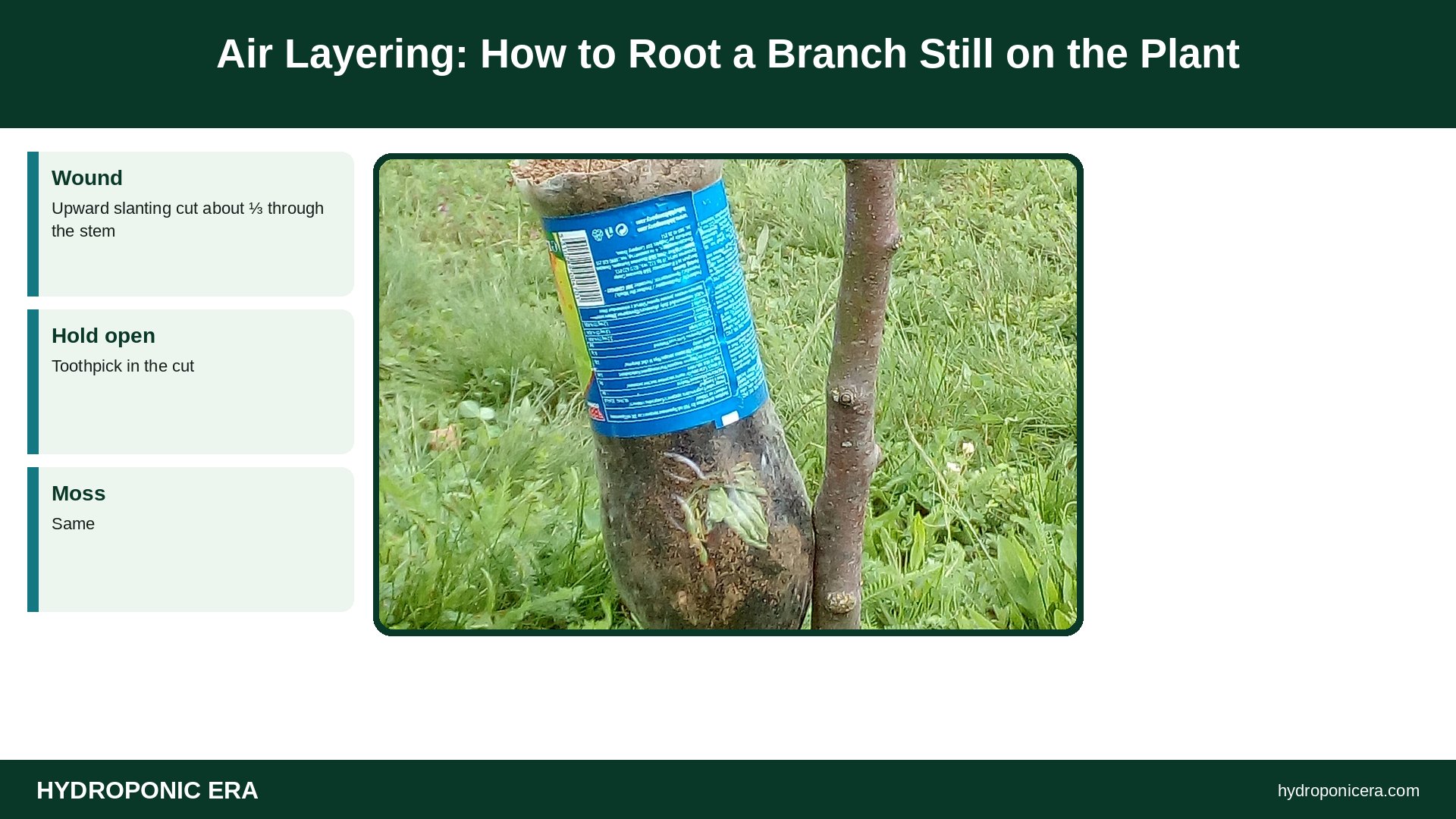
How Does Air Layering Work?
Air layering works by trapping the plant’s own food at a wound. Iowa State University Extension explains that girdling the stem, fully or partly, interrupts the downward flow of carbohydrates and other compounds, and these build up at the injury and promote rooting there. Because the branch stays attached, it keeps getting water through the woody center until it has its own roots.
Virginia Cooperative Extension notes that air layering is used to propagate indoor plants with thick stems, or to rejuvenate them when they become leggy.
Which Plants Can You Propagate by Air Layering?
You can propagate many woody and thick-stemmed plants by air layering. NC State Extension lists large, overgrown houseplants such as rubber plant, croton and dieffenbachia, and woody ornamentals such as azalea, camellia, magnolia, oleander and holly. Palm Beach County Extension adds tropical fruit trees including lychee, longan, loquat, carambola, Persian lime and fig.
| Group | Air layering candidates |
|---|---|
| Houseplants | Rubber plant, weeping fig, croton, dieffenbachia, dracaena, umbrella plant, monstera |
| Woody shrubs | Azalea, camellia, magnolia, holly, oleander |
| Fruit trees | Fig, lychee, longan, loquat, carambola, lime |
When Is the Best Time for Air Layering?
Spring is the best time for air layering. Iowa State says early spring is ideal, although most houseplants can be layered any time of year. For woody outdoor plants, NC State recommends spring layers on shoots from the previous season, or mid- to late-summer layers on current-season shoots. Palm Beach County Extension notes spring and summer layers are usually ready by fall or winter.
How Do You Air Layer a Plant Step by Step?
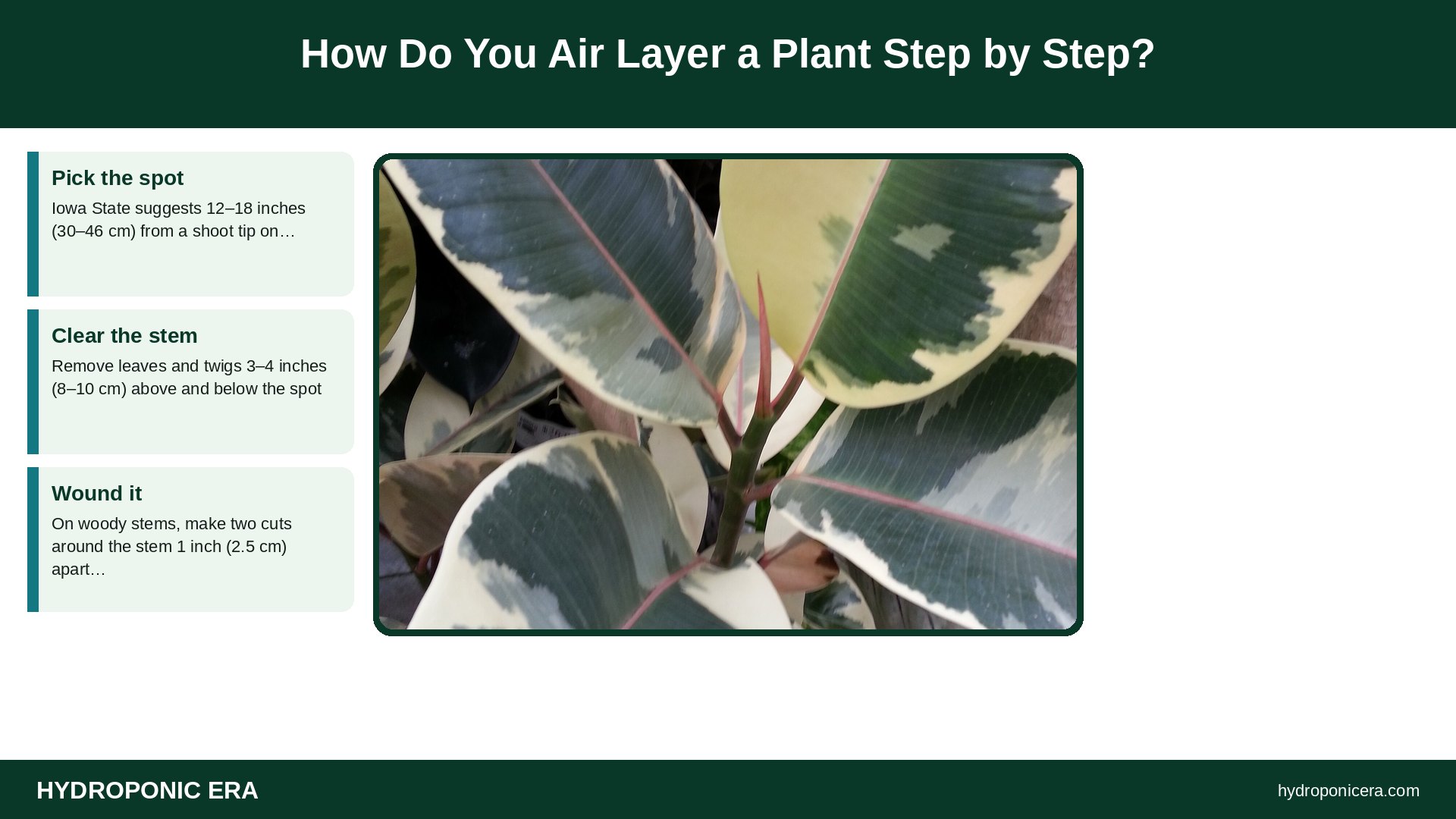
- Pick the spot. Iowa State suggests 12–18 inches (30–46 cm) from a shoot tip on rubber trees; NC State suggests about 1 foot (30 cm) from the tip, just below a node. Pencil-thick or larger stems work best on woody plants.
- Clear the stem. Remove leaves and twigs 3–4 inches (8–10 cm) above and below the spot.
- Wound it. On woody stems, make two cuts around the stem 1 inch (2.5 cm) apart, join them with a vertical cut, peel off the ring of bark, and scrape the cambium. On canes, make an upward cut one-third through and wedge it open.
- Add rooting hormone if you like. Iowa State notes the stem will root without it but more slowly.
- Pack moist moss. Soak unmilled sphagnum, squeeze out excess water, and wrap 1–2 handfuls around the wound.
- Wrap in clear plastic. Tie or tape above and below; no moss should stick out.
- Shade it outdoors. NC State and Palm Beach County suggest covering the plastic with aluminum foil in sun to prevent overheating.
- Check moisture. If the moss turns lighter and dry, open the top tie and add water.
How Long Does Air Layering Take to Root?
Air layering usually takes several weeks to a few months to root. Iowa State Extension says roots should appear in several weeks but some species take several months. The University of Alaska Fairbanks reports three to five months for indoor plants like dracaena and dumb cane, and Palm Beach County says fruit tree layers may take one month to a year.
| Plant type | Typical rooting time | Source |
|---|---|---|
| Rubber plant, ficus | Several weeks | Iowa State |
| Leggy indoor plants | About 3–5 months | UAF |
| Tropical fruit trees | 1 month to 1 year | Palm Beach County |
How Do You Cut and Pot an Air Layering Once It Roots?
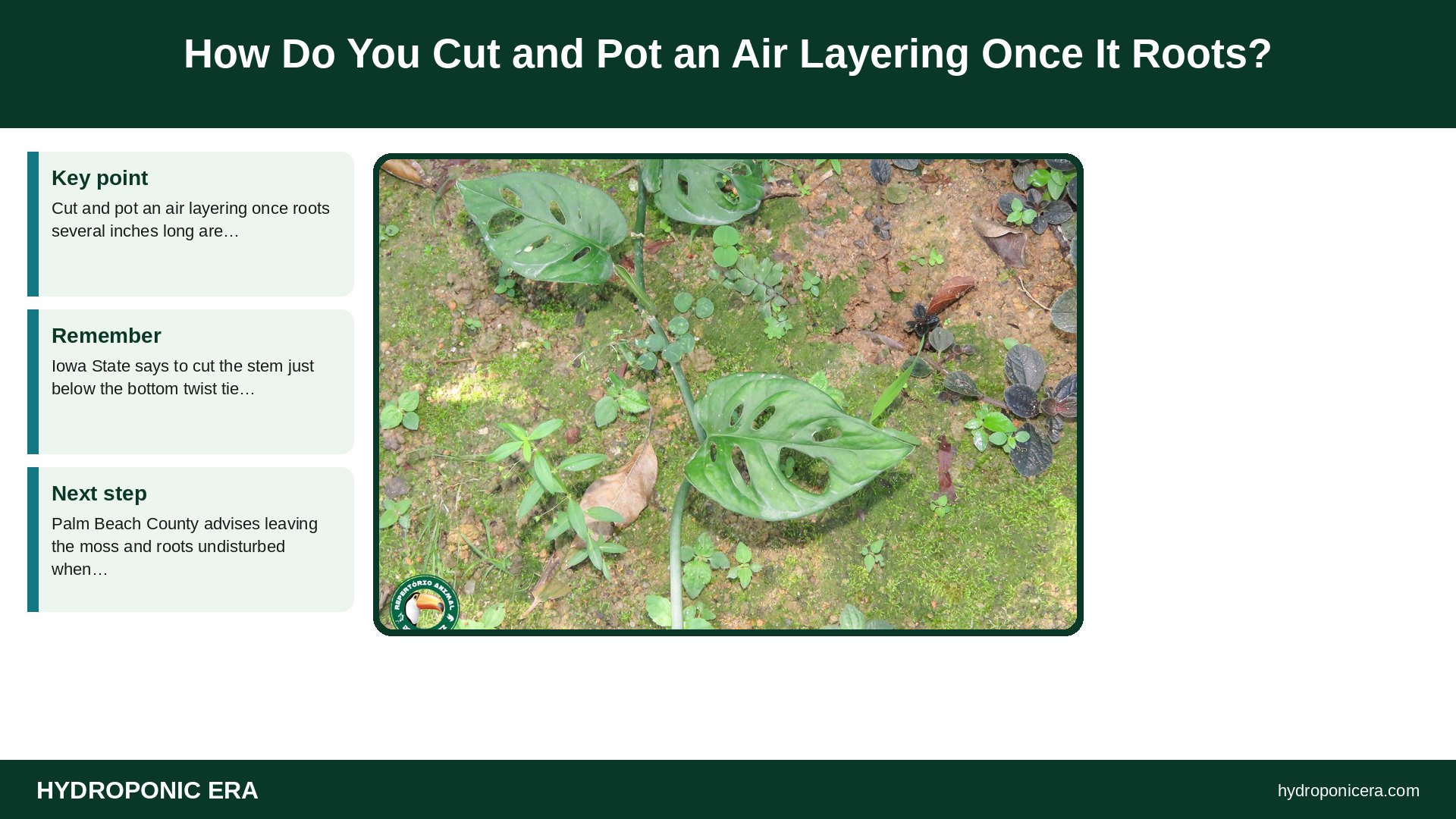
Cut and pot an air layering once roots several inches long are clearly visible through the plastic. Iowa State says to cut the stem just below the bottom twist tie, remove the plastic and ties, and plant the rooted top in commercial potting mix. Palm Beach County advises leaving the moss and roots undisturbed when planting.
Keep the new plant well watered in bright, indirect light; Iowa State says it should establish within a few weeks. NC State adds that new layers need shade and steady moisture at first. For extra humidity, use a humidity dome or tent.
What Happens to the Parent Plant After Air Layering?
The parent plant usually regrows. The University of Alaska Fairbanks notes that the leafless stump left behind will sprout new leaves near the top with water and lots of light, which can take one to several months. You can also pot the rooted top and the old base together.
Why Is My Air Layering Not Rooting?
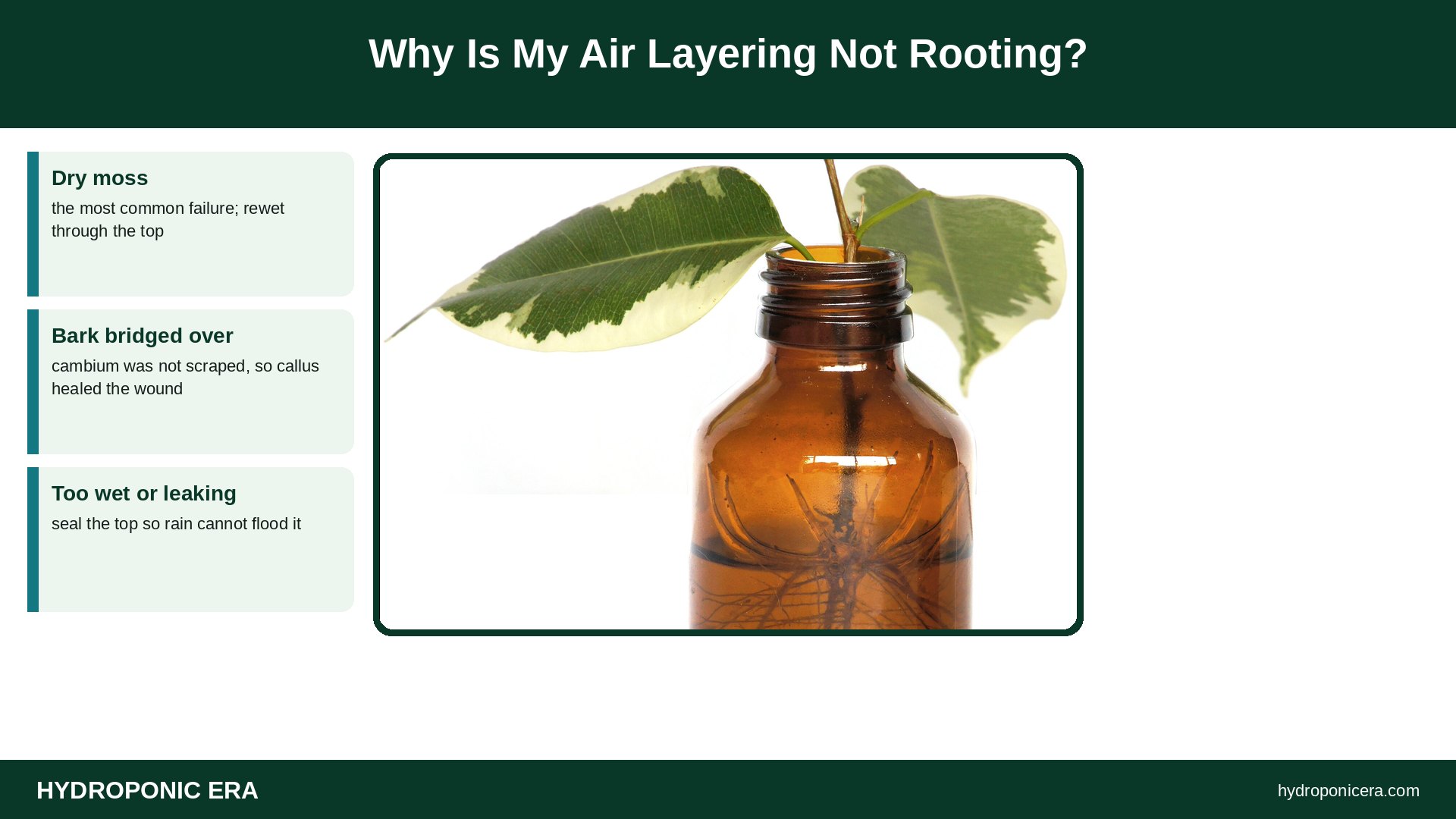
- Dry moss: the most common failure; rewet through the top.
- Bark bridged over: cambium was not scraped, so callus healed the wound.
- Too wet or leaking: seal the top so rain cannot flood it.
- Overheating: cover clear plastic with foil in direct sun.
- Weak plant: UAF says healthy plants in good light root faster.
Prefer simpler methods? See our guide to hydroponic cuttings and cloning.
What Supplies Do You Need for Air Layering?
Air layering needs only a few supplies. Iowa State Extension lists a sharp knife, sphagnum moss, a sheet of clear plastic, twist ties and rooting hormone. Add a toothpick for cane-type stems, aluminum foil for outdoor layers in sun, and a pot with fresh potting mix for the rooted plant.
FAQs
Can I air layer in water instead of moss?
Some growers use a cup of water or clear pods, but moss is the extension-standard method.
What can I use instead of sphagnum moss?
Coco coir or moist rooting mix can work if it stays evenly moist.
Do I need rooting hormone for air layering?
No. Iowa State says it speeds rooting, but stems root without it.
Can I do several layers on one plant?
Yes, on different branches, as long as the parent stays healthy.
Are air layering pods worth it?
Reusable pods replace plastic wrap and make checking easier; they work the same way.
Sources
- Iowa State University Extension — How to Propagate by Air Layering and Simple Layering
- Iowa State University Extension — How Can I Propagate a Rubber Tree?
- NC State Extension — Plant Propagation by Layering
- University of Alaska Fairbanks — Airlayer to Renew Indoor Plants (HGA-00135)
- UF/IFAS Palm Beach County Extension — Cloning Your Fruit Trees
- Virginia Cooperative Extension — Propagation by Cuttings, Layering and Division
- Photo credits (Wikimedia Commons, edited with titles): AirLayering 07 by Drenisa (CC BY-SA 4.0); Ficus elastica Doescheri03ra by Satin66Flower (CC BY-SA 4.0); Monstera adansonii 127416487 by Diogo Luiz (CC BY-SA 4.0); Ficus cuttings with roots in a bottle, White background by Biusch (CC BY-SA 3.0); Basilikum (Ocimum basilicum) Stecklinge — Josef Schlaghecken by Schlaghecken Josef (CC BY-SA 4.0)