
Is lucky bamboo in fish tank setups safe for fish? It is generally safe when only the roots and lower stem sit in the water and the leaves stay above it. Lucky bamboo is a Dracaena, not an aquatic plant, so submerged leaves rot and foul the water. Rinse new stalks and keep pest sprays away.
Key takeaway: Keep leaves dry, roots wet, and watch for rot. Lucky bamboo is toxic to dogs and cats, so keep pets from chewing it.
| Need | Detail |
|---|---|
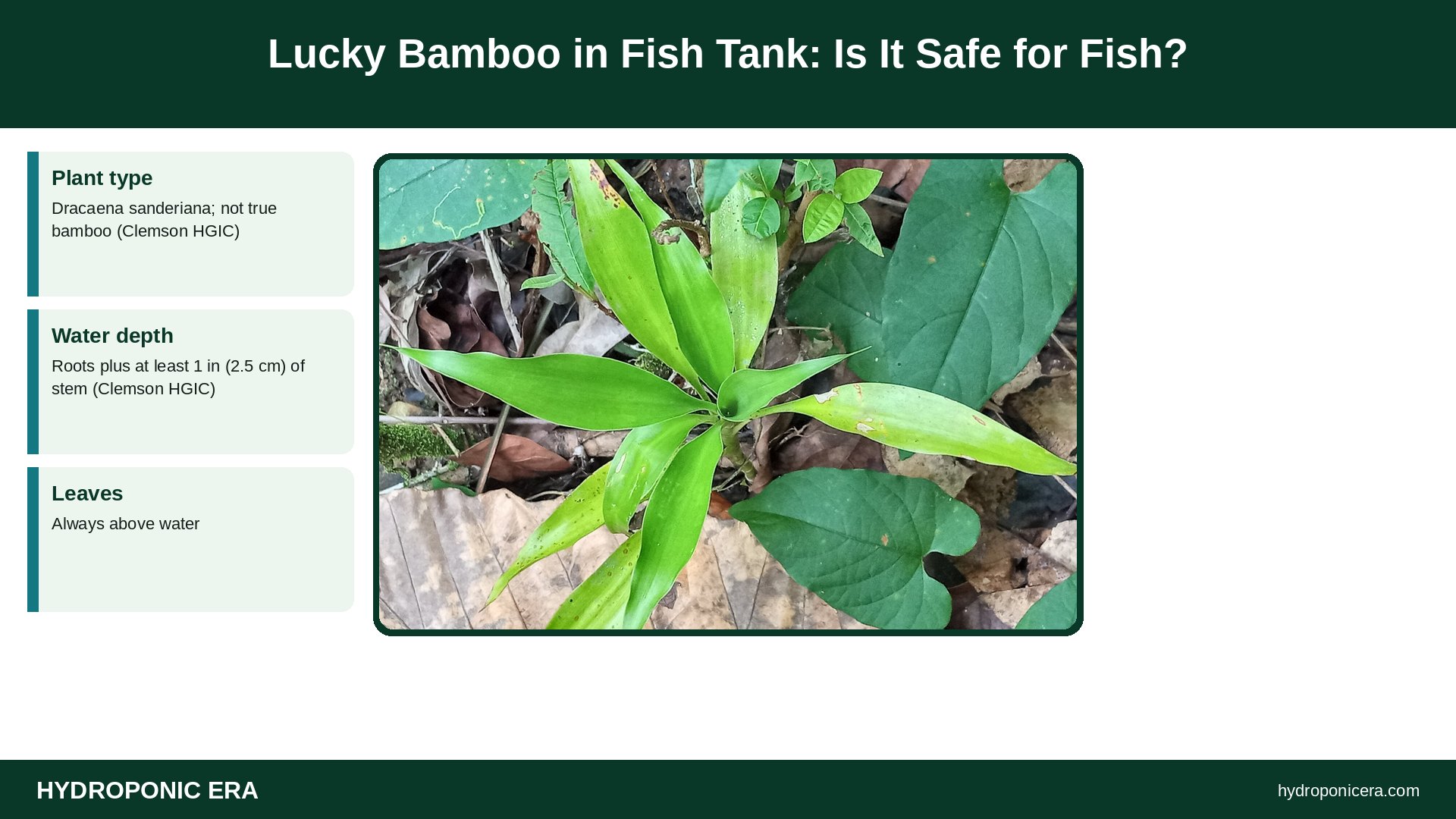
| Plant type | Dracaena sanderiana; not true bamboo (Clemson HGIC) |
| Water depth | Roots plus at least 1 in (2.5 cm) of stem (Clemson HGIC) |
| Leaves | Always above water |
| Light | Bright, indirect; direct sun browns leaves |
| Pets | Dracaena is toxic to dogs and cats (ASPCA) |
| New roots | Usually 2 to 3 weeks from a cutting |
Is Lucky Bamboo in Fish Tank Water Safe for Fish?
Lucky bamboo in fish tank water is widely kept with fish and is generally considered low risk when the leaves stay dry and the plant is clean. The real dangers are rotting leaves or stems, leftover fertilizer or pesticide on store stalks, and decorative wax on cut tops. Inspect and rinse every stalk first.
The ASPCA lists Dracaena species as toxic to dogs and cats because of saponins, and Clemson HGIC notes it can irritate human skin. Wash hands after handling. See our aquarium water caution guide.
Can Lucky Bamboo in Fish Tank Water Be Fully Submerged?
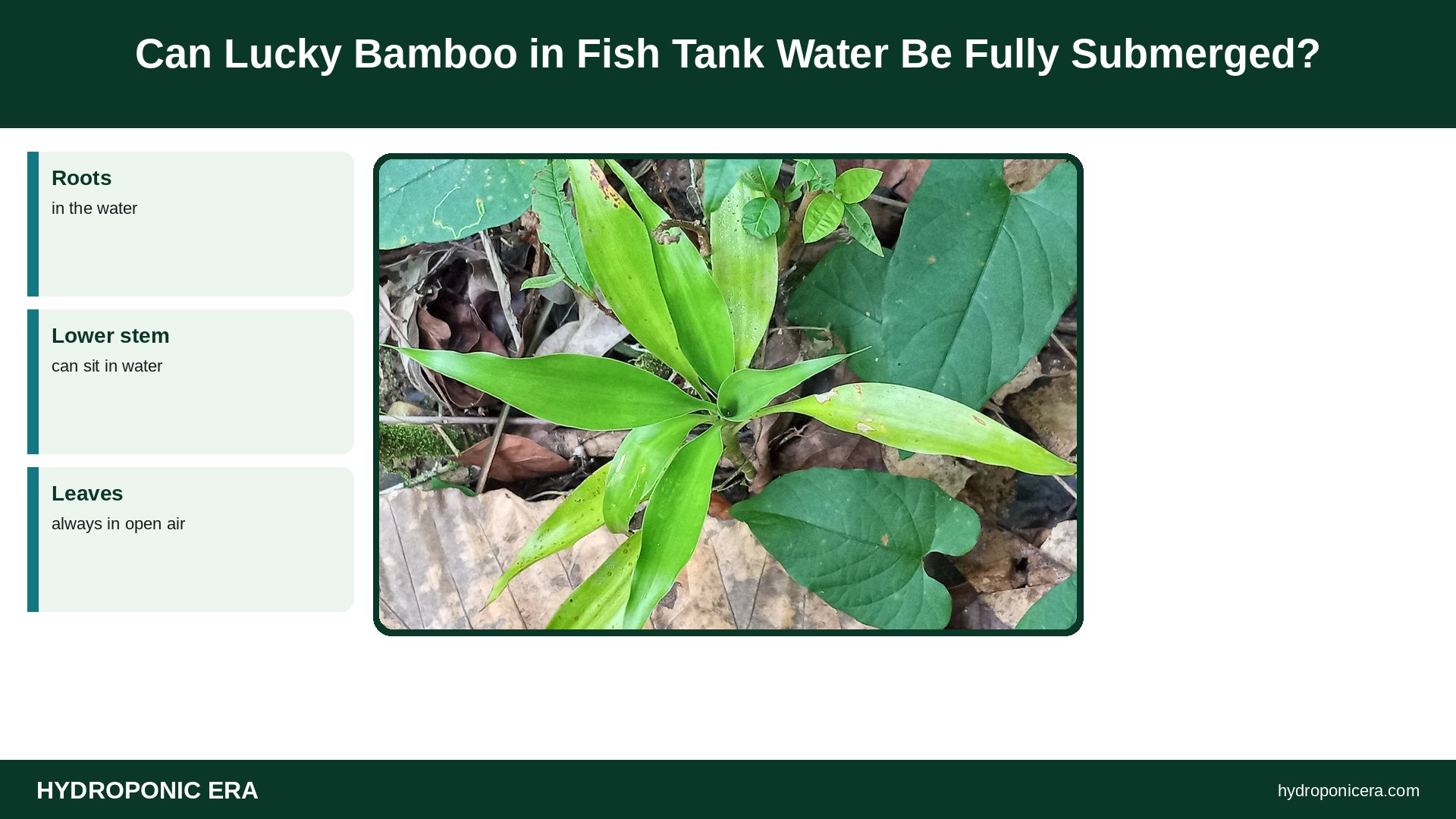
No. Lucky bamboo can survive for a while underwater, but it is not an aquatic plant and submerged leaves usually yellow and rot over time. Rotting tissue adds waste that can raise ammonia. Keep the leafy top above the waterline so the plant stays healthy and the tank stays clean.
- Roots: in the water.
- Lower stem: can sit in water.
- Leaves: always in open air.
- Cut tops: keep dry to prevent rot.
How Do You Add Lucky Bamboo in Fish Tank Setups?
Add lucky bamboo in fish tank setups by placing rinsed stalks in a hang-on planter, a gap in the lid, or wedged between rocks so the roots reach the water and the leaves rise above the rim. Clemson HGIC suggests pebbles to hold stalks upright in containers, and the same idea works in a tank corner.
- Choose healthy stalks that are firm and green.
- Remove ties and wax if they could touch water.
- Rinse the roots under dechlorinated water.
- Trim yellow or mushy roots.
- Anchor the stalks with rocks, a planter or a lid hole.
- Keep leaves above water.
- Watch water quality for the first few weeks.
Does Lucky Bamboo Clean Fish Tank Water?
It helps a little. Like other plants with roots in water, lucky bamboo uses some nitrate and other nutrients from fish waste as it grows. It grows slowly, so its effect is small compared with faster plants such as pothos. It does not replace a filter or water changes.
Compare options in our list of plants that grow in water.
What Light Does Lucky Bamboo in Fish Tank Lids Need?
Lucky bamboo in fish tank lids or rims needs bright, indirect light. Clemson HGIC recommends east- or north-facing rooms and warns direct sunlight browns the leaves. The spill light from a tank fixture plus room light is often enough. Avoid direct sun on the tank, which also feeds algae.
Should You Fertilize Lucky Bamboo in a Fish Tank?
Usually not. Clemson HGIC suggests a weak liquid fertilizer every other month for lucky bamboo in vases, but in a fish tank, fish waste supplies nutrients and plant fertilizer may harm fish or feed algae. Let the fish feed the plant, and keep up regular partial water changes instead.
| Problem | Likely cause | Fix |
|---|---|---|
| Yellow stalk | Rot or too much light | Remove stalk; move from sun |
| Brown leaf tips | Fluoride, direct sun | Trim; reduce sun |
| Mushy roots | Rot | Trim to firm tissue |
| Pests | Mites, mealybugs, aphids | Rinse leaves away from tank |
How Do You Handle Pests on Lucky Bamboo Near Fish?
Handle pests by rinsing leaves or wiping them by hand, away from the tank. Clemson HGIC lists spider mites, mealybugs and aphids as pests and mentions neem oil or insecticidal soap, but keep those products out of fish tank water because they can harm fish. Remove the plant before any treatment.
How Often Should You Check the Stalks?
Check the stalks once a week during routine tank care. Look for yellowing, soft spots, a sour smell or slimy roots, and remove any problem stalk right away so decay does not reach the water. Healthy stalks stay firm and green, with white or orange-red roots that feel solid.
- Weekly: look over stalks, leaves and roots.
- At water changes: trim dead roots and leaves.
- Monthly: test ammonia and nitrate after adding plants.
Our water testing guide explains common tests.
How Do You Grow More Stalks?
Clemson HGIC says to cut a shoot of new growth off the main stem, remove the lowest leaves and place it in water; roots usually form within 2 to 3 weeks. Root new cuttings in a jar first, then move them to the tank once roots look firm and white.
Learn more in our guide to lucky bamboo care in water.
Which Fish Work With Lucky Bamboo in Fish Tank Setups?
Small, peaceful fish such as bettas, guppies and tetras suit lucky bamboo in fish tank setups because they rarely disturb roots. Diggers such as large cichlids or goldfish may uproot stalks, so secure them well. Keep the tank heated and stable for tropical fish; the plant also prefers warmth.
Clemson HGIC notes lucky bamboo kept outdoors should come inside before nights drop below 65°F (18°C). Our guide to aquarium heaters covers stable temperatures.
FAQ About Lucky Bamboo in Fish Tanks
Is lucky bamboo real bamboo?
No; it is Dracaena sanderiana (Clemson HGIC).
Can a betta live with it?
Yes, with leaves above water and a clean stalk.
Why is my stalk turning yellow?
Often rot or too much sun; remove yellow stalks.
Is it toxic to cats and dogs?
Yes; the ASPCA lists Dracaena as toxic to both.
How deep should it sit?
Cover roots and about 1 inch (2.5 cm) of stem.
Sources
- Clemson HGIC — How To Grow and Care for Lucky Bamboo
- ASPCA — Dracaena
- NC State Extension — Dracaena sanderiana
- Photo credits (Wikimedia Commons, edited with titles): Dracaena sanderiana 132158060 by Beah Vega (CC BY 4.0); Dracaena sanderiana 132158060 by Beah Vega (CC BY 4.0); Covid test kit 2022 by Downtowngal (CC BY-SA 4.0); Glow light tetra by Jim Zamichieli (CC BY-SA 3.0)