
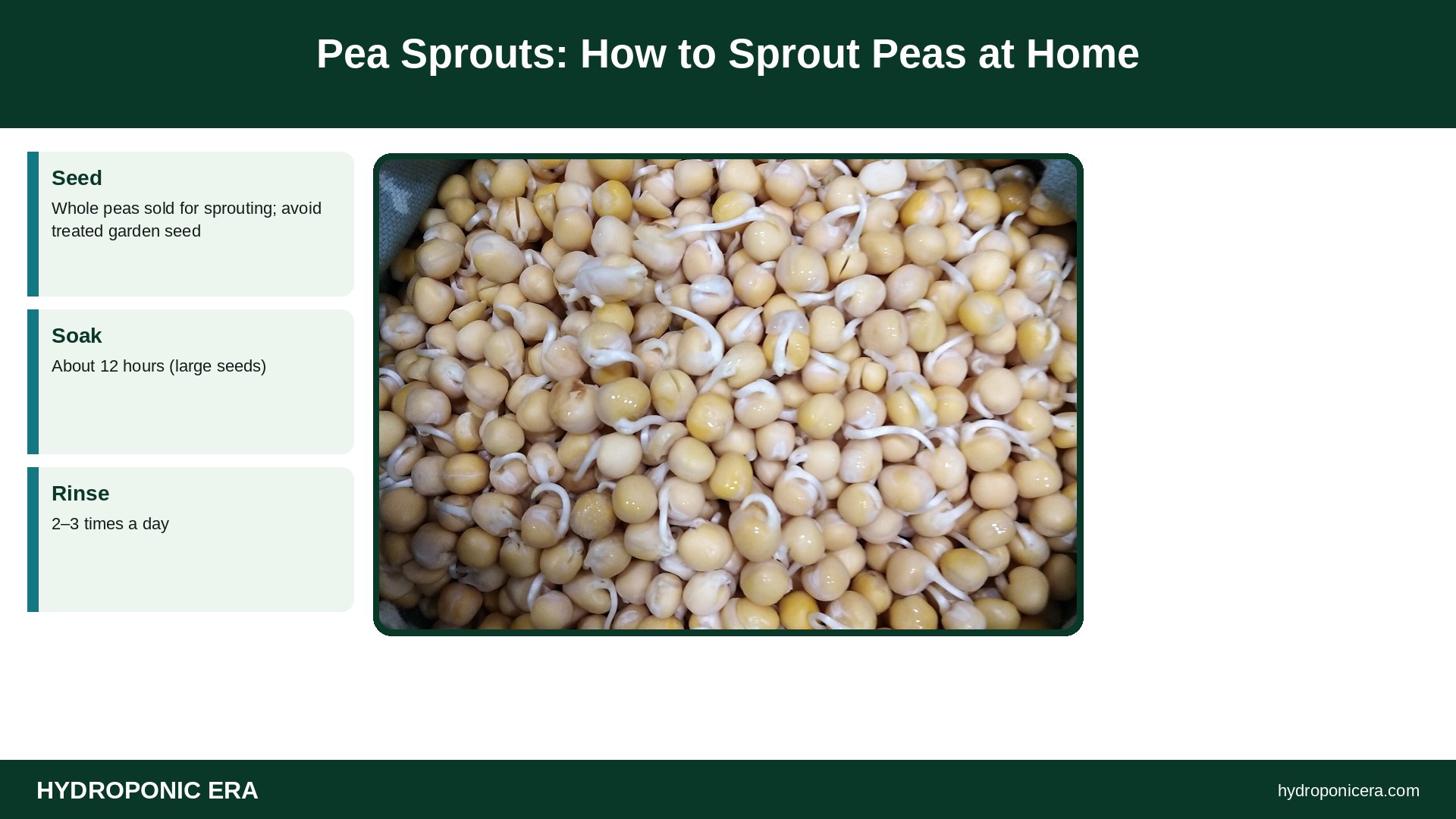
How do you grow pea sprouts? Soak whole dried peas sold for sprouting in room-temperature water for about 12 hours, drain, and keep them in a jar or tray in a dark spot. Rinse and drain two or three times a day. Pea sprouts are ready in about 3–6 days, once short roots appear. Refrigerate them and eat within a few days.
Key takeaway: Pea sprouts are one of the easiest sprouts to grow because the large seeds are forgiving and fast. Start with seed labeled for sprouting, rinse often so the peas never sour, and harvest early, since large-seeded sprouts lose quality quickly at room temperature.
| Pea sprouts step | Guideline | Source |
|---|---|---|
| Seed | Whole peas sold for sprouting; avoid treated garden seed | Virginia Tech, UC ANR |
| Soak | About 12 hours (large seeds) | USask |
| Rinse | 2–3 times a day | USask, Virginia Tech |
| Temperature | 70–80°F (21–27°C), dark | NC State |
| Ready in | About 3–6 days | Virginia Tech |
| Storage | Refrigerate; large sprouts best within 3–4 days | Virginia Tech |
What Are Pea Sprouts?
Pea sprouts are germinated pea seeds eaten when the root, and sometimes a tiny shoot, has just emerged. They taste sweet and green, a lot like fresh peas, with a crisp bite. University of Vermont Extension lists peas among popular sprouting seeds, and NC State Extension includes green peas in its list of seeds for home sprouting.
Are Pea Sprouts the Same as Pea Shoots?
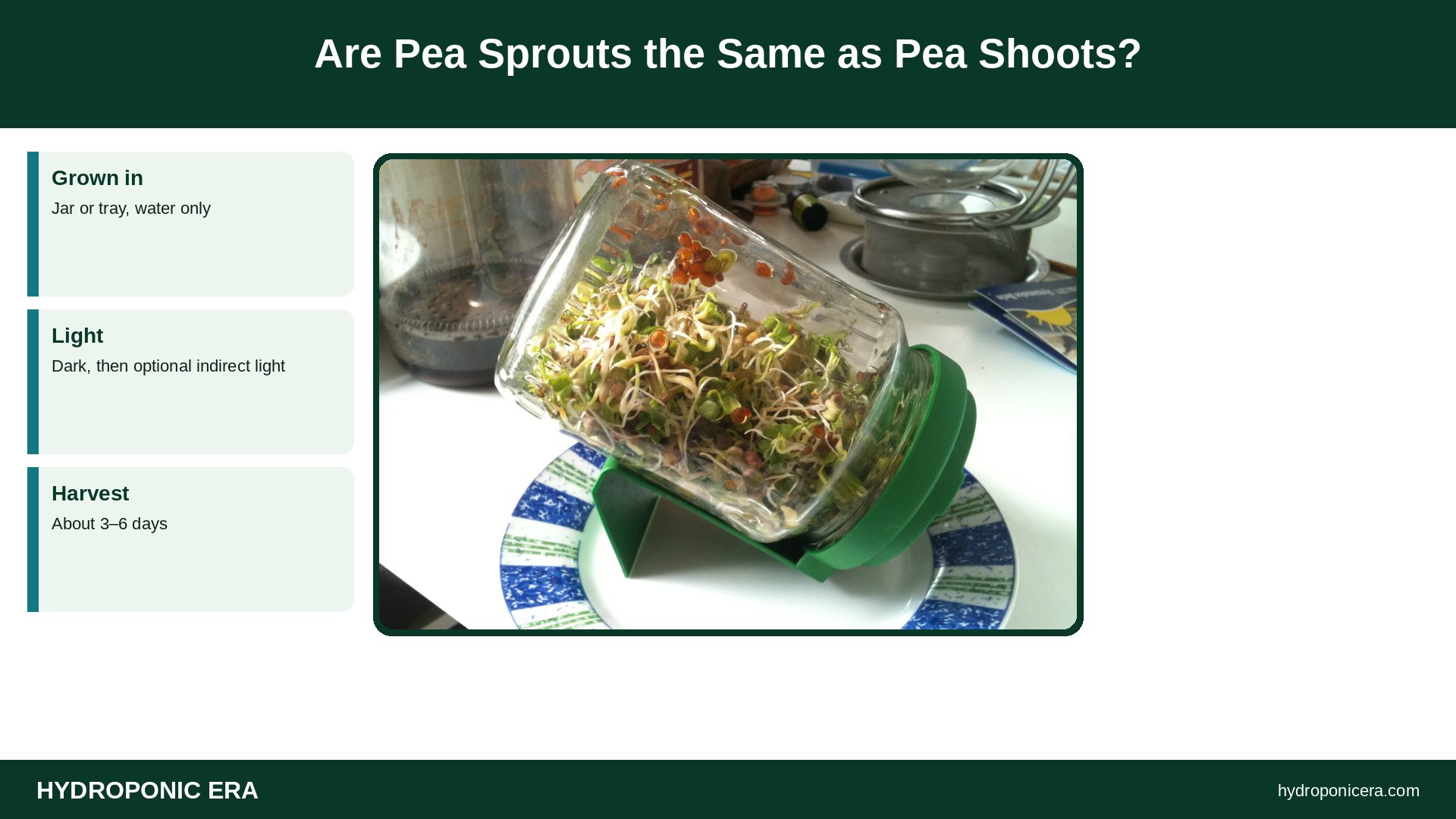
No. Pea sprouts are harvested within days, root and seed included, while pea shoots are young stems and leaves grown in a tray of growing media and cut above the soil. Utah State University Extension’s microgreens guide grows pea shoots from about 5.3 oz (150 g) of seed per 10 × 20 inch (25 × 50 cm) tray, soaked 6 hours, kept dark 3 days and cut at 8–10 days.
| Feature | Pea sprouts | Pea shoots |
|---|---|---|
| Grown in | Jar or tray, water only | Tray with media |
| Light | Dark, then optional indirect light | Light after dark start |
| Harvest | About 3–6 days | About 8–10 days |
| Eaten | Whole seed, root and shoot | Cut stems and leaves |
For shoots, see our hydroponic microgreens guide.
Which Peas Should You Use for Pea Sprouts?
Use whole, untreated peas sold for sprouting. Virginia Tech Extension warns that seeds sold for gardening are often treated with pesticides, so buy seed labeled for sprouting. Split peas will not sprout because the seed is broken. UC ANR goes further and recommends certified pathogen-free seed, noting that “organic” does not mean tested for pathogens.
How Do You Grow Pea Sprouts Step by Step?
- Measure seed. Virginia Tech suggests starting with 1 tablespoon to ¼ cup, using more for larger seeds like peas.
- Sanitize the jar with a diluted bleach solution, then rinse, as UC ANR describes.
- Soak about 12 hours in clean, room-temperature water; USask gives 12 hours for peas.
- Drain and rinse through a mesh lid.
- Tilt the jar upside down at an angle so water drains fully.
- Keep it dark and warm, around 70–80°F (21–27°C), per NC State.
- Rinse two to three times daily so the peas don’t sour.
- Harvest when roots are about ¼–½ inch (6–13 mm) long, usually by day 3–6.
New to jar sprouting? Read how to grow sprouts in a jar.
How Long Do Pea Sprouts Take?
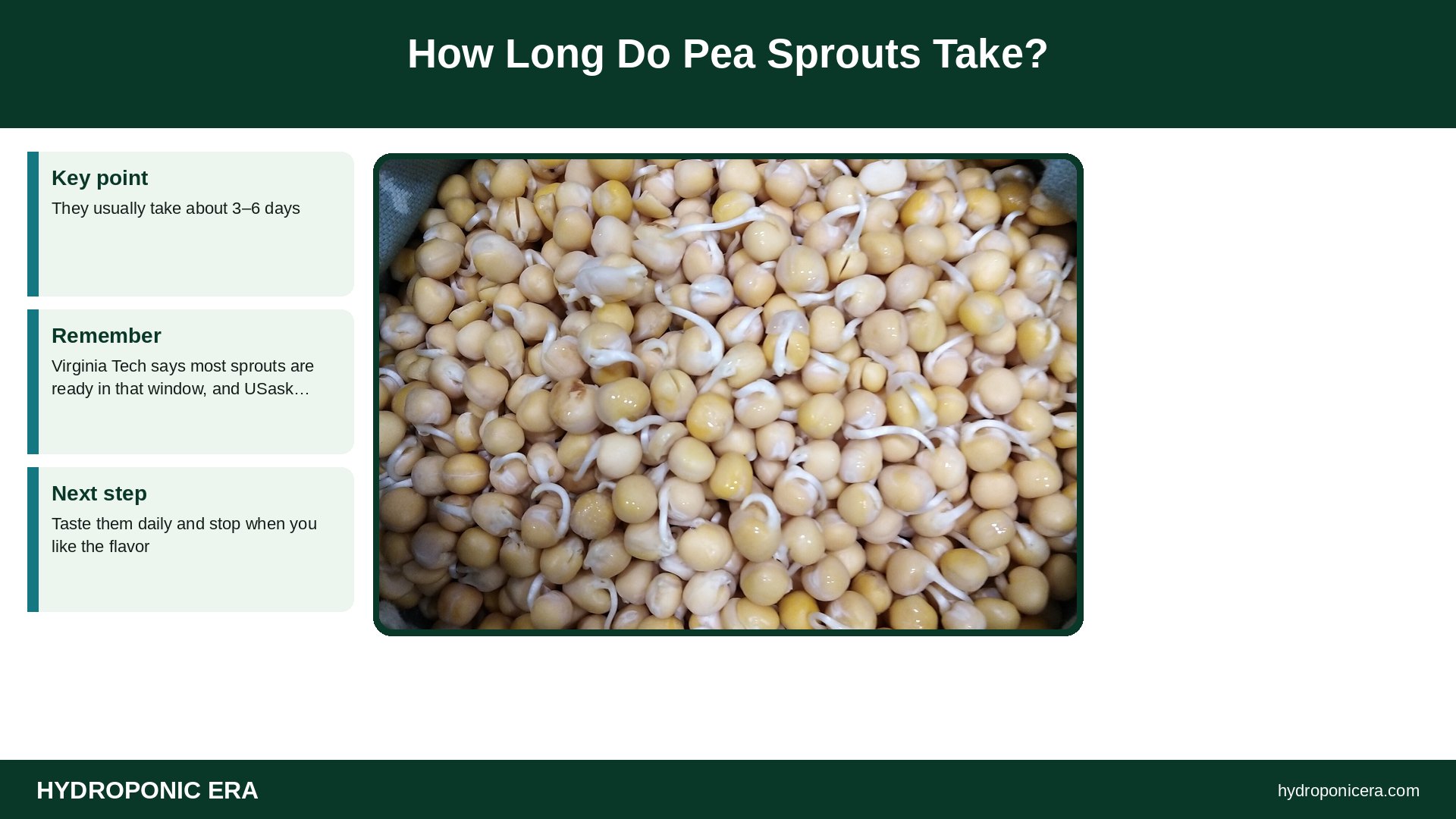
They usually take about 3–6 days. Virginia Tech says most sprouts are ready in that window, and USask says sprouts can be eaten as soon as roots or leaves are visible. Taste them daily and stop when you like the flavor. Virginia Tech warns that large seeds turn soft and moldy if left too long at room temperature.
Are Pea Sprouts Safe to Eat Raw?
They carry the same risk as other raw sprouts. The FDA says warm, humid sprouting conditions are ideal for bacteria, and a few bacteria on the seed can grow to high levels even in clean home setups. The FDA advises children, older adults, pregnant people and anyone with a weakened immune system to avoid raw or lightly cooked sprouts.
- Buy certified seed where possible.
- Heat-treat seed: UC ANR describes 5 minutes in 3% hydrogen peroxide preheated to 140°F (60°C), then a 1-minute rinse.
- Skim floating seeds and hulls, which UC ANR links to most contamination.
- Cook sprouts to 165°F (74°C) for higher-risk eaters, as UC ANR advises.
Should Pea Sprouts Be Grown in the Dark?
Grow pea sprouts in the dark at first, then give indirect light if you want green tips. USask suggests moving sprouts to a bright spot once leaves form, but never in direct sun. Virginia Tech notes light-grown sprouts are greener and stronger in flavor, while dark-grown sprouts stay pale and mild. Either way is fine.
How Do You Store Pea Sprouts?
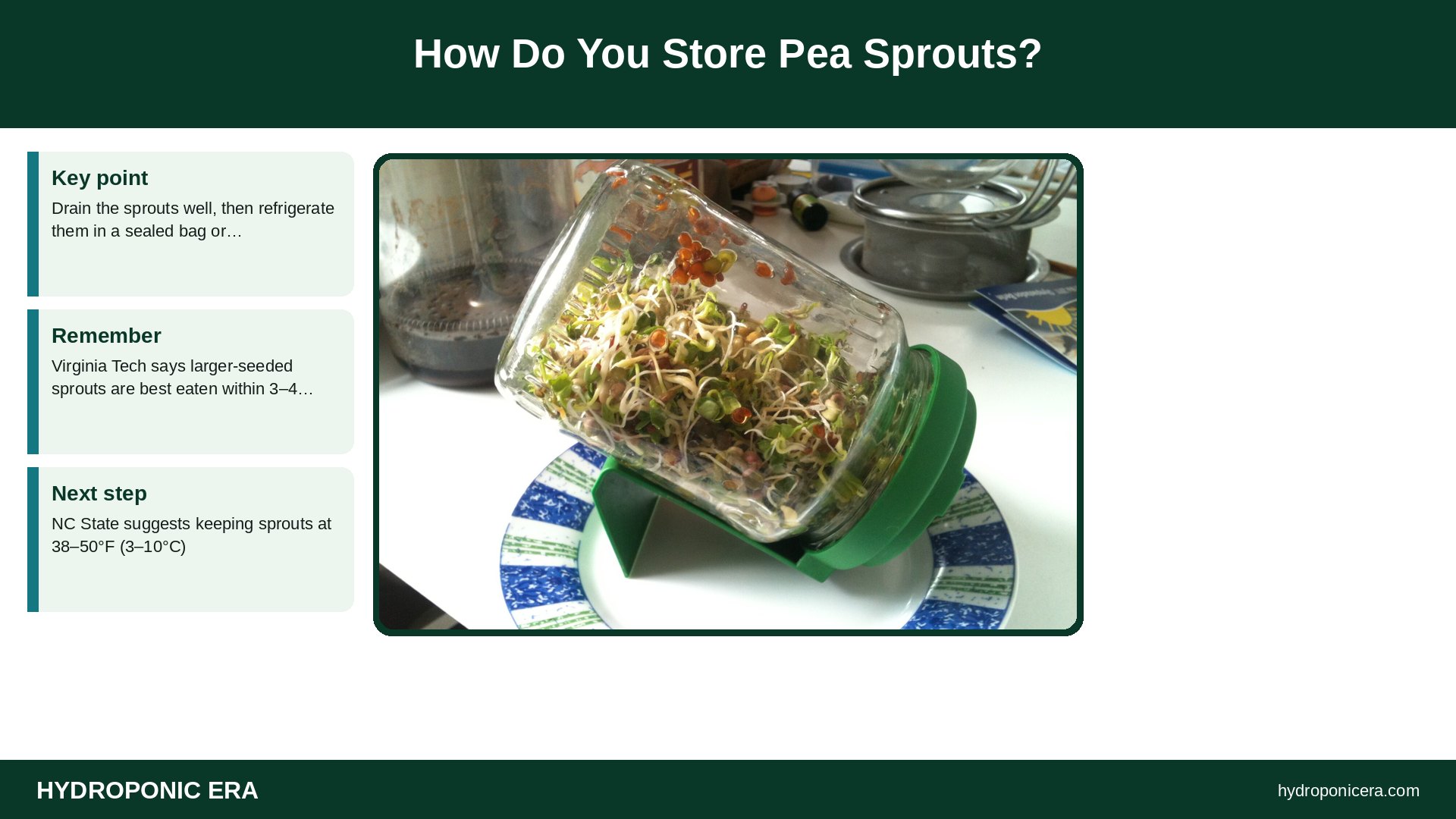
Drain the sprouts well, then refrigerate them in a sealed bag or container. Virginia Tech says larger-seeded sprouts are best eaten within 3–4 days, while small-seeded sprouts keep a week or more. NC State suggests keeping sprouts at 38–50°F (3–10°C). Toss any batch that smells sour or looks slimy.
How Do You Use Pea Sprouts in the Kitchen?
Use them anywhere you want a sweet, crunchy, fresh-pea flavor. Virginia Tech Extension suggests sprouts for soups, sandwiches, omelets, breads, casseroles, stir-fries and vegetable dishes, or simply as a snack. Cooking them briefly is a smart choice for anyone at higher risk of foodborne illness. Add them at the end of cooking so they stay crisp.
Virginia Tech also notes that sprout rinse water can be reused to water houseplants, a small way to cut waste while you sprout.
Why Are My Pea Sprouts Moldy or Sour?
- Sour smell: not rinsed enough; rinse 3 times a day and drain completely.
- Slimy or fuzzy seeds: left too long or kept too warm; discard and restart.
- Seeds won’t sprout: old, split or treated seed. NC State also notes chlorinated water can cause poor sprouting.
- Uneven growth: too many peas in the jar; use less seed.
FAQs
Can I use grocery-store dried peas?
Whole dried peas may sprout, but seed sold for sprouting is safer and more reliable.
Do I eat the whole pea?
Yes, the seed, root and any small shoot.
Can I cook them?
Yes. Stir-frying or adding them to soups lowers food-safety risk, and UC ANR recommends cooking to 165°F (74°C) for higher-risk eaters.
Why did only some peas sprout?
Old or damaged seed germinates poorly; skim off floaters and broken peas after soaking.
How often should I start a batch?
NC State suggests starting a new batch every few days for a steady supply.
Can I grow peas to full size hydroponically?
Yes. See how to grow peas hydroponically.
Sources
- Virginia Cooperative Extension — Sprouting Seeds for Food (SPES-394P)
- University of Saskatchewan — Sprouts
- NC State Extension — Bean Sprouts and Other Vegetable Seed Sprouts
- UC ANR — Growing Seed Sprouts at Home (Publication 8151)
- U.S. FDA — Selecting and Serving Produce Safely
- Utah State University Extension — Grow Your Own Microgreens
- Photo credits (Wikimedia Commons, edited with titles): Garden pea sprouts by Yarzaryeni (CC BY 3.0); Growing bean sprouts by User:tlcoles (CC BY-SA 3.0); Garden pea sprouts by Yarzaryeni (CC BY 3.0); Growing bean sprouts by User:tlcoles (CC BY-SA 3.0); Salad, Romaine lettuce, cucumber, tomato, green pepper, radish, alfalfa sprouts, black olives, lemon juice, salt & olive oil (7765310086) by Lablascovegmenu from London (CC BY 2.0)