
Do rice hulls work in hydroponics? Parboiled rice hulls can replace part of perlite in soilless mixes, and trials show similar growth for many crops. Rice hulls hydroponics works best as 15–30% of a mix with coir or peat, because hulls add air space but hold less water. Use parboiled, not raw, hulls and watch moisture.
Key takeaway: Rice hulls hydroponics is a low-cost way to add aeration to coir or peat mixes. Research on parboiled hulls shows growth comparable to perlite at moderate rates, but water retention falls above about 30%. Use parboiled hulls, rinse and monitor irrigation, and test a small batch before committing a whole crop.
| Study | Setting | Main finding |
|---|---|---|
| Evans and Gachukia, HortScience 2004 | Greenhouse peat mixes, parboiled hulls vs perlite | Comparable growth, no weed seeds germinated, tomato shoot growth lower at 20–40% hulls |
| HortTechnology 17(3) | Substrate physical properties | Hulls improved air-filled porosity, water holding lower at 30% and above |
| ASHS 2009 abstract | Hydroponic herbs and flowers in 85% hulls and 15% coir | Yields comparable to perlite and coir |

What Is Rice Hulls Hydroponics?
Rice hulls hydroponics means using rice hulls, the husks removed when rice is milled, as a lightweight, free-draining growing medium or as an amendment in a soilless mix. Hulls are cheap and renewable. The best studied form is parboiled rice hulls, which are steamed or boiled, then dried, to reduce weed seeds and fine dust.
Hulls are not a mainstream hydroponic medium like coco coir or perlite and vermiculite. Rice hulls hydroponics works as a replacement for part of the perlite and as an addition to peat or coir. See the broader choices in our guide to growing media for hydroponics.
What Does Research Show About Rice Hulls Hydroponics?
Studies of rice hulls hydroponics and soilless mixes show growth similar to perlite at moderate rates. A 2004 HortScience study found parboiled hulls and perlite gave comparable growth in peat mixes, with lower tomato shoot growth at 20–40% hulls. A 2009 abstract reported comparable herb and flower yields in 85% hulls with 15% coir.
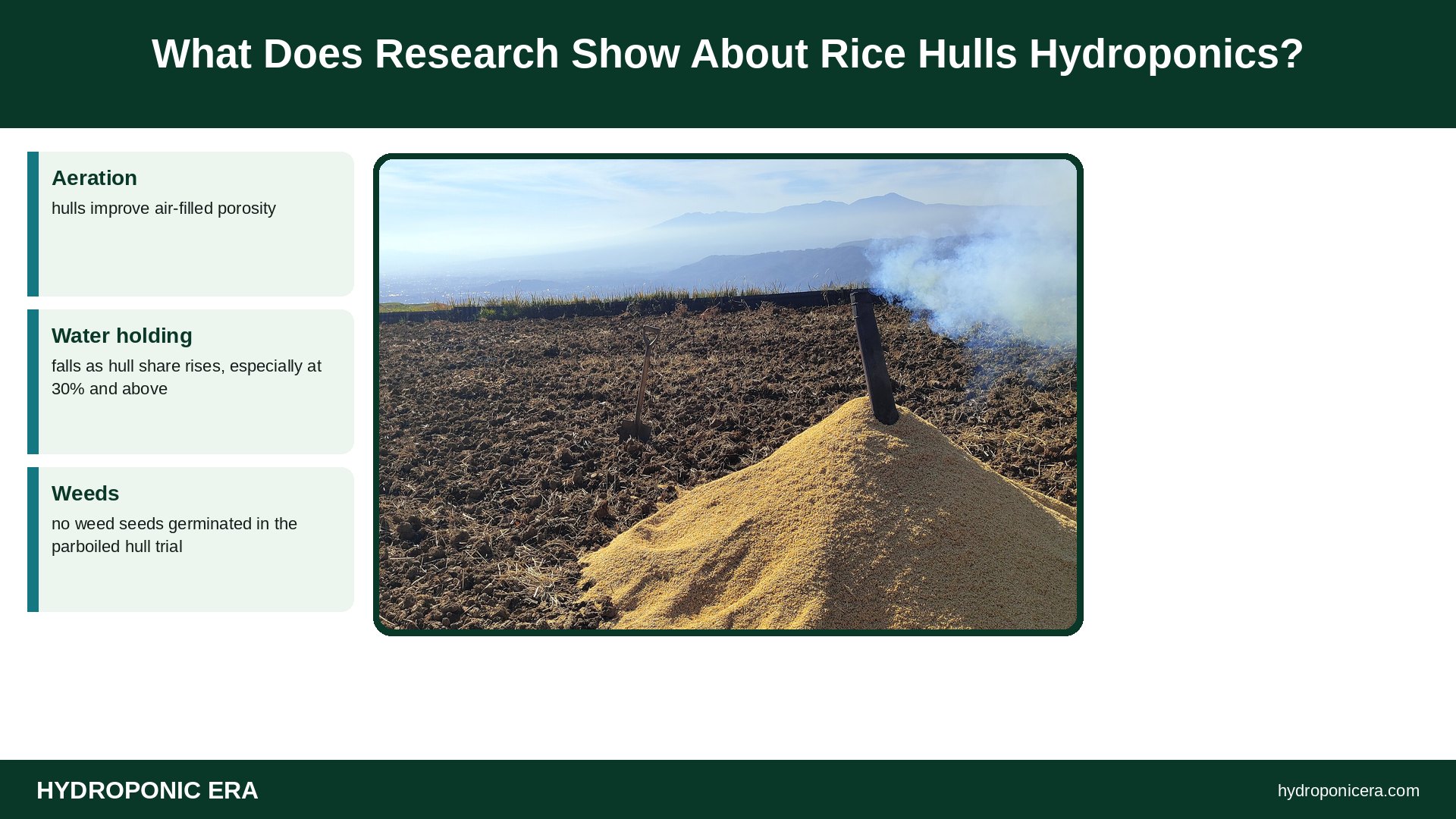
- Aeration: hulls improve air-filled porosity.
- Water holding: falls as hull share rises, especially at 30% and above.
- Weeds: no weed seeds germinated in the parboiled hull trial.
- Caution: the 2004 trial was in peat-based greenhouse mixes, not hydroponics.
In other words, the best evidence for rice hulls hydroponics is promising but narrow, and results depend on crop, container and irrigation frequency.
How Do You Use Rice Hulls in Hydroponics?
Start with a blend of 15–30% parboiled hulls and the rest coir or peat, then adjust based on how fast the mix dries. Rinse the hulls, soak them briefly, and check drainage. Raw hulls may carry weed seeds and take up nitrogen as they break down, so parboiled hulls are the safer choice.
- Buy parboiled or steamed hulls from a horticultural supplier.
- Rinse them and let excess water drain.
- Mix 15–30% hulls with coir or peat, and test drainage.
- Fill containers and irrigate more often than with coir alone.
- Check EC and pH of runoff, as explained in EC and TDS in hydroponics.
Adjust irrigation frequency according to the plants’ needs and weather. Because hulls hold less water, drip systems may need shorter, more frequent cycles.
Rice Hulls vs Perlite: Which Is Better?
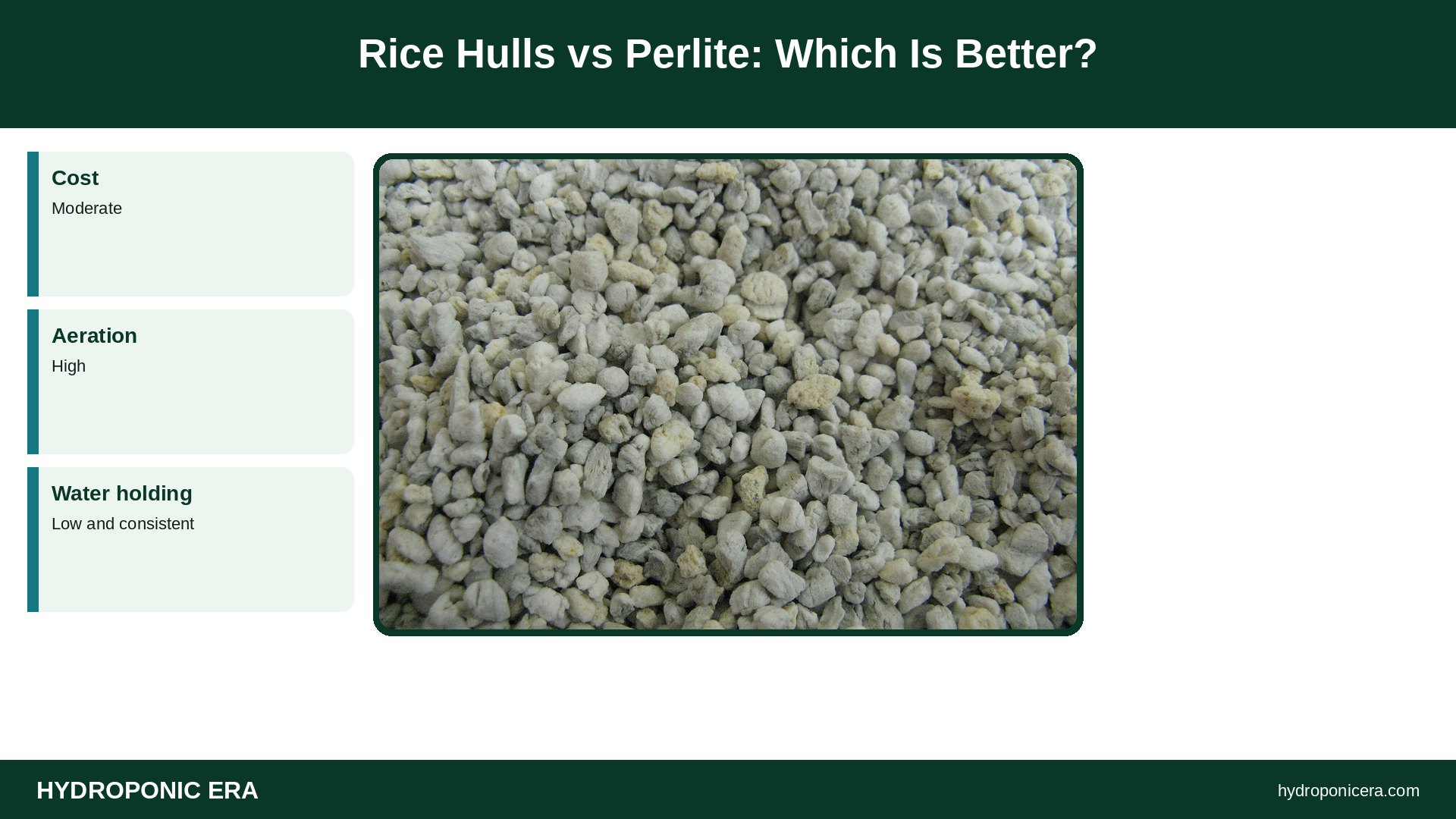
Rice hulls are cheaper and renewable, while perlite is more consistent and holds slightly different amounts of water. In research, parboiled hulls matched perlite for growth at moderate rates. Perlite is easier to find and standardized, so rice hulls hydroponics suits growers who want a low-cost, renewable amendment and can test it.
| Feature | Parboiled rice hulls | Perlite |
|---|---|---|
| Cost | Often low | Moderate |
| Aeration | High | High |
| Water holding | Lower above about 30% of a mix | Low and consistent |
| Consistency | Varies by source | Standardized |
| Dust and weed seeds | Low if parboiled | Dust when dry |
What Are the Risks of Rice Hulls Hydroponics?
Rice hulls hydroponics has a few risks: raw hulls may sprout weed seeds or tie up nitrogen as microbes break them down, hulls decompose faster than perlite, and they can float and shift in flood-and-drain systems. Test a small batch, keep records and replace aged media between crops.
Do not use hulls treated with pesticides or from unknown sources. If you grow food crops, buy from a horticultural supplier and ask about treatment. Compare crops side by side before using rice hulls hydroponics across your whole system.
How Should You Manage Irrigation and Feeding With Hulls?
Hulls drain fast, so water more often with smaller volumes. Check the top inch of the medium daily and adjust cycles, since the mix may look dry on top while holding water lower down. Because hulls decompose over a season, nitrogen may be tied up near the start, so watch for pale lower leaves and adjust feed.
Run a simple trial: fill several containers with your usual mix and several with a hull blend, grow the same crop in each, and compare growth, drying time and EC drift. A few weeks of data tells you more than any general claim. Keep the hull share modest in your first run, then raise it only if plants perform well.
Where Can You Buy Parboiled Rice Hulls?
Horticultural suppliers sell parboiled hulls in bags, sometimes under the name PBH. Farm suppliers and feed stores may sell raw hulls, which are not the same. Ask whether the hulls were steamed or parboiled and whether they were treated with chemicals. Buy a small bag first, and store it dry so it does not mold.
Which Crops Suit Rice Hulls Hydroponics?
Herbs and leafy greens are the safest test crops for rice hulls hydroponics, because the 2009 abstract reported comparable herb and flower yields with a mostly hull mix. Heavier feeders such as tomatoes showed lower shoot growth at higher hull percentages in the 2004 study, so use a lower hull share for them.
FAQ About Rice Hulls Hydroponics
Are rice hulls good for hydroponics?
They can be, as part of a mix, if they are parboiled and tested for your crop.
What percentage of rice hulls should I use?
Studies tested a wide range. A cautious start is 15–30% mixed with coir or peat.
Are raw rice hulls okay?
Parboiled is safer, since raw hulls may carry weed seeds and take up nitrogen.
Do rice hulls replace perlite completely?
In one hydroponic abstract, a mostly hull mix matched perlite and coir, but results vary by crop.
How long do rice hulls last?
They break down faster than perlite, so refresh the mix between crops.
Sources
- HortScience 39(2) — Evans and Gachukia, parboiled fresh rice hulls vs perlite
- HortTechnology 17(3):312 — Parboiled rice hulls in soilless substrates
- ASHS Annual Conference 2009 — Rice hulls in hydroponic substrates (abstract)
- Photo credits (Wikimedia Commons, edited with titles): モミガラくん炭づくり by Komoro no kaze (CC BY-SA 4.0); モミガラくん炭づくり by Komoro no kaze (CC BY-SA 4.0); Perlite1 by KENPEI (CC BY-SA 3.0); Hydroton by Lucis (CC BY-SA 3.0)