
How do you do a seed viability test? For a seed viability test, place 10 seeds on a damp paper towel, fold it into a sealed bag, and keep it near 70°F (21°C). Check every 2–3 days, then count how many sprout. If 7 or more of 10 sprout, the seeds are good. Fewer than 5 means replace them.
Key takeaway: A seed viability test tells you the germination rate before you waste trays, media and weeks. Use 10 seeds, a damp paper towel and steady warmth, then count sprouts on the schedule for each crop. Sow thicker if the rate is 50–60%, and discard seeds below 50%.
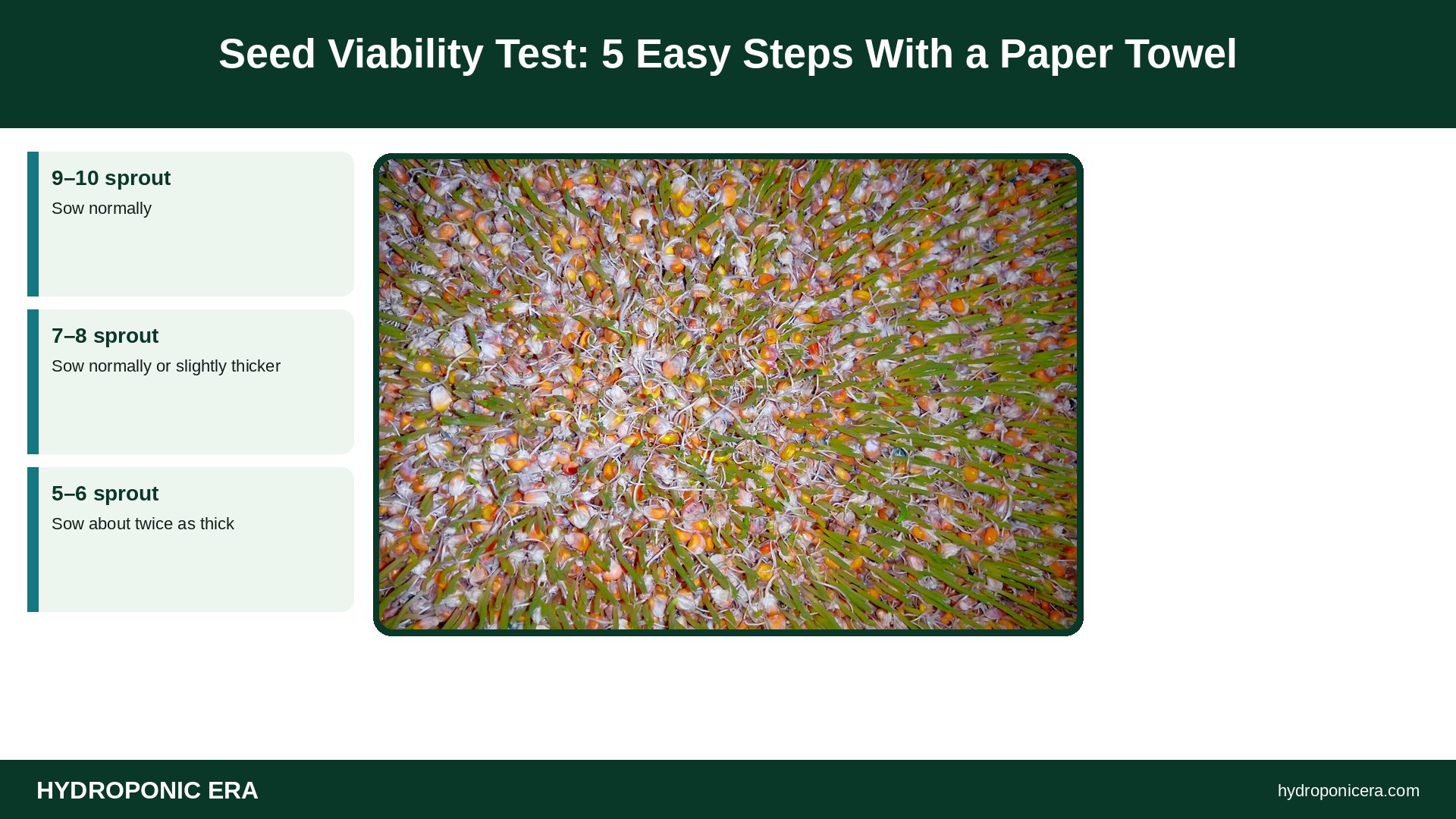
| Result from 10 seeds | Germination rate | What to do |
|---|---|---|
| 9–10 sprout | 90–100% | Sow normally |
| 7–8 sprout | 70–80% | Sow normally or slightly thicker |
| 5–6 sprout | 50–60% | Sow about twice as thick |
| Fewer than 5 sprout | Under 50% | Replace the seed |
Why Do a Seed Viability Test?
A seed viability test shows whether old or stored seed will still germinate, so you know how thickly to sow and whether to buy fresh packets. Seed loses vigor with age and poor storage, and a failed tray costs far more than a quick test. It takes about a week and needs only paper towels and a bag.
University extension services in Illinois, Wisconsin and Iowa all describe the paper towel method for testing leftover seed. If seeds fail, the cause may be age, storage or conditions rather than the seed itself, so also read why hydroponic seeds do not germinate.
How Do You Run a Seed Viability Test Step by Step?
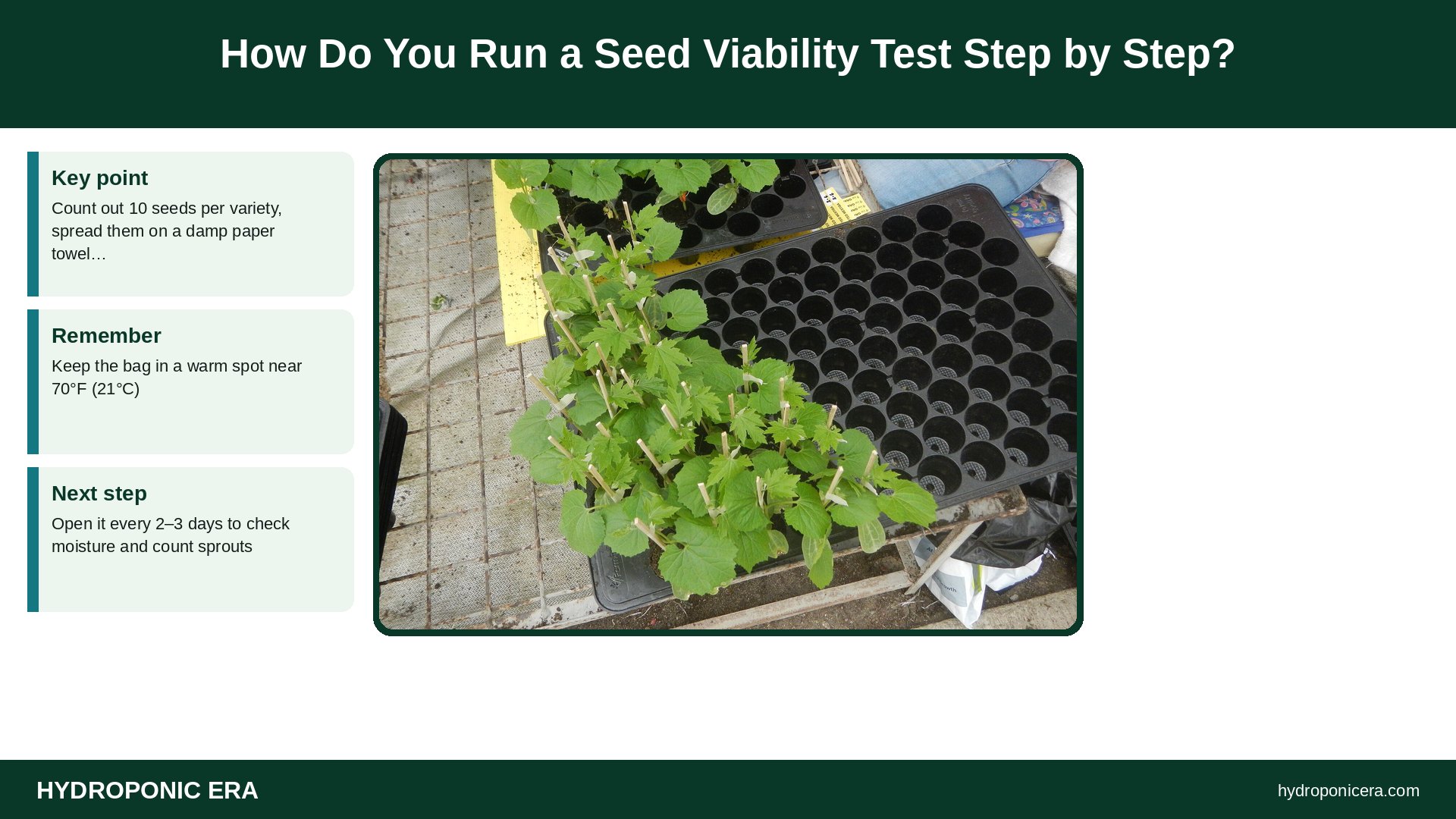
Count out 10 seeds per variety, spread them on a damp paper towel, fold it, slide it into a zip bag, and label it. Keep the bag in a warm spot near 70°F (21°C). Open it every 2–3 days to check moisture and count sprouts. Stop at the time listed for that crop.
- Wet a paper towel, then wring it out until it is damp, not dripping.
- Place 10 seeds on the towel, spaced apart, and fold it over.
- Slide the towel into a labeled zip bag or container with a loose lid.
- Keep it warm, near 70°F (21°C), but out of direct sun.
- Check every 2–3 days, re-dampen if dry, and count sprouts at the end of the window.
Our guides to hydroponic germination methods and microgreens on paper towels use the same idea for growing seedlings.
How Do You Read Seed Viability Test Results?
Count the seeds that produced a healthy root, then multiply by 10 to get a percentage from a 10-seed test. A rate of 70–90% or more is good. A rate of 50–60% means sow about twice as thick. Below 50%, extension sources suggest replacing the seeds, since weak seedlings are common.
A larger sample gives better accuracy. If you have plenty of seed, test 20 and divide by 20. Record the date and result on the packet so you do not need to repeat the test next year.
How Long Does Each Seed Viability Test Take?
Time varies by crop. Quick germinators such as lettuce, radish and many brassicas may sprout in 3–7 days, while peppers, parsley and some herbs may need two weeks or more. Check the packet, and give slow crops the full window before counting a seed viability test as failed.
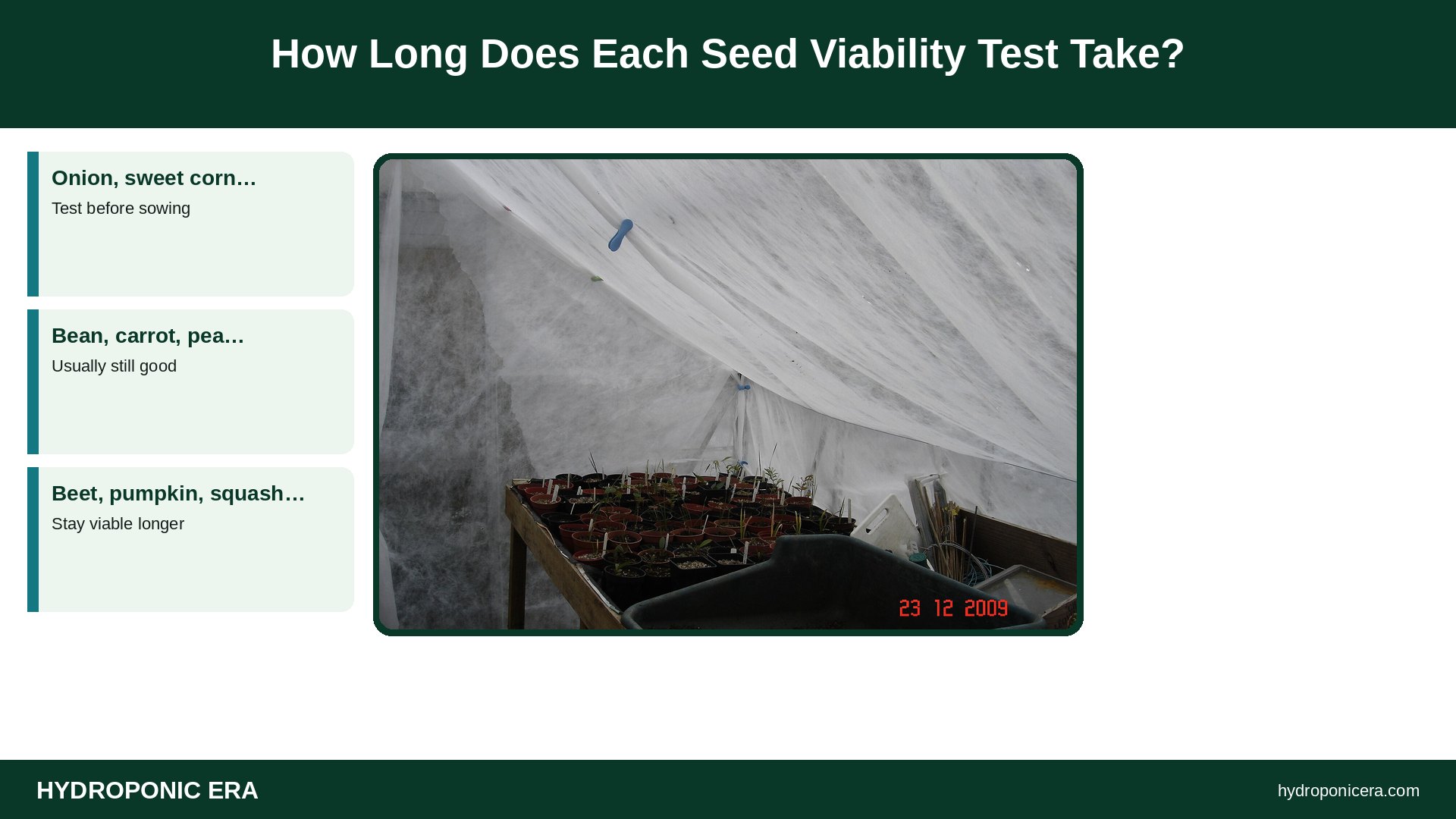
| Crop | Typical shelf life of stored seed | Notes |
|---|---|---|
| Onion, sweet corn, parsnip, pepper | About 1–2 years | Test before sowing |
| Bean, carrot, pea, tomato | About 3 years | Usually still good |
| Beet, pumpkin, squash, watermelon | About 4 years | Stay viable longer |
| Broccoli, cabbage, cucumber, lettuce, radish, spinach | About 5 years | Test older packets |
What Affects the Results of a Seed Viability Test?
Results depend on seed age, storage, temperature, moisture and the species. Warm, dry, dark storage keeps seed alive longer, while heat and humidity shorten life. Some seeds need light or a cold period before sprouting, and a seed viability test will under-report if you skip these steps. Always check species needs.
- Age and storage: dry, cool storage extends life.
- Moisture: too wet causes mold, too dry stops sprouting.
- Temperature: steady warmth, near 70°F (21°C), suits many crops.
- Dormancy: hard coats may need scarification or a cold period before they sprout.
For starting conditions, see seedling heat mats and humidity domes.
What Should You Do After a Seed Viability Test?
If the rate is good, sow as normal. If it is 50–60%, sow about twice as many seeds to compensate. If it is below 50%, replace the seed. Sprouted test seeds can be planted gently if the roots are short, though it is easy to damage them. Always label leftover seed with the date and result.
Are Quick Shortcuts Like the Float Test Reliable?
Float tests, where seeds that float are discarded, are not a dependable way to judge germination, and they can throw away good seed. A wet paper towel test measures what you care about, which is whether a seed produces a root under good conditions. Use that for any packet you plan to rely on.
Another quick check is to sprout a handful in a small tray the way you would normally sow, which doubles as a real first planting. It works best for seed you intend to grow anyway. For packets you may never use, the towel method wastes the least seed and the least time.
How Should You Keep Seed Between Tests?
Keep seed dry, cool and dark in labeled, airtight containers or envelopes inside a jar. Heat and humidity shorten seed life, so a closet shelf beats a sunny kitchen windowsill. Write the packet year and any test result on the label so you know when to retest. Rotate older packets to the front and use them first.
FAQ About the Seed Viability Test
How many seeds do I need for a seed viability test?
Ten is the common number, because it makes the math easy, but more seeds give a better estimate.
What germination rate is good?
70–90% or more is considered good. Below 50% means replace the seed.
How long does a seed viability test take?
Usually 3–14 days, depending on the crop. Check the packet.
Can I plant seeds from a seed viability test?
Yes, if the roots are short and you handle them gently.
Do old seeds always fail?
No. Many seeds last several years in good storage, so test before throwing them out.
Sources
- University of Illinois Extension — Seed viability (PDF)
- UW–Madison Extension, Dane County — Seed viability and germination testing
- University of Illinois Extension — Are my seeds still good? Testing seed germination
- Iowa State University Extension — Can you use vegetable seeds from last year?
- Photo credits (Wikimedia Commons, edited with titles): Maize seeds germination by TheMbgold (MBart) (CC BY-SA 4.0); 5670Farm Ready Seedling Facility East West Seed Philippines 20 by Judgefloro (CC0); Fleece lined greenhouse potting tray and seed pots – Flickr – peganum by peganum from Small Dole, England (CC BY-SA 2.0); Pepper and tomato seedling trays at Boğaziçi University 2026 by Furkan Akkurt (CC BY-SA 4.0)