
Is a systemic insecticide for houseplants safe to use? A systemic insecticide for houseplants is safe only when the label lists your plant and use site. Systemics move through the plant and can reach nectar and pollen, so they must not go on edible plants unless labeled, or on flowering plants visited by bees. Try soap, oil and traps first.
Key takeaway: A systemic insecticide for houseplants is absorbed by roots or leaves and spreads through the plant, protecting new growth for weeks. That strength is also the risk: residues can reach flowers and fruit. Read the label for plant, site and edible-crop limits, and use non-systemic options first.
| Option | How it works | Best for | Caution |
|---|---|---|---|
| Insecticidal soap | Contact spray on soft-bodied pests | Aphids, mealybugs, whiteflies | Needs full coverage |
| Horticultural oil | Smothers pests on contact | Scale, mites, mealybugs | Test first, avoid sensitive plants |
| Systemic insecticide for houseplants | Absorbed and moves through the plant | Persistent pests on non-edible plants | Label limits, pollinators, edibles |
| Sticky traps and Bti | Trap adults, kill gnat larvae | Fungus gnats | Does not stop sap-feeding pests |
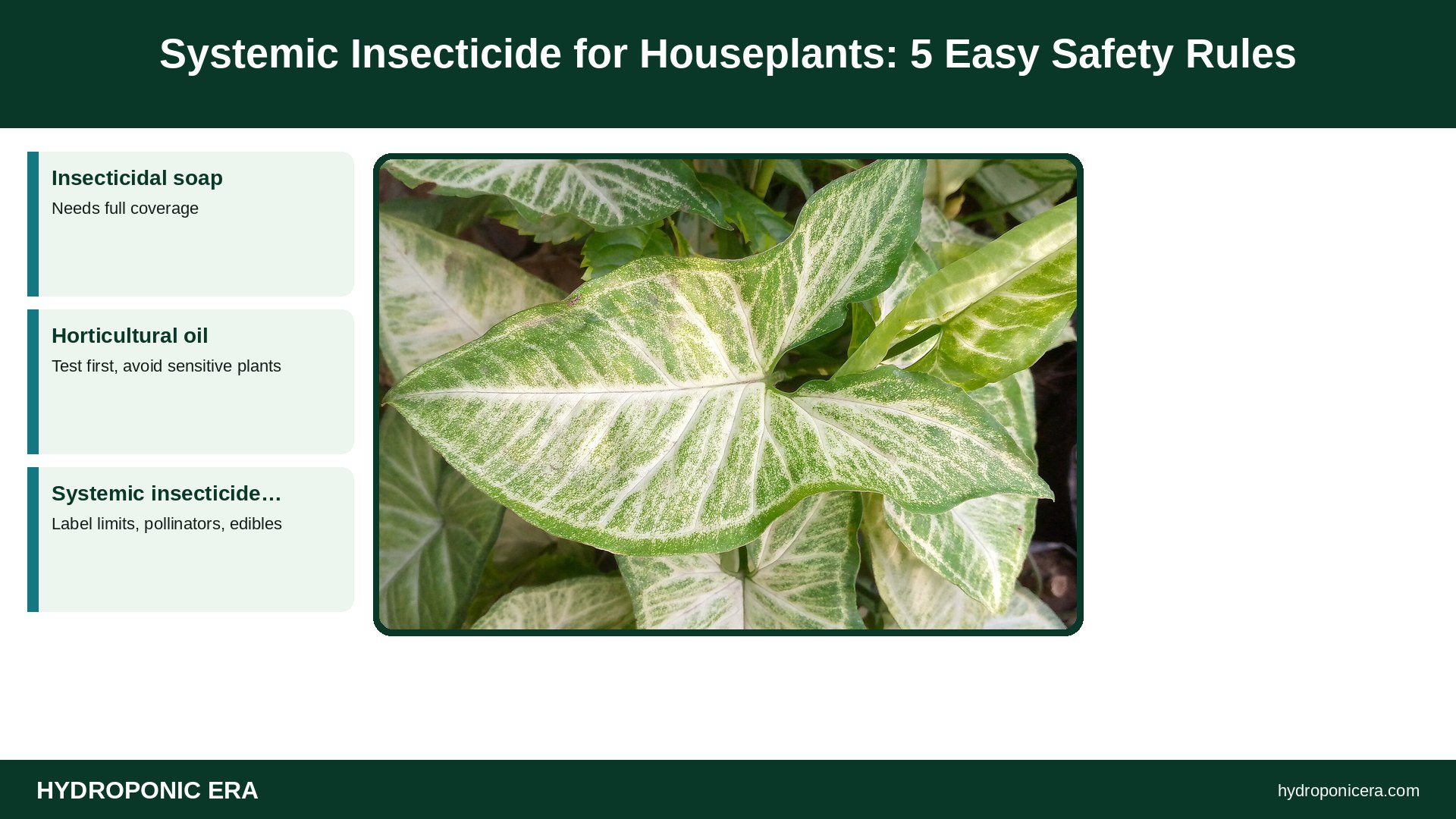
What Is a Systemic Insecticide for Houseplants?
A systemic insecticide for houseplants is a product taken up through roots or leaves and moved through the plant’s tissue, so pests that feed on the plant are exposed. Many are soil drenches or granules containing imidacloprid or similar actives. They can protect new growth for weeks, which is why they are popular for stubborn pests.
The same quality makes them risky. Colorado State University Extension advises against using imidacloprid on houseplants unless the label permits it. Systemic actives can persist in plant tissue and, in flowering plants, reach nectar and pollen visited by bees, so the label rules matter.
When Should You Avoid a Systemic Insecticide for Houseplants?
Avoid a systemic insecticide for houseplants on edible plants unless the label specifically lists them, on plants that will be moved outdoors in bloom, and in systems where water recirculates. Houseplant products may prohibit use on vegetables, herbs and fruit. If you grow food indoors, the label rules are strict.
- Edible plants: only products labeled for that crop, with a pre-harvest interval.
- Plants that bloom outdoors: residues can reach pollinators.
- Hydroponic reservoirs: labels are written for soil or media, not recirculating water.
- Pets that chew plants: keep treated plants out of reach.
The EPA label is the law. If it does not mention your plant or situation, do not improvise. See our overview of hydroponic pests such as aphids and mites for safer first steps.
What Should You Try Before Using a Systemic Insecticide for Houseplants?
Start with non-systemic options: wash plants with a strong stream of water, wipe pests off, prune infested growth, isolate the plant, and use insecticidal soap or horticultural oil for sap-feeding pests. Most houseplant infestations of aphids, mealybugs and mites respond to repeated, thorough treatment. Resort to a systemic insecticide for houseplants only for persistent pests on non-edible plants.
- Isolate the infested plant from others.
- Wash leaves and stems, including undersides, with water.
- Apply insecticidal soap or neem oil to the pests, following the label.
- Repeat every few days to catch each new hatch.
- Consider other options if pests persist after several rounds.
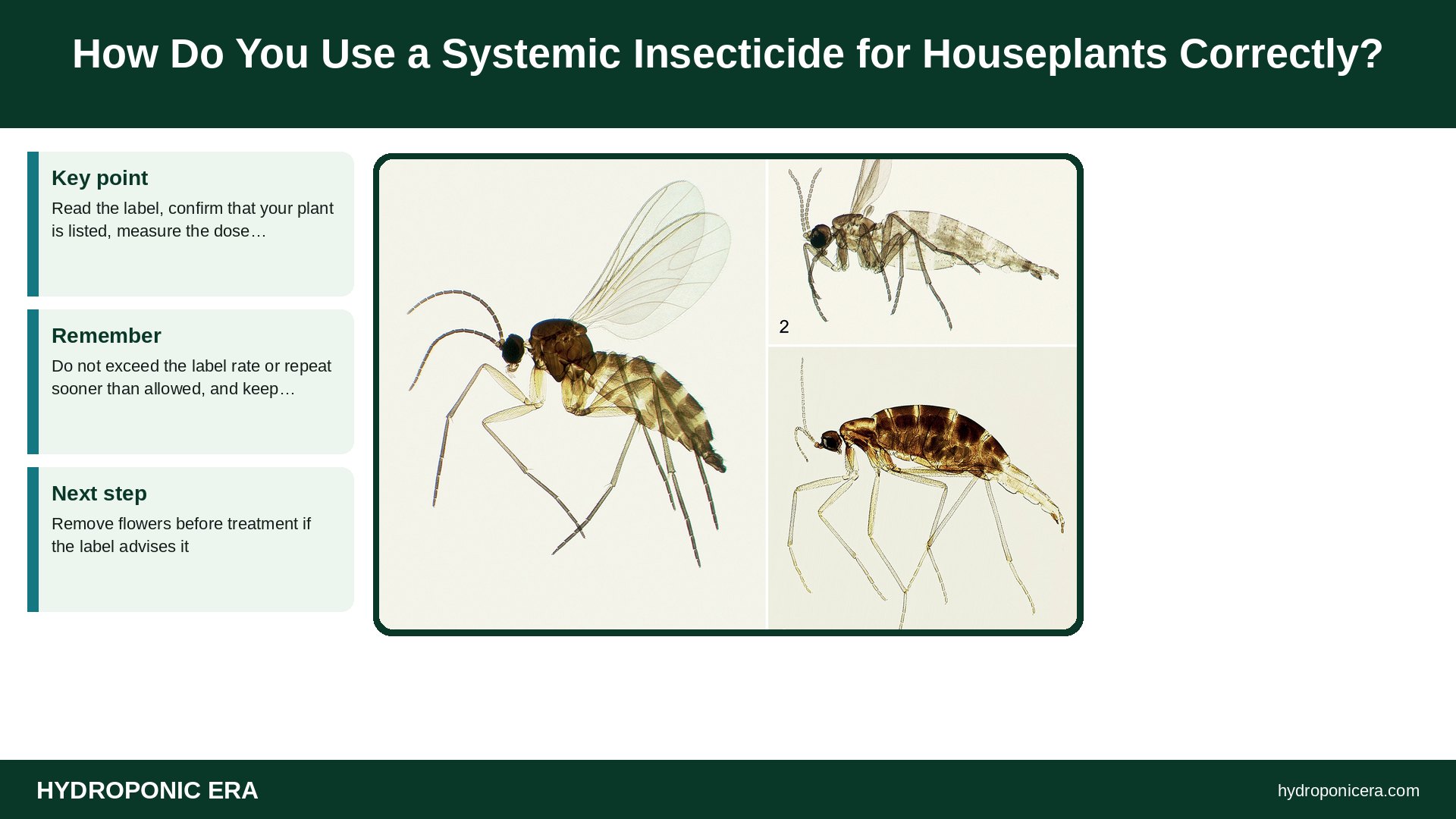
For gnats flying around pots, a systemic is the wrong tool. Read fungus gnats in hydroponics for treatments that target larvae in the medium.
How Do You Use a Systemic Insecticide for Houseplants Correctly?
Read the label, confirm that your plant is listed, measure the dose exactly, and apply to moist medium as directed. Do not exceed the label rate or repeat sooner than allowed, and keep pets and children away. Remove flowers before treatment if the label advises it. Store the product in its original container.
Wear gloves, wash your hands afterward and dispose of unused product as the label says. Keep plants treated with a systemic insecticide for houseplants away from edible plants and pollinators, and never pour leftover solution into drains or outdoor soil.
How Do Systemic Insecticides Affect Bees and the Environment?
Systemic insecticides can move into pollen and nectar, which is why pollinator protection is a central concern. Even indoors, treated plants that go outside in bloom can expose bees. Keep treated plants indoors or away from flowers visited by pollinators, and follow all label restrictions about outdoor use and disposal.
Choosing less persistent options over a systemic insecticide for houseplants reduces environmental risk when possible. If you buy new houseplants, ask nurseries what they were treated with, since some garden-center plants may have received systemics earlier.
How Do You Handle a Pest That Keeps Coming Back?
Recurring pests usually point to a source, not just a failed spray. Check new plants for hitchhikers, inspect nearby plants, and clean pots, saucers and shelves. Mealybugs and scale hide in leaf joints and under bark, so look closely and use a magnifier. Many infestations return because one egg mass or one infested neighbor was missed.
- Quarantine new plants for two to four weeks before they join the collection.
- Inspect leaf joints, undersides and stems weekly.
- Keep plants healthy, since stressed plants attract more pests.
- Avoid overfeeding with nitrogen, which makes soft growth that pests love.
If a plant is badly infested and not valuable, discarding it in a sealed bag is often safer and cheaper than chemical treatment. If it is valuable, ask your local extension office or a garden center what is labeled for your plant and pest, and bring a sample or clear photo.
Where Can You Find the Right Label Information?
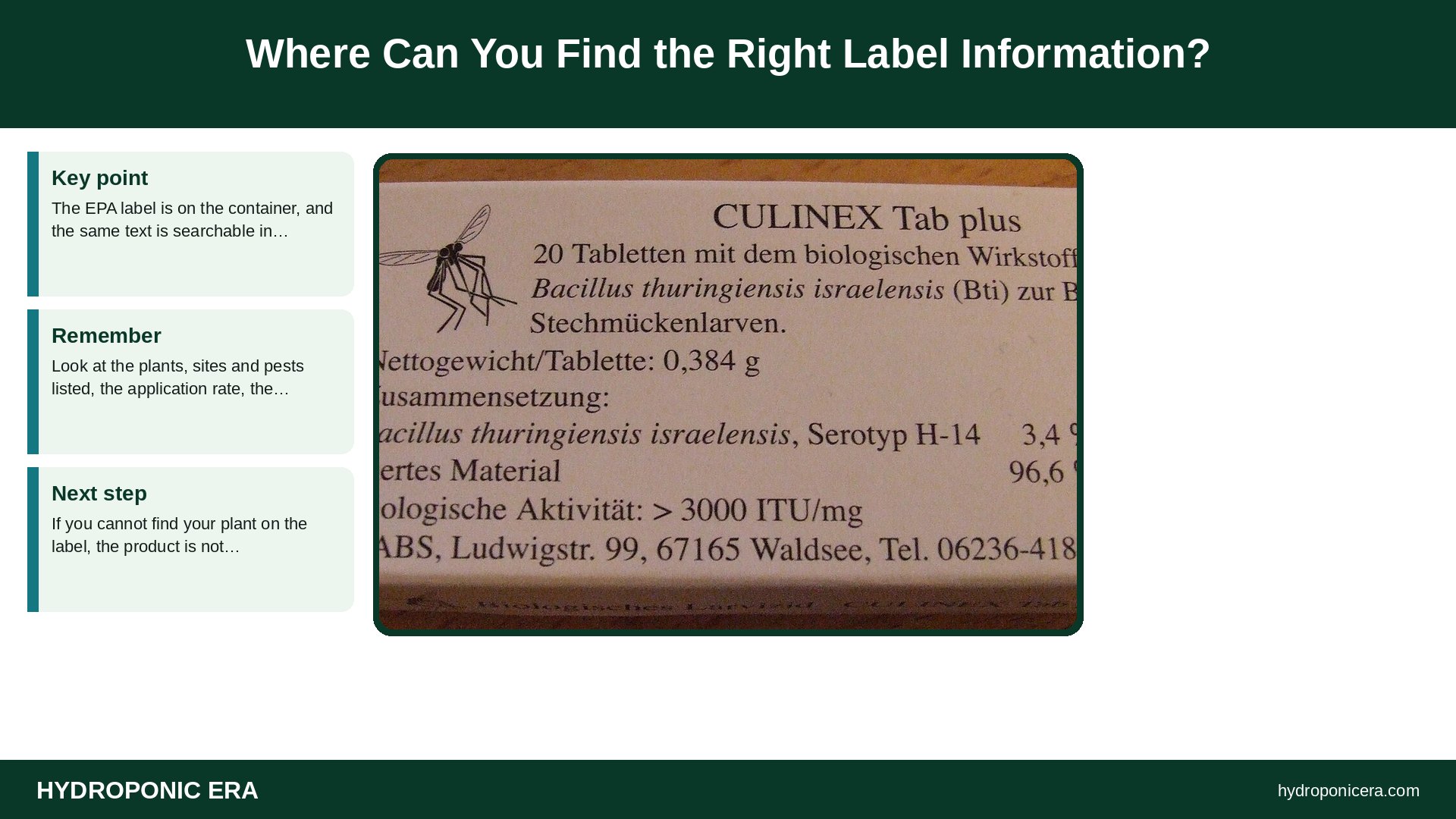
The EPA label is on the container, and the same text is searchable in the EPA’s product label system. Look at the plants, sites and pests listed, the application rate, the pre-harvest interval and the first aid section. If you cannot find your plant on the label, the product is not approved for that use, and you should choose another method.
FAQ About Systemic Insecticide for Houseplants
Can I use systemic insecticide on herbs or vegetables I grow indoors?
Only if the label lists that crop. Many houseplant systemics prohibit edible plants.
How long does a systemic insecticide for houseplants last?
It can protect new growth for weeks, depending on the product and plant.
Is imidacloprid safe for houseplants?
Only when the label allows. It can persist in plant tissue and reach pollen and nectar.
What is a safer option for mealybugs?
Isolate the plant, wipe off pests with alcohol-dampened swabs where safe, and use soap or oil.
Can I use systemics in hydroponics?
Not unless the label specifically permits it. Most are written for soil or media drenches.
Sources
- Colorado State University Extension — Managing houseplant pests
- University of Missouri Extension — Insect and mite pests of houseplants (MG14)
- NC State Extension Gardener Handbook — Appendix B: pesticide safety
- U.S. EPA — Example pesticide product label (EPA Reg. 42750-115)
- Photo credits (Wikimedia Commons, edited with titles): Syngonium podophyllum ( Arrowhead plant) 001 by Jeremyida002 (CC BY-SA 4.0); Neem oil plant by Ayyuha Sideeq (CC0); Sciaridae (10.3897-zookeys.957.46528) Figures 1–3 by Menzel F, Gammelmo Ø, Olsen KM, Köhler A (2020) The Black Fungus Gnats (Diptera, (CC BY 4.0); Culinex Tab plus by Claus Ableiter (CC BY-SA 3.0)