
How do you use green lacewings for aphid control? Release green lacewing larvae or eggs at the first sign of aphids, spread them over infested plants in the evening, and mist foliage first so larvae stay put. One larva can eat roughly 300–400 aphids as it develops. Avoid broad-spectrum pesticides for 2–3 weeks before and after release.
Key takeaway: Green lacewings are predators only in the larval stage, so you release eggs or larvae, not adults. Start early, mist plants, release near pests, and keep ants and pesticides under control. Expect fewer aphids within a couple of weeks, not overnight, and release again if pressure continues.
| Stage | What it does | Use in pest control |
|---|---|---|
| Eggs | Hatch into larvae within days | Cards or loose eggs placed on plants |
| Larvae | Eat aphids, mites, small caterpillars and eggs | The working stage |
| Pupae | Rest in a cocoon | No feeding |
| Adults | Feed mostly on nectar and pollen | Lay eggs, not main predators |
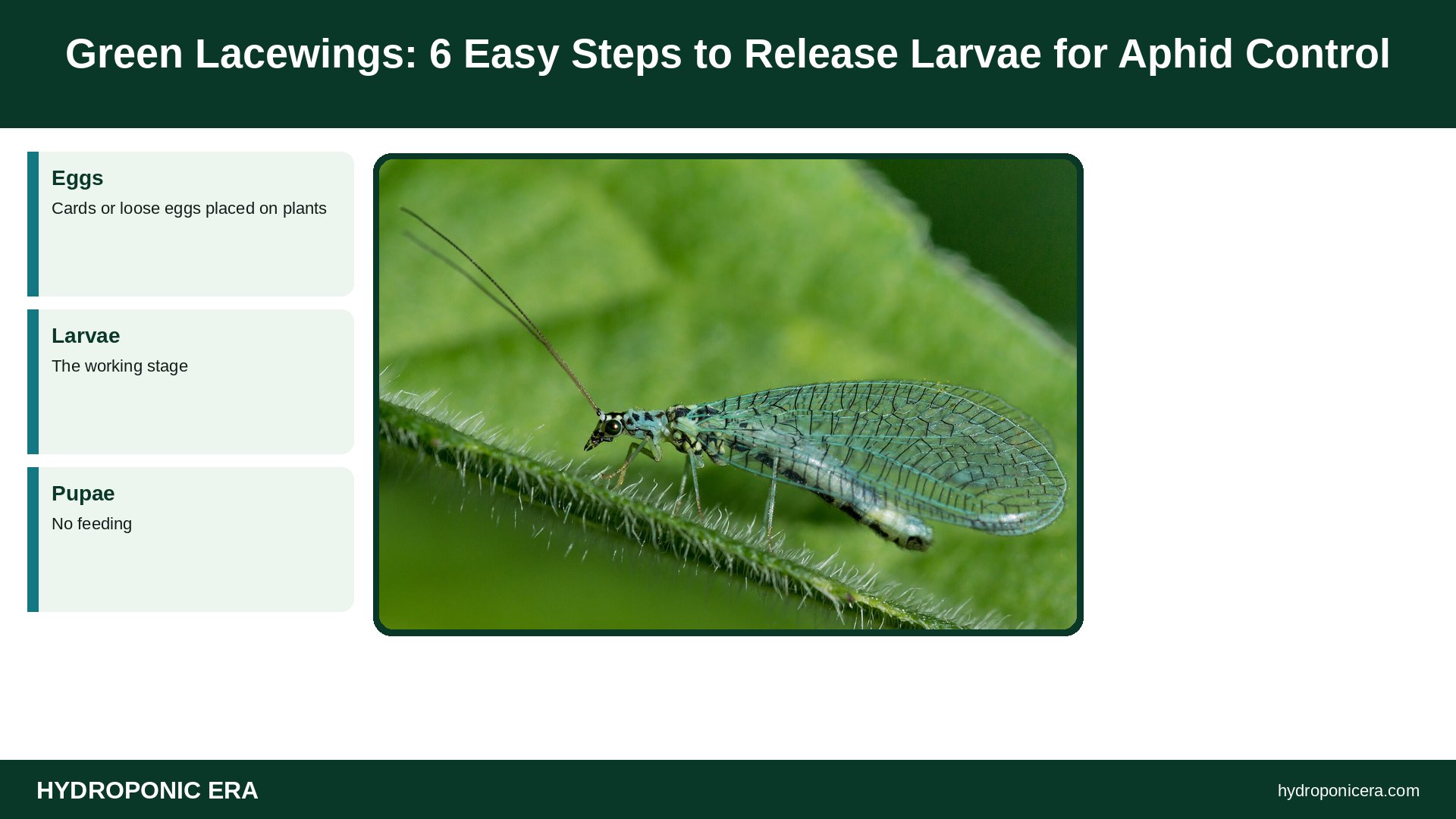
What Are Green Lacewings?
Green lacewings are delicate green insects with lacy wings, and their larvae are voracious predators of aphids, spider mites, thrips, whitefly nymphs and small caterpillars. The larvae are often called aphid lions. Adults eat mainly nectar, pollen and honeydew, so the biocontrol value comes from the larval stage.
Ohio State and Kansas State extension publications describe lacewings as biological control agents for greenhouse and garden pests. For another predator that suits aphids, see ladybugs for aphids.
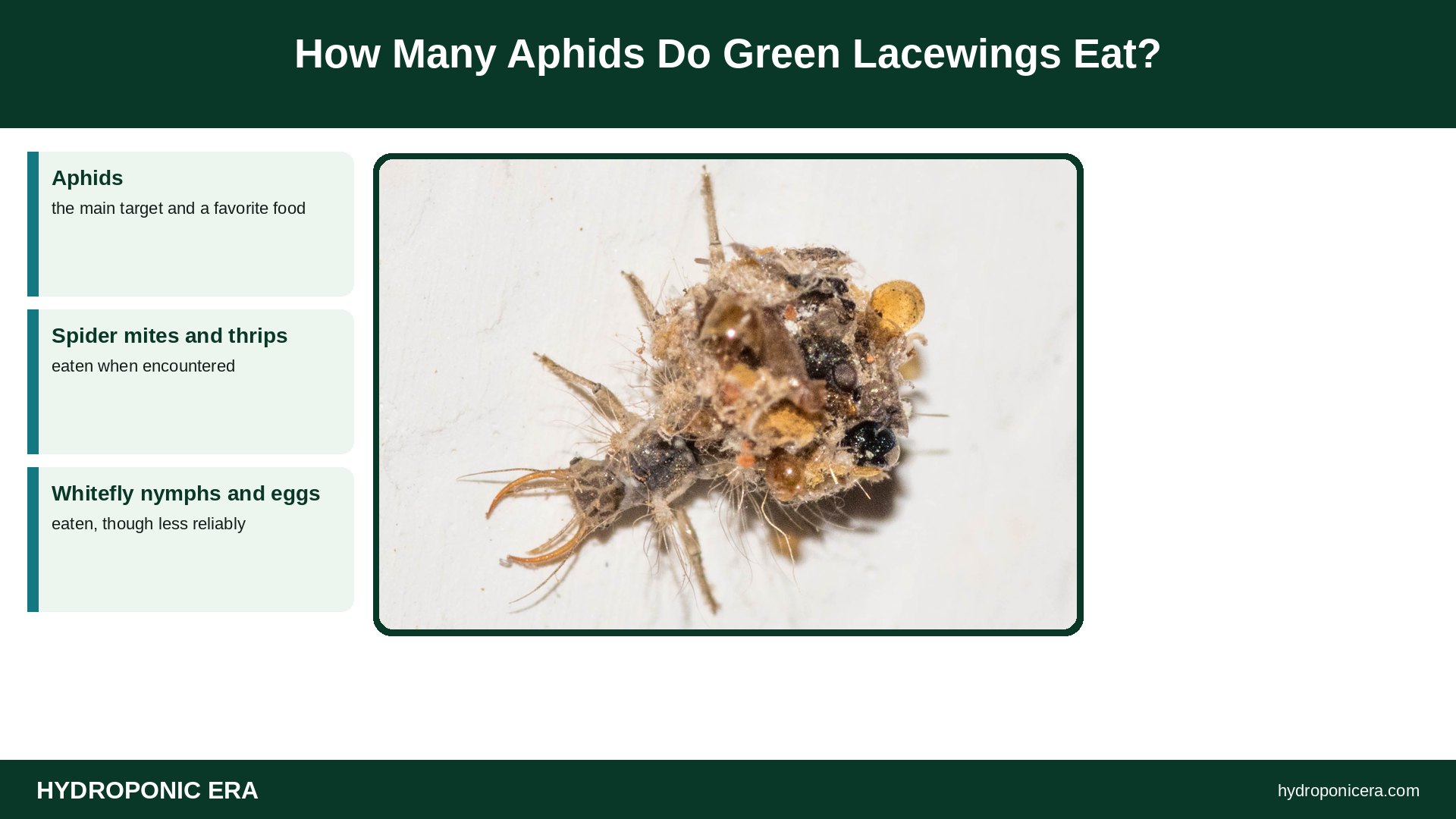
How Many Aphids Do Green Lacewings Eat?
A single green lacewing larva can eat roughly 300–400 aphids before it pupates, according to extension and IPM sources. In an orchard study from Washington State University, releases of 20,000 larvae per acre reduced aphid numbers by about 40–70%. Results in a home grow area depend on how many pests there are.
- Aphids: the main target and a favorite food.
- Spider mites and thrips: eaten when encountered.
- Whitefly nymphs and eggs: eaten, though less reliably.
- Small caterpillars: eaten when small.
Think of them as a support for a larger plan that includes scouting, sticky traps and good sanitation, rather than a quick fix.
How Do You Release Green Lacewings?
Release green lacewings in the evening, when it is cooler and they are less likely to leave. Mist the foliage lightly so larvae can drink and stick, then place eggs, cards or larvae near aphid colonies. Do not release into plants sprayed with broad-spectrum pesticides in the last two to three weeks.
- Scout and confirm that aphids or mites are present.
- Hold off on any broad-spectrum sprays for 2–3 weeks.
- Mist leaves, then place the release material on infested plants.
- Spread out the release over several plants and at several heights.
- Check again after 5–7 days and repeat if aphids remain.
Ants often protect aphids from predators, so control ants first. Our guide to hydroponic pests such as aphids and mites covers monitoring and cultural controls that pair well with releases.
When Should You Release Green Lacewings?
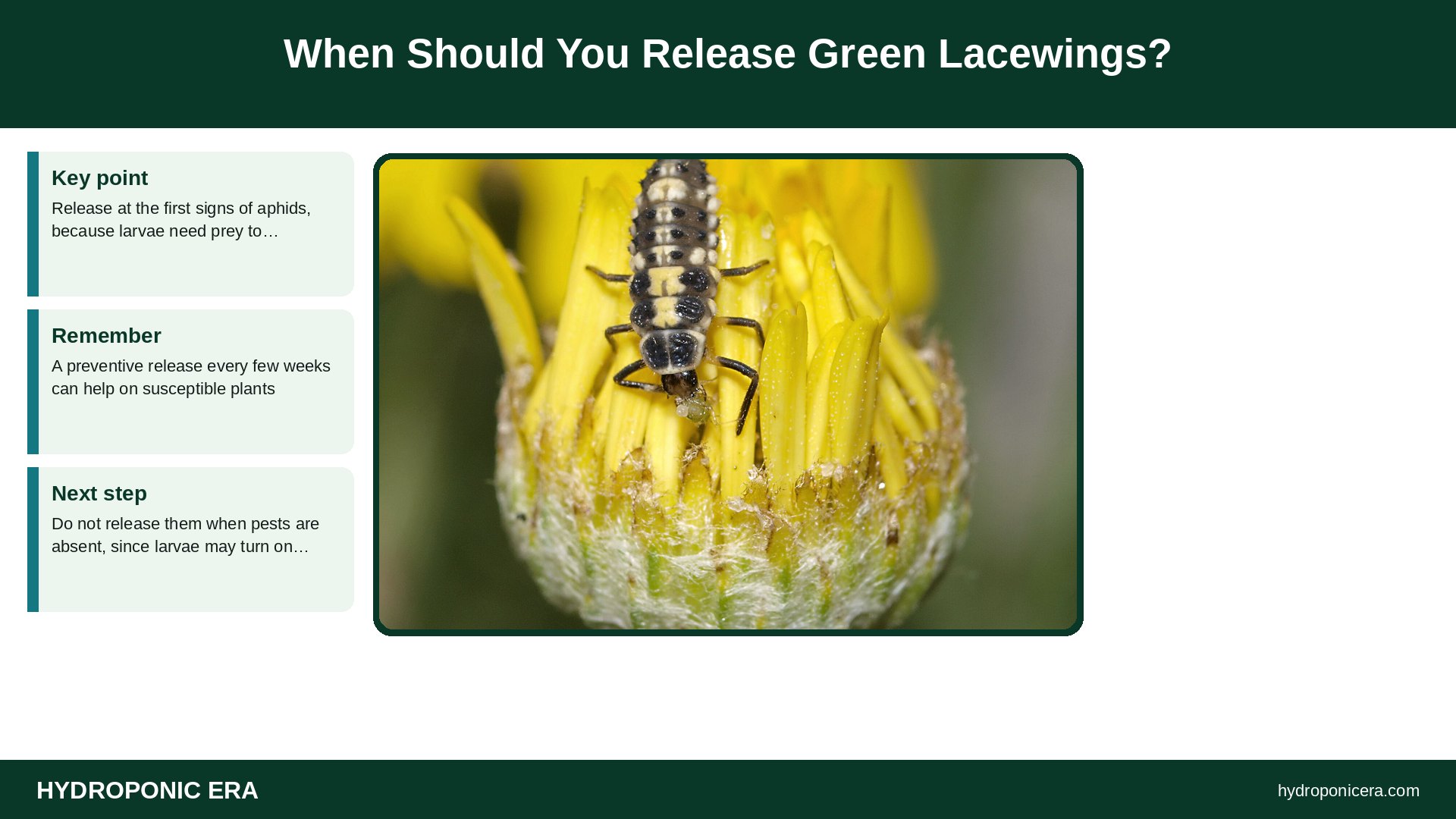
Release at the first signs of aphids, because larvae need prey to survive and cannot control a huge outbreak quickly. A preventive release every few weeks can help on susceptible plants. Do not release them when pests are absent, since larvae may turn on each other or wander away.
Extension and UC IPM guidance stresses releasing early, when pest numbers are still low, and repeating releases if the problem continues. Warm conditions speed development, and cool weather slows it, so adjust expectations to your room temperature.
What Can Make Green Lacewings Fail?
Releases fail when pesticides are present, ants protect the pests, larvae are released into dry or very hot conditions, or too few are released for the size of the infestation. They can also eat each other if crowded. Spread releases, keep plants clean of residues and match numbers to pest levels.
| Problem | Why it happens | Fix |
|---|---|---|
| Larvae disappear | Pesticide residue or heat | Wait 2–3 weeks after sprays, release in the evening |
| Aphids keep increasing | Too few predators or ants present | Release more and control ants |
| Larvae crowd together | Released in one spot | Spread over many plants |
| No pests present | Larvae starve | Time release with first detection |
How Do You Keep Lacewings Around After Release?
Adult lacewings feed on nectar, pollen and honeydew, so a few flowering plants nearby, such as alyssum, dill or cilantro allowed to bloom, give adults food and encourage them to lay eggs. Indoors, this is hard, so rely on repeat releases. Outdoors, avoid broad-spectrum sprays and leave a few aphids so larvae have prey.
Provide shelter and water as well. A light misting each morning gives larvae moisture, and a plant mix with different heights helps them hide from heat and wind. Keep notes on release dates and aphid counts so you can see how long the effect lasts.
How Do You Monitor Results?
Count aphids on a few marked leaves before the release and again every few days. Yellow sticky traps catch winged aphids and show whether new pests are arriving. Look for the spiny, alligator-like larvae and for empty aphid skins, both signs of successful predation.
If counts have not dropped after two weeks, check for ants, pesticide residue or heat, then release again. Persistent infestations may need a different tool, such as a soap or oil spray applied at least two to three weeks before the next release.
Are Green Lacewings Safe for Hydroponic Systems?
They are safe for plants and people, and they work in greenhouses and indoor gardens. Keep nutrient reservoirs covered, and avoid sprays that could kill larvae. Because they fly as adults, they may leave a closed room through vents, so expect to repeat releases as needed. Combine them with neem oil for plants only if the label and release timing allow.
FAQ About Green Lacewings
Are green lacewings good for aphids?
Yes. The larvae eat large numbers of aphids, mites and other soft-bodied pests.
Should I release larvae or adults?
Release eggs or larvae. Adults mainly feed on nectar and pollen.
How soon do green lacewings work?
You may see fewer aphids within a week or two, depending on the pest level.
Can green lacewings bite people?
They are harmless to people, though larvae may rarely nip when handled.
How do I attract green lacewings outdoors?
Plant nectar and pollen flowers and avoid broad-spectrum insecticides.
Sources
- Ohio State University Extension — Green lacewings (ENT-72)
- Kansas State University — Green lacewings: biological control agents of greenhouse insect pests (MF3654)
- University of Maryland Extension — Lacewings
- Washington State University — Lacewings in orchards
- UC IPM — Green lacewings
- Photo credits (Wikimedia Commons, edited with titles): Chrysopidae 01 (MK) by Mathias Krumbholz (CC BY-SA 3.0); Lacewing larva from South Africa by RudiSteenkamp (CC BY-SA 4.0); 14-spotted Ladybird larva eating an aphid (16475286350) by Line Sabroe from Denmark (CC BY 2.0); Neem oil plant by Ayyuha Sideeq (CC0)