
Do amino acids for plants actually work? The evidence for amino acids for plants is mixed. Some studies show certain amino acids can supply nitrogen or boost growth in specific crops, while independent field trials, such as UK wheat trials at nine sites, found no significant yield benefit. Treat them as an optional extra, not a fertilizer substitute.
Key takeaway: Amino acids for plants are sold as biostimulants, but research shows uneven results. Plants make their own amino acids from nitrogen, so a balanced fertilizer matters more. If you test a product, use a small trial with an untreated control, follow the label and watch for salt buildup or slime in reservoirs.
| Study | What it tested | What it found |
|---|---|---|
| Agronomy Journal | Lysine as a nitrogen source for corn | Supplied nitrogen about as well as ammonium nitrate |
| Frontiers in Plant Science 2023 | Amino acids on Arabidopsis | Glutamine and asparagine increased leaf area, most others did not |
| UK ADAS Yield Enhancement Network | Amino acid product on wheat at 9 sites | No significant yield benefit |
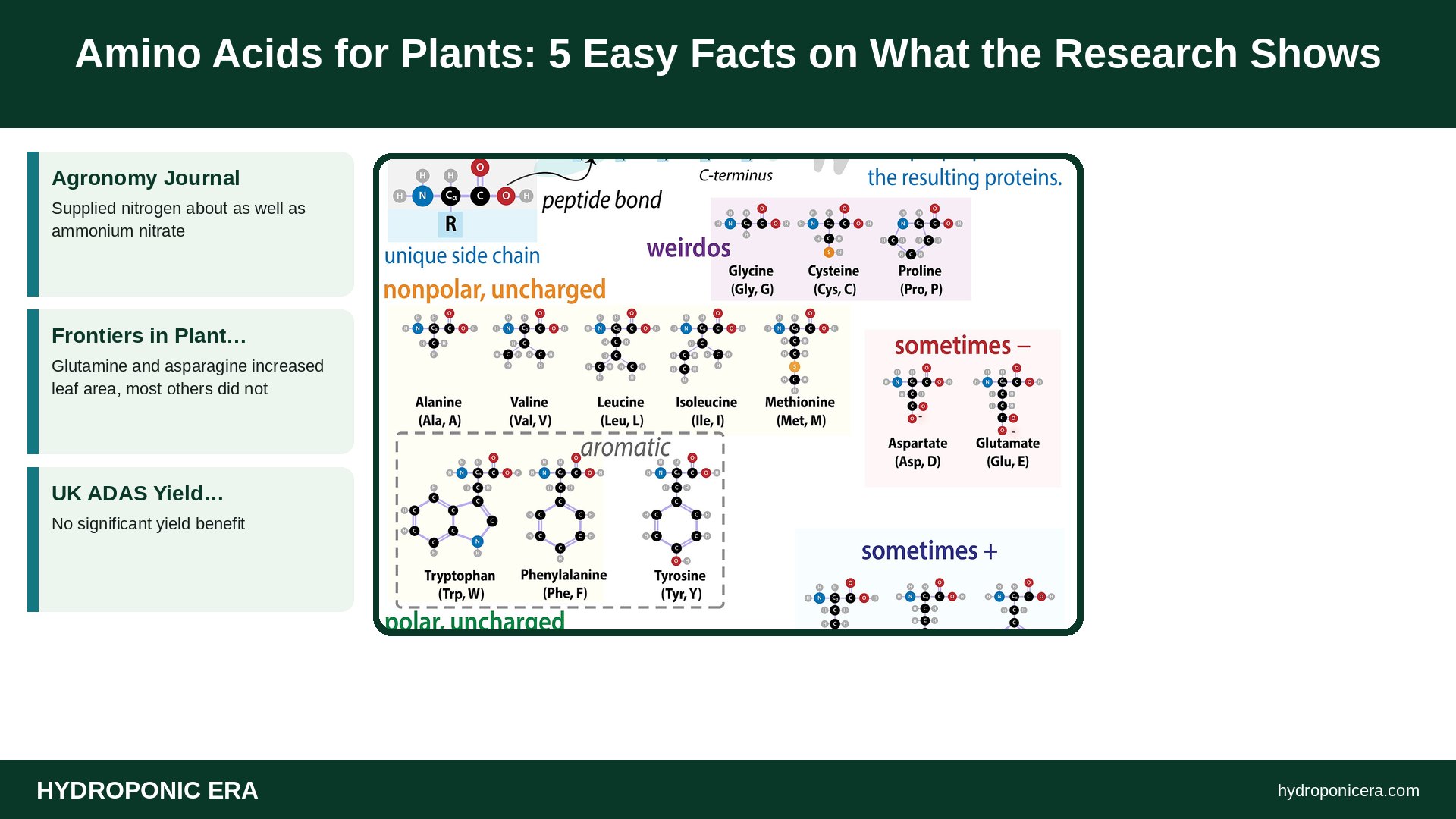
What Are Amino Acids for Plants?
Amino acids are the building blocks of proteins, and plants make all they need from nitrogen, carbon and minerals. Products sold as amino acids for plants usually contain free amino acids from fish, soy, seaweed or other hydrolyzed protein. Marketing claims range from better growth to stress relief, so the useful question is what research shows.
Plants can absorb some amino acids through roots and leaves, but they depend on nitrate and ammonium as their main nitrogen sources. In most gardens and hydroponic systems, a balanced feed already gives plants what they need. For a base nutrient program, see one-part vs two-part vs three-part nutrients.
What Does Research Say About Amino Acids for Plants?
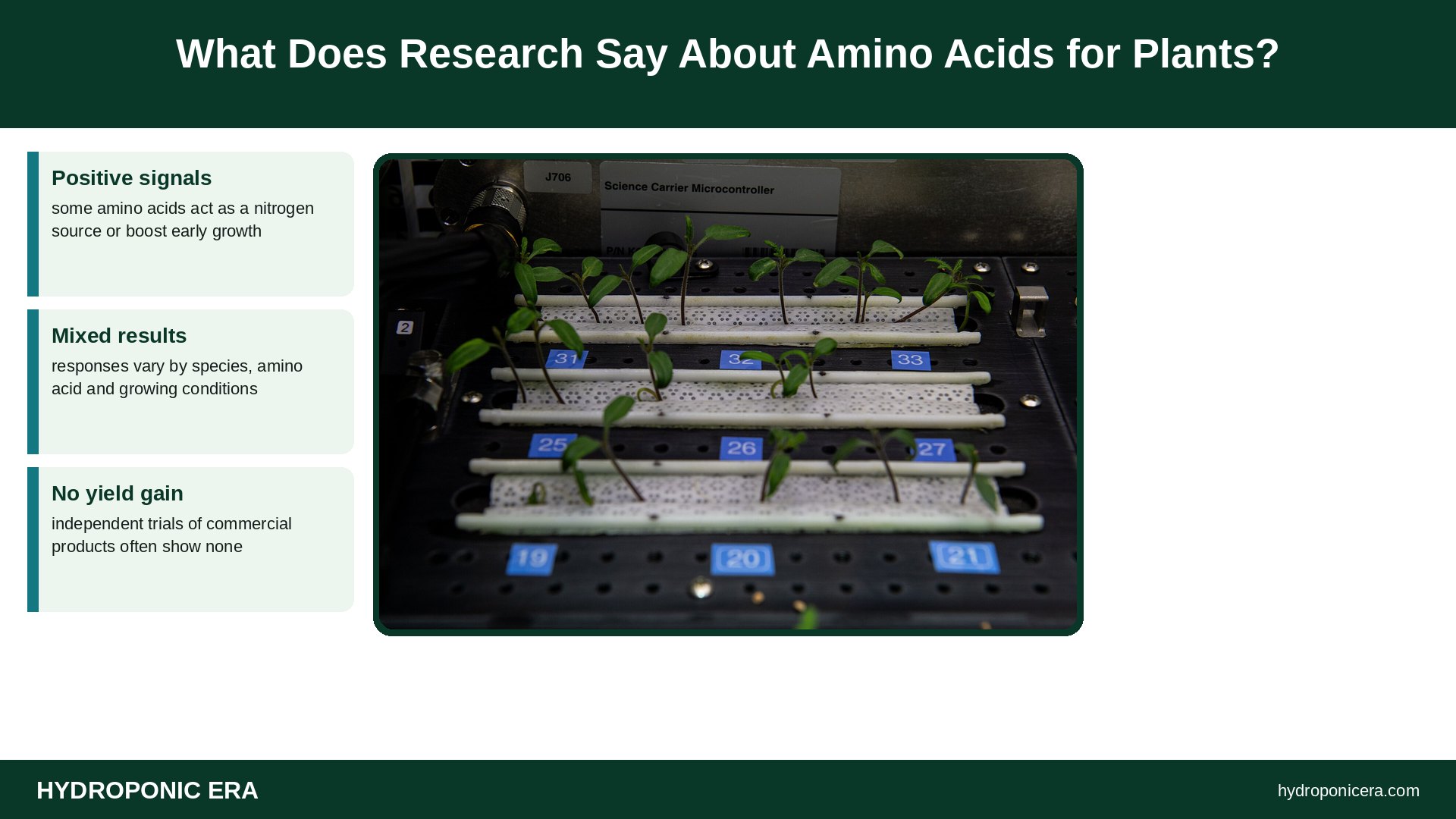
Research on amino acids for plants shows mixed results. A paper in Agronomy Journal found lysine supplied nitrogen to corn as well as ammonium nitrate, while a 2023 Frontiers study found that only a few amino acids, such as glutamine and asparagine, raised leaf area in Arabidopsis. Independent wheat trials showed no yield gain.
- Positive signals: some amino acids act as a nitrogen source or boost early growth.
- Mixed results: responses vary by species, amino acid and growing conditions.
- No yield gain: independent trials of commercial products often show none.
These results do not prove that amino acids for plants never help. They show that benefits depend on the crop, the dose and the conditions, so claims should be tested rather than assumed. A real trial needs an untreated comparison group.
Are Amino Acids for Plants Worth Buying?
For most home growers, amino acids for plants are not worth buying until the basics are right: light, pH, balanced nutrients and healthy roots. If you are curious, try a small trial on a few plants, compare them with untreated plants, and stop if you see no difference after a couple of weeks.
- Fix light, pH and nutrient balance first.
- Pick one product and follow the label rate.
- Treat a few plants and keep matching plants untreated.
- Record growth, color and any changes weekly.
- Keep the product only if the treated plants clearly outperform.
Check solution strength with an EC or TDS meter before and after, since some products add salts.
Can You Use Amino Acids for Plants in Hydroponics?
You can try amino acids for plants in hydroponics, but use caution. Amino acids feed bacteria and fungi as well as plants, so in warm, stagnant reservoirs they may encourage slime and root disease. Keep the water cool and aerated, use a low dose, and watch root color and smell. Stop at the first sign of trouble.
This risk is a reasoned caution rather than a published finding for each product, so treat it as a precaution. For root health, see Pythium root rot in hydroponics and organic and bioponic nutrients.
Which Amino Acids for Plants Matter Most?
Research highlights a few individual amino acids rather than blends. Glutamine and asparagine acted as nitrogen carriers in plants, and lysine supplied nitrogen to corn in one study. Many commercial products contain a mix, and labels often do not state the concentrations. Look for a clear analysis and a company that explains its data.
| Amino acid | Role noted in research | Caution |
|---|---|---|
| Glutamine | Raised leaf area in Arabidopsis | Lab study, not a garden result |
| Asparagine | Raised leaf area in Arabidopsis | Lab study, not a garden result |
| Lysine | Nitrogen source for corn | Not a general rule for all crops |
How Do You Choose and Use a Product Safely?
Pick a product with a transparent label, mix only the labeled amount, and avoid overdosing. Many amino acid products are made from fish or hydrolyzed protein and can smell strong. Apply to leaves only in mild weather, and keep products away from pets and food storage. Too much can burn foliage and add salts.
Compare the cost with simple options such as a balanced fertilizer and good light. In seedlings, our guide to nutrients for hydroponic seedlings shows that proper dilution matters far more than add-ons.
Why Do Marketing Claims Outrun the Evidence?
Biostimulant labels often cite lab or greenhouse results that do not carry over to real gardens. A product may help a seedling under stress in a controlled test and do nothing in healthy plants with good nutrition. Claims that use words such as boosts, activates or supercharges are not measurements, and a label may not give application data at all.
Ask three questions before you buy: who tested it, on which crop, and compared with what. If the answers are vague, the claim is a hope, not a result. Independent university or extension trials carry more weight than the manufacturer’s own brochure.
What Should You Do Instead for Faster Growth?
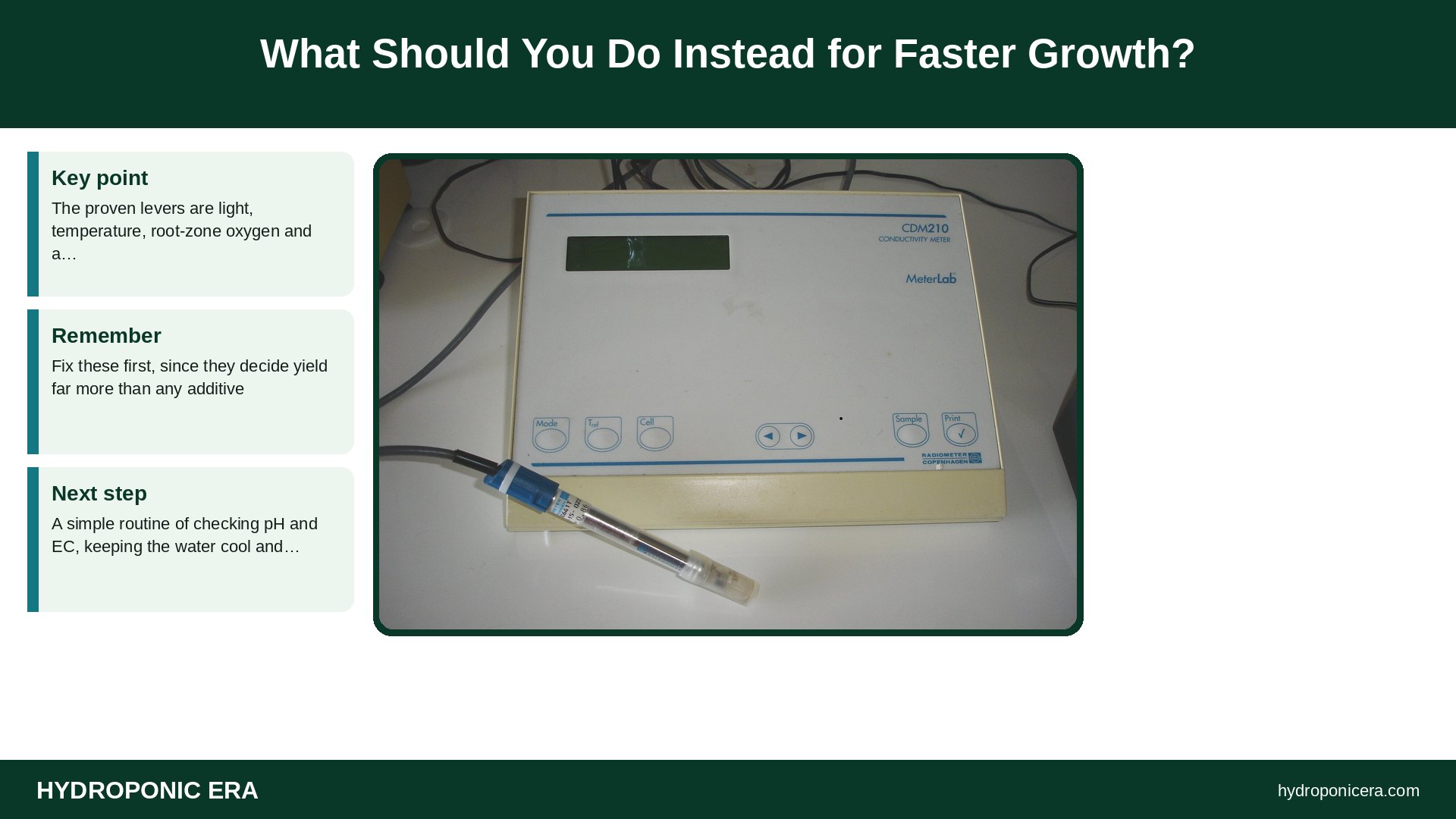
The proven levers are light, temperature, root-zone oxygen and a balanced nutrient solution at the right pH. Fix these first, since they decide yield far more than any additive. A simple routine of checking pH and EC, keeping the water cool and giving enough light beats a cabinet full of supplements.
FAQ About Amino Acids for Plants
Do amino acids make plants grow faster?
Sometimes in specific tests, but independent trials of commercial products often show no yield benefit.
Are amino acids a substitute for fertilizer?
No. Plants still need nitrogen, phosphorus, potassium and other nutrients.
Can amino acids burn plants?
Overdosing can, and some products add salts. Use the label rate.
Are amino acids for plants organic?
Some are made from fish or plant proteins, but check the label for organic listing.
How do I test whether a product helps?
Treat a few plants, keep matching plants untreated, and compare results.
Sources
- Agronomy Journal — Lysine as a nitrogen source for corn
- Frontiers in Plant Science — Amino acids and Arabidopsis growth (2023)
- ADAS Yield Enhancement Network — Amino acid trial summary
- Photo credits (Wikimedia Commons, edited with titles): Amino acids chart JPG by Biochemlife (CC BY-SA 4.0); Tomato Seedlings Grow in Plant Habitat-06 (iss070e064263) by NASA Johnson Space Center (Public domain); Compost pile by Ksd5 (CC0); Electrical conductivity meter by Nuno Nogueira (Nmnogueira) (CC BY-SA 2.5)