
How do you grow calendula indoors or in hydroponics? Grow calendula (pot marigold) from fresh seed sown 1/4–1/2 inch (6–13 mm) deep in darkness, since light inhibits germination. Seeds sprout in about 5–15 days. Give plants full sun or strong grow lights, cool temperatures, light feeding and moderate water, then deadhead often to keep the orange and yellow blooms coming.
Key takeaway: Calendula is an easy, cool-loving annual herb with edible petals. Cover the seed, avoid heavy fertilizer, pinch young plants for bushiness and pick flowers regularly. Watch for aphids and powdery mildew.
| Calendula need | Guideline | Source |
|---|---|---|
| Sowing depth | 1/4–1/2 in (6–13 mm); cover seed | UW–Madison Extension |
| Soil temperature to sow | 60°F (16°C) | UNH and USU Extension |
| Germination | 5–15 days | UW–Madison Extension |
| Plant height | 8–24 in (20–60 cm) | USU Extension |
| Spacing | 8–16 in (20–40 cm) | USU and UNH Extension |
| Soil pH | 6–7 | USU Extension |
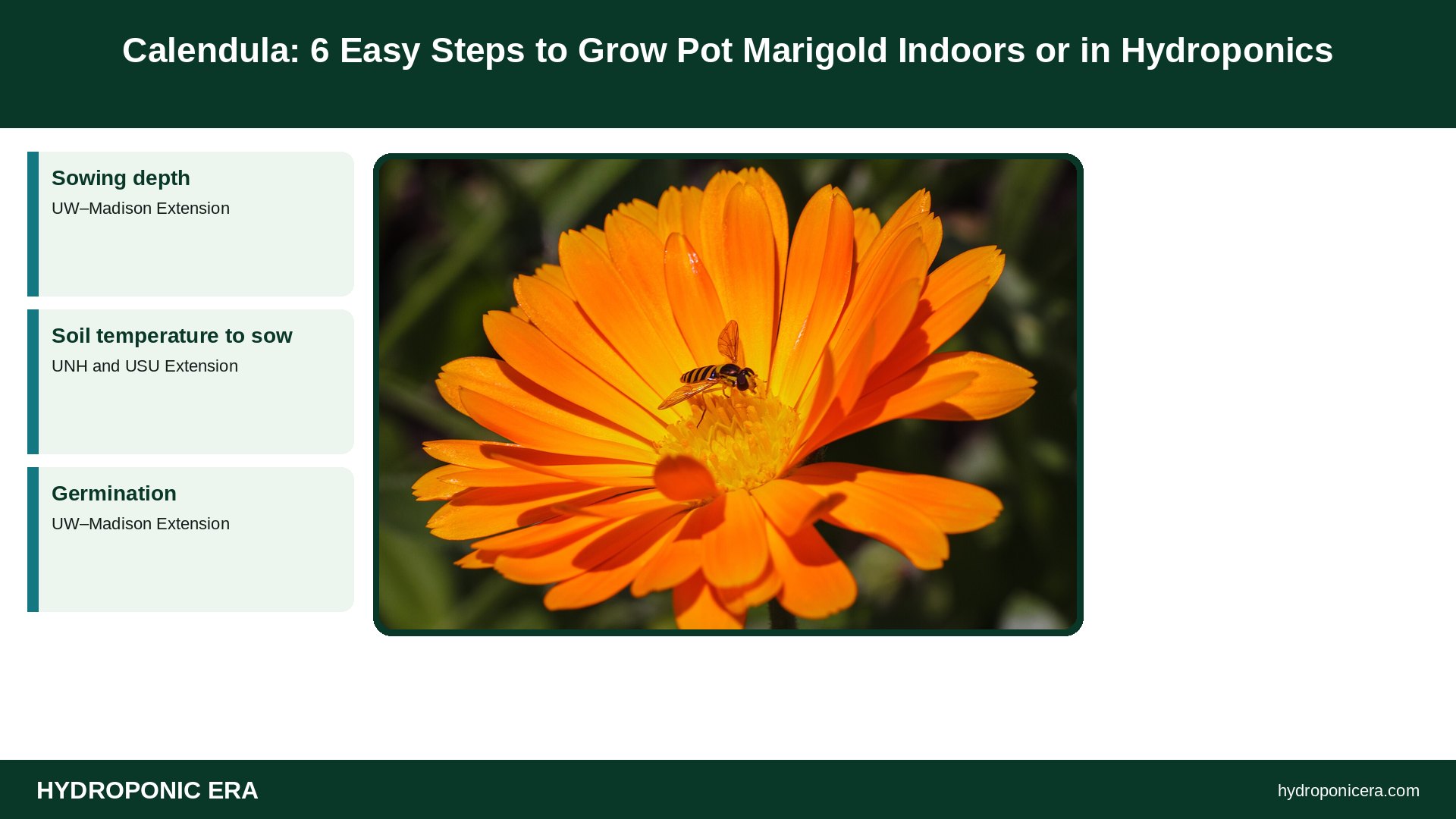
What Is Calendula?
Calendula officinalis is an annual herb in the daisy family from southern Europe and the eastern Mediterranean, according to University of Wisconsin–Madison Extension. Its common name is pot marigold, but it is not a true marigold (Tagetes). Pot marigold petals have long been used for food and color, and modern cultivars bloom in orange, yellow, white and bicolor forms.
The bushy plants carry 2–3 inch (5–8 cm) daisy-like flowers over a long season. If you already grow hydroponic marigolds, note that calendula is a different plant with different uses.
How Do You Germinate Calendula Seeds?
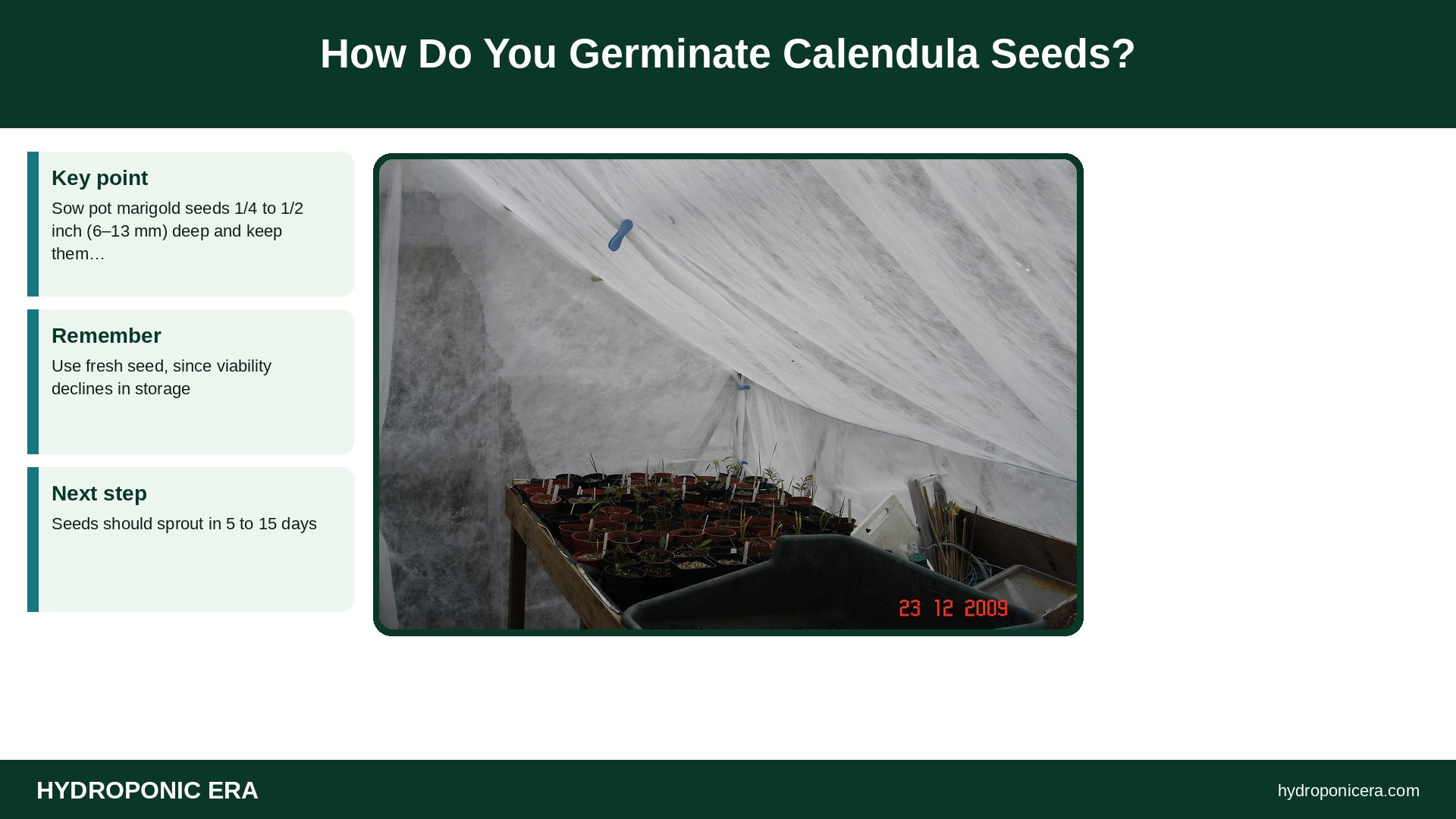
Sow pot marigold seeds 1/4 to 1/2 inch (6–13 mm) deep and keep them dark, because UW–Madison Extension says light inhibits germination. Use fresh seed, since viability declines in storage. Seeds should sprout in 5 to 15 days. UNH and USU Extension recommend sowing outdoors once soil reaches 60°F (16°C), or start seeds indoors six to eight weeks before your last frost.
- Soak nothing; sow dry seed into moist plugs or seed mix.
- Cover each seed with 1/4–1/2 in (6–13 mm) of media or a cap of vermiculite.
- Keep plugs at about 60–70°F (16–21°C) and evenly moist.
- Move seedlings under bright light as soon as they emerge.
- Transplant into net cups, buckets or pots once roots show.
Rockwool cubes work if you push the seed deep into the hole and cover it. See our hydroponic germination methods for plug options.
Can Calendula Grow in Hydroponics?
Yes. Pot marigold is a compact annual, so it adapts to Dutch buckets, deep water culture totes or a drip system with a coarse medium. USU Extension notes it needs little fertilization, and UW–Madison says plants flower best when not heavily fertilized. In hydroponics, that means a mild, balanced solution rather than a strong bloom formula.
Because plants grow 8–24 inches (20–60 cm) tall and spread, give each pot marigold its own site. A Dutch bucket system or a single 5-gallon bucket DWC is simple. Our hydroponic flowers guide lists other blooms that pair well.
How Much Light and Temperature Does Pot Marigold Need?
Calendula needs full sun to light shade outdoors and bright light indoors. USU says it grows in full sun to part shade, and UW–Madison notes plants may languish in long hot spells but usually recover when cooler weather returns. Indoors, keep air near the cool side of room temperature and avoid placing lights so close that they heat the canopy.
- Light: full sun outside; strong LED light indoors for 12–14 hours.
- Temperature: cool conditions; growth slows in prolonged heat.
- Heat-tolerant cultivars: USU names ‘Coronet’ and ‘Pacific Beauty.’
How Do You Keep Pot Marigold Blooming?
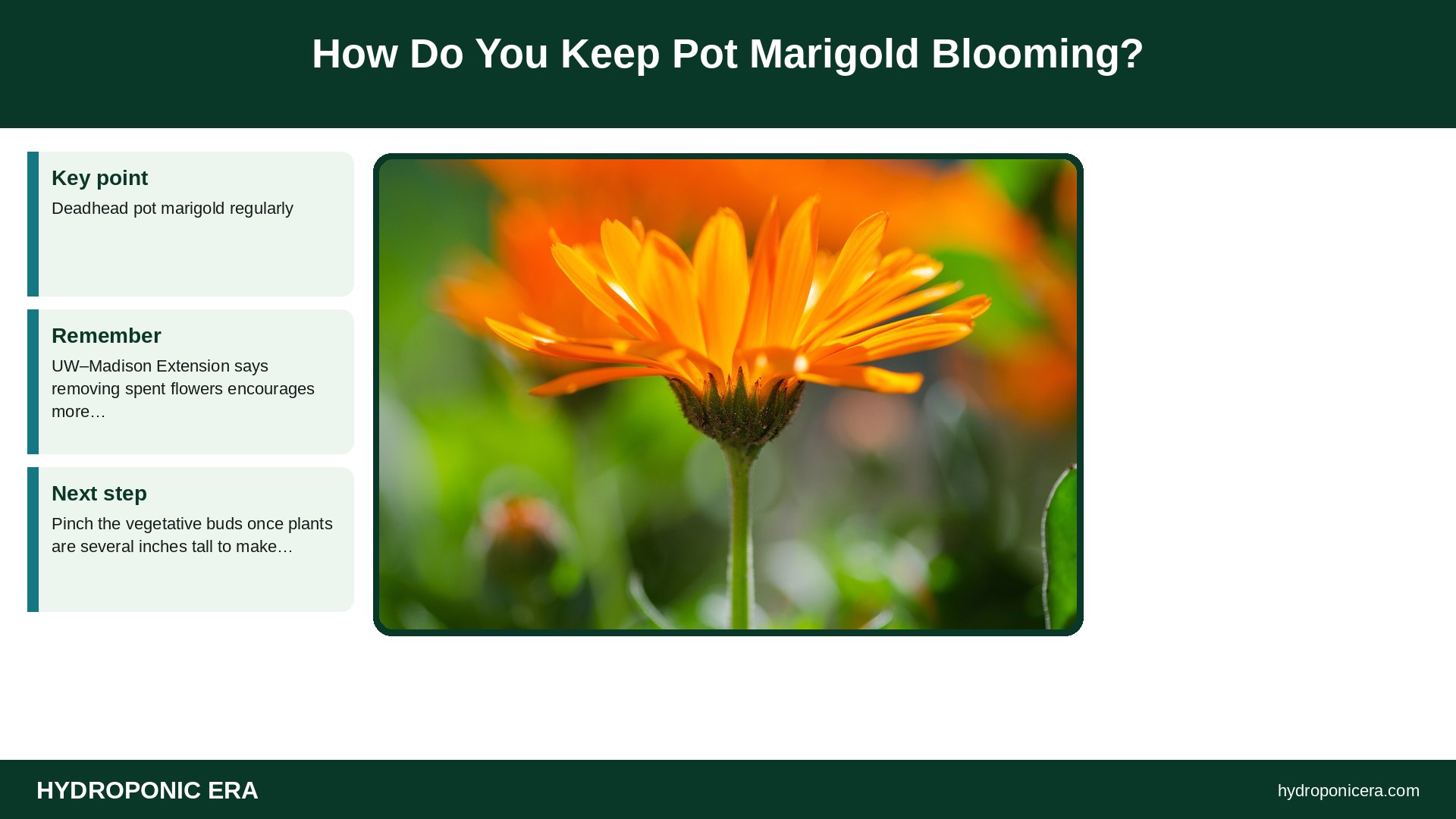
Deadhead pot marigold regularly. UW–Madison Extension says removing spent flowers encourages more blooms, and leaving them lets plants self-sow. Pinch the vegetative buds once plants are several inches tall to make them bushier. Water moderately and avoid heavy feeding, which pushes leaves over flowers. Plants can bloom almost continuously until the first heavy frost outdoors.
Succession sowing every few weeks keeps fresh plants coming, which is useful indoors where older plants get leggy.
Are Calendula Petals Edible and How Do You Harvest Them?
Yes. UNH Extension says calendula petals can be used fresh to decorate salads or cakes, or dried and added to soups and stews. USU suggests harvesting flower heads at full bloom and using them fresh or dried. For cut flowers, UNH notes stems last longer if picked when half open. Only eat flowers you grew without non-food-labeled pesticides.
To dry petals, pull them from the flower head and spread them on a screen in a shaded, airy spot until crisp. Store them in a sealed jar. Our edible flowers guide covers other options.
What Pests and Problems Affect Pot Marigold?
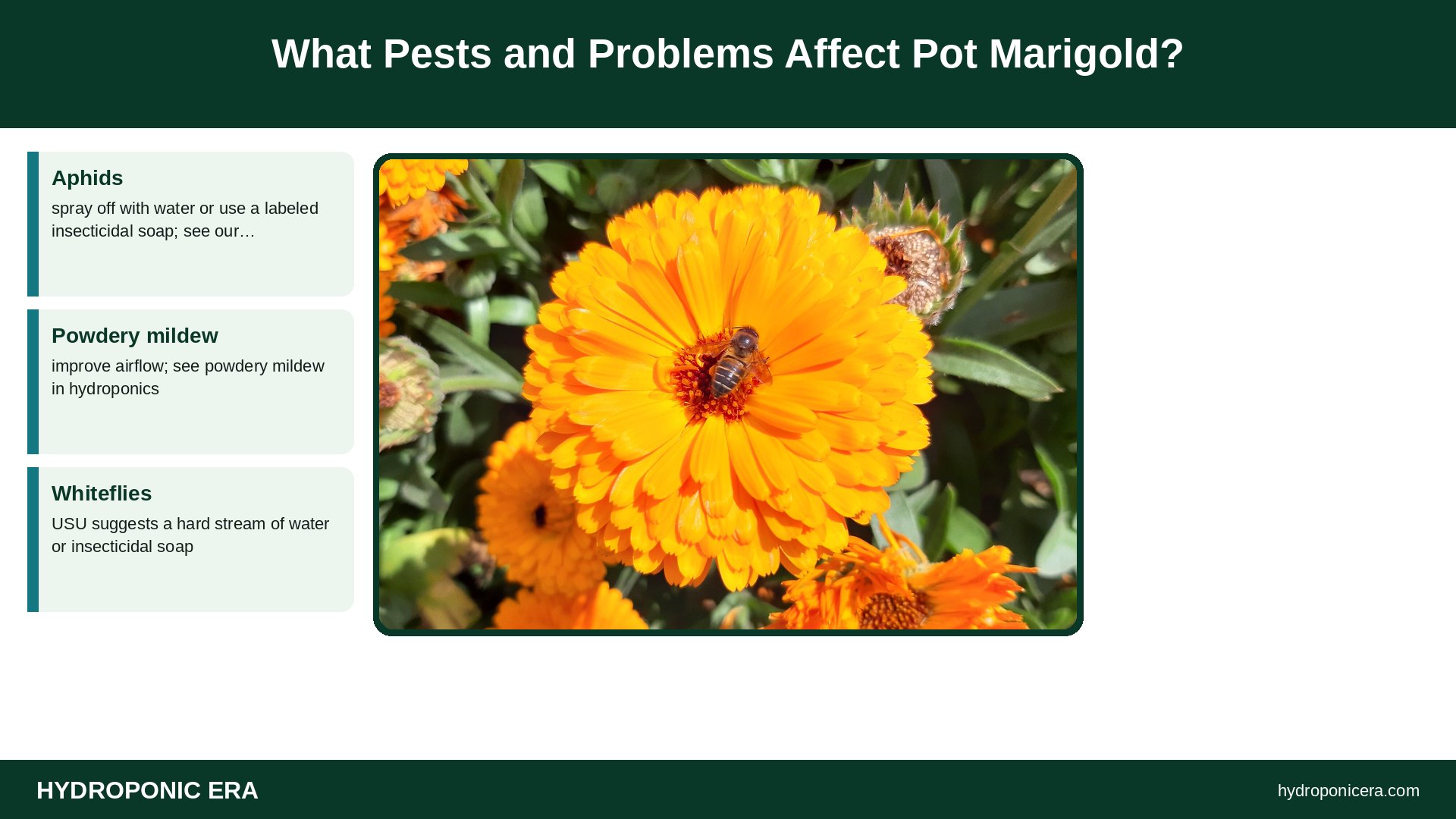
Pot marigold generally has few problems, but UW–Madison lists aphids, powdery mildew and occasionally cucumber mosaic virus. USU adds whiteflies. Inspect leaf undersides weekly, keep air moving and avoid crowding. Remove infected leaves early and isolate any plant with mottled, distorted growth.
- Aphids: spray off with water or use a labeled insecticidal soap; see our aphids and mites guide.
- Powdery mildew: improve airflow; see powdery mildew in hydroponics.
- Whiteflies: USU suggests a hard stream of water or insecticidal soap.
FAQ About Calendula
Is calendula the same as marigold?
No. Pot marigold is pot marigold; true marigolds are Tagetes.
Does calendula need light to germinate?
No. UW–Madison says light inhibits germination, so cover the seed.
How long until pot marigold flowers?
UNH lists maturity at 30–50 days.
Will pot marigold self-seed?
Yes, if you leave spent flowers on the plant.
Can I grow pot marigold in a container indoors?
Yes, with bright light, cool air and moderate watering.
Sources
- University of Wisconsin–Madison Extension — Calendula, Calendula officinalis
- University of New Hampshire Extension — How to grow calendula
- Utah State University Extension — How to grow calendula in your garden
- Photo credits (Wikimedia Commons, edited with titles): Orange 001 2013 07 15 by Friedrich Haag (CC BY-SA 4.0); Fleece lined greenhouse potting tray and seed pots – Flickr – peganum by peganum from Small Dole, England (CC BY-SA 2.0); Calendula officinalis ( by Sara De Carli (CC BY 4.0); Pot Marigold Flower by Leesha.S (CC BY-SA 4.0)