
How do you grow borage? Borage is an easy annual herb grown from seed in full sun. Sow it directly after frost or start it indoors in the container where it will stay, since it is difficult to transplant. Plants reach 2–3 feet (60–90 cm) tall, bloom with blue star-shaped flowers, and readily reseed themselves.
Key takeaway: Borage (Borago officinalis), also called starflower, has cucumber-flavored leaves and edible blue flowers that draw bees. It likes sun and dry conditions, needs support in wind, and its prickly hairs can irritate skin.
| Need | Borage guideline | Source |
|---|---|---|
| Light | Full sun; tolerates some shade | Illinois, UC Master Gardeners |
| Height | 2–3 ft (60–90 cm) tall and wide | UMD, UCANR |
| Spacing | 12 in (30 cm) between plants, 18 in (45 cm) rows | UMD Extension |
| Sowing | Direct after frost, or indoors | Illinois Extension |
| Succession | Sow every 4 weeks | UMD, Illinois |
| Compact type | ‘Bianca’, white flowers, good for pots | Illinois Extension |
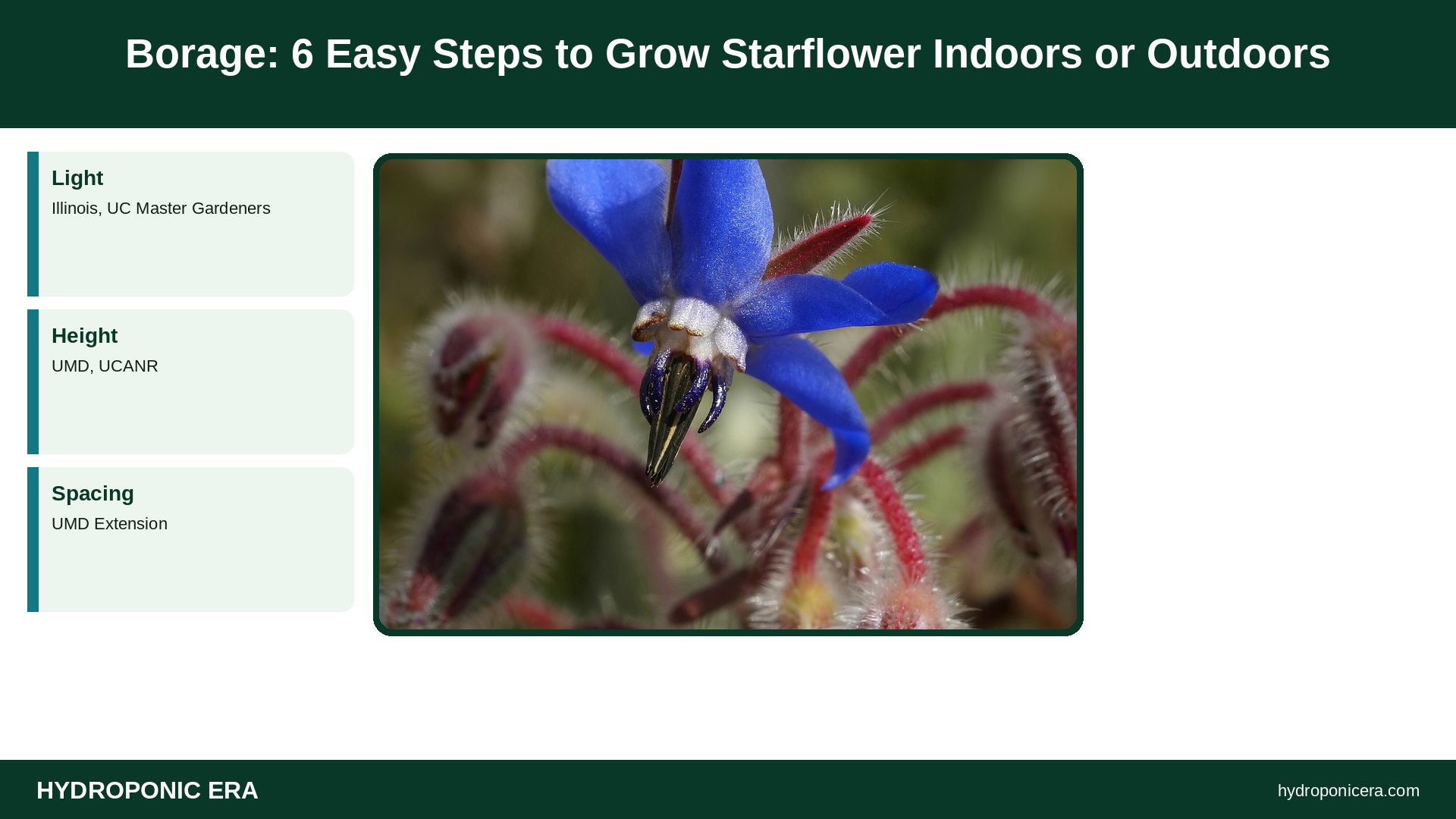
What Is Borage?
Borage is a decorative annual herb with coarse, very hairy leaves and stems and sky-blue star-shaped flowers, according to University of Maryland Extension. Illinois Extension describes the leaves as gray-green, with fine hairs on both leaves and stems. UC Master Gardeners in Sonoma County note the blossoms open pale pink, then turn blue and deepen to purple.
Both the young leaves and the flowers are edible. If you like flowers on the plate, see our guide to growing edible flowers hydroponically.
How Do You Plant Borage Seeds?
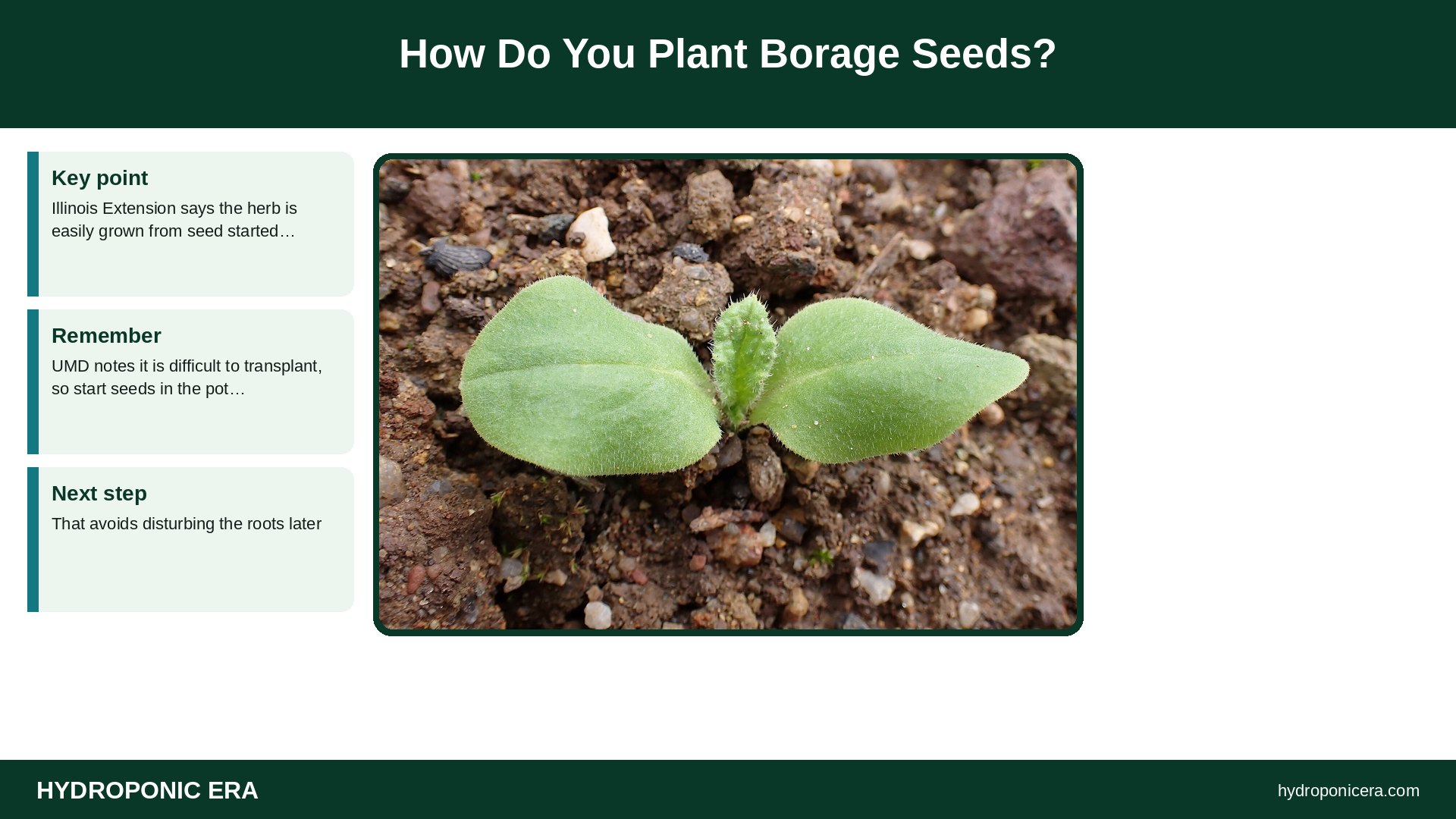
Illinois Extension says the herb is easily grown from seed started indoors or sown directly in the garden after frost has passed. UMD notes it is difficult to transplant, so start seeds in the pot, plug or net cup where the plant will finish. That avoids disturbing the roots later.
- Wait until frost danger is past for outdoor sowing.
- Sow in the final container, or in a cube you can drop straight into a net pot.
- Keep the medium moist until seedlings appear.
- Thin to 12 in (30 cm) between plants, per UMD spacing.
- Sow again every 4 weeks for a steady supply, as UMD and Illinois suggest.
Our hydroponic germination methods cover cubes and plugs.
What Light and Water Does Borage Need?
Grow it in full sun. Illinois Extension says it prefers full sun and, once established, does well on dry soils. UMD agrees it does best in dry, sunny places. UC Master Gardeners say it tolerates some shade with little water, and occasional irrigation during dry spells keeps plants thriving longer. Avoid soggy conditions.
Indoors, that means your brightest window or a strong grow light. In a hydroponic setup, keep the crown dry and give roots good air. No extension service publishes a hydroponic nutrient recipe for this herb, so treat any system grow as an experiment.
Can You Grow Borage in Containers or Hydroponics?
Yes, with the right variety and support. Illinois Extension lists ‘Bianca’ as a compact, sturdier form with white flowers that is good for pot culture. Standard plants reach 2–3 feet (60–90 cm) tall and wide, per UC Master Gardeners, so give each one plenty of room. Illinois notes stems are brittle and easily damaged by wind, so staking is suggested.
- Container: choose a deep pot; the plant dislikes being moved.
- Kratky or DWC: use a large bucket and stake the stem; see the Kratky method.
- Shared reservoirs: check our companion planting limits.
Why Do Bees Love Borage?
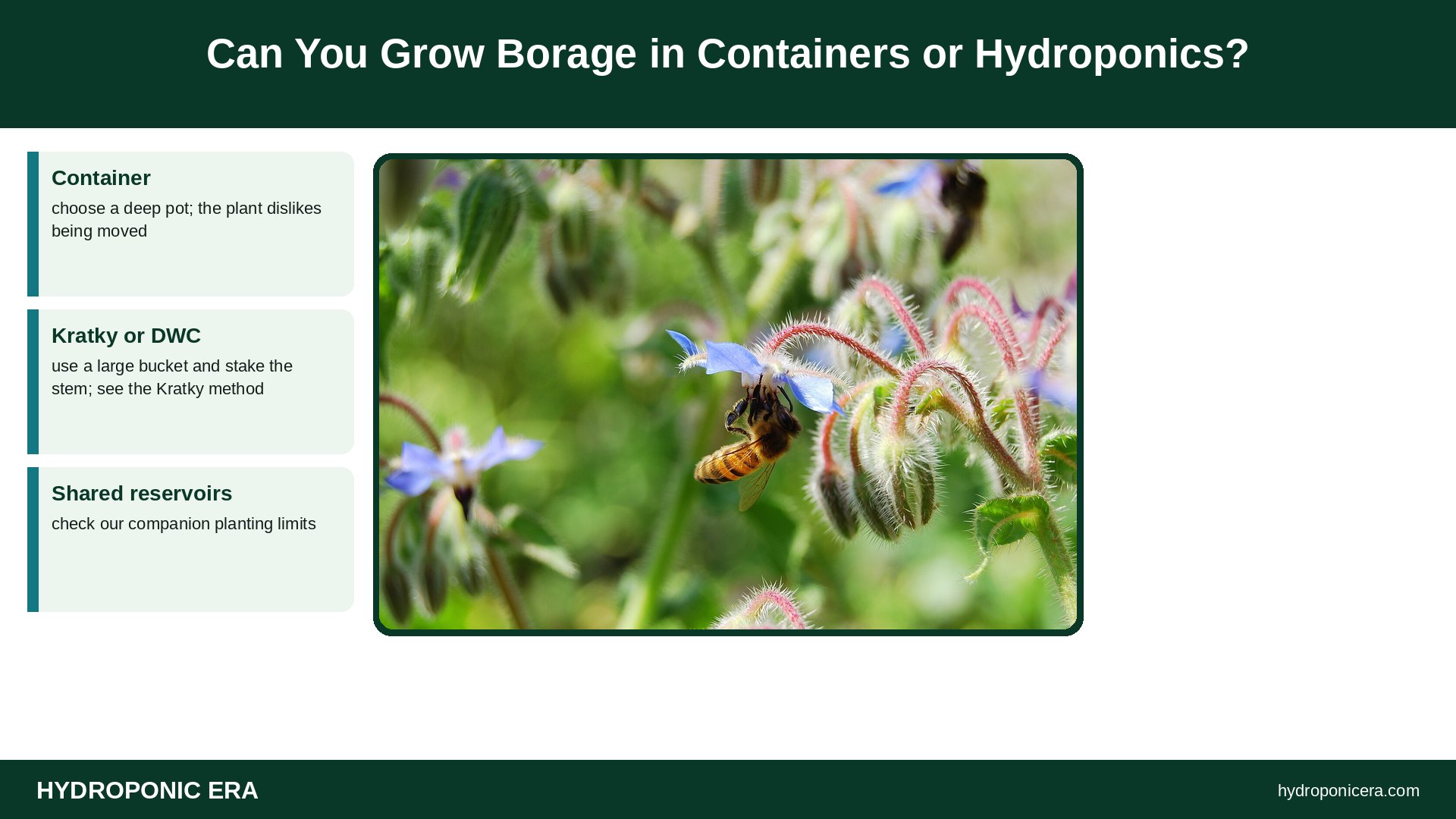
Bees seek out this herb early in the year, the UC Master Gardeners say, because it is one of the few flowering plants that provides nectar and pollen before most others bloom. Bee activity peaks on warm, sunny days. UMD suggests planting it near a vegetable garden to draw pollinating insects. Indoors, you still need to move pollen for fruiting crops.
For indoor fruit set, see our indoor pollination guide.
How Do You Harvest and Use Borage?
Pick blossoms as they open, and use leaves fresh any time, UMD says; they are seldom dried. Illinois Extension says the leaves add a cucumber-like flavor to salads, soups, stews and drinks, and the flowers make an edible garnish. UC Master Gardeners favor the youngest leaves, which have the fewest hairs.
- Wear gloves: the stiff hairs and sap can irritate skin in some people.
- Remove flower clusters before seed forms to get more blooms.
- Leave some seed heads if you want volunteers next year.
Does Borage Reseed Itself?
Yes. UMD says it will readily reseed itself, and UC Master Gardeners say it often pops up in moist and dry spots once established. Some gardeners simply lay a stem of spent, gone-to-seed flowers where they want new plants. Unwanted seedlings pull out easily. Deadheading slows this down if you want a tidier garden.
What Are the 6 Steps at a Glance?
Here is the whole process in order, using the extension advice above. It works for a garden bed, a deep patio pot or a large hydroponic bucket, as long as the plant gets strong light and room to spread. Plan for one plant per 12 in (30 cm) of space.
- Pick a sunny spot or a strong grow light.
- Sow seeds in the final container after frost.
- Thin seedlings and keep the crown dry.
- Stake stems before wind or weight bends them.
- Harvest young leaves and fresh flowers with gloves on.
- Re-sow every 4 weeks, or let a few heads drop seed.
FAQ About Growing Starflower
Is borage an annual or perennial?
It is an annual, but it often returns each year by self-seeding.
How tall does borage get?
About 2–3 ft (60–90 cm) tall.
Can you eat borage leaves?
Yes. Young leaves are best; they taste like cucumber.
Why are my borage stems falling over?
Stems are brittle and wind-prone; stake them, as Illinois Extension suggests.
What is the best borage for pots?
‘Bianca’, a compact white-flowered type, is recommended for pot culture.
Sources
- University of Maryland Extension — Borage
- University of Illinois Extension — Borage
- UC Master Gardener Program of Sonoma County — Borage
- Photo credits (Wikimedia Commons, edited with titles): Borago officinalis (flower) by Hans Hillewaert (CC BY-SA 3.0); Borago officinalis kz09 by Krzysztof Ziarnek, Kenraiz (CC BY-SA 4.0); Apis mellifera et Borago officinalis by Gohnarch (CC BY-SA 3.0); Fleece lined greenhouse potting tray and seed pots – Flickr – peganum by peganum from Small Dole, England (CC BY-SA 2.0)