
Does cayenne pepper spray work on plants? Cayenne pepper spray can repel some mammals, such as squirrels, but results against insects are inconsistent. Capsaicin, the active compound, is an EPA-registered biochemical repellent, yet Virginia Tech Extension warns that homemade mixes are untested, vary in strength, can burn leaves and are illegal for some uses. Registered capsaicin products are more reliable.
Key takeaway: Capsaicin deters many mammals but not birds, irritates skin and eyes, and is toxic to bees and beneficial insects. A homemade cayenne pepper spray has no label, no tested dose and may damage foliage. Identify the pest first, and use a registered product exactly as its label directs.
| Fact | What it means | Source |
|---|---|---|
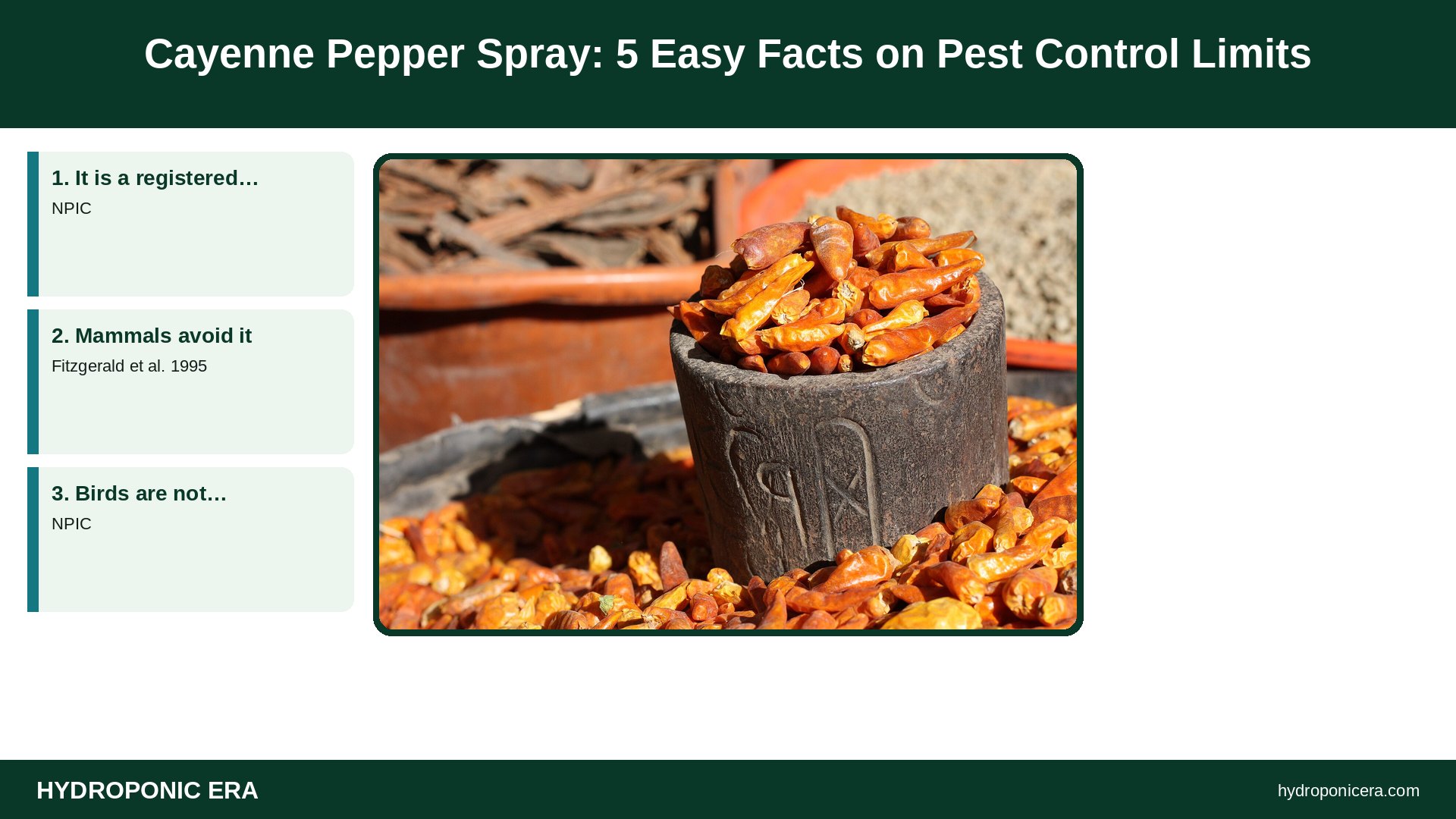
| 1. It is a registered repellent | Capsaicin products have been EPA-registered since 1962 | NPIC |
| 2. Mammals avoid it | Treated seed was almost fully rejected by squirrels | Fitzgerald et al. 1995 |
| 3. Birds are not repelled | Birds cannot taste capsaicin | NPIC |
| 4. It harms beneficials | Toxic to bees and other beneficial insects | NPIC |
| 5. Homemade is untested | Variable results, possible leaf burn, some uses illegal | Virginia Tech |
How Does Cayenne Pepper Spray Work?
Cayenne pepper spray works through capsaicin, the compound that makes hot peppers burn. The National Pesticide Information Center (NPIC) explains that capsaicin is mainly an animal repellent that is also used against insects and mites. In insects, it appears to damage cell membranes and disrupt the nervous system; in mammals, it causes a painful burning sensation.
University of Missouri IPM notes that peppers most likely make capsaicin to defend against insect damage and fungal growth. That is why hot pepper plants themselves are relatively pest-free, as covered in our guide to growing hot peppers.
Does Cayenne Pepper Spray Keep Squirrels and Animals Away?
The evidence is strongest for mammals. In a 1995 Cornell University study, sunflower hearts treated with capsaicin at 100,000 Scoville Heat Units were nearly completely avoided by captive gray squirrels. Lipid-based formulations worked better, and capsaicin suet worked at lower strength.
- Squirrels and rodents: repelled by strong, oil-based capsaicin.
- Pets and wildlife: NPIC says products are used as backyard repellents.
- Birds: not repelled, because birds cannot taste capsaicin.
- Reapplying: follow the label interval, since homemade mixes have none.

Does Cayenne Pepper Spray Kill Aphids and Mites?
It can affect soft insects on contact, but homemade cayenne pepper spray is an unreliable insecticide. Virginia Tech Extension notes that homemade pesticides are not standardized, so their effectiveness is highly variable. For aphids and spider mites, tested options such as strong water sprays, insecticidal soap or natural predators are more dependable.
See our guides to aphids and mites, ladybugs for aphids and aquaponics-safe pest control.
Can Cayenne Pepper Spray Burn Plant Leaves?
Yes. Virginia Tech Extension warns that homemade pesticide mixes can cause chemical burns on ornamental plants and dead patches in lawns. Many pepper spray recipes add oil or soap to make them stick, and those ingredients can scorch foliage in heat or sun. Always test any spray on a few leaves first.
- Spray a small patch of leaves only.
- Wait two to three days and look for spotting or browning.
- Avoid spraying in hot midday sun.
- Never spray stressed, wilted or newly transplanted plants.
- Rinse leaves with water if damage appears.

Is Homemade Cayenne Pepper Spray Legal and Safe?
Not always. Virginia Tech Extension notes that homemade pesticides are not tested to federal or food safety standards and that some uses are considered illegal. They also lack a label with directions, protective equipment and disposal steps. NPIC warns that capsaicin is very irritating to the skin and eyes and can harm lungs if inhaled.
| Risk | Why it matters | Source |
|---|---|---|
| Eye and skin burns | Capsaicin is a strong irritant | NPIC |
| Pets exposed | Pets may touch or eat treated plants | NPIC |
| Bees harmed | Toxic to bees and beneficial insects | NPIC |
| No label | No tested dose, PPE or disposal directions | Virginia Tech |
| Legal issues | Some homemade uses are illegal | Virginia Tech |
How Do You Use Capsaicin Repellents Safely?
Choose an EPA-registered capsaicin product that lists your pest and your plant, then follow the label exactly. NPIC advises staying away from treated plants until the spray dries. Wear gloves and eye protection, keep pets and children off wet surfaces, and avoid spraying open flowers where bees forage.
- Read the label before buying, mixing or spraying.
- Wear gloves, long sleeves and eye protection.
- Spray in calm weather so it does not drift onto you.
- Avoid flowers and times when bees are active.
- Store leftovers clearly labeled, out of reach, as UConn Extension advises.
Why Should You Identify the Pest First?
Because the right control depends on the culprit. Virginia Tech Extension stresses knowing the identity of the pest and making sure both the pest and the plant are listed on a product label. Chewed leaves could be caterpillars, slugs or rabbits, and each needs a different response. Guessing wastes time and can harm helpful insects.
| Damage you see | Likely culprit | Better first step |
|---|---|---|
| Dug-up bulbs, bitten fruit | Squirrels | Netting, cages or a registered repellent |
| Curled, sticky new leaves | Aphids | Water spray, soap or predators |
| Fine webbing, speckled leaves | Spider mites | Rinse leaves, raise humidity |
| Ragged holes, slime trails | Slugs and snails | Hand-pick, traps |
Once you know the pest, check your local extension service for proven controls before reaching for a kitchen remedy.
What Are Better Alternatives to Cayenne Pepper Spray?
Match the method to the pest. Physical barriers such as netting and row covers stop mammals and birds, beneficial insects control aphids, and registered biological products target specific pests. UConn Extension notes that many naturally derived pesticides are now sold that have been tested for effectiveness and environmental impact, giving consistent results.
For crawling pests, compare options in our diatomaceous earth guide.
FAQ About Cayenne Pepper Spray
Does cayenne pepper spray hurt bees?
Yes. NPIC lists capsaicin as toxic to bees and other beneficial insects.
Will it keep birds off my plants?
No. NPIC notes that birds cannot taste capsaicin.
Is it safe on vegetables I plan to eat?
Only registered products labeled for food crops have tested directions. Homemade mixes do not.
How long does capsaicin last in soil?
NPIC says soil bacteria break capsaicin down.
Can capsaicin harm my dog?
NPIC warns pets can be exposed by touching or eating treated plants, so keep them away until it dries.
Sources
- National Pesticide Information Center. Capsaicin general fact sheet.
- Virginia Cooperative Extension. Myth-busting homemade pesticides (ENTO-570).
- UConn Extension. Homemade pesticide issues: understanding the science.
- Fitzgerald C.S., Curtis P.D., Richmond M.E., Dunn J.A. 1995. Effectiveness of capsaicin as a repellent to birdseed consumption by gray squirrels. UNL Digital Commons.
- University of Missouri IPM. Cool off with hot peppers.
- Photo credits (Wikimedia Commons, edited with titles): Souk Al Milh, Sana, Yemen (4324865585) by yeowatzup (CC BY 2.0); Man turns drying chili peppers, Turkey by Rotadefterim (CC BY-SA 4.0); Man turns drying chili peppers, Turkey by Rotadefterim (CC BY-SA 4.0)