
Aquaponics pest control has one hard rule: anything that reaches the water must be safe for fish and beneficial bacteria. Synthetic pesticides are off the table, and many “organic” sprays such as neem, pyrethrum and rotenone are toxic to fish too. Fish-safe integrated pest management (IPM) relies on prevention, screens and sticky traps, hand removal and water sprays, beneficial insects such as ladybugs, lacewings and parasitic wasps, and narrow biological products like Bacillus thuringiensis (Bt) for caterpillars. If you must use a stronger spray, move plants away from the system and let them dry before returning them.
Key takeaway: Prevent first, monitor weekly, remove pests by hand or water, release beneficials, and treat only with products known to be fish-safe, applied so nothing drips into the water.
| Control | Fish-safe? | Best for |
|---|---|---|
| Insect screens, sticky traps | Yes | Whiteflies, thrips, fungus gnats |
| Hand removal, strong water spray | Yes | Aphids, caterpillars, mites |
| Ladybugs, lacewings, parasitic wasps | Yes | Aphids, whiteflies |
| Bacillus thuringiensis (Bt) | Yes (FAO) | Caterpillars |
| Beauveria bassiana | Yes (FAO) | Many soft-bodied insects |
| Diatomaceous earth | Non-toxic to fish (FAO) | Crawling insects |
| Neem, pyrethrum | Toxic to fish | Only as foliar spray away from water |
| Rotenone, nicotine, synthetics | No | Never in aquaponics |

Why Aquaponics Pest Control Is Different
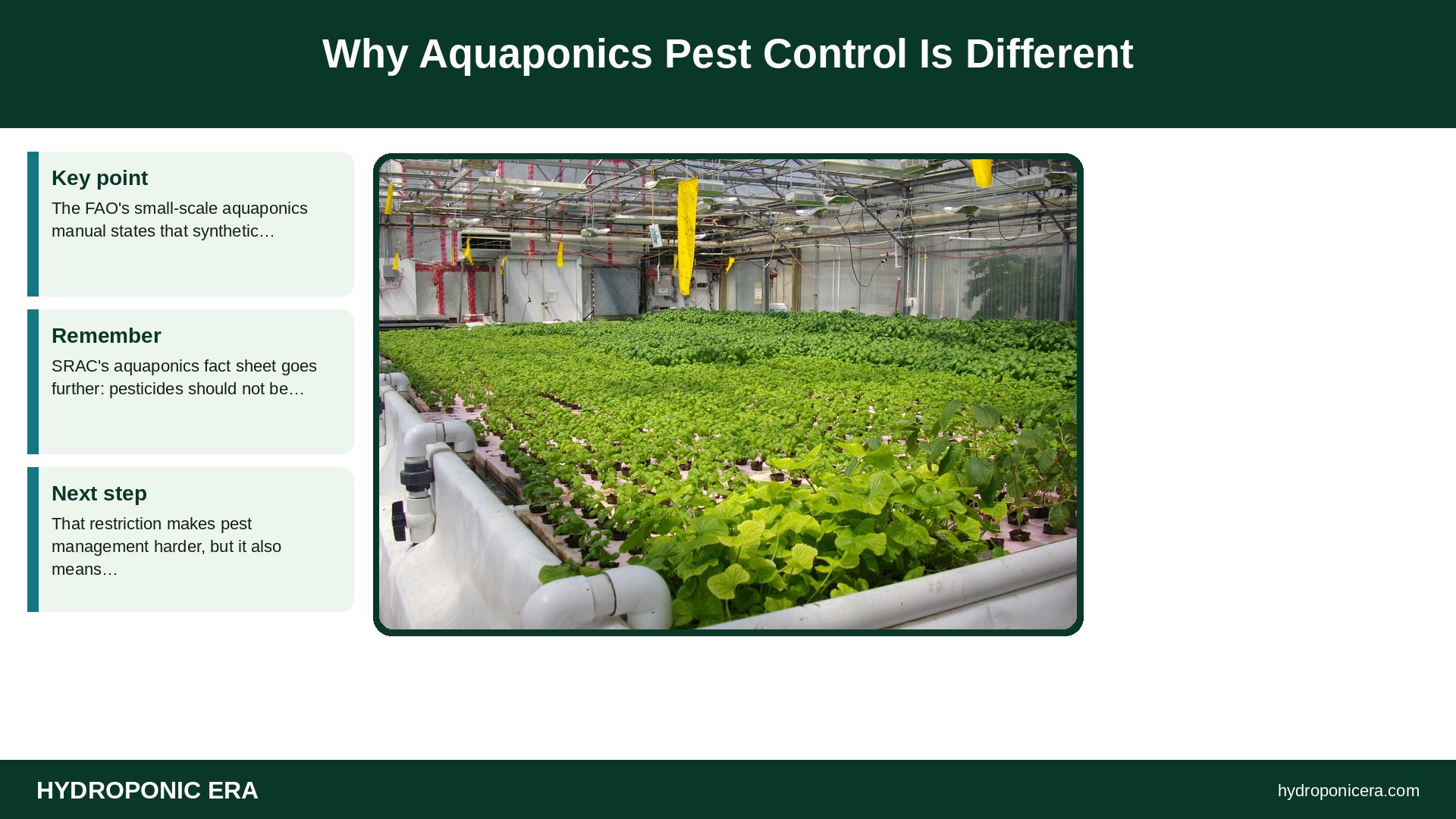
The FAO’s small-scale aquaponics manual states that synthetic pesticides and insecticides must never be used in aquaponics because they will kill the fish, and adds that many biological controls are also deadly to fish. SRAC’s aquaponics fact sheet goes further: pesticides should not be used to control insects on aquaponic plants, even those registered for vegetables. That restriction makes pest management harder, but it also means crops are free of pesticide residues.
Beneficial bacteria matter too. Sprays that harm insects can also stress the nitrifying bacteria in your biofilter, causing ammonia to rise. See nitrifying bacteria.
Prevention: The Base of Aquaponics Pest Control
- Start clean. Buy seedlings from a reputable source and inspect them. See quarantine new plants.
- Screen the space. Insect netting on greenhouse vents keeps out many flying pests. See aquaponics greenhouse.
- Don’t overfeed nitrogen. The FAO notes excessive nitrogen makes soft, succulent tissue that pests prefer, and recommends exchanging some water when nitrate exceeds about 120 mg/L.
- Space plants. Crowded, shaded canopies hold pests and humidity.
- Keep it clean. Remove dead leaves, roots and debris after each harvest.
- Rotate crops. The FAO notes even a short change of crop can sharply reduce pests that target a monoculture.
Monitoring and Early Detection
Check the undersides of leaves weekly with a hand lens. Yellow sticky cards catch whiteflies, aphids, fungus gnats and thrips and show when numbers rise. The FAO suggests indicator plants: cucumbers and legumes attract aphids and mites early, so they warn you before the main crop is hit. See sticky trap placement.
Mechanical and Physical Controls
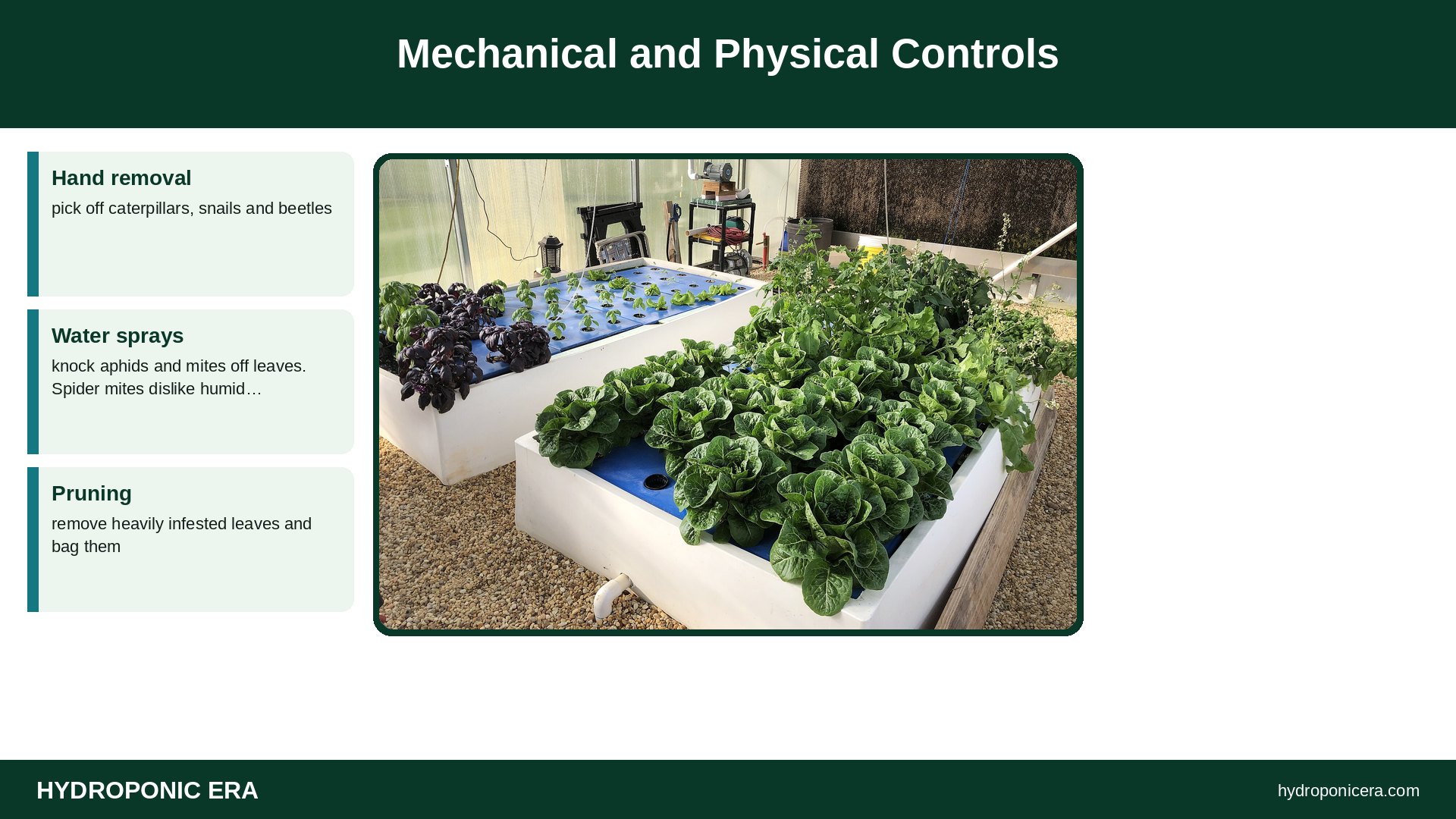
- Hand removal: pick off caterpillars, snails and beetles.
- Water sprays: knock aphids and mites off leaves. Spider mites dislike humid conditions; the FAO notes timed misters on leaves can deter them.
- Pruning: remove heavily infested leaves and bag them.
- Vacuuming: a small handheld vacuum removes whiteflies from leaf undersides.
- Trap crops: the FAO describes “catch plants” such as fava beans grown in pots beside, not within, the system; they attract pests that can then be treated away from the water.
Beneficial Insects
SRAC reports that parasitic wasps and ladybugs can be used to control whiteflies and aphids, and that biological control works best in enclosed greenhouses. The FAO lists lacewings, predatory beetles and parasitoid wasps for aphids, Cryptolaemus beetles for mealybugs, and predatory mites (Hypoaspis miles) for fungus gnats and thrips. Beneficials never fully eradicate pests; they keep them in balance, so don’t spray anything that would kill them. Flowers near outdoor systems help keep beneficial insects around. See hydroponic marigolds.
Fish-Safe Biological Products
The FAO names two biological controls widely used in aquaponics: Bacillus thuringiensis, a bacterial toxin that targets caterpillars, leaf rollers and moth larvae without harming beneficial insects, and Beauveria bassiana, a fungus that infects insects through their skin. SRAC notes UVI controls caterpillars by spraying Bt twice weekly. Even with fish-safe products, spray leaves, not water, and cover open rafts or tanks while you work.
Products to Use Only Away From Water
The FAO’s insecticide table lists neem as toxic to fish but usable as a foliar spray away from water, pyrethrum likewise, and rotenone as extremely toxic to fish. It also cautions that soaps can damage fish gills, so very little should reach the water. If you need one of these, lift plants out (easy in raft systems), treat them elsewhere, and let leaves dry completely before returning them. Never spray over the fish tank.
Common Pests and Fish-Safe Responses
| Pest | First response | Next step |
|---|---|---|
| Aphids | Water spray, prune hot spots | Ladybugs, lacewings, parasitic wasps |
| Whiteflies | Yellow sticky cards, vacuum | Parasitic wasps |
| Spider mites | Raise humidity, rinse leaves | Predatory mites |
| Caterpillars | Hand pick | Bt foliar spray |
| Thrips | Blue or yellow sticky cards | Predatory mites |
| Fungus gnats | Dry media surface, sticky cards | Predatory mites |
For pest-specific guides, see aphids and mites, whiteflies, thrips and fungus gnats.
Diseases and Fungi
Good airflow, moderate humidity and spacing prevent most leaf diseases. Remove infected leaves promptly. Copper and sulfur fungicides are risky: the FAO warns copper accumulates in water and is toxic to crustaceans. For mildew, focus on ventilation first. See powdery mildew.
Weekly Aquaponics Pest Control Routine
- Inspect leaf undersides on a few plants in every bed.
- Count pests on sticky cards and replace cards as needed.
- Rinse or hand-pick early infestations.
- Release beneficials when counts rise.
- Apply Bt only if caterpillars appear, spraying leaves, not water.
- Log what you saw and did, so patterns show by season.
Aquaponics Pest Control Indoors vs Outdoors
Indoor and greenhouse systems give you the most control. Screens keep many pests out, and beneficial insects stay where you release them, which is why SRAC notes biological control works best in enclosed greenhouses. Outdoors, pests arrive from surrounding plants, but so do natural predators. The FAO recommends keeping surrounding vegetation trimmed and planting flowers nearby to support beneficial insects.
Indoor aquaponics pest control often comes down to fungus gnats, aphids and spider mites, all helped by good airflow and a weekly inspection. Outdoor aquaponics pest control adds caterpillars, beetles and birds; netting and hand removal go a long way. In both settings, keep a small spray bottle of plain water handy for knocking off aphids as soon as you see them.
FAQs
Can I use neem oil in aquaponics?
Only on plants moved away from the system; the FAO lists neem as toxic to fish.
Is Bt safe for fish?
Yes; it targets caterpillars and is widely used in aquaponics.
Are ladybugs good for aquaponics?
Yes, especially for aphids in greenhouses.
Can I use insecticidal soap?
Use sparingly and keep it out of the water; soaps can damage fish gills.
Is diatomaceous earth fish-safe?
The FAO lists it as non-toxic to fish; avoid breathing the dust.
What’s the best aquaponics pest control?
Prevention, monitoring and beneficial insects working together.
Sources
- FAO — Small-scale aquaponic food production
- Southern Regional Aquaculture Center — SRAC 454: Aquaponics—Integrating Fish and Plant Culture
- UConn Integrated Pest Management — Greenhouse and Vegetable IPM
- Photo credits (Wikimedia Commons, edited with titles): Striped ladybird with aphids (4560537745) by Ton Rulkens from Mozambique (CC BY-SA 2.0); CDC South Aquaponics Raft Tank 1 2010-07-17 by Bryghtknyght (CC BY 3.0); Deepwater Aquaponics Floating Rafts Growing Lettuce, Basil and Arugula by Alabama Extension (CC0); French marigold garden 2009 G1 by George Chernilevsky (Public domain); Feeding fish (51250565367) by USFWS Mountain Prairie (Public domain)