
What is cucumber mosaic virus? Cucumber mosaic virus (CMV) is an aphid-spread plant virus that infects over 1,200 species, including cucumbers, peppers, tomatoes, lettuce and spinach. It causes mottled mosaic leaves, stunting and distorted fruit. University of Wisconsin says there is no known cure, so remove infected plants and prevent spread with resistant varieties, clean seed and weed control.
Key takeaway: Cucumber mosaic virus has no cure; remove infected plants, exclude aphids and grow resistant varieties.
| Crop | Typical CMV symptom | Source |
|---|---|---|
| Cucurbits | Yellow mosaic, stunting, small curled leaves | UMass Extension |
| Tomato | Thin, shoestring-like leaves | UMass Extension |
| Pepper | Mosaic fading to dull, leathery leaves | UMass Extension |
| Celery | Downward-curling young petioles | UMass Extension |
| Many hosts | Ring spots, puckering, warty fruit | University of Wisconsin |
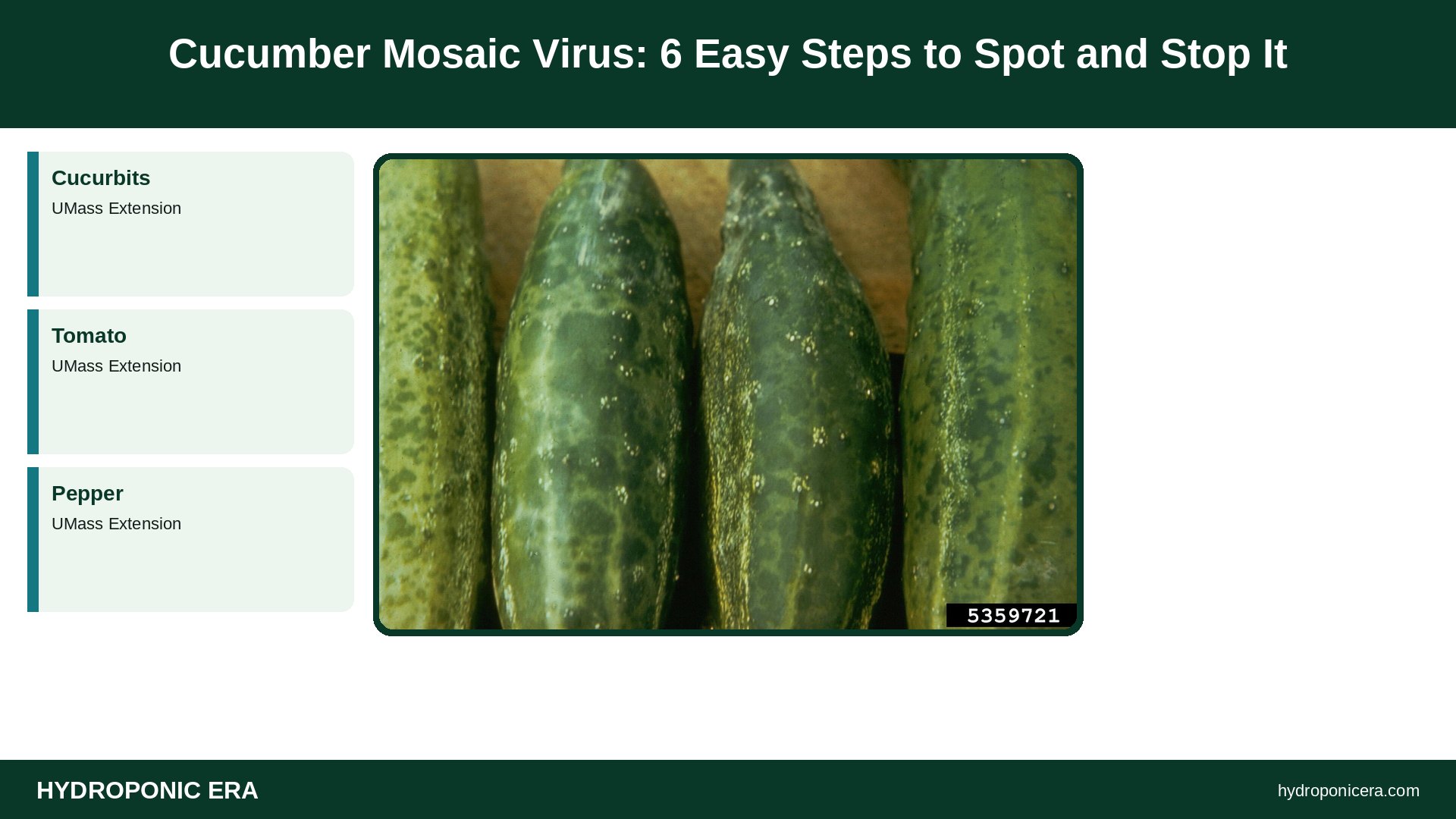
What Does Cucumber Mosaic Virus Look Like?
Symptoms vary by host, variety and infection timing. University of Wisconsin lists stunting, mosaic or mottling in blotchy white, yellow and light green, ring spots on leaves and fruit, and cupping, puckering and strapping of leaves, plus warts on fruit. In extreme cases, parts of a plant or the whole plant may die.
Which Plants Does Cucumber Mosaic Virus Infect?
A huge range. UMass Extension gives a host range of more than 1,200 species, with vegetable hosts including carrot, celery, cucurbits, legumes, lettuce, onion, pepper, spinach and tomato, and rarely potato. University of Minnesota adds that it infects plants from over forty families, including petunias, impatiens and many weeds.
Compare related diseases in our tomato yellow leaf curl virus guide.
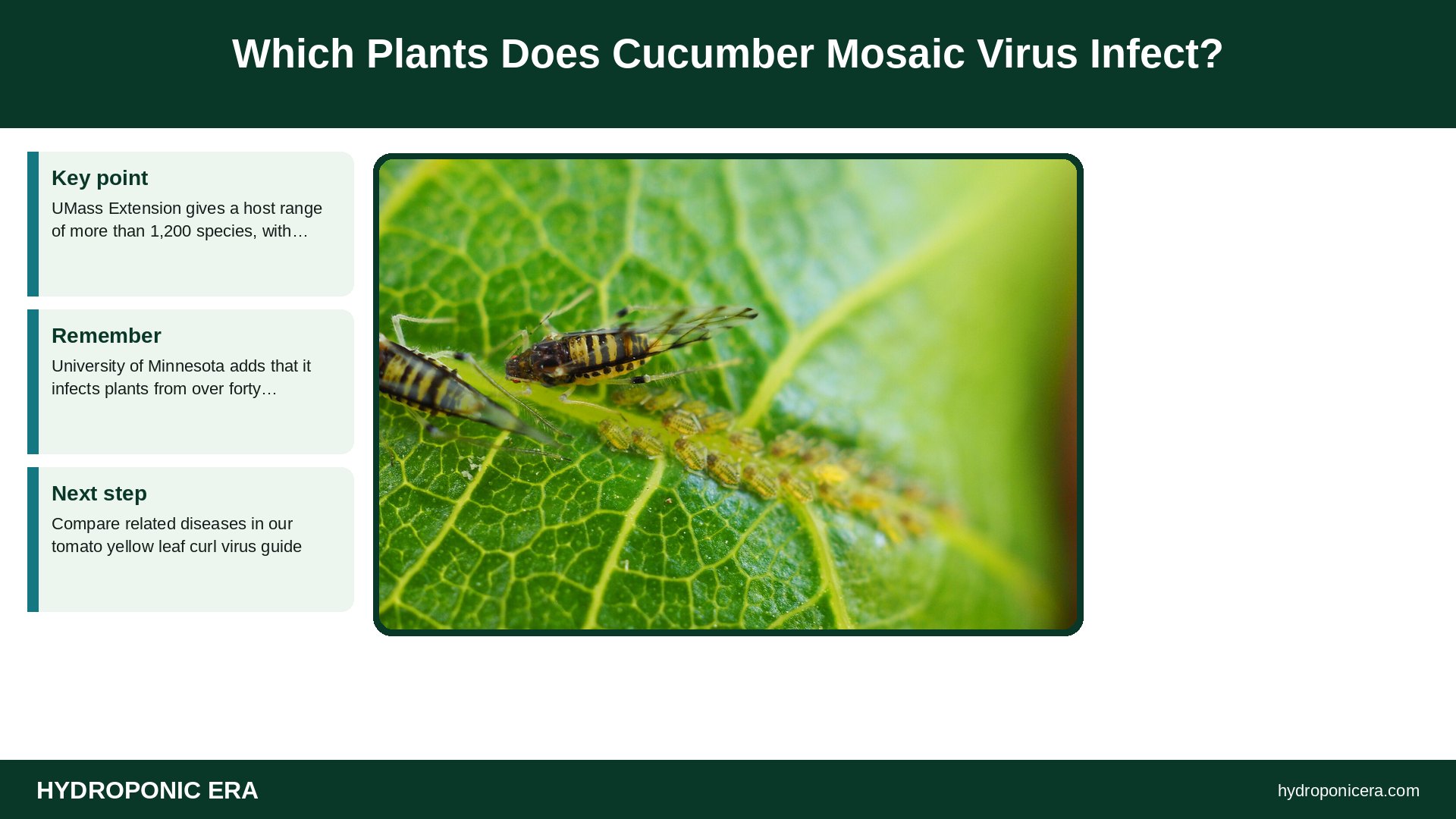
How Does Cucumber Mosaic Virus Spread?
Mainly by aphids. UMass Extension says at least 75 aphid species carry it in a non-persistent manner, picking it up in under one minute of feeding and keeping it only a few hours. University of Wisconsin puts the number above 80 species. The virus also spreads mechanically, and Minnesota notes infected sap moves on hands and tools.
Learn aphid control in our hydroponic pests: aphids and mites guide.
Which Cucurbits Suffer Most From CMV?
Squash and melons. UMass Extension says symptoms are most severe in summer squash, some pumpkins and many melons, and less severe in cucumber, winter squash and watermelon. Infected fruit are often distorted, discolored and small, and severely infected fruit produce negligible seed. Flowers may also develop abnormal, greenish petals.
What Other Viruses Look Like CMV?
Several mosaic viruses do. University of Minnesota lists squash mosaic, zucchini yellow mosaic, watermelon mosaic 2 and papaya ringspot viruses, and notes plants often carry more than one at once. Squash mosaic spreads by cucumber beetles and seed, not aphids. Lawn herbicide damage can also mimic viral symptoms in home gardens.
Is Cucumber Mosaic Virus Seed-Borne?
Sources differ by host. UMass Extension says there is no evidence it is seed-borne in any vegetable host, though it has been reported in other hosts. University of Wisconsin says seeds and even pollen from certain host plants can carry it. Either way, Minnesota advises buying clean seed and never saving seed from infected plants.
Can You Cure Cucumber Mosaic Virus?
No. University of Wisconsin says there is no known cure, and University of Minnesota says no pesticides can reverse or limit viral symptoms. Wisconsin advises removing and destroying infected plants by burning where allowed, deep burying or hot composting, since they act as reservoirs that spread the virus to nearby healthy plants.
Do Insecticides Stop Cucumber Mosaic Virus?
Usually not. University of Wisconsin warns insecticides act too slowly to stop aphids from transmitting the virus and may make them move and feed more widely. UMass agrees insecticides can irritate aphids into faster probing, though it notes mineral oil or rapid-acting sprays can be effective. Minnesota adds sprays often kill aphids’ natural enemies.
Try biological help in our ladybugs for aphids guide.
How Do You Prevent Cucumber Mosaic Virus?
Combine several barriers. These steps come from UMass, Wisconsin and Minnesota Extension advice for gardens, fields and greenhouses.
- Buy certified, virus-free seed and transplants.
- Choose CMV-resistant cucurbit, pepper, lettuce or spinach varieties; UMass notes no resistant tomatoes.
- Remove weeds, especially perennials, around growing areas.
- Use floating row covers, reflective mulch or aphid screening.
- Pull and remove plants showing symptoms.
- Wash hands and tools with soap and water after handling infected plants.
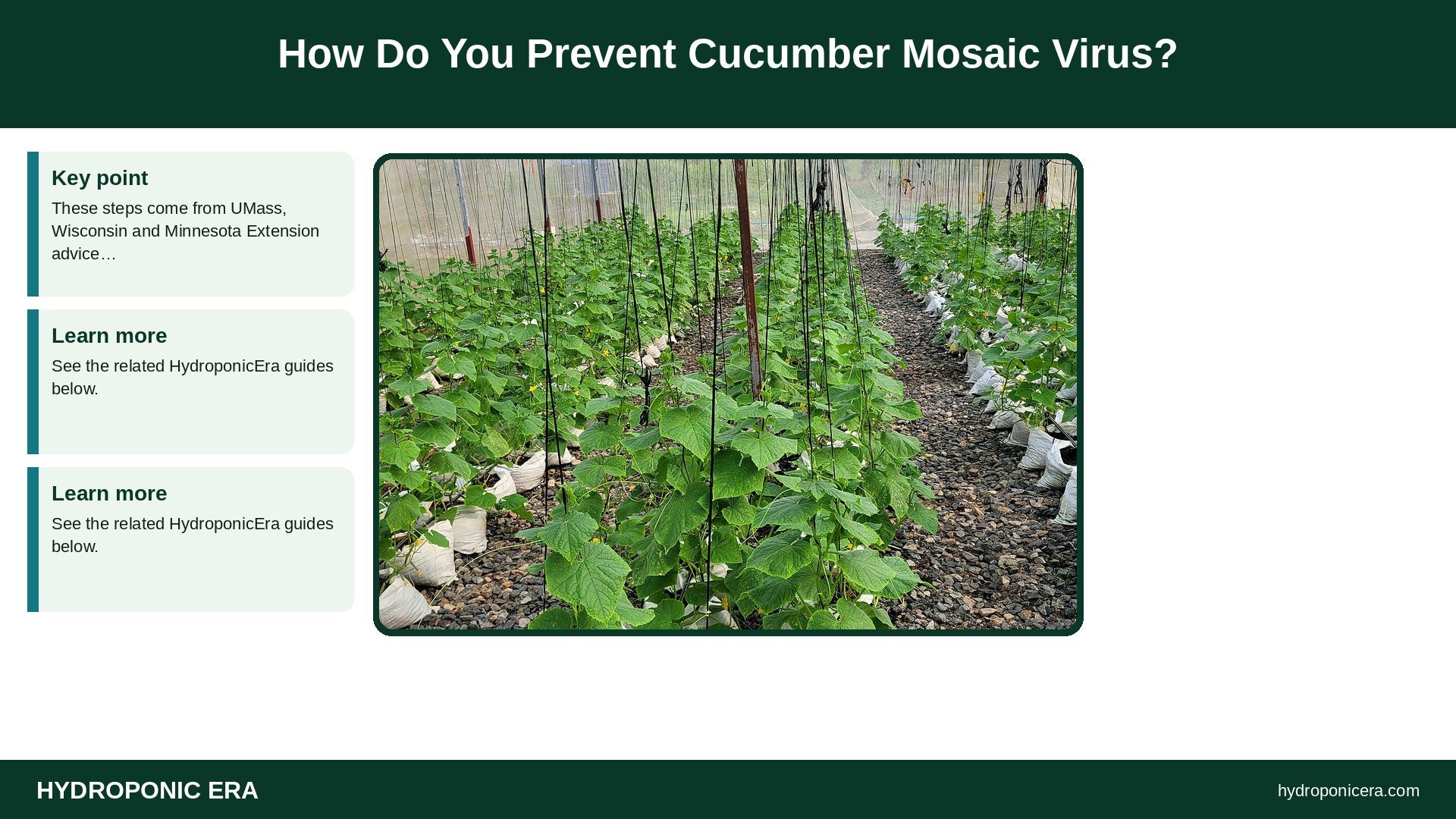
How Do Greenhouse Growers Manage Cucumber Mosaic Virus?
Exclude aphids and remove nearby hosts. University of Minnesota advises screening greenhouses and hoop houses to keep aphids out, eliminating weeds and other virus hosts within 350 feet (107 m), and not planting cucurbit field crops next to greenhouse areas. It also recommends sending suspect plants to a diagnostic clinic, because viruses look alike.
Pick tolerant types with our best cucumber variety for hydroponics guide.
FAQ About Cucumber Mosaic Virus
Can I eat fruit from infected plants?
The sources cover plant damage, not food safety; UMass says fruit is often small, distorted and discolored.
Does CMV infect tomatoes?
Yes. UMass lists filiform, shoestring-like leaves as the hallmark symptom.
Can I diagnose CMV by eye?
Not reliably. Minnesota says lab analysis is the only way to confirm the virus.
Can I compost infected plants?
Wisconsin says hot composting is one disposal option.
Sources
- University of Massachusetts Amherst Extension — Cucumber Mosaic Virus
- University of Wisconsin–Madison PDDC — Cucumber Mosaic
- University of Minnesota Extension — Cucurbit Viruses
- Photo credits (Wikimedia Commons, edited with titles): Cucumber mosaic virus symptoms by William M. Brown Jr. (CC BY 3.0 us); Aphids on a leaf, 2025 early summertime Alconbury Weald by ISAAC THE BOY (CC BY 4.0); Cucumber greenhouse plants of Dr. Mahmoud Salem’s farm by Amnsalem (CC BY-SA 4.0); Cucumber in the greenhouse 3 by Pascal Kings (CC BY 4.0)