
Can you grow ice plant hydroponically? Yes. Ice plant hydroponics is a proven way to grow crystalline ice plant (Mesembryanthemum crystallinum), the crunchy, salty-tasting succulent green. A Cornell University study in HortScience found that adding a little salt to the nutrient solution, 0.05 M sodium chloride, increased total fresh weight by 173% compared with no salt. Plants are usually harvested 6–8 weeks from sowing.
Key takeaway: Edible ice plant is a halophyte, a plant adapted to salty ground. Grow it in a normal hydroponic nutrient solution with a small, measured salt addition, keep the salt low for the best yield, and harvest young shoots before the plants turn woody or flower.
| Factor | What research and agencies report | Source |
|---|---|---|
| Plant type | Edible succulent halophyte | Cornell, HortScience 2022 |
| Best NaCl level for growth | 0.05 M (about 2.9 g per liter, or 11 g per gallon) | Cornell, HortScience 2022 |
| 0.10 M NaCl | Still stimulated growth, smaller than 0.05 M | Cornell, HortScience 2022 |
| 0.20 M NaCl | Little effect versus no salt | Cornell, HortScience 2022 |
| 0.40 M NaCl | Strongly reduced growth | Cornell, HortScience 2022 |
| Typical harvest | 6–8 weeks from sowing | Cornell, HortScience 2022 |
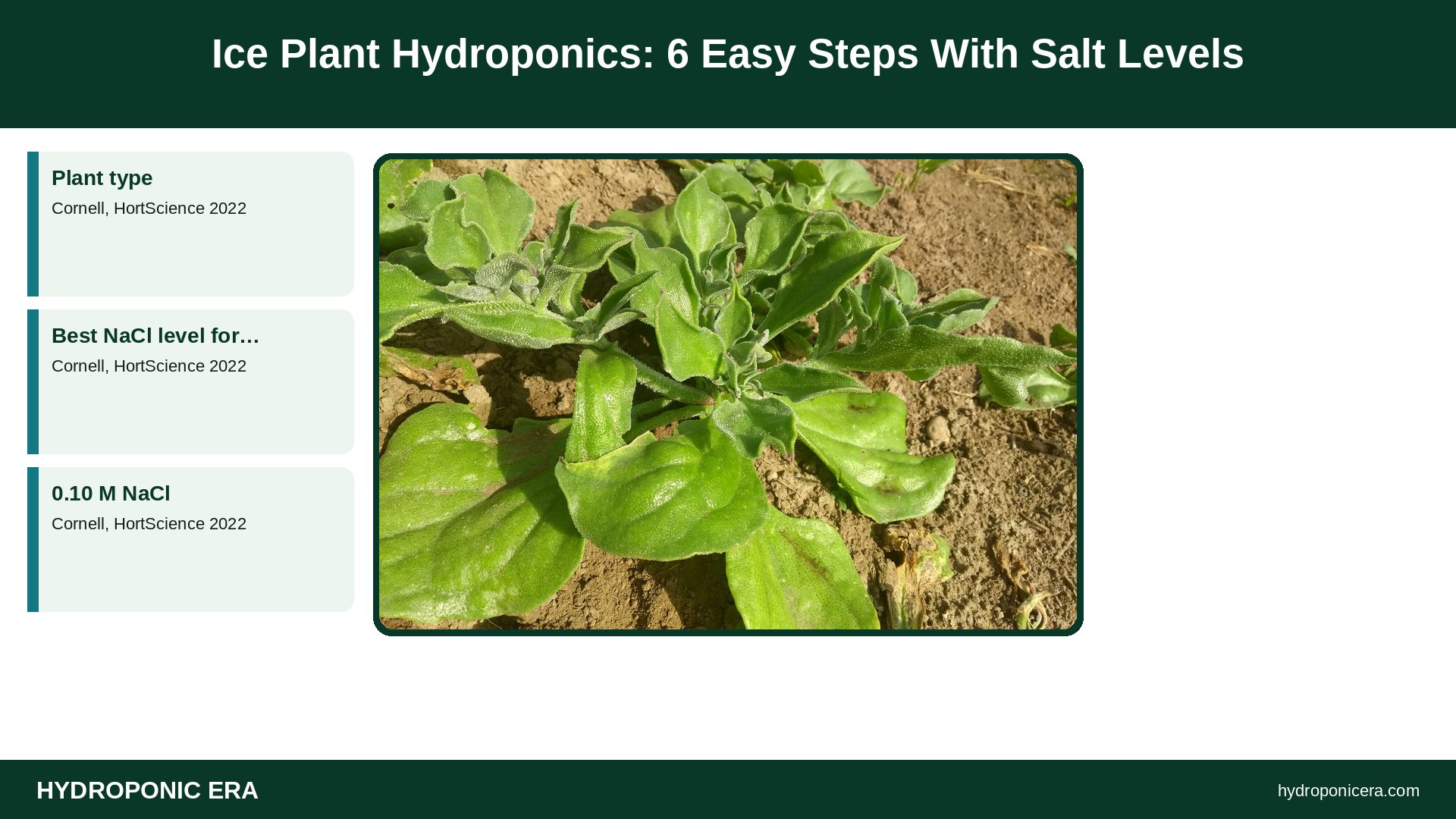
What Is Edible Ice Plant?
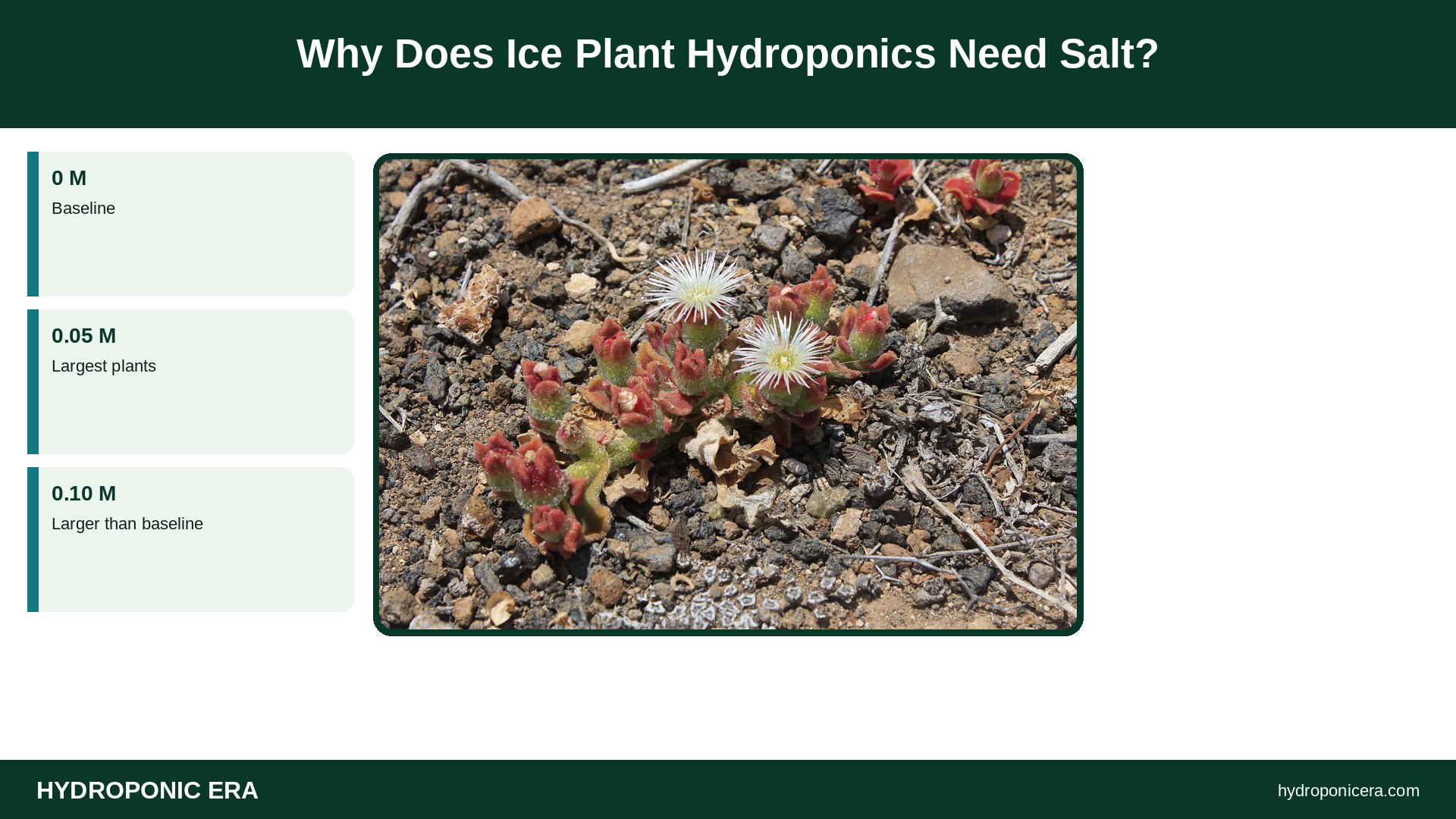
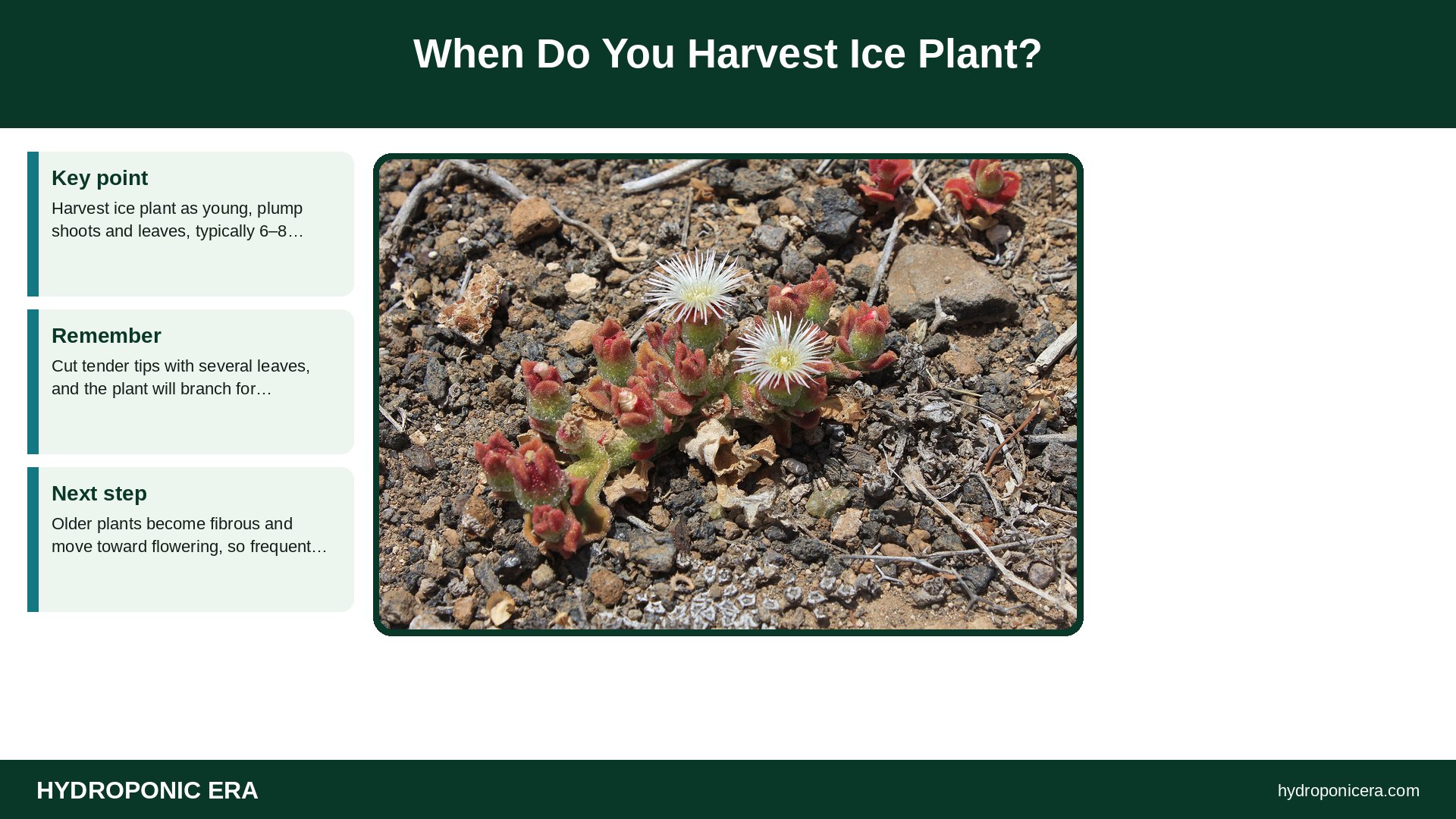
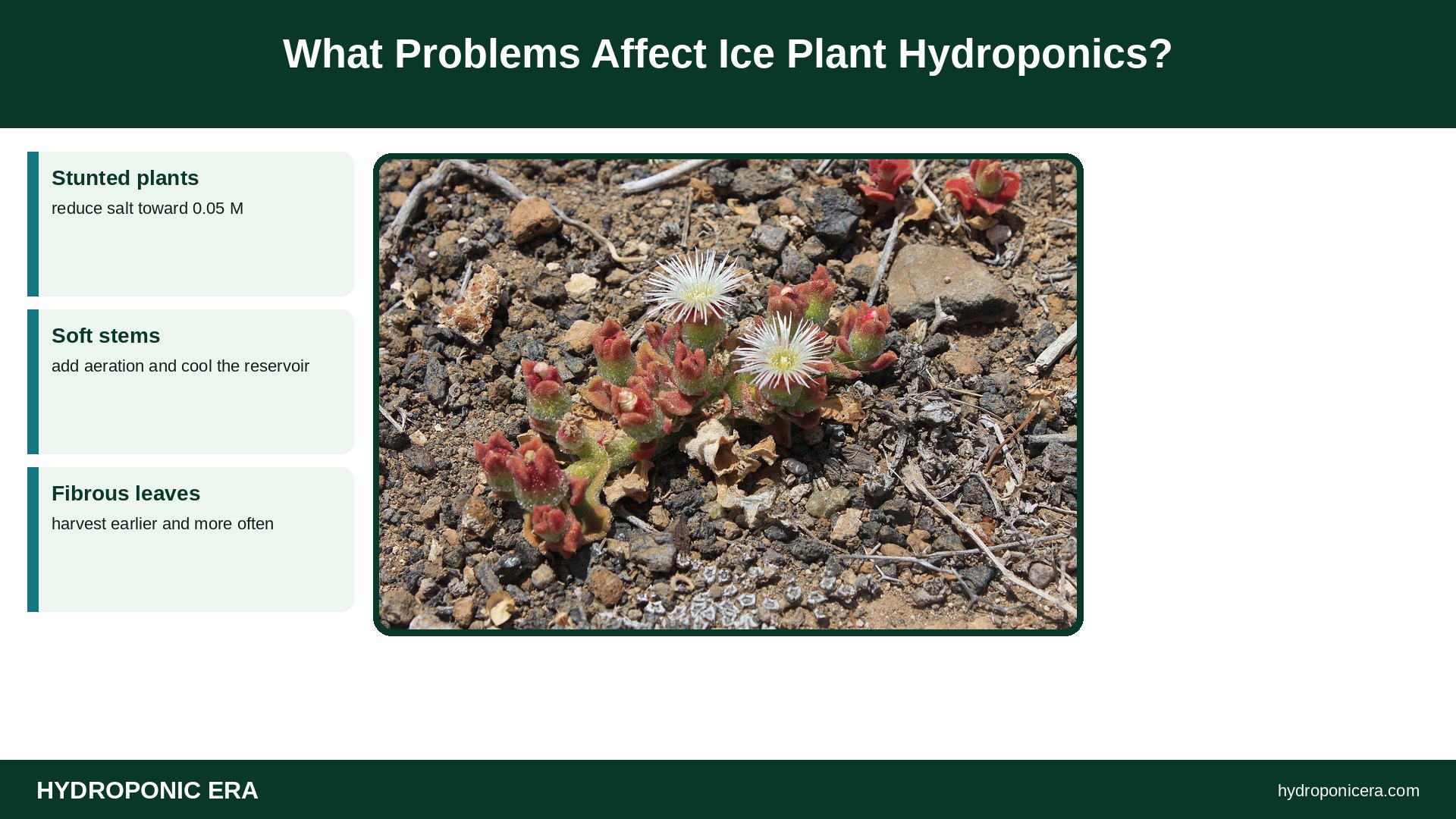
Edible ice plant is Mesembryanthemum crystallinum, a low-growing annual or biennial succulent native to South Africa. The California Invasive Plant Council (Cal-IPC) notes it is named for the glistening bladder-like cells on its leaves and stems. Those cells store salt and water, which give the leaves their crunchy texture and lightly salty taste.
Chefs sell it as ice lettuce, crystal lettuce or barafu. Cornell researchers Jiaqi Xia and Neil Mattson describe it as a novel edible succulent with savory flavor, emerging as a new salad ingredient. It is not the same as the landscape ice plants (Carpobrotus and Delosperma) used as groundcovers, so buy seed labeled M. crystallinum.
Why Does Ice Plant Hydroponics Need Salt?
Ice plant hydroponics benefits from a small salt addition because the plant is a halophyte. The Cornell HortScience paper describes it as an obligatory halophyte that requires sodium chloride for optimum growth. In their trial, 0.05 M NaCl gave the biggest plants, raising total fresh weight 173% and shoot fresh weight 193% over unsalted controls.
More salt is not better for yield. In the same study, 0.10 M still helped, 0.20 M had little effect compared with no salt, and 0.40 M strongly stunted plants. The researchers note that higher salt can raise health-promoting compounds such as pinitol, but home and market growers chasing leaf weight should stay at the low end. A 2023 Frontiers in Plant Science study of other edible halophytes grown in NFT indoors reached the same general lesson: each species has its own salt range, and yield drops once you exceed it.
| Salt level | Grams NaCl per liter | Grams per gallon | Effect on growth |
|---|---|---|---|
| 0 M | 0 | 0 | Baseline |
| 0.05 M | 2.9 | 11 | Largest plants |
| 0.10 M | 5.8 | 22 | Larger than baseline |
| 0.20 M | 11.7 | 44 | About the same as baseline |
| 0.40 M | 23.4 | 89 | Strongly stunted |
Gram figures are simple conversions from molarity (sodium chloride is 58.4 g per mole) for plain, non-iodized salt. Add salt after the plants are established, as the researchers did a week after transplanting.
How Do You Set Up Ice Plant Hydroponics?
Set up ice plant hydroponics like any leafy green system, then add measured salt once seedlings are established. Start seeds in rockwool or coco plugs, transplant into deep water culture or NFT, and let plants settle for about a week in a normal nutrient solution before adding sodium chloride at roughly 0.05 M.
- Sow the tiny seeds on the surface of moist plugs and keep them humid until they sprout.
- Grow seedlings in a standard leafy-green nutrient solution.
- Transplant into net cups in deep water culture or NFT channels.
- After about a week, dissolve plain salt in reservoir water and add it to reach about 0.05 M.
- Check EC after adding salt; it will rise sharply, so record the new baseline.
- Replace the solution on a schedule instead of topping up with more salt.
Salt makes EC readings misleading, because sodium chloride adds conductivity without adding nutrients. Read our guide to hydroponic EC and TDS and track the nutrient EC before salt is added.
Is Salt in the Reservoir Safe for Pumps and Other Plants?
Salt water is harder on equipment and on other crops, so run ice plant hydroponics in its own system. Most leafy greens and herbs are not halophytes and would be damaged by the same salt level. Rinse pumps and air stones when you change the reservoir, and avoid metal fittings that corrode in brine.
- Separate reservoir: never share it with lettuce or basil.
- Plastic fittings: salt corrodes many metals.
- Disposal: do not dump salty solution on garden soil, where it can build up.
- Records: write down grams of salt per volume each time you mix.
When Do You Harvest Ice Plant?
Harvest ice plant as young, plump shoots and leaves, typically 6–8 weeks after sowing according to the Cornell study. Cut tender tips with several leaves, and the plant will branch for more harvests. Older plants become fibrous and move toward flowering, so frequent harvests keep the texture crisp and juicy.
Rinse leaves gently; the glistening cells are the crunchy part and should look intact. Chill harvested shoots quickly. For another fleshy-leaved green, see our New Zealand spinach hydroponics guide.
Is Ice Plant Invasive?
Yes, in some places. Cal-IPC lists crystalline iceplant with a Moderate rating in California. It says the plant suppresses native plants by accumulating salt in the soil and leaving mats of dry plant matter. Grow it indoors or in containers, and never let it set seed near natural coastal areas.
Indoor ice plant hydroponics carries little risk if you harvest before flowering and discard spent plants in the trash rather than a compost pile that could spread seed.
What Problems Affect Ice Plant Hydroponics?
The main problems are too much salt, which stunts growth, soft or rotting stems from warm, low-oxygen water, and tough leaves from late harvesting. Ice plant is a succulent, so it also dislikes cool, dim, overly wet conditions at the seedling stage. Bright light and well-aerated water solve most issues.
- Stunted plants: reduce salt toward 0.05 M.
- Soft stems: add aeration and cool the reservoir.
- Fibrous leaves: harvest earlier and more often.
- Leggy seedlings: give more light.
For a refresher on oxygen, see our deep water culture for beginners guide.
What Is the Best System for Ice Plant Hydroponics?
The best system for ice plant hydroponics is a small, dedicated deep water culture tub or NFT channel that you can drain and refill easily. Because salt is part of the recipe, full reservoir changes are simpler than topping up. Ice plant hydroponics also works in Kratky jars for a few plants, as long as you mix the salt into fresh solution each time.
| System | Why it suits ice plant hydroponics | Watch out for |
|---|---|---|
| Deep water culture | Easy to mix exact salt doses | Warm water and low oxygen |
| NFT | Good airflow around crowns | Salt crust on channel edges |
| Kratky jar | No pump to corrode | Solution strength rises as water drops |
Whichever system you choose, label it as a salt system so nobody tops it up with plain nutrient solution meant for lettuce.
FAQ About Ice Plant Hydroponics
Can ice plant grow without salt?
Yes, but the Cornell study found plants given 0.05 M NaCl grew much larger than those without salt.
What salt should I use for ice plant hydroponics?
Plain sodium chloride without iodine or anti-caking additives is the simplest choice.
Does ice plant taste salty?
Lightly, even in ice plant hydroponics with low salt. The leaf cells store salty sap that gives a fresh, briny crunch.
Is ice plant the same as succulent groundcover ice plant?
No. Edible ice plant is Mesembryanthemum crystallinum; groundcover types are different plants.
How long does ice plant hydroponics take to harvest?
Usually 6–8 weeks from sowing.
Sources
- Xia and Mattson, Cornell University, HortScience — Response of Common Ice Plant to Sodium Chloride Concentration in Hydroponic Nutrient Solution
- California Invasive Plant Council — Mesembryanthemum crystallinum profile
- Frontiers in Plant Science — Salinity and light regime in edible halophytes in greenhouse and indoor farming
- Photo credits (Wikimedia Commons, edited with titles): Edible Mesembryanthemum crystallinum by Idéalités (CC BY-SA 4.0); Eiskraut by Lubaer (CC BY-SA 4.0)