
Can you grow epazote hydroponically? Yes. Epazote hydroponics works well because Dysphania ambrosioides (also listed as Chenopodium ambrosioides) is a fast, easy annual herb. Illinois Extension calls it extremely easy to grow from seed in full sun. Grow it in DWC, Kratky or a Dutch bucket, pinch the tips often, and sow again every 2–3 weeks for a steady supply of young leaves.
Key takeaway: Epazote is grown for its strongly flavored leaves, a key herb in Mexican black beans, tamales and mole. Harvest tips regularly to keep plants bushy and to limit flowering. NC State Extension lists the plant as poisonous, mainly the seeds in large amounts, so use leaves in culinary quantities and keep it away from pets.
| Factor | What sources report | Source |
|---|---|---|
| Botanical name | Dysphania ambrosioides (Amaranthaceae) | NC State Extension |
| Size outdoors | 2–5 feet (0.6–1.5 m) tall; about 4 feet (122 cm) in gardens | NC State; Illinois Extension |
| Light | Full sun | Illinois Extension; NC State |
| Succession sowing | Every 2–3 weeks | Illinois Extension |
| Harvest | Pinch stem tips regularly | Illinois Extension |
| Toxicity | Seeds poisonous in large amounts; problem for dogs, cats, horses | NC State Extension |
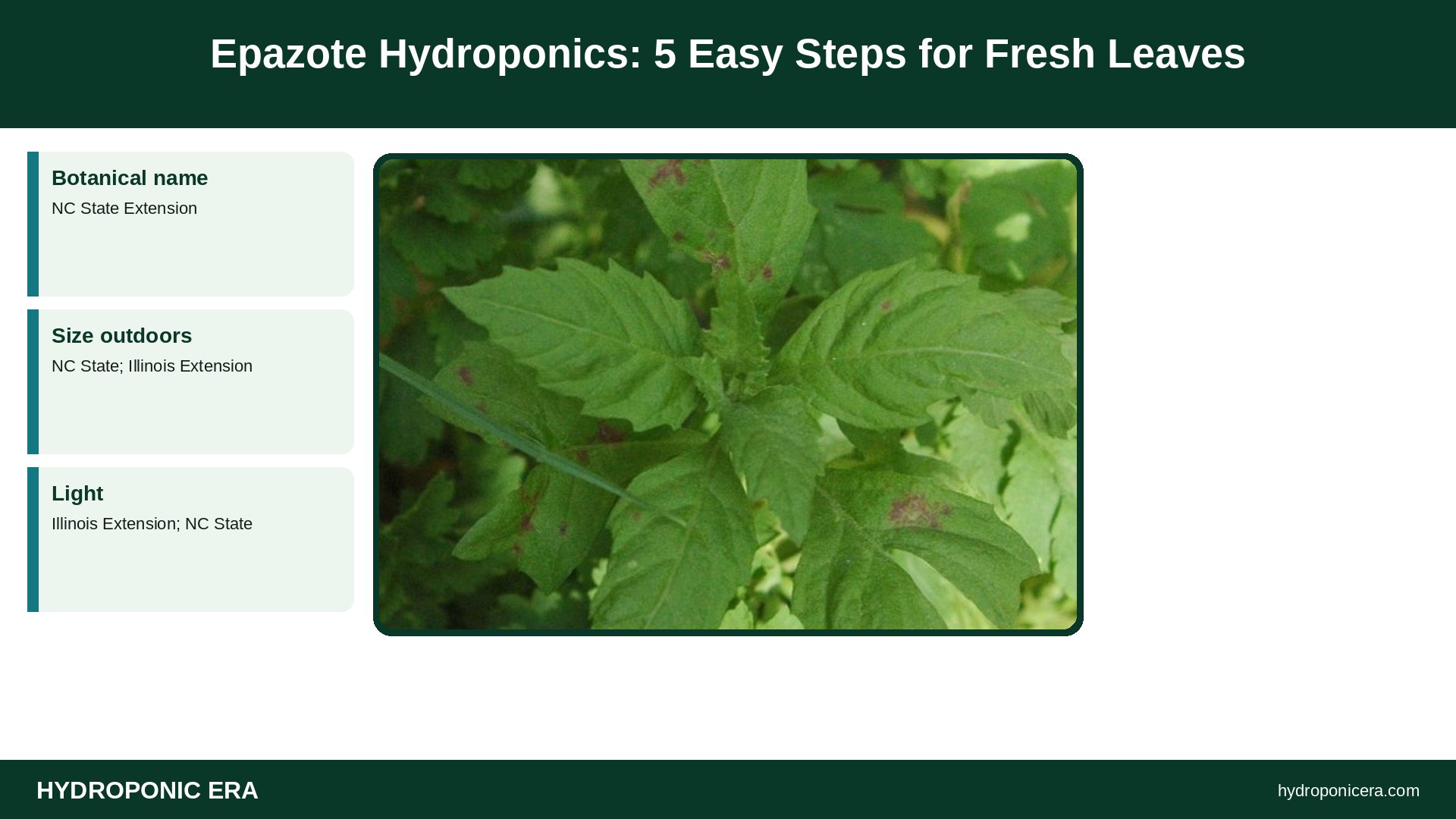
What Is Epazote?
Epazote is a pungent herb native to the tropical Americas. NC State Extension describes it as an annual or short-lived perennial in the Amaranthaceae family, with leaves and stems dotted with glands that release an aromatic oil. Illinois Extension compares its flavor to a mix of cilantro, anise, licorice, pine, camphor and eucalyptus.
Illinois Extension calls epazote one of the most important herbs in traditional Mexican dishes, including tamales, salsa, black beans, enchiladas and mole. NC State notes the leaves are added to bean dishes to help reduce their gas-causing effects.
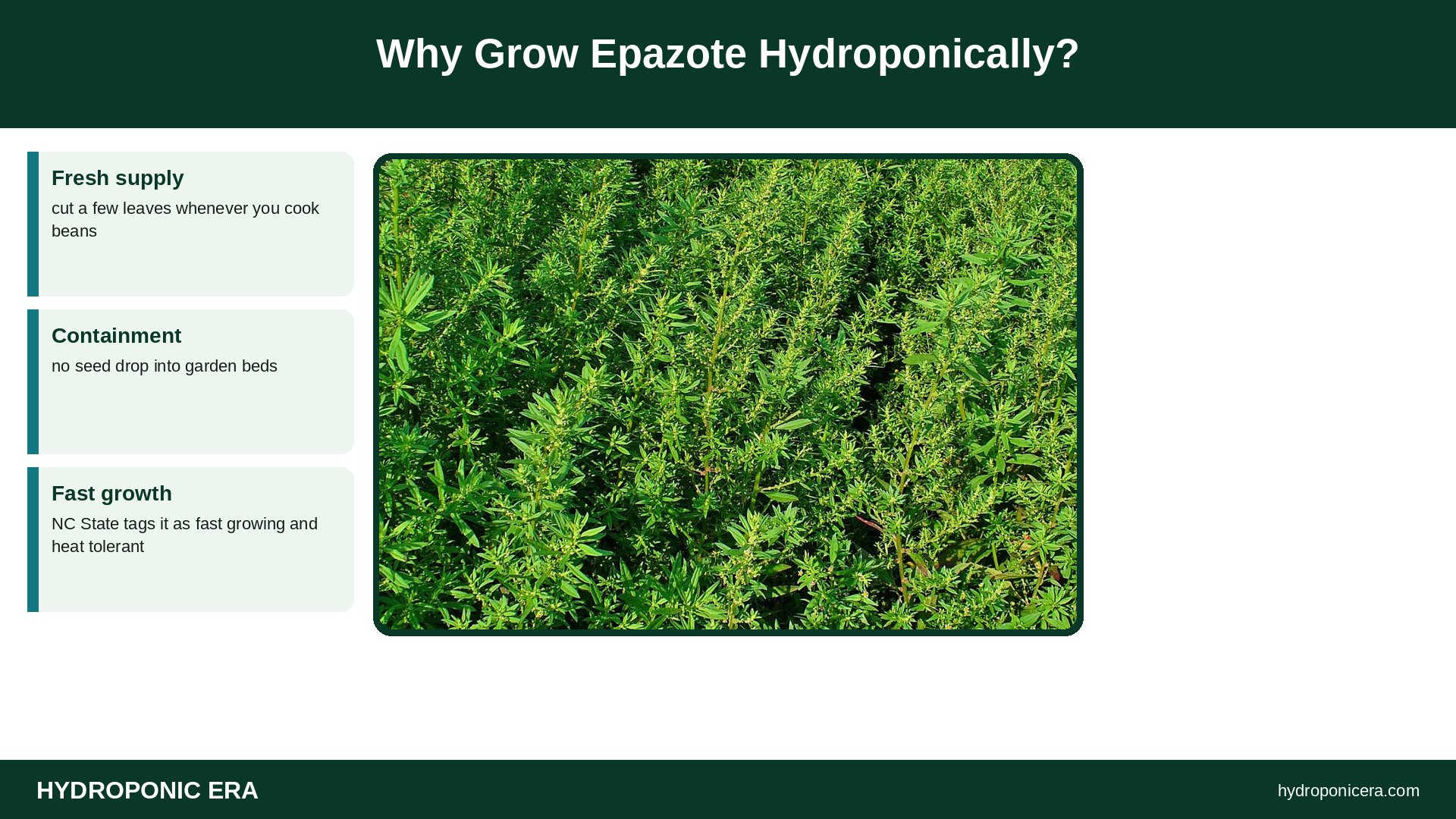
Why Grow Epazote Hydroponically?
Epazote hydroponics solves two common problems: fresh epazote is hard to find in many stores, and garden plants self-seed aggressively. Illinois Extension warns epazote self-seeds very freely and may become invasive. Growing it indoors in a hydroponic system, and harvesting before seed sets, keeps it contained while giving you fresh leaves year-round.
- Fresh supply: cut a few leaves whenever you cook beans.
- Containment: no seed drop into garden beds.
- Fast growth: NC State tags it as fast growing and heat tolerant.
- Small footprint: frequent pinching keeps it compact.
How Do You Start Epazote Seeds for Hydroponics?
Start epazote hydroponics from seed in rockwool or coco plugs. Illinois Extension says it is extremely easy to grow from seed, so sow a few seeds per plug, keep them moist and warm, and thin to the strongest seedling. Move plugs into net cups once roots poke through the bottom.
- Soak plugs in plain water.
- Sow 2–3 small seeds per plug and cover very lightly.
- Keep plugs moist and warm under a humidity dome.
- Thin to one seedling per plug.
- Transplant into DWC, Kratky or a Dutch bucket when roots appear.
For a simple start, see our Kratky method guide.
What Light and Nutrients Does Epazote Need?
Epazote needs full sun outdoors, so indoors give it strong LEDs for long days. The University of Maryland recommends grow lights 14–16 hours a day for indoor herbs in winter. Feed a standard herb nutrient solution; epazote is a vigorous, weedy plant and rarely needs a strong feed to grow fast.
| Setting | Starting point | Basis |
|---|---|---|
| Light hours | 14–16 hours a day | University of Maryland |
| Light strength | Strong, full-sun equivalent | Illinois Extension; NC State |
| Nutrients | Standard herb solution | General herb practice |
| Root zone | Moist but well drained and oxygenated | Illinois Extension soil notes |
For details, read hydroponic nutrients for herbs and how much light herbs need.

How Do You Harvest Epazote?
Harvest epazote by pinching the tips of the stems regularly. Illinois Extension says this supplies young, tender leaves, makes the plant more compact and bushy, and limits flowers and seed. Older leaves have the strongest flavor, while young leaves are milder, so pick according to how strong you like it.
Illinois Extension notes fresh stems can be held in water or refrigerated wrapped in a damp paper towel in an unsealed plastic bag. Leaves can also be dried.
Is Epazote Safe to Eat?
Epazote leaves are a traditional culinary herb, but the plant is not harmless. NC State Extension lists it as poisonous, with seeds as the toxic part. It reports nausea, headache, vomiting, convulsions and coma if seeds are eaten in large amounts, and notes the old worm-remedy dose could be toxic. It is also flagged as a problem for dogs, cats and horses.
- Use leaves in normal cooking amounts, as in traditional recipes.
- Do not eat seeds or use the plant as a home remedy.
- Keep plants out of reach of pets.
- Harvest before flowering to avoid seed production in epazote hydroponics.
What Problems Affect Epazote Hydroponics?
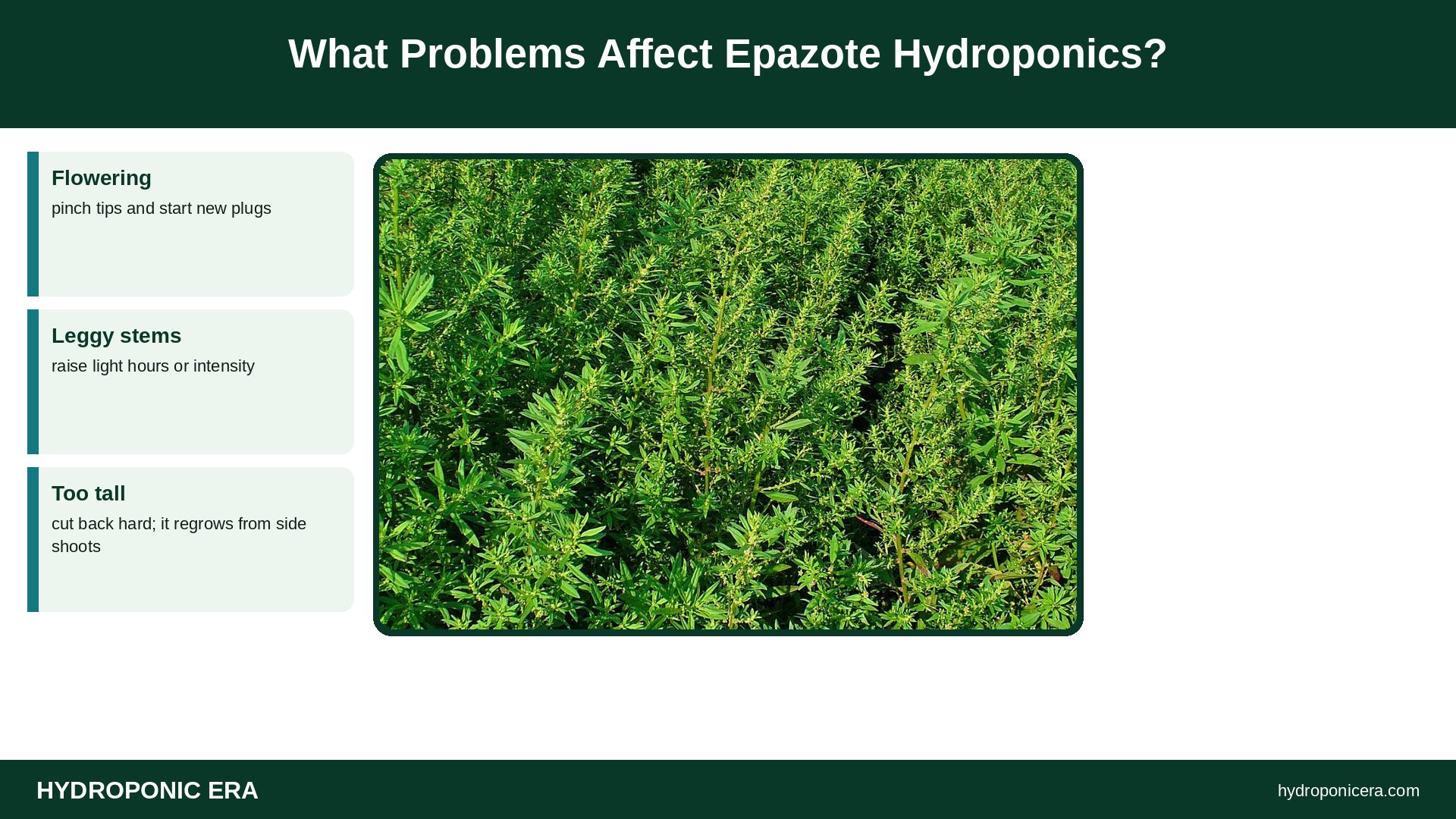
The main problems in epazote hydroponics are rapid flowering, leggy growth under weak light and overly large plants. Because epazote is a weedy, fast-growing annual, the fix is usually more frequent harvesting and fresh sowings. Illinois Extension suggests successive sowings every 2–3 weeks for a fresh leaf supply.
- Flowering: pinch tips and start new plugs.
- Leggy stems: raise light hours or intensity.
- Too tall: cut back hard; it regrows from side shoots.
- Root browning: add aeration and cool the solution.
What Is the Best System for Epazote Hydroponics?
The best system for epazote hydroponics is deep water culture, a Dutch bucket or a large Kratky tote. Epazote grows into a sizable, branching plant, so tiny countertop pods quickly become crowded. A roomy system with steady oxygen lets you keep one or two plants productive between fresh sowings.
| System | Fit for epazote hydroponics | Notes |
|---|---|---|
| Deep water culture | Excellent | Fast growth with aeration |
| Dutch bucket | Very good | Supports tall, branching stems |
| Large Kratky tote | Good | Simple; check the level weekly |
| Small countertop pod | Fair | Plants outgrow it fast |
Because epazote hydroponics is so quick, a single bucket plus a tray of new plugs every few weeks is usually enough for a household that cooks beans regularly. Grow it apart from cilantro and basil if pets visit that area, since NC State flags the plant as a problem for dogs and cats.
FAQ About Epazote Hydroponics
Is epazote hydroponics easy for beginners?
Yes. Illinois Extension calls epazote extremely easy to grow from seed.
How tall does epazote get in hydroponics?
About 2–5 feet (0.6–1.5 m) outdoors, but frequent pinching keeps hydroponic plants smaller.
Is epazote toxic to pets?
NC State Extension flags it as a problem for dogs, cats and horses.
What does epazote from hydroponics taste like?
A strong mix often compared to cilantro, anise, licorice, pine and camphor.
How often should I sow epazote?
Every 2–3 weeks for a continuous supply.
Sources
- University of Illinois Extension — Epazote
- NC State Extension — Dysphania ambrosioides
- University of Maryland Extension — Growing herbs in containers and indoors
- Photo credits (Wikimedia Commons, edited with titles): Chenopodium ambrosioides leaves by Stanislav Doronenko (CC BY 2.5); Dysphania ambrosioides 001 by H. Zell (CC BY-SA 3.0)