
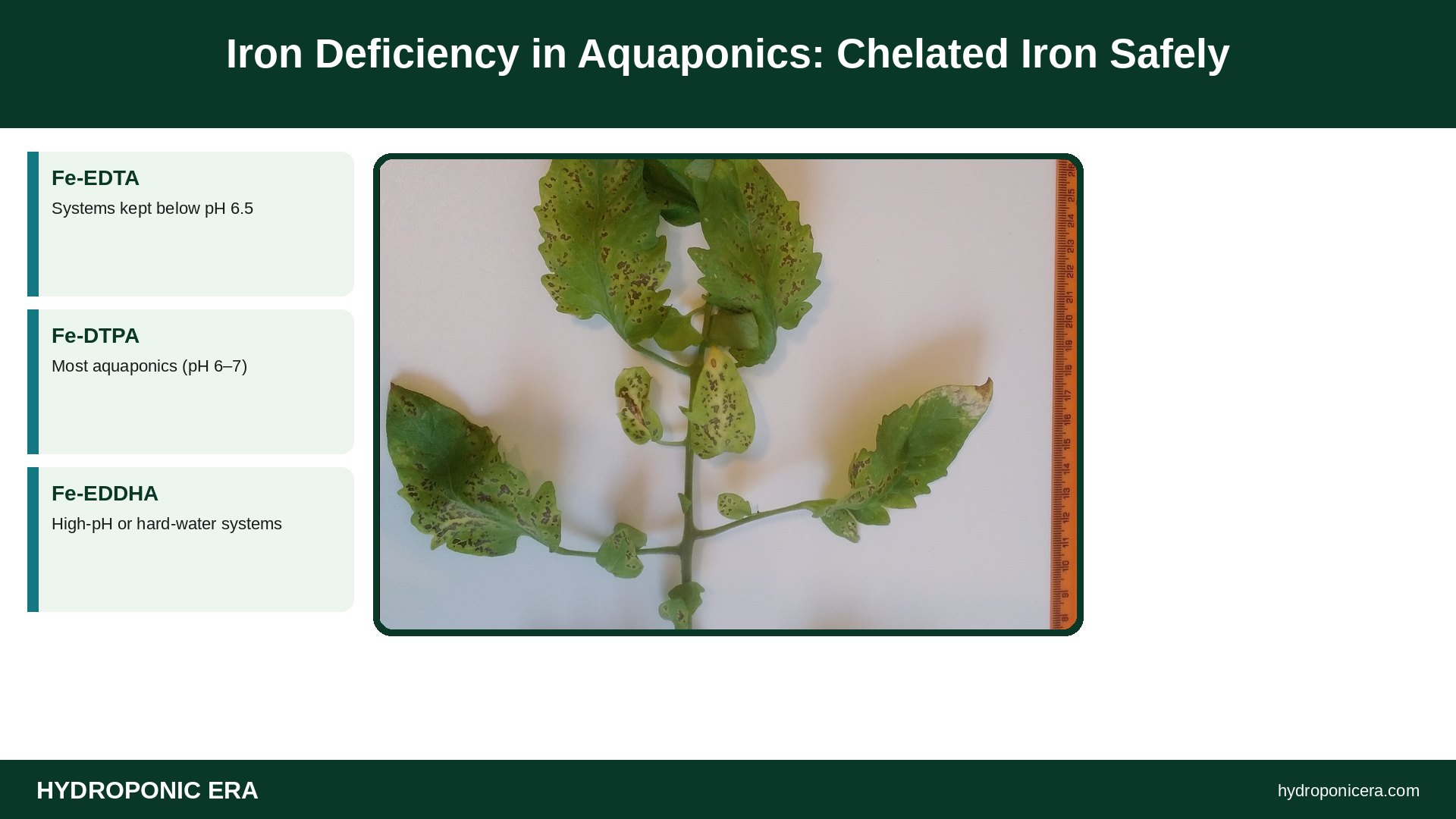
Aquaponics iron deficiency is the most common nutrient problem in aquaponics because fish feed contains less iron than plants need. It shows as yellow new leaves with green veins. The fix is chelated iron, not iron sulfate, because plain iron precipitates out of solution at the pH most aquaponics systems run. FAO’s aquaponics manual recommends adding chelated iron to about 2 mg/liter, and 1–2 mg/liter during the first three months of a new system. Match the chelate to pH: research in HortScience notes Fe-EDTA holds iron to about pH 6.5, Fe-DTPA to about 7.5, and Fe-EDDHA to about 9.
Key takeaway: Check pH, then dose chelated iron (DTPA is a good all-rounder for aquaponics pH) to about 2 mg/liter.
| Chelate | Holds iron up to about | Cost (HortScience) | Best use |
|---|---|---|---|
| Fe-EDTA | pH 6.5 | Lowest | Systems kept below pH 6.5 |
| Fe-DTPA | pH 7.5 | About 2× EDTA | Most aquaponics (pH 6–7) |
| Fe-EDDHA | pH 9 | About 4× EDTA | High-pH or hard-water systems |
Why Aquaponics Iron Deficiency Is So Common
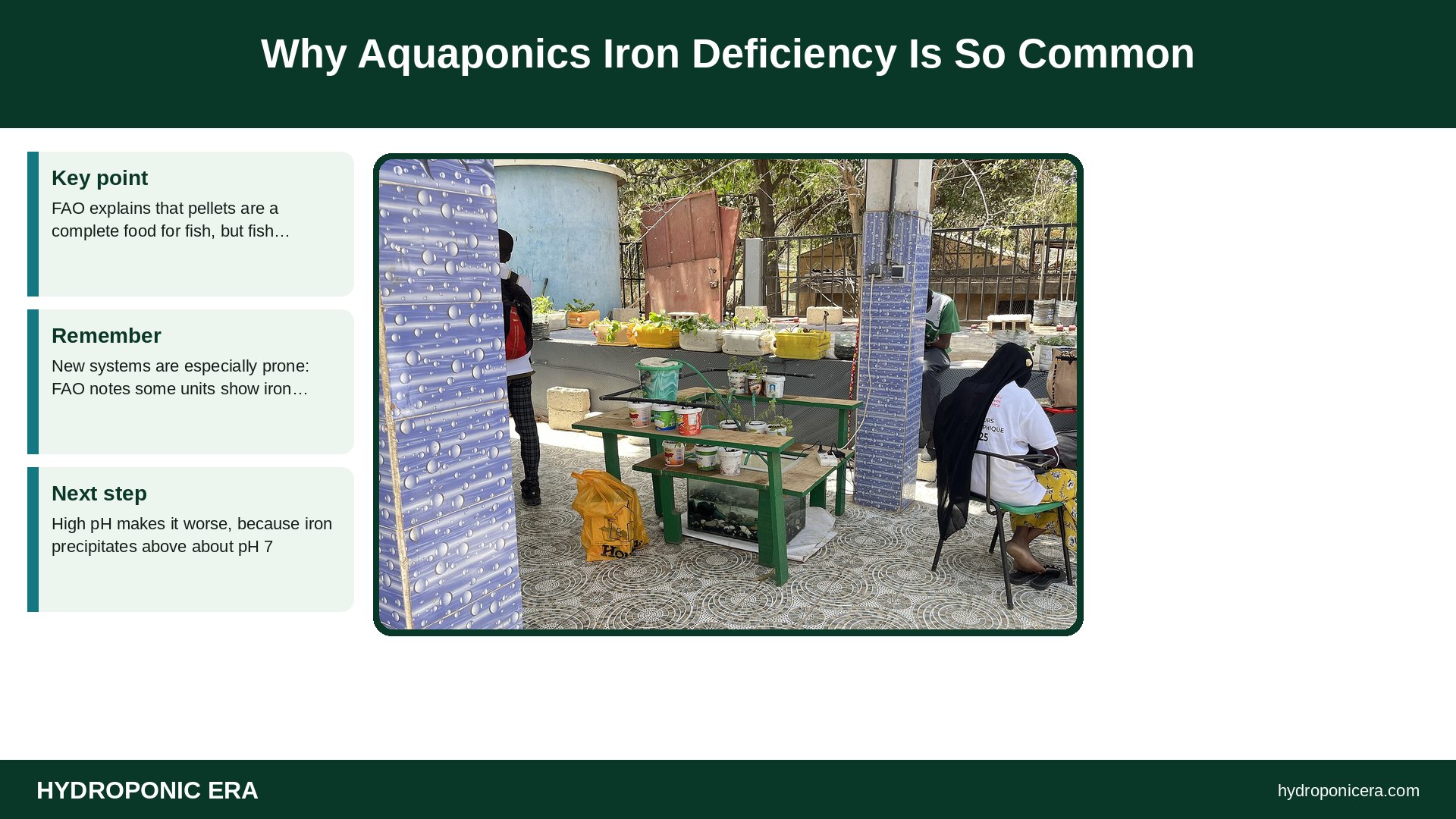
FAO explains that pellets are a complete food for fish, but fish don’t need the same levels of iron, potassium, and calcium as plants. New systems are especially prone: FAO notes some units show iron deficiency in the first 2–3 months, when plants need iron for early growth and fish feed doesn’t supply enough. High pH makes it worse, because iron precipitates above about pH 7.
Recognizing Aquaponics Iron Deficiency
According to FAO, iron deficiency shows as yellowing between the veins, then the whole leaf turning pale yellow and eventually white with dead patches. Because iron can’t move within the plant, symptoms appear on new leaves first. Manganese deficiency looks similar, but FAO notes it’s often linked to pH above 8. If older leaves yellow first, suspect nitrogen instead. See aquaponics plants turning yellow.
How to Dose Chelated Iron
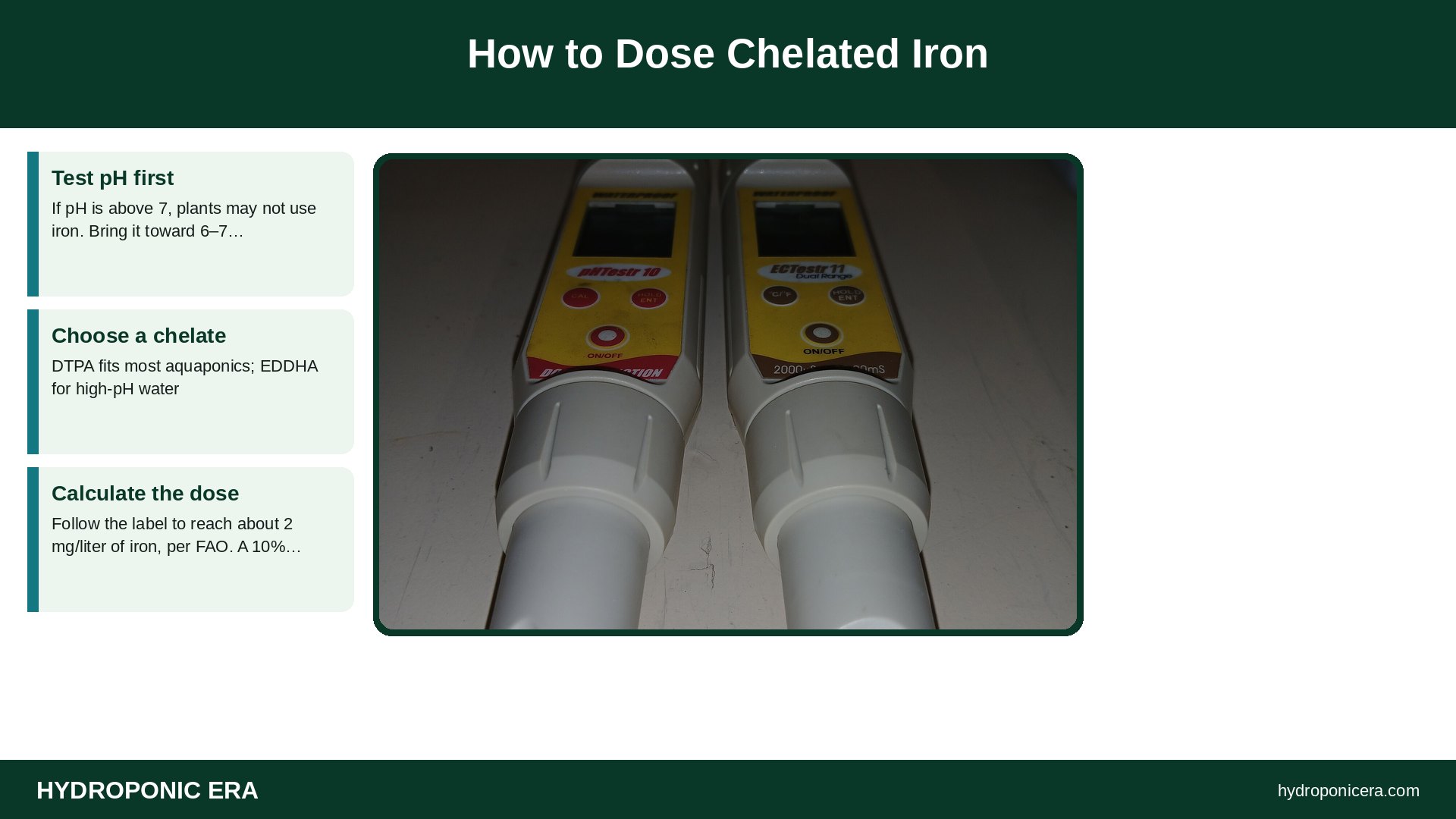
- Test pH first. If pH is above 7, plants may not use iron. Bring it toward 6–7 gradually.
- Choose a chelate. DTPA fits most aquaponics; EDDHA for high-pH water.
- Calculate the dose. Follow the label to reach about 2 mg/liter of iron, per FAO. A 10% iron product contains 100 mg iron per gram, so 1 gram adds about 2 mg/liter to 50 liters (about 13 gallons).
- Dissolve it first. Mix in a bucket of system water and add slowly near the sump or return.
- Repeat when needed. FAO suggests adding iron again whenever deficiency appears.
FAO also gives a rule-of-thumb dose of about 5 mL of chelated iron solution per square meter of grow bed when deficiency is suspected, and notes extra iron doesn’t harm the system but can stain tanks and pipes.
Is Chelated Iron Safe for Fish?
FAO describes chelated iron as a standard aquaponics supplement at the recommended levels. Avoid products with added nitrogen, phosphorus, or other fertilizers not meant for fish. Use plain chelated iron powder and add it slowly.
Natural Fixes for Aquaponics Iron Deficiency
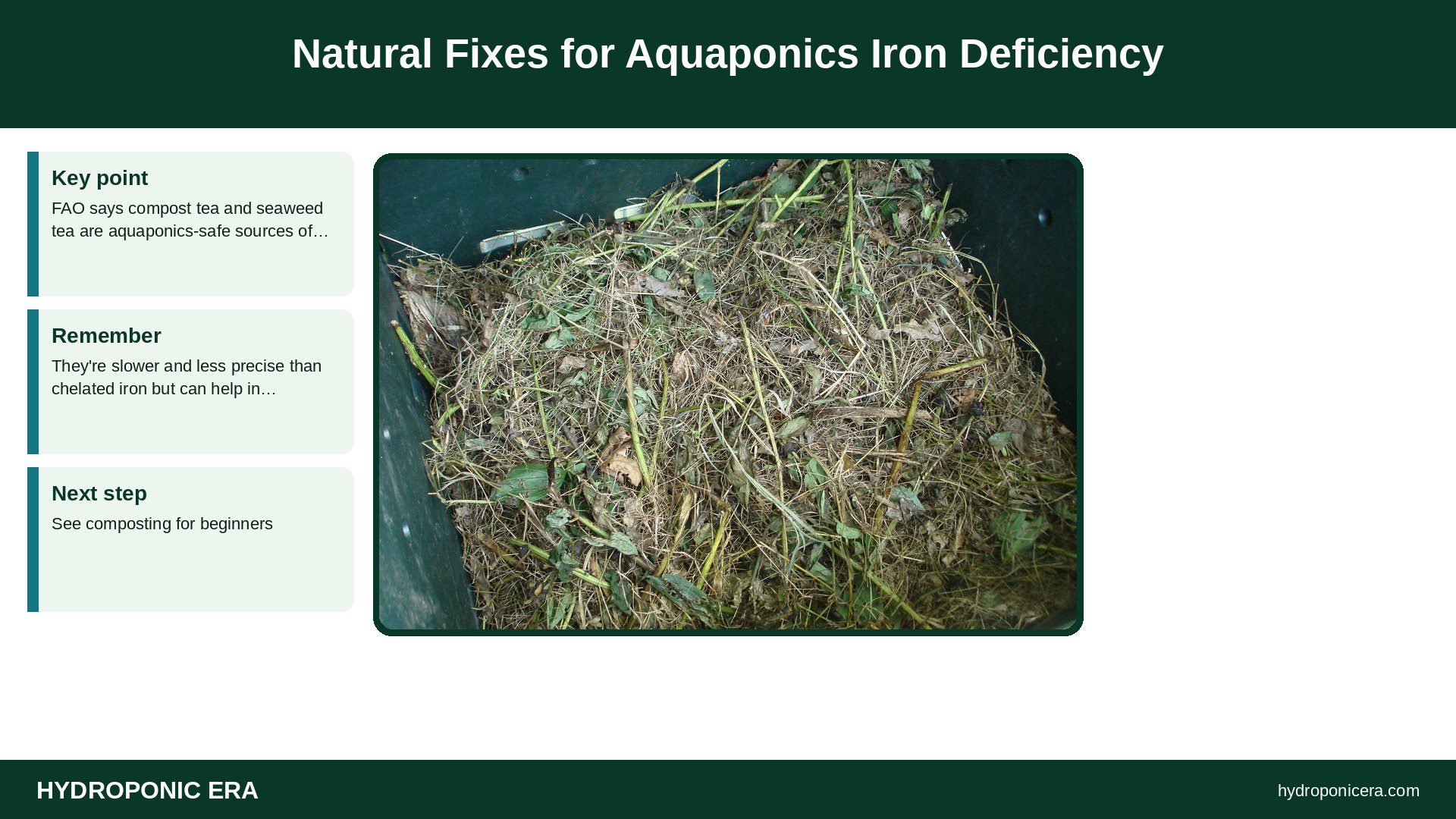
FAO says compost tea and seaweed tea are aquaponics-safe sources of iron and other micronutrients. They’re slower and less precise than chelated iron but can help in organic setups. See composting for beginners.
Iron and Pumps
FAO mentions a suggestion, still under research, that submerged magnetic-drive pumps may affect iron availability. If iron problems persist despite dosing and correct pH, test iron levels and watch trends. See mag drive vs impeller pumps.
Prevent Aquaponics Iron Deficiency

- Dose 1–2 mg/liter during the first three months of a new system, as FAO recommends.
- Keep pH between 6 and 7.
- Test iron monthly with an iron test kit.
- Pick the right chelate for your water.
- Avoid limestone or shell media that push pH up.
See aquaponics pH and chelated vs non-chelated micronutrients.
Aquaponics Iron Deficiency vs Other Problems
Several problems can look like aquaponics iron deficiency:
- Manganese deficiency: similar yellowing between veins; FAO links it to pH above 8.
- Nitrogen deficiency: yellowing starts on older leaves, not new ones.
- Magnesium deficiency: yellowing between veins on older leaves; FAO says magnesium is rarely limiting in aquaponics.
- Cold roots or root rot: plants can’t take up iron even when it’s present.
Because iron can’t move inside the plant, new leaves showing yellowing first is the strongest clue for aquaponics iron deficiency.
Testing for Aquaponics Iron Deficiency
An inexpensive iron test kit shows whether iron is actually low. If the test reads well above about 2 mg/liter but plants still look yellow, the cause is more likely pH, temperature, or roots. Test before and a few days after dosing so you can see how quickly your system uses iron.
How Fast Plants Recover
Leaves that are already yellow often stay pale, because iron doesn’t move into old tissue. Look for green new growth within one to two weeks after dosing chelated iron and correcting pH. If new leaves keep coming in yellow, recheck pH and iron levels.
Aquaponics Iron Deficiency in Different Systems
Raft and NFT systems often show aquaponics iron deficiency sooner than media beds, because media beds hold more solids that slowly mineralize and release micronutrients. Systems with limestone gravel or hard, alkaline tap water also tend to run high pH, which locks up iron. If your water comes out of the tap above pH 7.5, plan on regular iron dosing with a chelate that holds iron at higher pH, and consider rainwater or filtered water to bring pH down.
Which Crops Show Aquaponics Iron Deficiency First?
Fast-growing leafy crops like lettuce, basil, and spinach often show yellow new leaves first. Fruiting crops like tomatoes and peppers also need steady iron. Watch the newest growth on your most sensitive crops as an early warning, and dose before the whole system shows symptoms. See iron deficiency in hydroponics for comparison.
FAQs: Aquaponics Iron Deficiency
What does aquaponics iron deficiency look like?
Yellow new leaves with green veins, turning pale white if severe.
How much iron for aquaponics?
FAO recommends about 2 mg/liter of chelated iron.
Which chelated iron is best?
DTPA for pH up to about 7.5; EDDHA for higher pH.
Is iron safe for fish?
Chelated iron at recommended levels is a standard aquaponics supplement.
Can I use iron sulfate?
It precipitates at aquaponics pH, so chelated iron is preferred.
Sources
- FAO — Small-scale aquaponic food production
- HortScience — Fertigation with Fe-EDTA, Fe-DTPA, and Fe-EDDHA chelates
- Photo credits (Wikimedia Commons, edited with titles): Septoria leaf spot symptoms on tomato leaf (Septoria lycopersici on Solanum lycopersicum leaf) by MerielGJones (CC BY-SA 4.0); AQUAPONIE by Hopeballa (CC BY-SA 4.0); PH- und Leitfähigkeitsmessgeräte by Rotkaeppchen68 (CC0); Compost pile by Ksd5 (CC0); Deep water culture by ArcadiYay (CC BY-SA 4.0)