Here’s how to store hydroponic lettuce : leave the roots on, set the head in a closed container or bag, and refrigerate it at 32–40°F with high humidity. Don’t wash it until just before eating. Stored this way, most leaf lettuce stays crisp for about two to three weeks. Closed packaging matters more than the roots.

Here’s how to grow rice hydroponically : germinate seed on mesh over water in the dark, switch to a half-strength nutrient solution after a few days, then grow plants in a dark-walled tank with full-strength solution at about pH 5.0, warm temperatures and very bright light. Expect 105–145 days to grain. It’s doable at home but challenging.
Here’s how to grow wheatgrass without soil: soak hard red winter wheat seeds for about 12 hours, rinse until tiny roots show, spread them densely on a damp soilless pad or mix, and keep them warm (70–75°F) and out of direct sun for a few days. Then move them to bright light. Harvest in about 7–10 days.
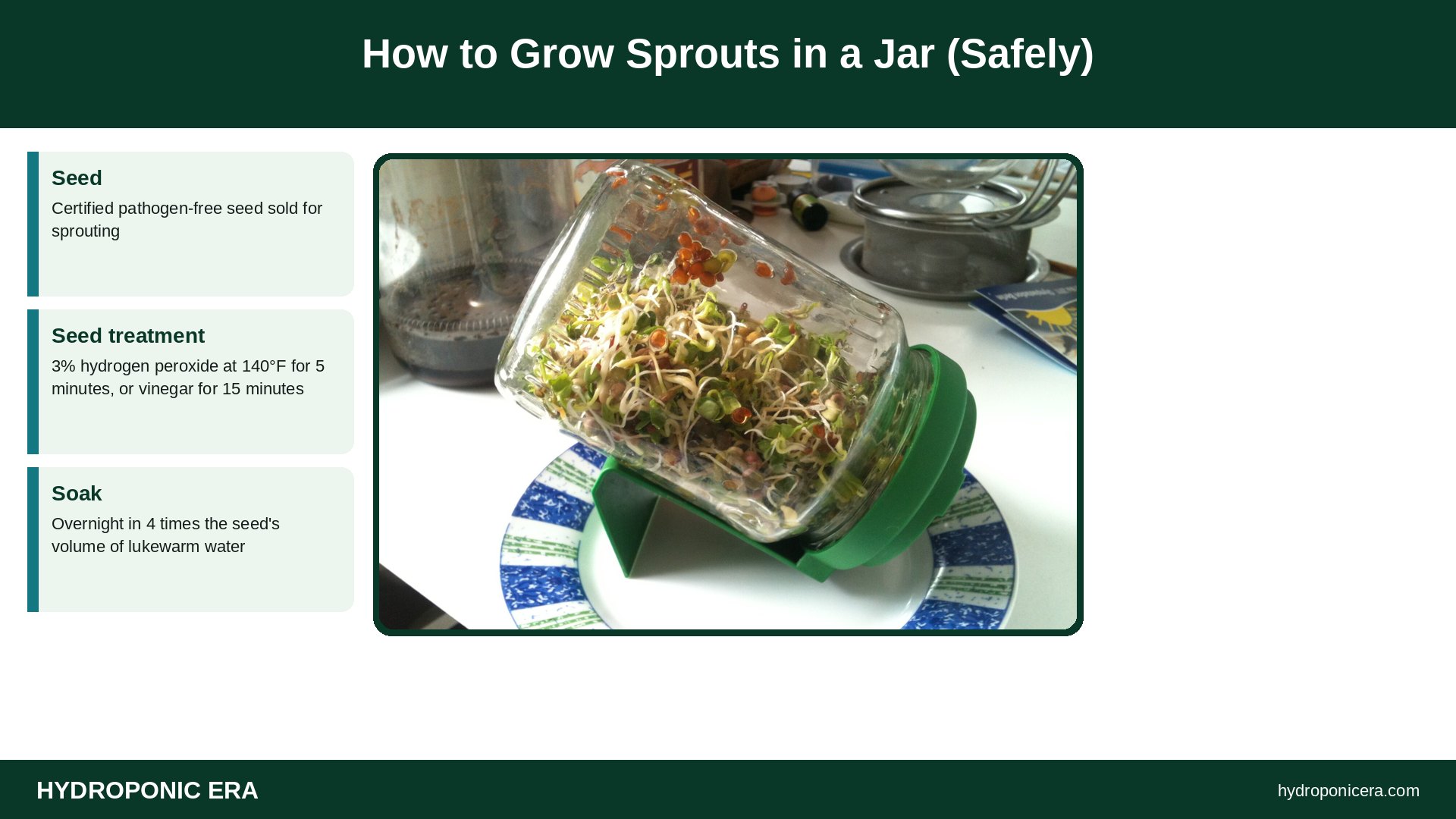
Here’s how to grow sprouts in a jar safely: buy certified pathogen-free sprouting seed, sanitize the seed and jar, soak the seed overnight, then drain, cap with mesh and rinse at least three times a day. Sprouts are ready in 3–4 days at 1–2 inches. Raw sprouts carry real food-poisoning risk, so high-risk people should eat them cooked.
Here’s how to grow wasabi hydroponically : start with clean plantlets, keep the nutrient solution cool (about 54–59°F), give flowing, oxygen-rich water and heavy shade, and feed lightly. Wasabi hates heat. It’s a slow specialty crop; WSU Extension reports harvests at 16–20 months in traditional water beds.
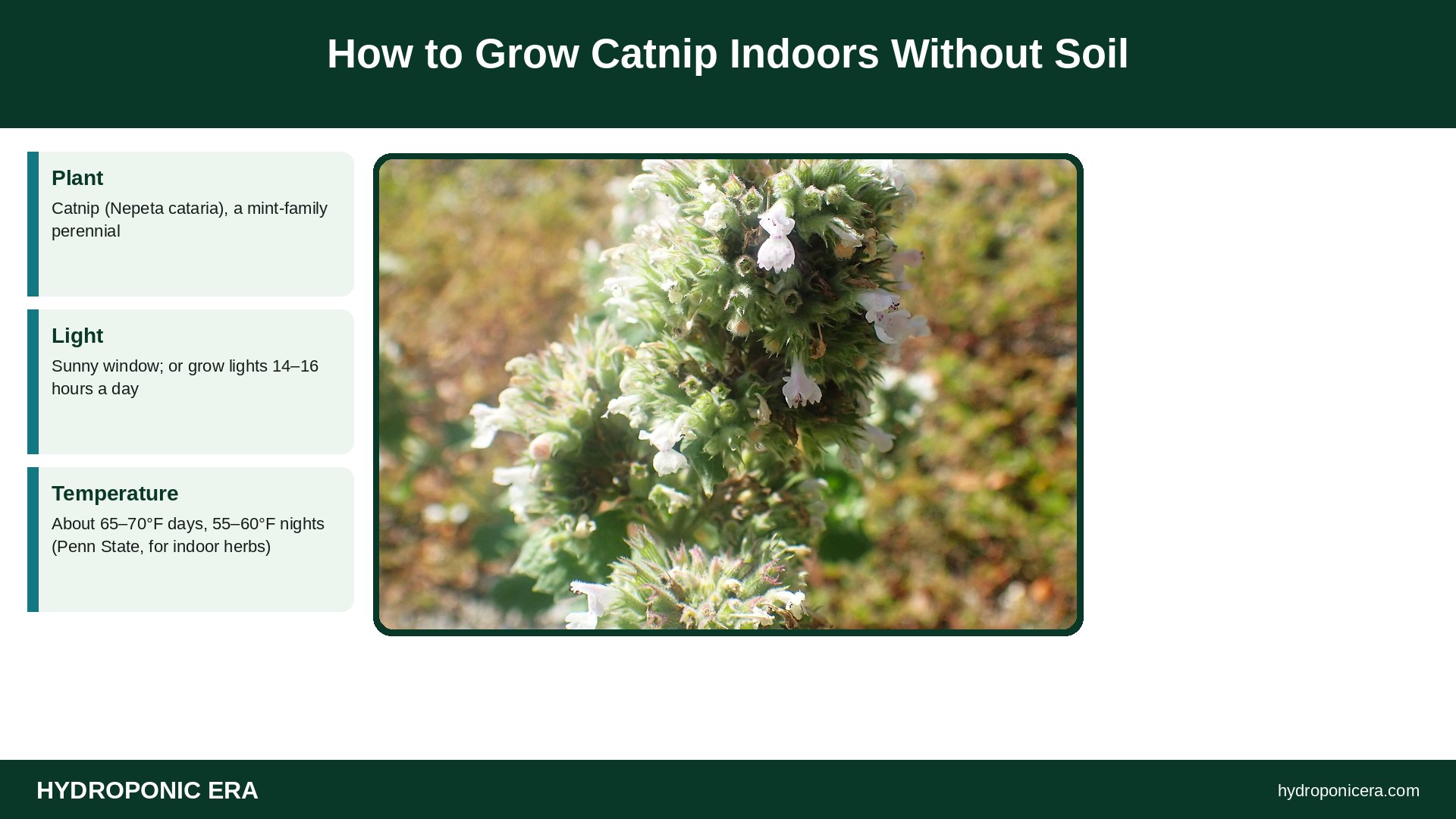
Here’s how to grow catnip indoors : sow seed or plant a division in a pot with drainage and well-drained mix, give it a sunny south or west window or grow lights for 14–16 hours a day, water when the mix starts to dry, and pinch often. Keep it out of your cat’s reach until it’s established.
Here’s how to grow saffron indoors : buy firm Crocus sativus corms in late summer, plant them right away in deep pots or crates (or soilless trays), keep them cool and bright through fall, then pick the flowers and dry the three red stigmas. Expect a small harvest; it takes about 150–170 flowers to make one gram of saffron.
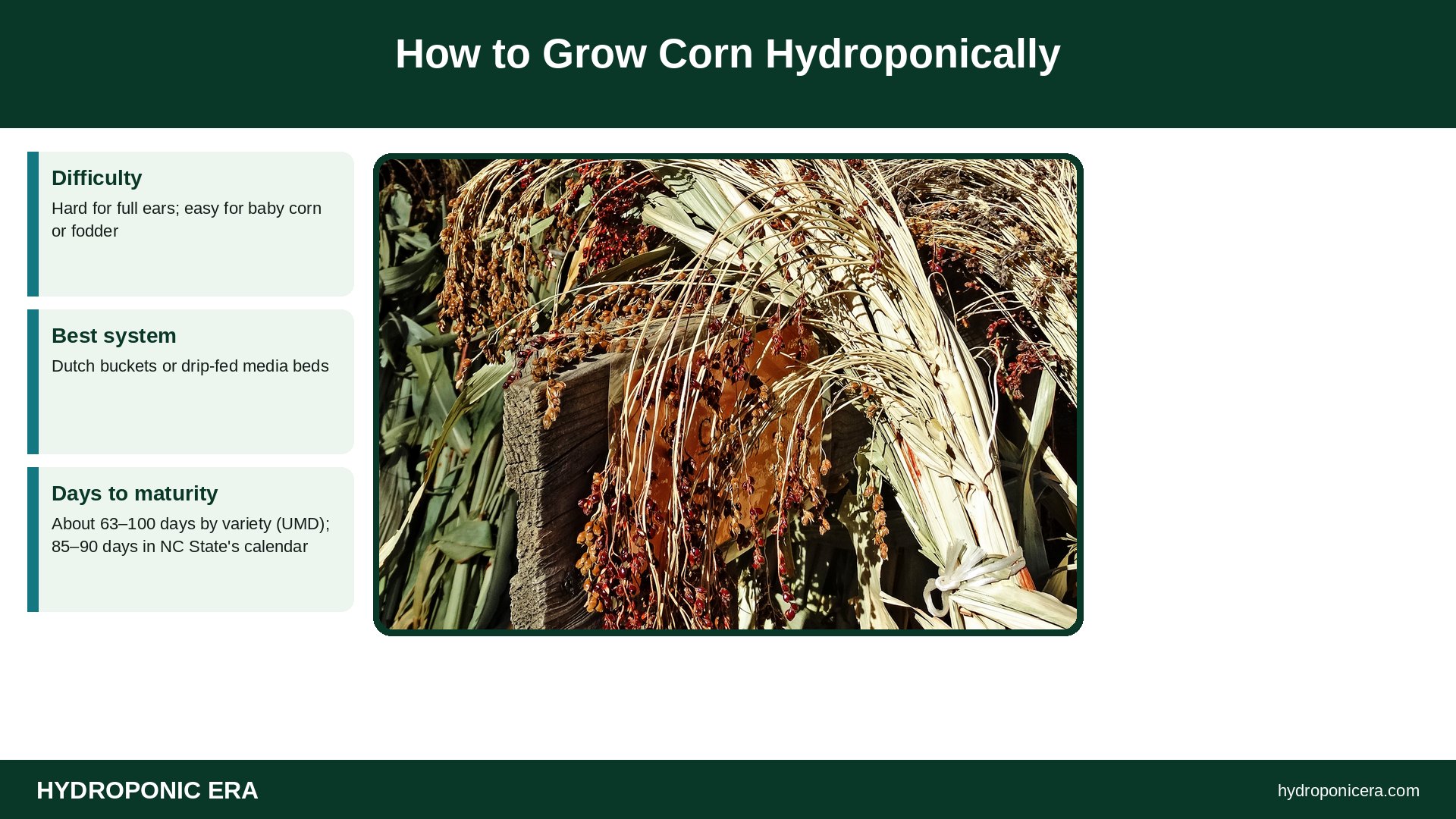
If you’re wondering how to grow corn hydroponically , the honest answer is: it works best in large Dutch buckets or drip-fed media, with strong light, plenty of nitrogen and hand pollination. Sweet corn is tall, hungry and wind-pollinated, so indoor ears are often small. Baby corn and corn fodder are far easier wins.
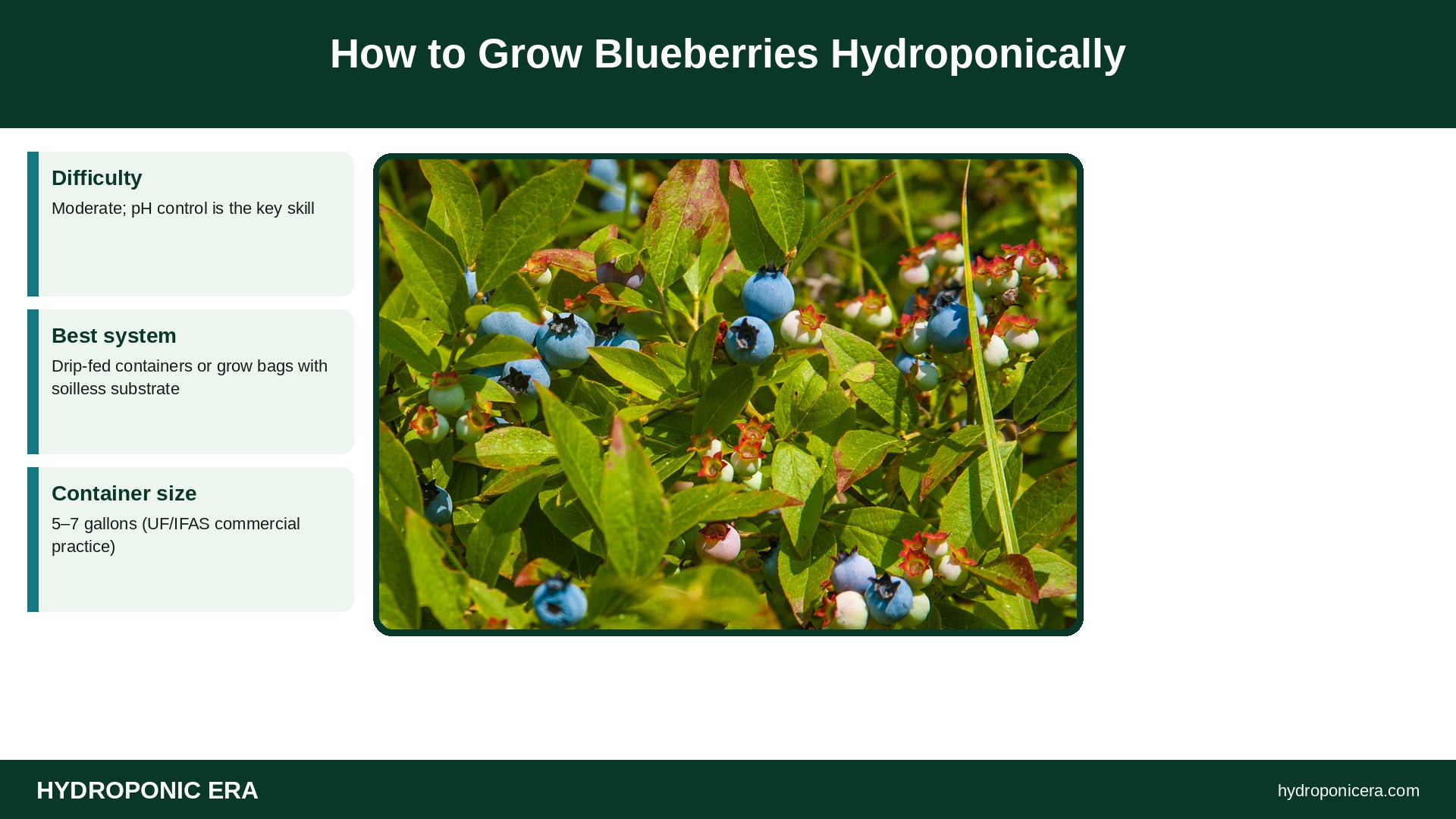
Here’s how to grow blueberries hydroponically : plant a container-friendly bush in a 5–7 gallon pot of acidic soilless mix (peat, coir, pine bark, perlite), feed it through drip with an acid-forming nutrient, keep runoff pH at 4.5–5.5, and give it a real winter rest. It’s a long-term fruit project, not a quick crop.
Learning how to grow carrots hydroponically starts with one honest fact: carrots are a root crop, so plain water systems like DWC or NFT rarely work. Use a short or round variety, a deep container of loose perlite or coco fed by drip, even moisture and steady light. Expect a fun project with smaller roots, not a big harvest.