DIY AeroGarden seed pods are easy: reuse the plastic grow baskets, fit a fresh grow sponge, sow several of your own seeds, label the top, and germinate under the dome with the lights at their lowest setting. Thin to one seedling once true leaves appear. It saves money, but seeds you supply aren’t covered by AeroGarden’s germination guarantee.
How long does hydroponics take to grow a harvest? Radishes and mustard greens can be ready in about 3 to 6 weeks from seed, leaf lettuce and arugula in about 6 to 7 weeks, herbs in 7 to 10 weeks, and tomatoes or peppers about 11 to 12 weeks after transplanting. The variety, light, temperature and nutrition decide where in each range your crop lands.
Growing bulbs in water works best with paperwhites, which bloom in about 3 to 5 weeks with no chilling, and with pre-chilled hyacinths in a forcing glass. Keep the water just below the base of the bulb so only the roots drink, start in a cool spot, then move the bulb to bright light once shoots appear. Tulips, daffodils and crocus need 15 or more weeks of cold first.
Plants that grow in water include pothos, philodendron, lucky bamboo, spider plant, tradescantia, coleus and English ivy, plus kitchen favorites like green onions, sweet potato slips, avocado pits and pineapple tops. Most need only a clean jar, a node or root zone under water, bright indirect light, fresh water every week and a pinch of fertilizer for long-term growth.
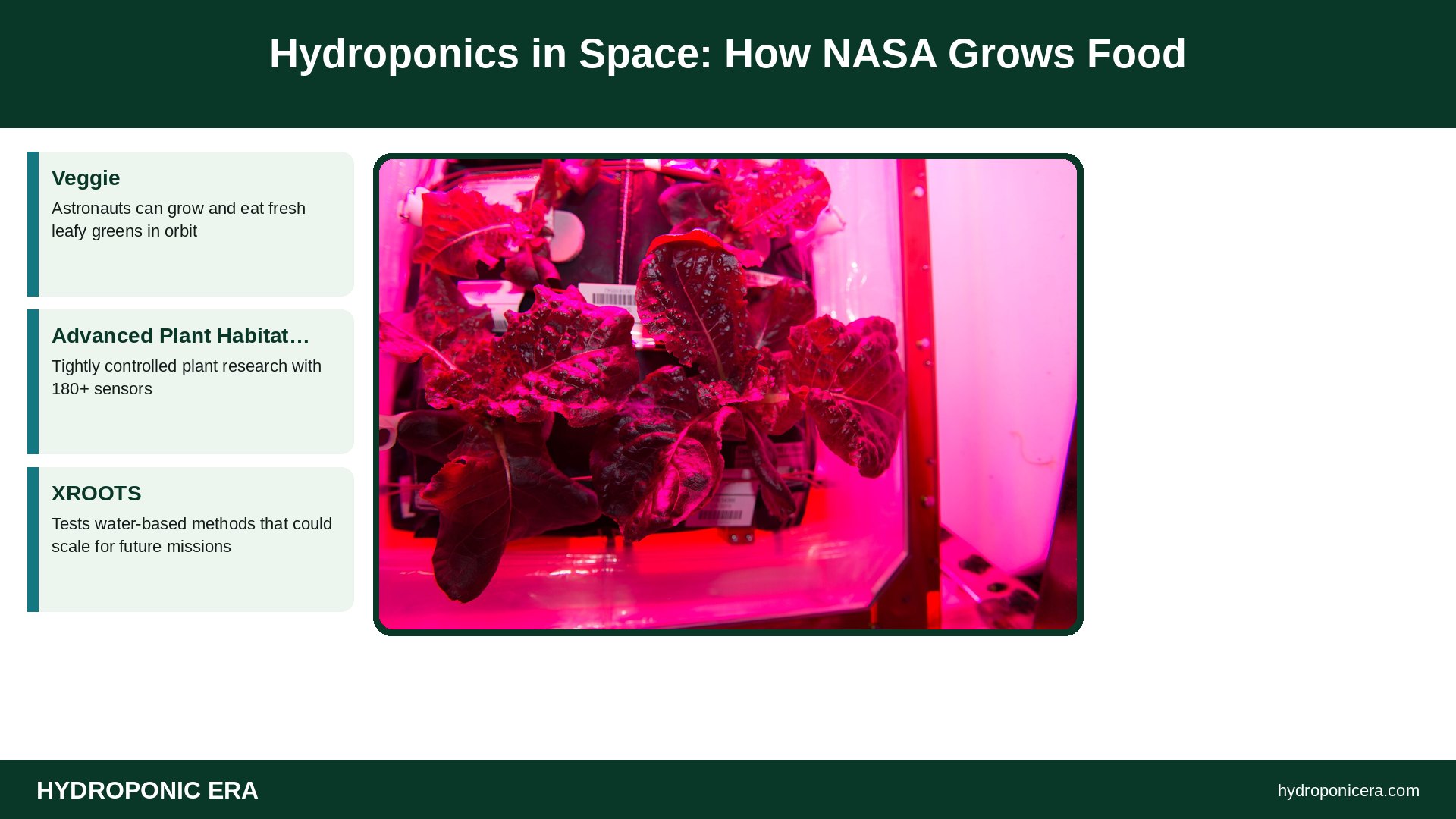
Hydroponics in space works differently than on Earth. NASA’s main station gardens, Veggie and the Advanced Plant Habitat, grow plants in clay-based media that wick water and nutrients to the roots, because loose water forms floating bubbles in microgravity. True water-based hydroponic and aeroponic methods have been tested on the International Space Station with the XROOTS experiment.
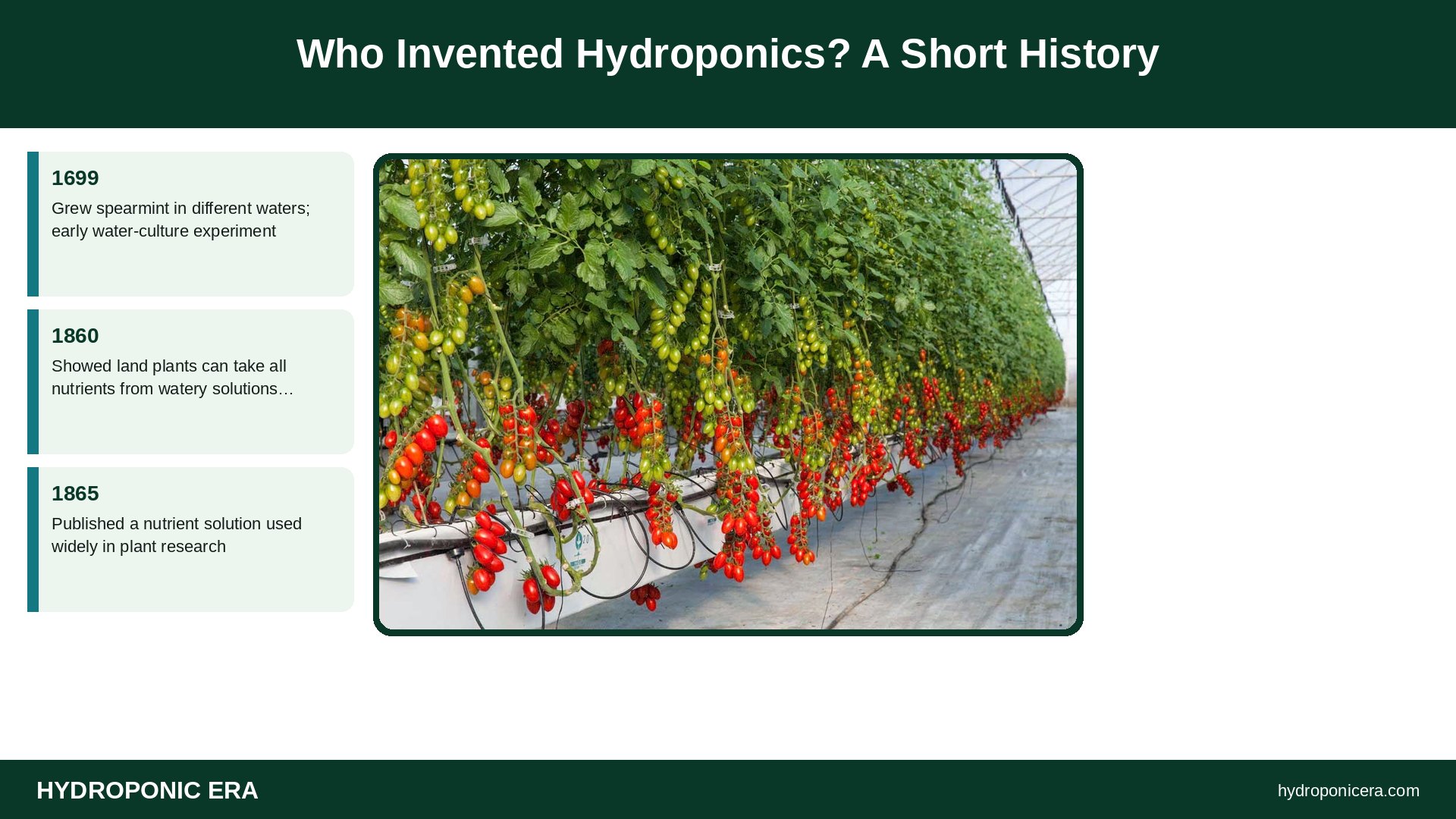
Who invented hydroponics? No single person. Scientists grew plants in water for centuries, Julius von Sachs and Wilhelm Knop proved around 1860 that plants could live on mineral solutions alone, and William F. Gericke of the University of California turned the lab method into practical crop production in the late 1920s and 1930s, popularizing the word “hydroponics.”
Are hydroponic vegetables healthy? Yes. Hydroponic vegetables contain the same vitamins, minerals and fiber as soil-grown ones of the same variety. Research shows small differences in either direction, and those depend more on variety, light, nutrient management, harvest timing and freshness than on soil itself. Eating more vegetables matters far more than how they were grown.
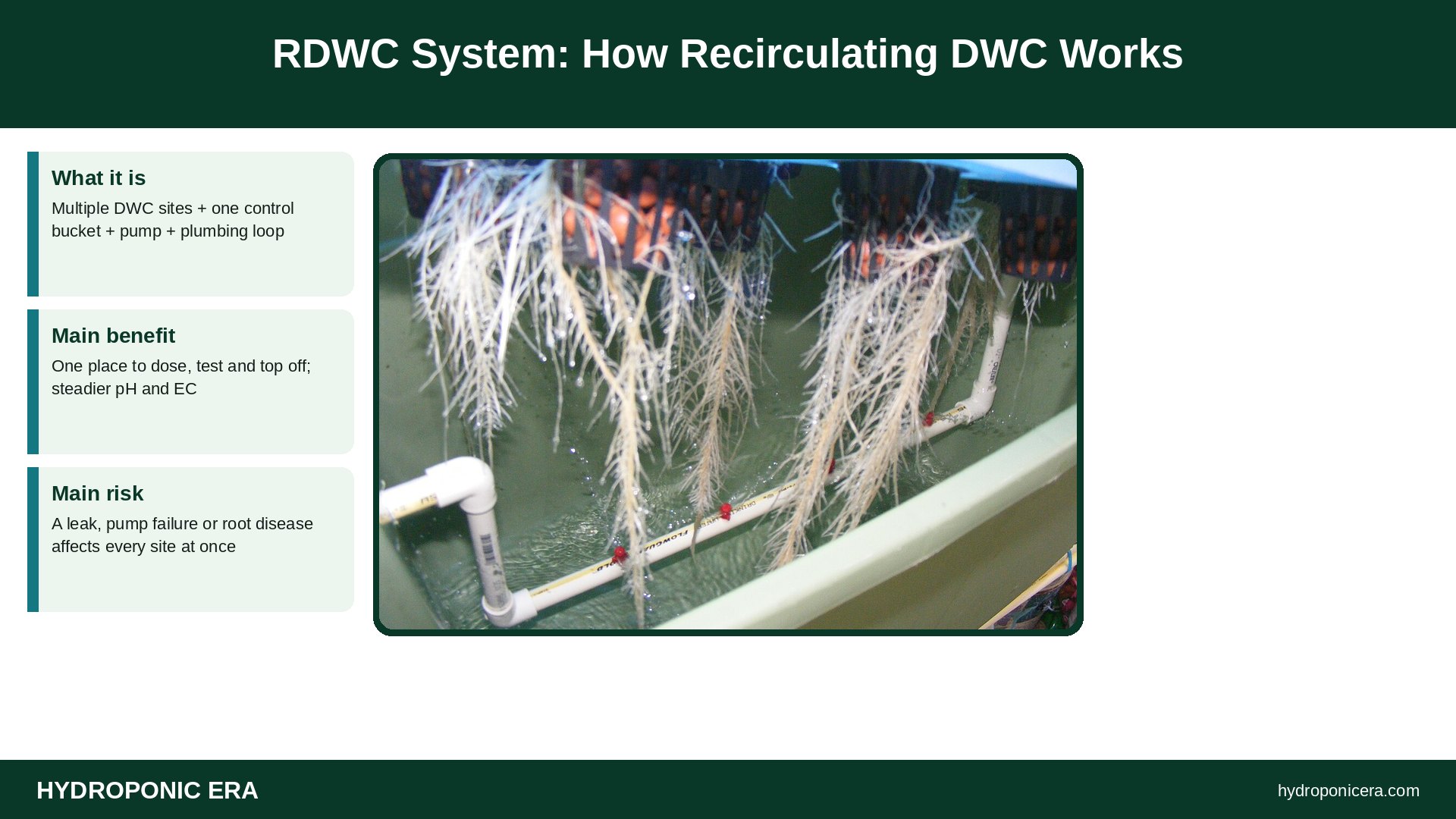
An RDWC system (recirculating deep water culture) links several aerated DWC buckets to one control bucket with pipes, so a single pump keeps the same nutrient solution moving through every plant site. You check pH, EC and temperature in one place instead of in each bucket, and the larger shared volume stays more stable.
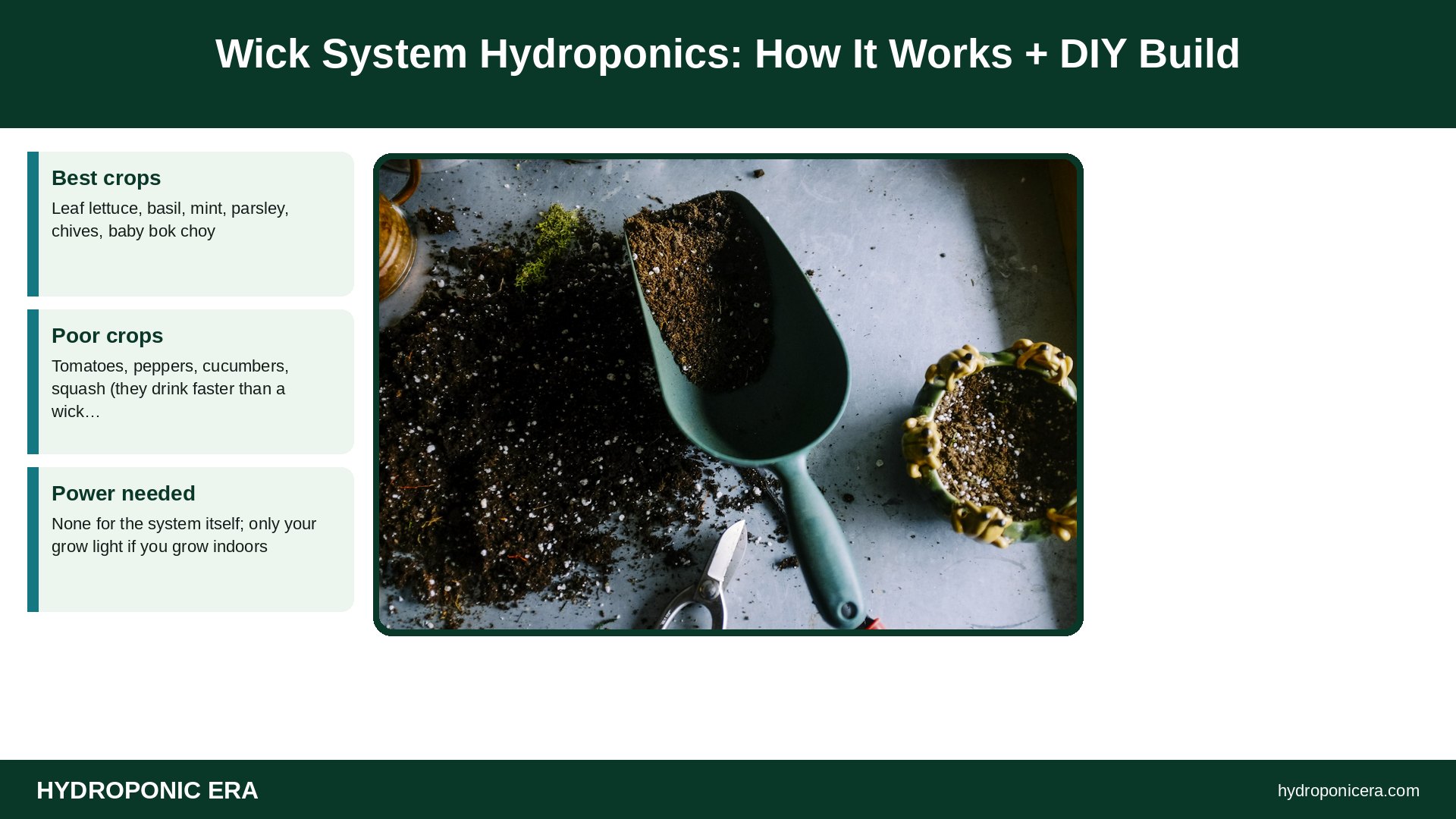
Wick system hydroponics is the simplest passive way to grow without soil: a cotton or nylon wick pulls nutrient solution from a reservoir up into a soilless medium by capillary action, with no pump, timer or electricity. It works well for lettuce, herbs and other small, light feeders, but it can’t keep up with thirsty fruiting plants such as tomatoes.
Equipment and airflow tweaks to stop dripping condensate that spreads disease and dilutes media.