
Can you grow cordyline in water? Yes. Cordyline in water roots easily from a leafy top cutting or a stem section. University of Hawaii CTAHR says ti cuttings for water rooting should be at least 6 inches (15 cm) long with about 1 inch (2.5 cm) of the end underwater, and that rooting hormone is not necessary. Change the water often and pot it once roots are strong.
Key takeaway: Root cordyline in water from a 6-inch top or cane, keep only the bottom inch submerged, give bright indirect light and warmth, and plant it before the roots grow very long.
| Factor | Target for cordyline in water | Source |
|---|---|---|
| Cutting length | At least 6 inches (15 cm) | UH CTAHR |
| Water depth | About 1 inch (2.5 cm) | UH CTAHR |
| Rooting hormone | Not necessary | UH CTAHR |
| Light | Bright, indirect | NC State |
| Temperature | 65–85°F (18–29°C) indoors; never below 50°F (10°C) | UH CTAHR, NC State |
| Rooting time | About 2–4 weeks | UH CTAHR |
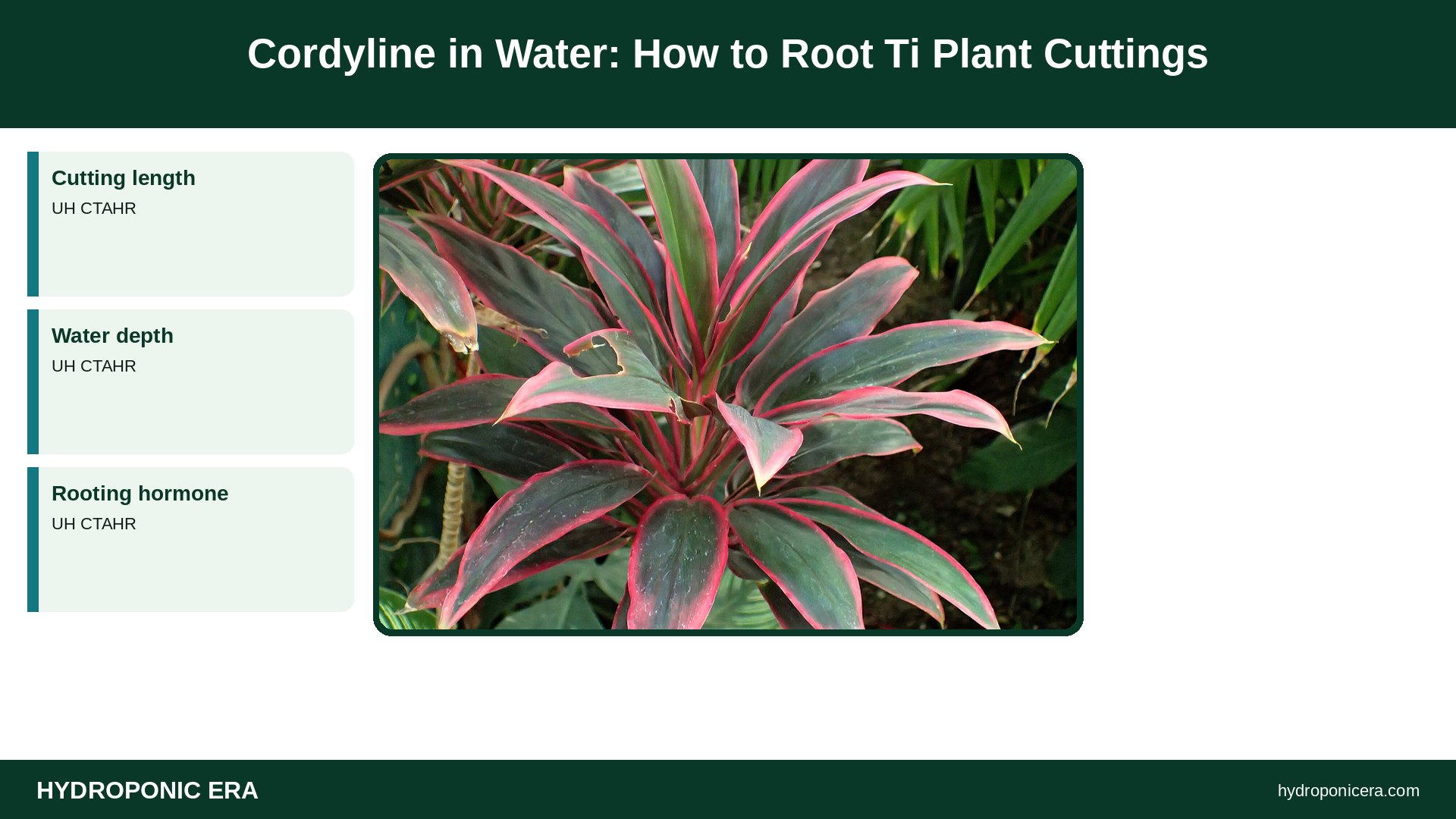
What Is a Cordyline, or Ti Plant?
Cordyline fruticosa, the Hawaiian ti plant or good-luck plant, is a tropical evergreen grown as a colorful houseplant across the U.S. NC State Extension describes lance-shaped leaves up to 30 inches (76 cm) long in shades of green, pink, purple and deep red, depending on the cultivar. It is hardy outdoors only in USDA zones 10–12.
Cordyline is often confused with dracaena. NC State notes that cordyline leaves have grooved petioles and its roots are white, while dracaena roots are orange or yellow. That white-root tip is handy when you watch your cordyline in water start to root. Popular cultivars include ‘Florida Red’, ‘Black Magic’ and ‘Maria’.
How Do You Root Cordyline in Water Step by Step?
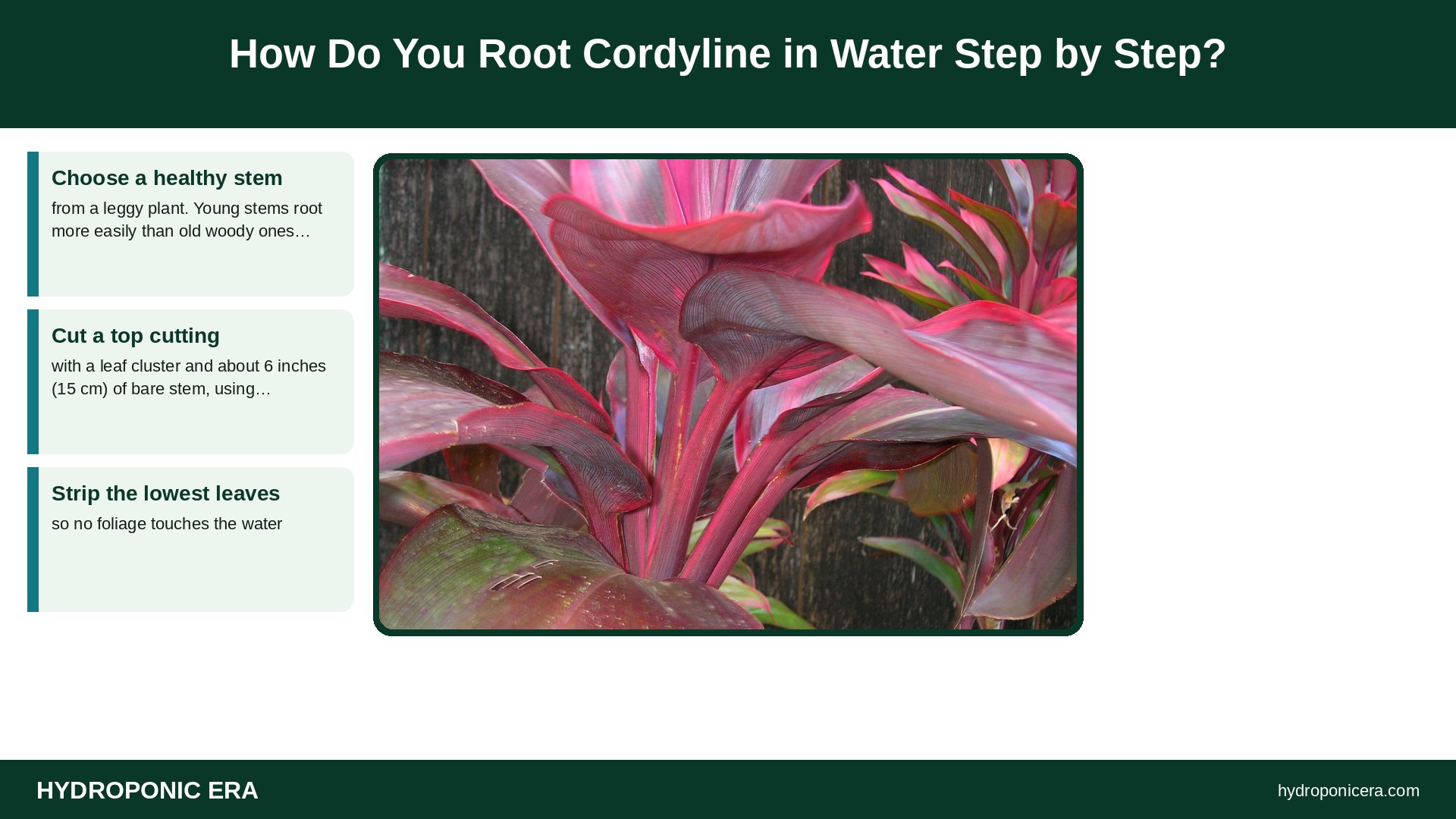
- Choose a healthy stem from a leggy plant. Young stems root more easily than old woody ones, CTAHR says.
- Cut a top cutting with a leaf cluster and about 6 inches (15 cm) of bare stem, using clean pruners.
- Strip the lowest leaves so no foliage touches the water.
- Stand it in a jar with about 1 inch (2.5 cm) of the stem end underwater.
- Place it in bright, indirect light in a warm room.
- Change the water every few days or whenever it clouds, to stop rot organisms.
- Pot it once a strong set of white roots forms, before they get very long.
CTAHR reports that a terminal leaf cluster with 6 inches (15 cm) of stem roots quickly and can make a well-shaped plant in 4–6 months. For general tips, see our guide to hydroponic cuttings and cloning.
Can Cordyline Cane Pieces Root in Water?
Yes, cane pieces can root, though they are slower than leafy tops in water. CTAHR says ti is propagated from stem sections 1 inch (2.5 cm) or more long, and these are sold as “ti logs,” NC State adds. Sections are usually laid in moist perlite or vermiculite rather than water, but a longer cane can sit upright in a shallow jar.
Keep cane pieces the right way up. CTAHR notes that vertical sections grow into single plants, while horizontal sections in media may sprout several shoots. Mist them, because new buds dry out quickly.
| Cutting type | Best rooting method | Speed |
|---|---|---|
| Leafy top, 6 inches (15 cm) or more | Water or moist media | Fast |
| Cane section, 1 inch (2.5 cm) or more | Moist perlite or vermiculite | Moderate |
| Air layer on parent | Moss wrap on stem | About 2 months |
| Seed | Fine media | Slow; variable colors |
How Long Does Cordyline Take to Root in Water?
Cordyline in water usually shows roots in about 2–4 weeks, the rooting time CTAHR gives for ti cuttings. Warmth speeds it up and cool rooms slow it down. NC State says the plant does best between 65 and 95°F (18–35°C) and does not tolerate temperatures below 50°F (10°C), so keep the jar away from cold winter windows.
Plant the cutting while roots are about 1–2 inches (2.5–5 cm) long. CTAHR warns that long rootlets can break off during planting.
Should You Feed Cordyline in Water?
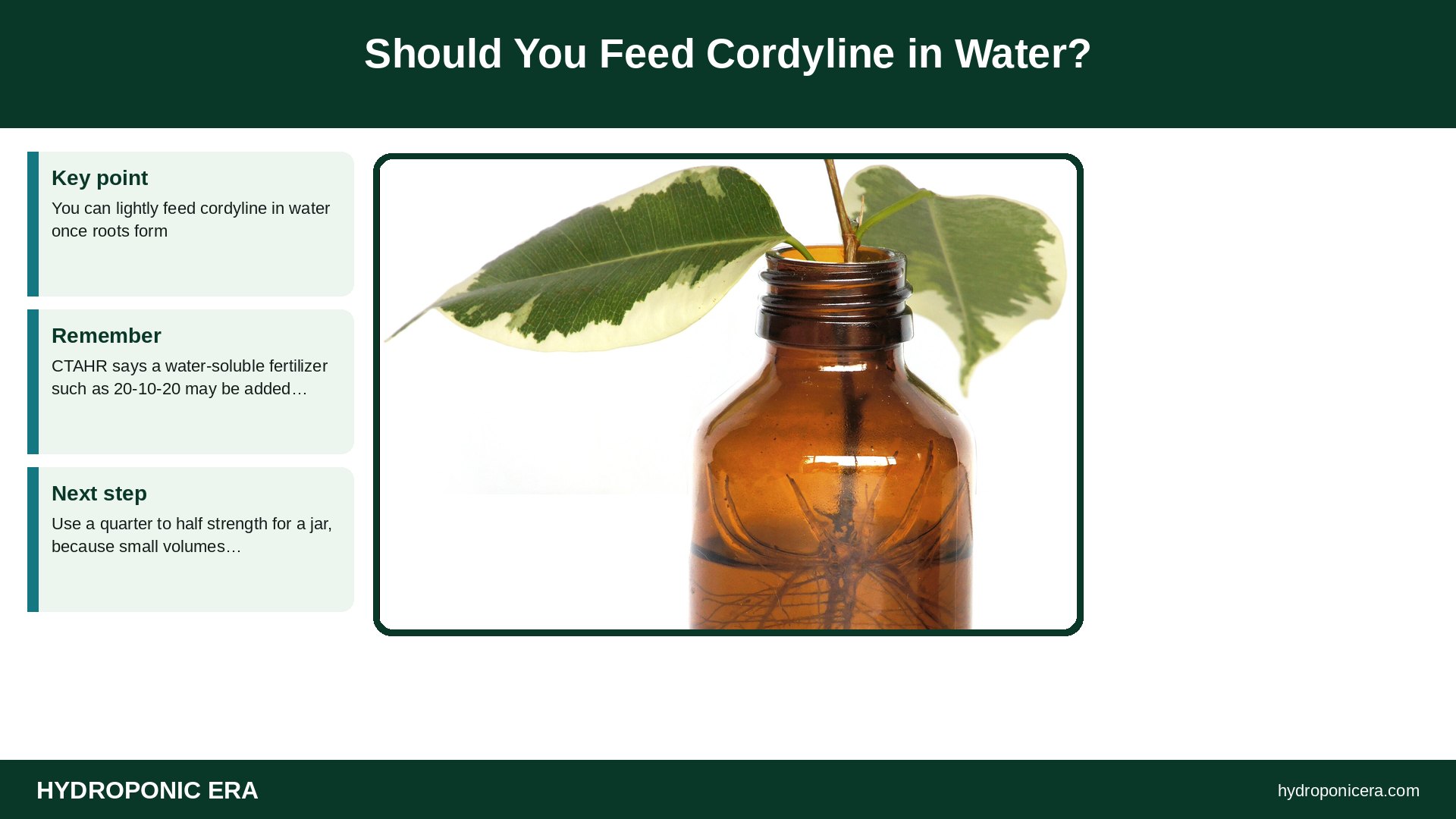
You can lightly feed cordyline in water once roots form. CTAHR says a water-soluble fertilizer such as 20-10-20 may be added to the rooting water, following package directions. Use a quarter to half strength for a jar, because small volumes concentrate salts quickly.
For long-term water growing, a semi-hydro setup with clay pebbles and a balanced nutrient works better than a bare jar. CTAHR also advises rinsing fertilizer off the foliage, since salts trapped in the leaf whorl can damage new leaves.
Why Is My Cordyline in Water Turning Brown?
- Dry air: NC State says leaf tips brown when air is too dry. CTAHR suggests 40–60% humidity indoors.
- Stale water: slimy stems or smell mean rot. Trim to clean tissue and refresh the water.
- Too much water depth: keep just the bottom inch submerged.
- Cold drafts: leaves drop below 50°F (10°C).
- Low light: colors fade and growth stalls; move closer to a bright window.
Brown roots need fast action; see our brown roots guide.
What Container Works Best for Cordyline in Water?
A narrow, clear glass jar works best for cordyline in water because it holds the cutting upright and lets you see roots and cloudiness. Pick a jar tall enough that the leaf cluster sits above the rim while only the bottom inch of stem is submerged. A bottle with a narrow neck keeps heavy tops from tipping.
Clear glass can grow algae over time. Rinse the jar each time you change the water, or switch to colored glass once roots are established. Group several cuttings in a wide vase only if each stem has room, since crowded stems trap stale water.
How Do You Move Cordyline From Water to Soil?
Move rooted cordyline from water to a well-drained potting mix with good aeration. CTAHR recommends media with no more than 50–60% peat, a pH of about 5.5–6.5 and a 4-inch (10 cm) pot for a new cutting. Keep it moist but not wet for the first few weeks while water roots adapt.
Is Cordyline Safe for Pets?
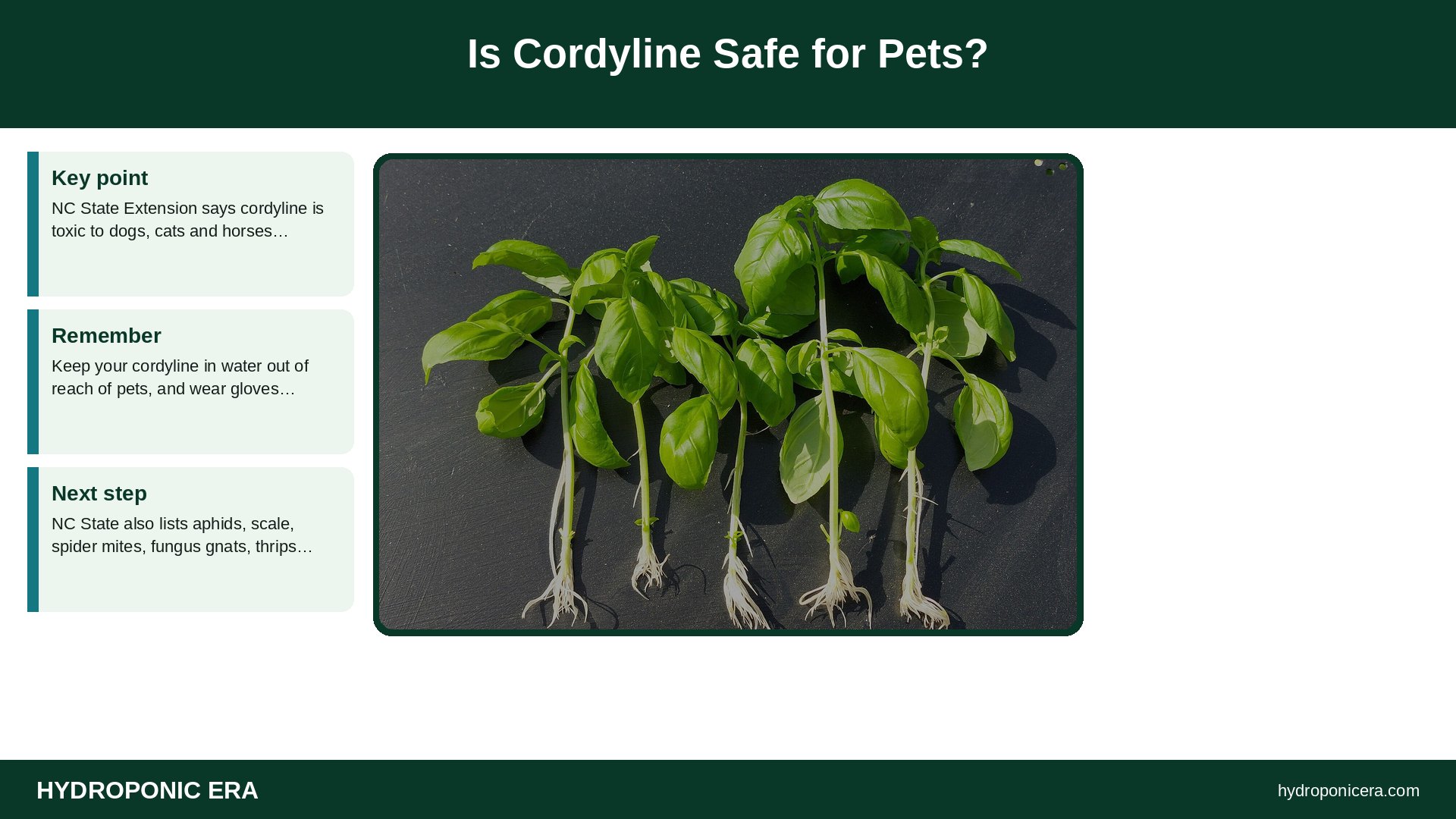
No. NC State Extension says cordyline is toxic to dogs, cats and horses and can cause stomach upset in people if eaten. Keep your cordyline in water out of reach of pets, and wear gloves when cutting it, since the sap can irritate skin. NC State also lists aphids, scale, spider mites, fungus gnats, thrips and mealybugs as pests to watch.
For more easy water plants, see lucky bamboo in water, pothos in water and our full list of plants that grow in water.
FAQs
Can cordyline live in water forever?
It can survive for months with fresh water and light feeding, but potting or semi-hydro gives stronger growth.
Do I need rooting hormone?
No. CTAHR says ti cuttings root quickly without it.
Why did my cutting lose color?
Low light. NC State says it needs bright indirect light to keep strong colors.
Is cordyline the same as dracaena?
No. They look similar, but cordyline has white roots and grooved petioles.
How often should I change the water?
Every few days, or whenever it turns cloudy.
Sources
- University of Hawaii CTAHR — Hawaiian Ti (OF-33)
- North Carolina State Extension — Cordyline fruticosa (Ti Plant)
- Photo credits (Wikimedia Commons, edited with titles): Cordyline fruticosa ‘Toucan’ kz3 by Krzysztof Ziarnek, Kenraiz (CC BY-SA 4.0); Starr 060916-8979 Cordyline fruticosa by Forest & Kim Starr (CC BY 3.0); Ficus cuttings with roots in a bottle, White background by Biusch (CC BY-SA 3.0); Basilikum (Ocimum basilicum) Stecklinge — Josef Schlaghecken by Schlaghecken Josef (CC BY-SA 4.0); Stage 1 of the night blooming Dracaena Flower by Legendster (CC BY-SA 4.0)