
What are sprouting seeds? Sprouting seeds are seeds sold for eating as sprouts, such as alfalfa, broccoli, radish, mung bean, lentil and clover. You soak them, then rinse and drain them for about 3–5 days until short shoots form. Buy seed labeled for sprouting, ideally pathogen-tested, because UC food safety experts trace most sprout illness outbreaks to contaminated seed.
Key takeaway: Choose sprouting seeds by flavor and timing, buy only sprouting-grade or certified seed, rinse two to four times a day and refrigerate the harvest at 40°F (4°C) or below.
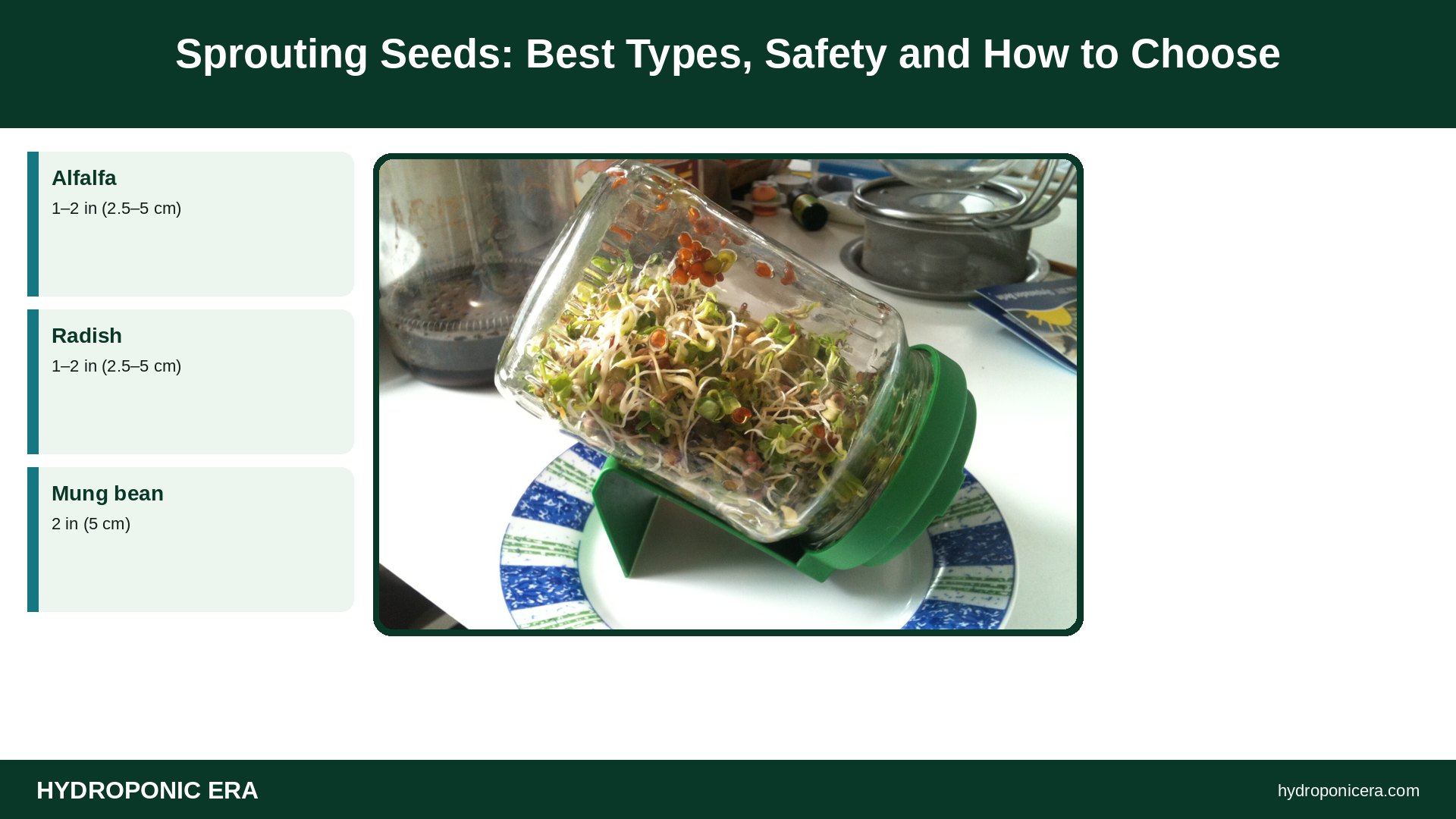
| Seed | Rinses per day | Days to harvest | Harvest length |
|---|---|---|---|
| Alfalfa | 3–4 | 3–5 | 1–2 in (2.5–5 cm) |
| Radish | 2 | 3–5 | 1–2 in (2.5–5 cm) |
| Mung bean | 4–5 | 3–4 | 2 in (5 cm) |
| Lentil | 2–3 | 3–4 | 1 in (2.5 cm) |
| Soybean | 6–8 | 4 | 2 in (5 cm) |
| Wheat | 2–3 | 3–4 | ½ in (1.3 cm) |
Data: Oregon State University Extension, “Grow Your Own Vegetable Sprouts.”
What Makes Sprouting Seeds Different From Garden Seeds?
Sprouting seeds are packed and sold for eating, while garden seeds are sold for planting and may be treated with fungicides. Never sprout seed coated with a colored treatment. UVM Extension notes that companies now market seeds specifically for sprouting, often in larger packs with sprouting directions, which makes them the safer and simpler choice.
UC Agriculture and Natural Resources goes further: ask for seed with pathogen-free certification. It also points out that “organic” alone does not mean seed has been tested for pathogens. Look for a lot number and testing statement on the bag.
Which Sprouting Seeds Are Best for Beginners?
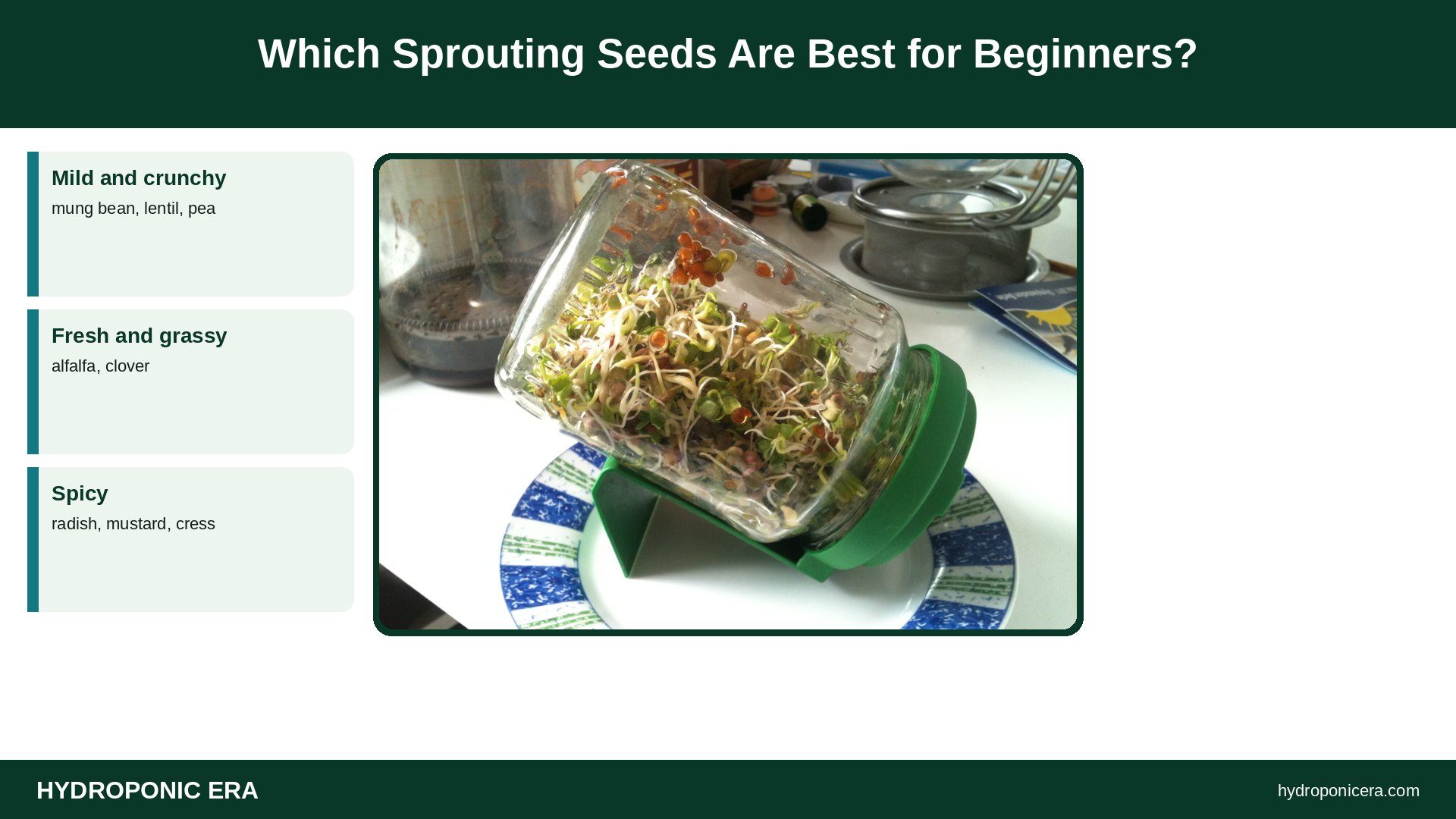
The best sprouting seeds for beginners are mung beans, lentils, radish and alfalfa, because they sprout fast and forgive small mistakes. NC State Extension lists many other options, including cabbage, clover, fenugreek, mustard, sesame, sunflower, adzuki beans, chickpeas, green peas, wheat, rye and triticale.
- Mild and crunchy: mung bean, lentil, pea.
- Fresh and grassy: alfalfa, clover.
- Spicy: radish, mustard, cress.
- Nutty: wheat, buckwheat, chickpea.
Mixes are popular, but OSU’s table shows seeds differ in timing and rinse needs. Pair seeds that finish together, such as alfalfa with radish.
How Do You Sprout Seeds Step by Step?
- Clean the jar. UVM advises washing containers in hot, soapy water. UC ANR also gives a sanitizing soak of ¾ cup unscented bleach per gallon (3 tablespoons per quart) for 5 minutes, then a rinse.
- Measure seed. About 1 tablespoon of small seed or ¼ cup of beans fills a quart jar.
- Soak. UVM suggests 6–8 hours for small seeds such as alfalfa and broccoli, and overnight for larger seeds such as mung beans and peas.
- Drain completely and set the jar tilted mouth-down in a bowl.
- Rinse and drain two to four times a day with cool water. OSU says rinsing removes heat and gases that build up as seeds germinate.
- Keep it at 70–85°F (21–29°C) out of direct sun. OSU notes most sprouts grow best between 75 and 85°F (24–29°C).
- Harvest when leaves appear and hulls loosen, usually after 3–6 days.
Our guide on how to grow sprouts in a jar covers jar lids and draining setups.
How Do You Make Sprouting Seeds Safer at Home?
Make sprouting seeds safer by starting with certified seed and an optional heat treatment. UC ANR Publication 8151 suggests heating seed for 5 minutes in 3% hydrogen peroxide held at 140°F (60°C), rinsing under running tap water for 1 minute, then skimming off floating seeds and hull fragments, which research ties to most contamination.
The FDA warns that warm, humid sprouting conditions are ideal for bacteria such as Salmonella, Listeria and E. coli, and that a few bacteria on seed can multiply even in a clean home setup. Children, older adults and anyone with a weakened immune system should eat sprouts only cooked until steaming hot, which UC lists as above 165°F (74°C). Read more in our home food safety guide.
How Much Do Sprouting Seeds Yield?
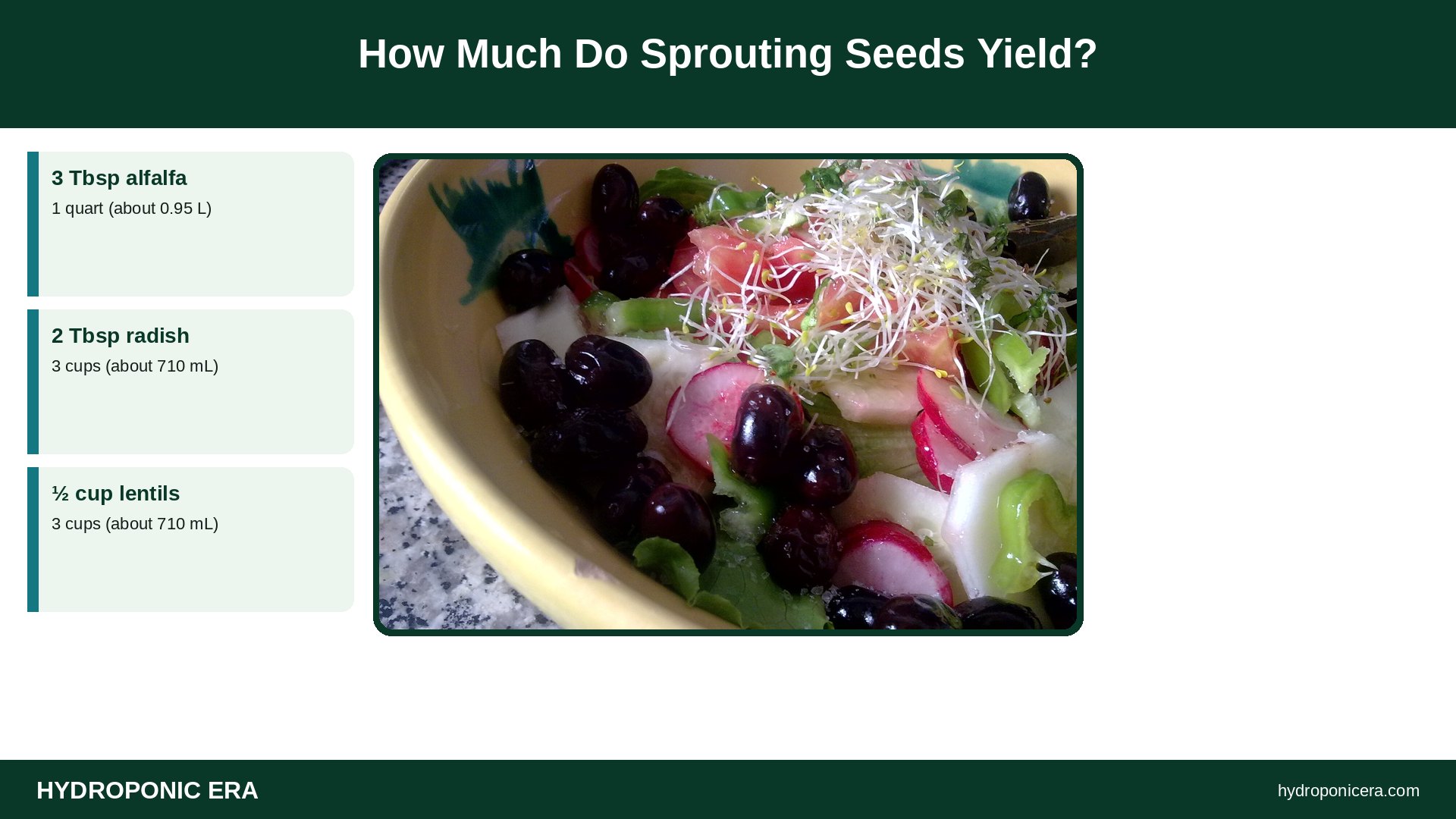
Sprouting seeds expand a lot. OSU Extension reports that 3 tablespoons of alfalfa make about 1 quart (0.95 L) of sprouts, 2 tablespoons of radish make about 3 cups, ½ cup of lentils makes about 3 cups and ½ cup of mung beans makes about 2 cups. In general, OSU says ¼ cup of seed produces about 2 cups of sprouts.
| Seed amount | Approximate sprouts |
|---|---|
| 3 Tbsp alfalfa | 1 quart (about 0.95 L) |
| 2 Tbsp radish | 3 cups (about 710 mL) |
| ½ cup lentils | 3 cups (about 710 mL) |
| ½ cup mung beans | 2 cups (about 475 mL) |
For a steady supply, NC State suggests starting a new batch every three days.
What Water Should You Use for Sprouting Seeds?
Use clean, cool, drinkable water for sprouting seeds. NC State Extension says chlorine in city water can cause poor sprouting and suggests non-chlorinated water such as well, spring or distilled water for bean sprouts. If your tap water is chlorinated and results are weak, try filtered or distilled water for the soak and rinses.
How Do You Store Sprouts After Harvest?
Store sprouts dry and cold. Give them a final rinse, float off loose hulls, then drain well or spin them dry. The FDA advises keeping fresh produce in a clean refrigerator at 40°F (4°C) or below. NC State notes that sprouts keep for several days in closed containers in the refrigerator. Throw out any that smell sour or feel slimy.
What Goes Wrong With Sprouting Seeds?
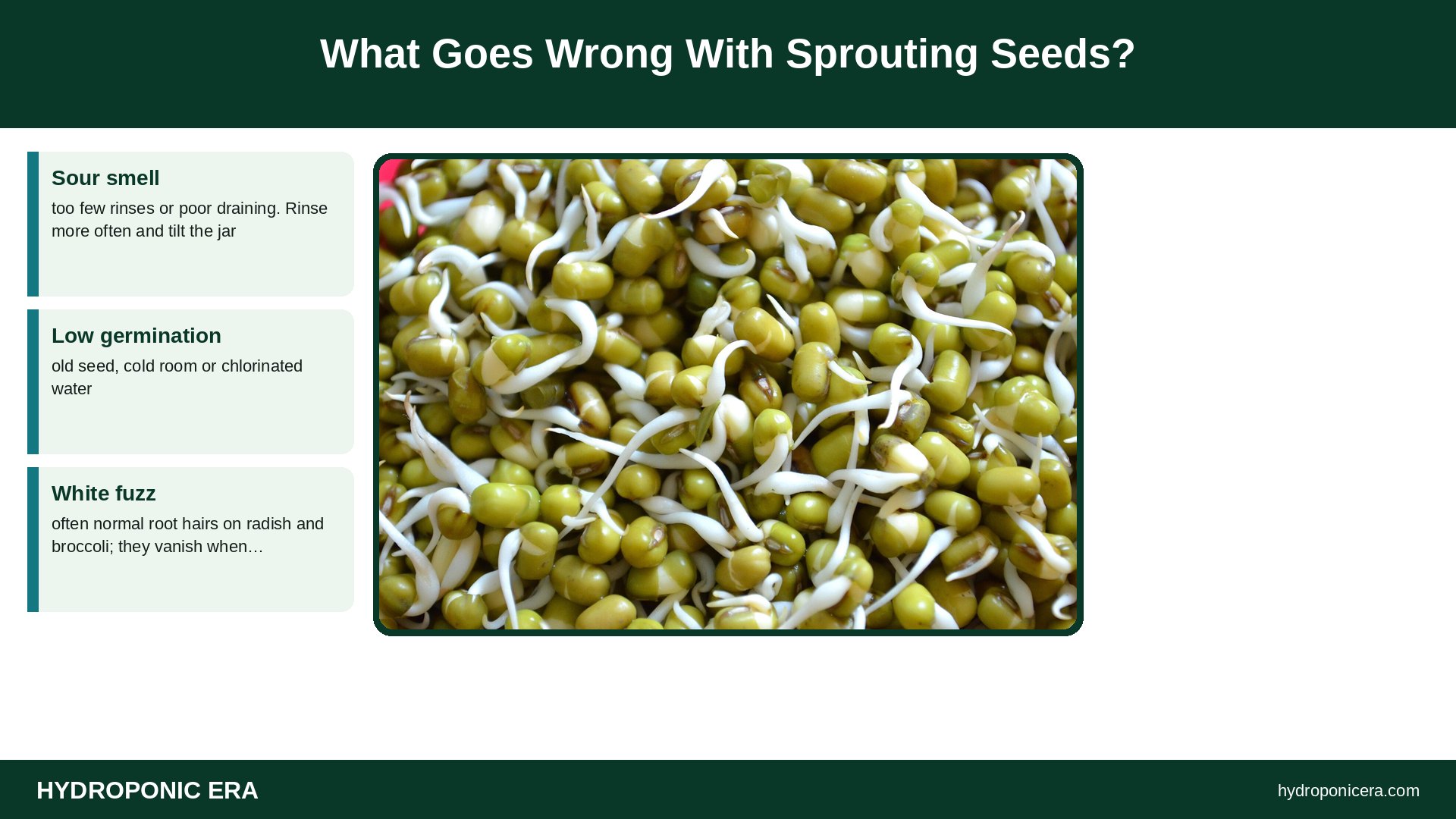
- Sour smell: too few rinses or poor draining. Rinse more often and tilt the jar.
- Low germination: old seed, cold room or chlorinated water.
- White fuzz: often normal root hairs on radish and broccoli; they vanish when rinsed. Gray, slimy growth is mold.
- Bitter sprouts: grown too long. NC State says mung sprouts over 4 inches (10 cm) may turn bitter.
If you want greener, leafier crops, try microgreens, which grow in light and are cut above the root.
What Equipment Do You Need for Sprouting Seeds?
Sprouting seeds needs very little equipment. A wide-mouth quart (0.95 L) jar, a mesh or screen lid, a bowl to tilt the jar in, measuring spoons and clean, cool tap water are enough for most small seeds. Tiered plastic sprouters and bamboo trays work well for larger batches and make rinsing easier.
- Jar and mesh lid: the cheapest setup for alfalfa, broccoli, radish and lentils.
- Tray sprouter: spreads seeds thin, which improves airflow.
- Bleach or sanitizer: for cleaning equipment between batches, as UC ANR advises.
- Refrigerator thermometer: confirms storage stays at 40°F (4°C) or below.
FAQs
Can I sprout regular grocery-store beans?
Often yes, but they are not tested for sprouting safety. Sprouting-grade seed is the safer choice.
Do sprouting seeds need light?
No. Keep them dark, then give a few hours of indirect light at the end if you want green leaves.
How long do sprouting seeds last?
Keep them cool, dry and dark, check the pack date and test a small batch if germination drops.
Are sprouts safe to eat raw?
The FDA and UC advise that high-risk people should not eat raw sprouts.
Can I mix seeds in one jar?
Yes, if they finish at the same time.
Sources
- Oregon State University Extension — Grow Your Own Vegetable Sprouts
- University of Vermont Extension — Sprouts: The Superfood to Grow at Home
- NC State Extension — Bean Sprouts and Other Vegetable Seed Sprouts
- University of California ANR — Growing Seed Sprouts at Home (Publication 8151)
- U.S. Food and Drug Administration — Selecting and Serving Produce Safely
- Photo credits (Wikimedia Commons, edited with titles): Growing bean sprouts by User:tlcoles (CC BY-SA 3.0); Growing bean sprouts by User:tlcoles (CC BY-SA 3.0); Salad, Romaine lettuce, cucumber, tomato, green pepper, radish, alfalfa sprouts, black olives, lemon juice, salt & olive oil (7765310086) by Lablascovegmenu from London (CC BY 2.0); Mung bean sprouts, close-up by pics_pd (CC0); Vigna radiata MHNT.BOT.2009.17.4 by Roger Culos (CC BY-SA 3.0)