
How do you plant cryptocoryne? Plant cryptocoryne with its roots in the substrate and its crown, where the leaves meet the roots, above the surface. Add a root tab near the roots, give it low to moderate light, and do not move it afterward. New plants often melt at first, so keep conditions stable and wait several weeks.
Key takeaway: Cryptocoryne is a slow, hardy rosette plant. Bury only the roots, add root tabs, keep light and water stable, and do not move it. If the leaves melt after you buy it, trim them and wait three to four weeks for new shoots.
| Step | Guideline | Why |
|---|---|---|
| Planting depth | Roots buried, crown above the substrate | A buried crown can rot |
| Fertilizer | Root tabs near the roots | Crypts feed through their roots |
| Light | Low to moderate | Slow growth, less algae |
| Moving the plant | Avoid it | Changes trigger melt |
| Melt recovery | Wait 3–4 weeks | Roots often send up new shoots |
What Is Cryptocoryne?
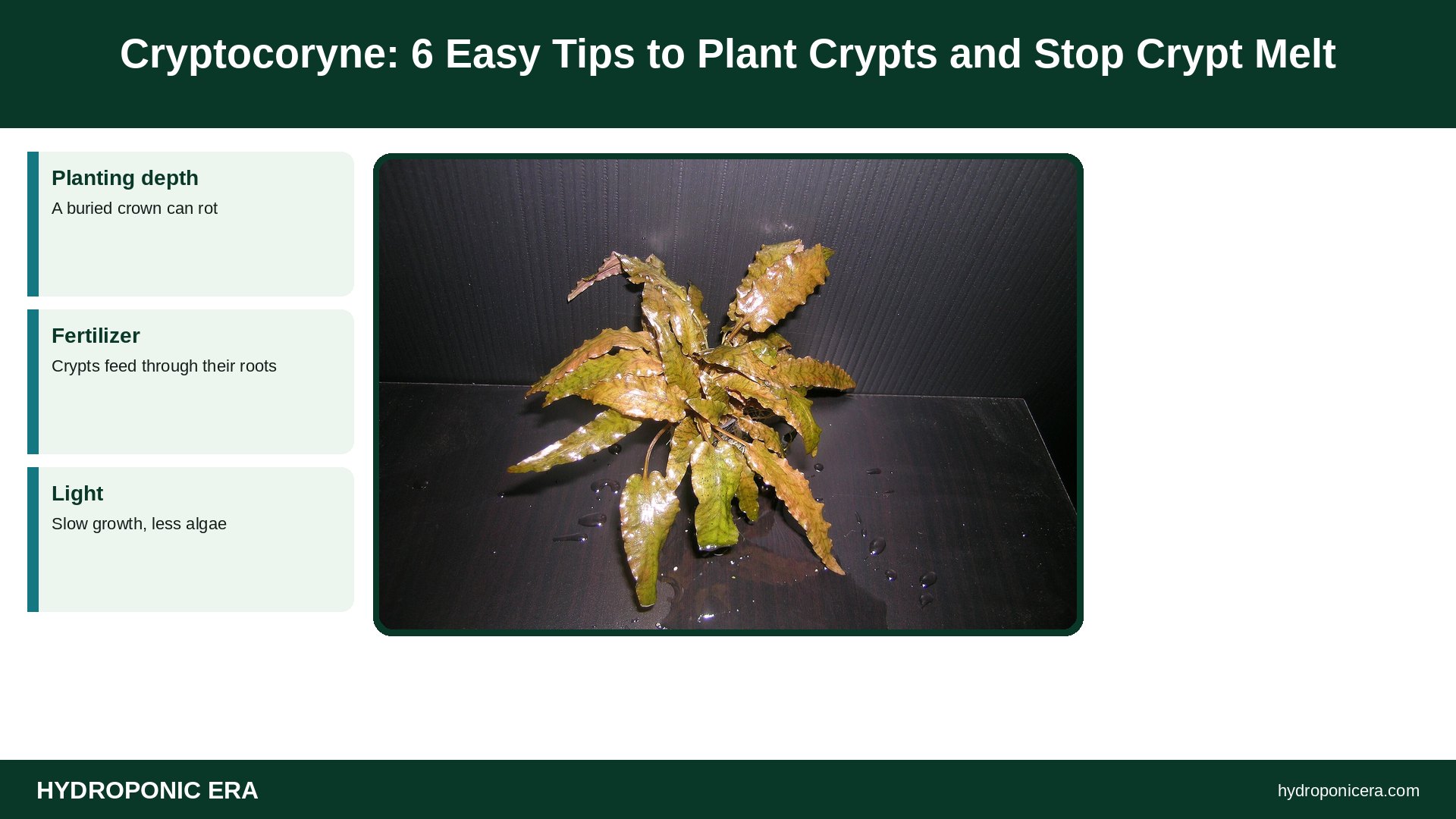
Cryptocoryne, or “crypt,” is a group of rosette plants that grow from the substrate and are popular in planted tanks. Common types include Cryptocoryne wendtii and Cryptocoryne spiralis. They are sturdy once settled but are slow growers and sensitive to change. Aquarium Co-Op notes that they need substrate and root tabs to grow well.
Smaller crypts such as C. parva stay low, while larger species such as C. wendtii suit the midground. Check the species before you choose a spot in the tank.
How Do You Plant Cryptocoryne Correctly?
- Unpot the plant and remove rock wool or rubber bands.
- Rinse the roots gently, and trim damaged roots.
- Bury the roots, and keep the crown above the surface.
- Place a root tab near, but not touching, the roots.
- Leave it alone for the first few weeks.
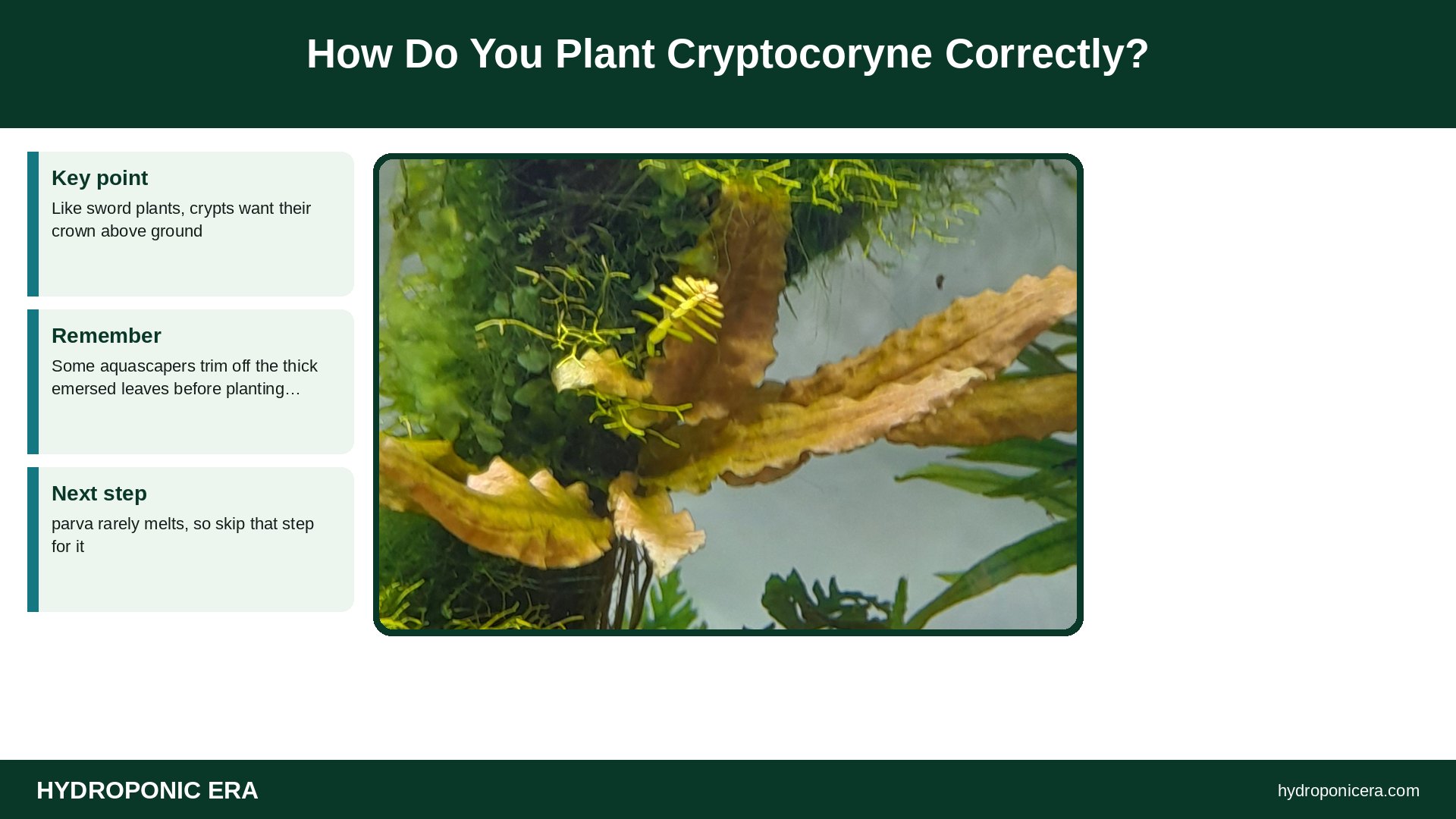
Like sword plants, crypts want their crown above ground. Some aquascapers trim off the thick emersed leaves before planting, since the plant will likely lose them anyway, but C. parva rarely melts, so skip that step for it.
Why Is Your Cryptocoryne Melting?
Crypt melt is the plant absorbing old leaves to adjust to new conditions, and it is common in new plants. Nurseries often grow crypts with the leaves above water. Underwater, the thick emersed leaves melt and thinner underwater leaves replace them. If the roots are healthy and the plant is not moved, small shoots usually appear within a few weeks.
Cut melting leaves off at the base, since rotting leaves can spike nitrogen or feed algae. Do not throw the plant away. Wait at least three to four weeks before deciding it is dead.
Why Do Established Cryptocoryne Plants Melt?
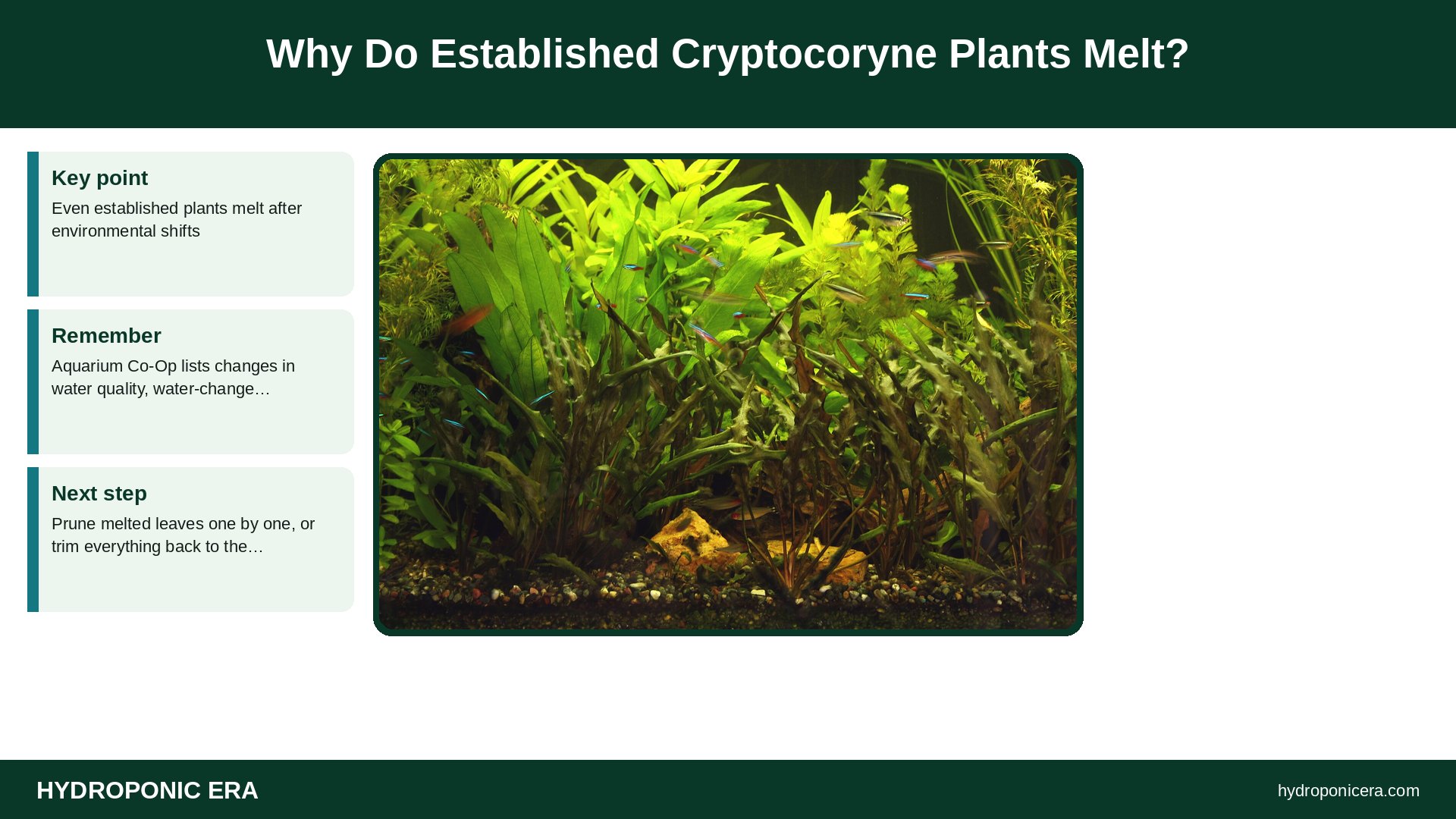
Even established plants melt after environmental shifts. Aquarium Co-Op lists changes in water quality, water-change frequency, moving the plant, lighting, fertilizer dosing, hot-summer temperatures, CO2 injection, fish food and even air pollutants. Prune melted leaves one by one, or trim everything back to the substrate, then keep the tank stable and wait several weeks.
What Light and Fertilizer Does Cryptocoryne Need?
Low to moderate light is enough. Crypts grow slowly, so more light mostly brings algae. Feed them with root tabs placed near the roots, and replace them every couple of months. In sand or gravel, tabs are the main nutrient source. Rich plant soil can supply more, and a mild liquid fertilizer helps in the water column.
Learn about substrates and media in our growing media guide, and see our guide to iron deficiency if new leaves look pale.
How Do You Prevent Algae While Crypts Recover?
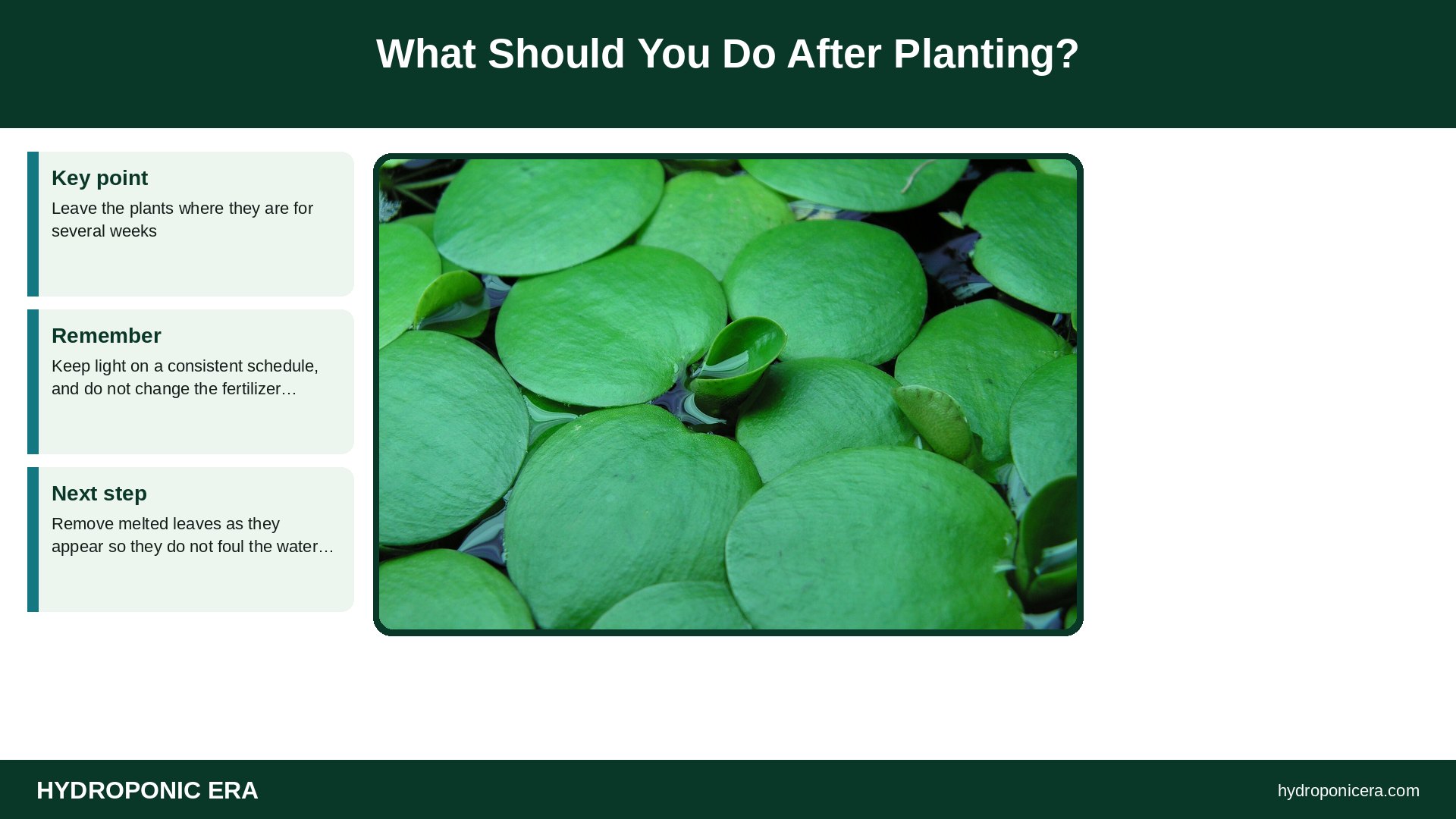
When crypts melt or are pruned, they take up fewer nutrients and the tank is more prone to algae. Aquarium Co-Op suggests adding fast-growing stem plants and floating plants in the meantime. Do not overfeed fish, and keep light levels steady until new leaves appear.
Which Types Suit Which Part of the Tank?
Small, low species such as C. parva work in the foreground and spread slowly. Medium species such as C. wendtii and C. spiralis suit the midground, and larger ones belong toward the back. Check the adult size on the label, and leave space for runners, since each plant can form a patch over time.
Because they grow slowly, buy a few extra plants rather than expecting a quick carpet. Group them in odd numbers, and place the largest at the back for a natural look.
How Do You Choose a Healthy Plant at the Store?
- Look for firm, plump roots and a solid crown.
- Avoid plants with slimy, black or mushy bases.
- Check for snails, eggs and algae on the leaves.
- Ask whether it was grown above water or below it.
- Rinse it, and quarantine it in a bucket before it goes into the tank.
Healthy roots matter more than perfect leaves, because the roots rebuild the plant after melt. Learn how nutrients move through plants in our hydroponics for beginners guide.
What Should You Do After Planting?
Leave the plants where they are for several weeks. Keep light on a consistent schedule, and do not change the fertilizer or the water-change routine suddenly. Remove melted leaves as they appear so they do not foul the water, and wait for little shoots near the base. New growth means the plant has adjusted.
Expect slow growth even after recovery. Many hobbyists see only a few new leaves per month, which is normal. Use that time to keep the glass clean and to watch the water for changes. Test the water on a regular schedule, and write down any change you make, so you can link a future melt to its cause instead of guessing. Patience is the main skill this plant teaches.
How Do You Propagate Cryptocoryne?
Established crypts spread by runners and produce small daughter plants. Wait until each daughter has roots and several leaves, then separate it with a clean cut and plant it with the crown above the substrate. The mother plant should be settled and healthy before you take daughters. Move them carefully, since any disturbance can trigger another round of melt.
FAQ About Cryptocoryne
Does it need CO2?
No. It grows slowly without CO2.
Is cryptocoryne good for beginners?
Yes, if you leave it alone and keep conditions stable.
Should I bury the crown?
No. Keep it above the substrate.
How long does melt last?
Wait three to four weeks for new shoots.
Do crypts need root tabs?
Yes, especially in sand or gravel.
Sources
- Aquarium Co-Op (hobby guide) — Why is my cryptocoryne plant melting?
- Aquarium Co-Op (hobby guide) — How do I plant my cryptocoryne?
- Hydro Habitats (hobby guide) — Cryptocoryne plant care guide
- Photo credits (Wikimedia Commons, edited with titles): -Cryptocoryne wendtii- from Tropica farm by photo: S. Tanaka (Public domain); Cryptocoryne wendtii Tropica-2-veda aquarium-bengaluru-India by Yercaud-elango (CC BY 4.0); Planted Tank 03 – Flickr – The Wandering Angel by The Wandering Angel from Makati City, Philippines (CC BY 2.0); Limnobium laevigatum by Cardex (Public domain)