
Can a papyrus plant grow in water? Yes. A papyrus plant (Cyperus papyrus) grows in wet soil or shallow standing water in full to part sun. It is hardy only in USDA zones 9–12, so in colder areas grow it in a pot, treat it as an annual and move it indoors before temperatures drop below 40°F (4°C).
Key takeaway: A papyrus plant is a tall, tender sedge that loves sun and wet roots. Keep it in a container to control spread, feed it well, divide it in spring and bring it indoors in a saucer of water before frost.
| Factor | Guideline | Source |
|---|---|---|
| Hardiness | USDA zones 9a–12b | UW–Madison Extension |
| Height | 5–8 ft (1.5–2.4 m) typical; up to 10 ft in Florida | UW, UF/IFAS |
| Sun | Full or part sun | UF/IFAS |
| Water | Moist to wet soil or standing water | UW, UF/IFAS |
| Cold limit | Protect below 40°F (4°C) | UW–Madison Extension |
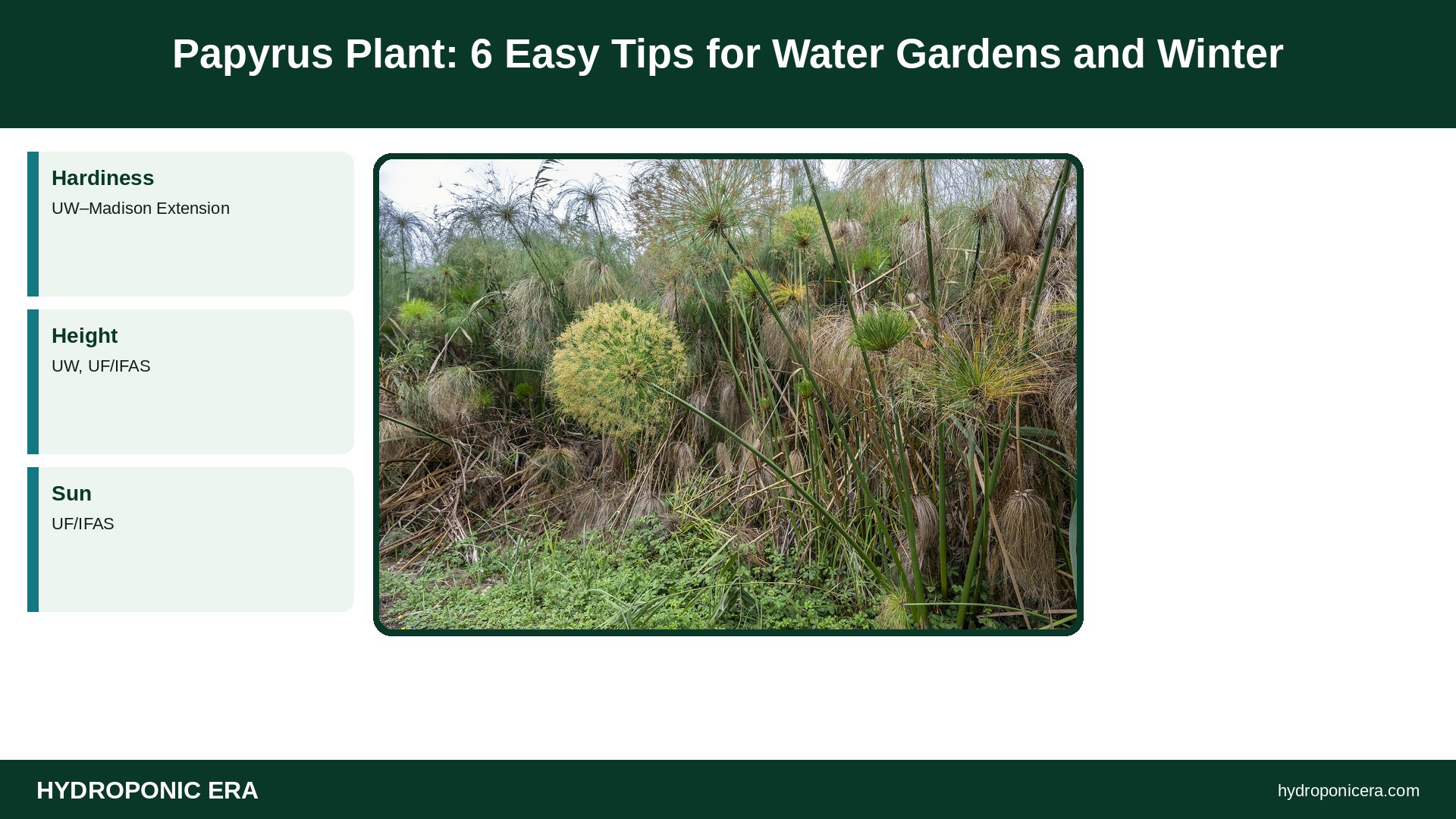
What Is a Papyrus Plant?
A papyrus plant is a clump-forming sedge from Africa that grows in swamps, shallow lakes and along streams. UW–Madison Extension describes Cyperus papyrus as a vigorous, tender perennial with triangular green stems topped by feathery, thread-like rays. It is the plant of ancient papyrus paper, and today it is a dramatic accent for sunny water features.
Smaller forms are sold for pots, so check the size on the tag before you plant.
How Do You Grow a Papyrus Plant in Water?
- Choose a large pot, with or without drainage holes.
- Fill it with heavy garden soil or aquatic planting mix, and plant the rhizome just below the surface.
- Set the pot in a spot with full or part sun.
- Keep the soil wet, or stand the pot in shallow water.
- Feed it well, since it can be fertilized heavily.
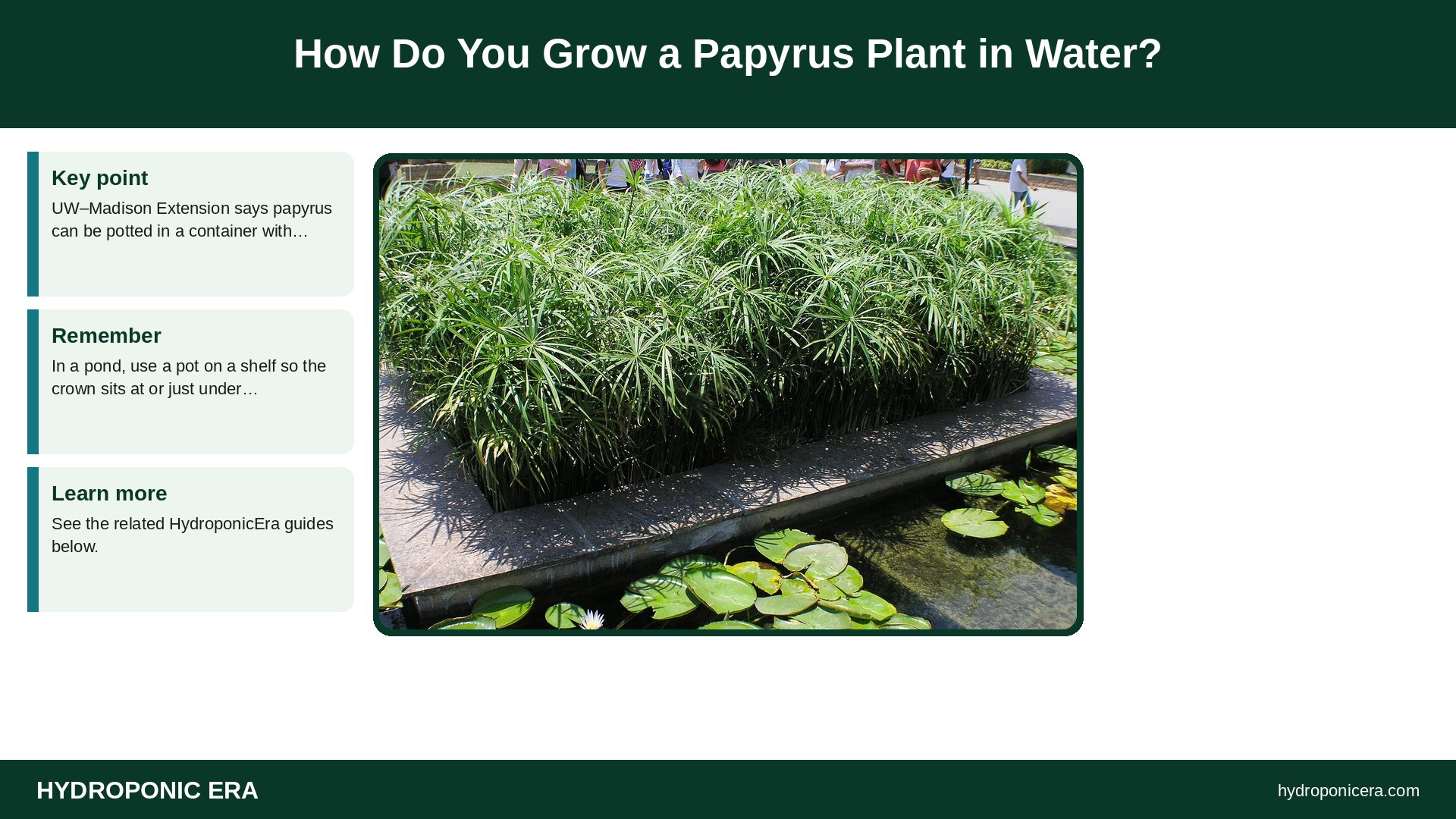
UW–Madison Extension says papyrus can be potted in a container with no drainage holes, and regulating moisture is easier that way. In a pond, use a pot on a shelf so the crown sits at or just under the surface.
Can a Papyrus Plant Grow in Your Climate?
A papyrus plant is hardy in USDA zones 9a to 12b. In colder areas it grows as an annual foliage plant outdoors in summer, in large containers or shallow water. UW–Madison Extension says it needs warm temperatures to thrive and should be protected or moved indoors when temperatures fall below 40°F (4°C).
- Zones 9–12: it can stay out, with frost protection.
- Zones 8 and below: grow in a pot, and move it inside.
- Southern ponds: keep it in a container to limit spread.
How Do You Keep a Papyrus Plant Over Winter?
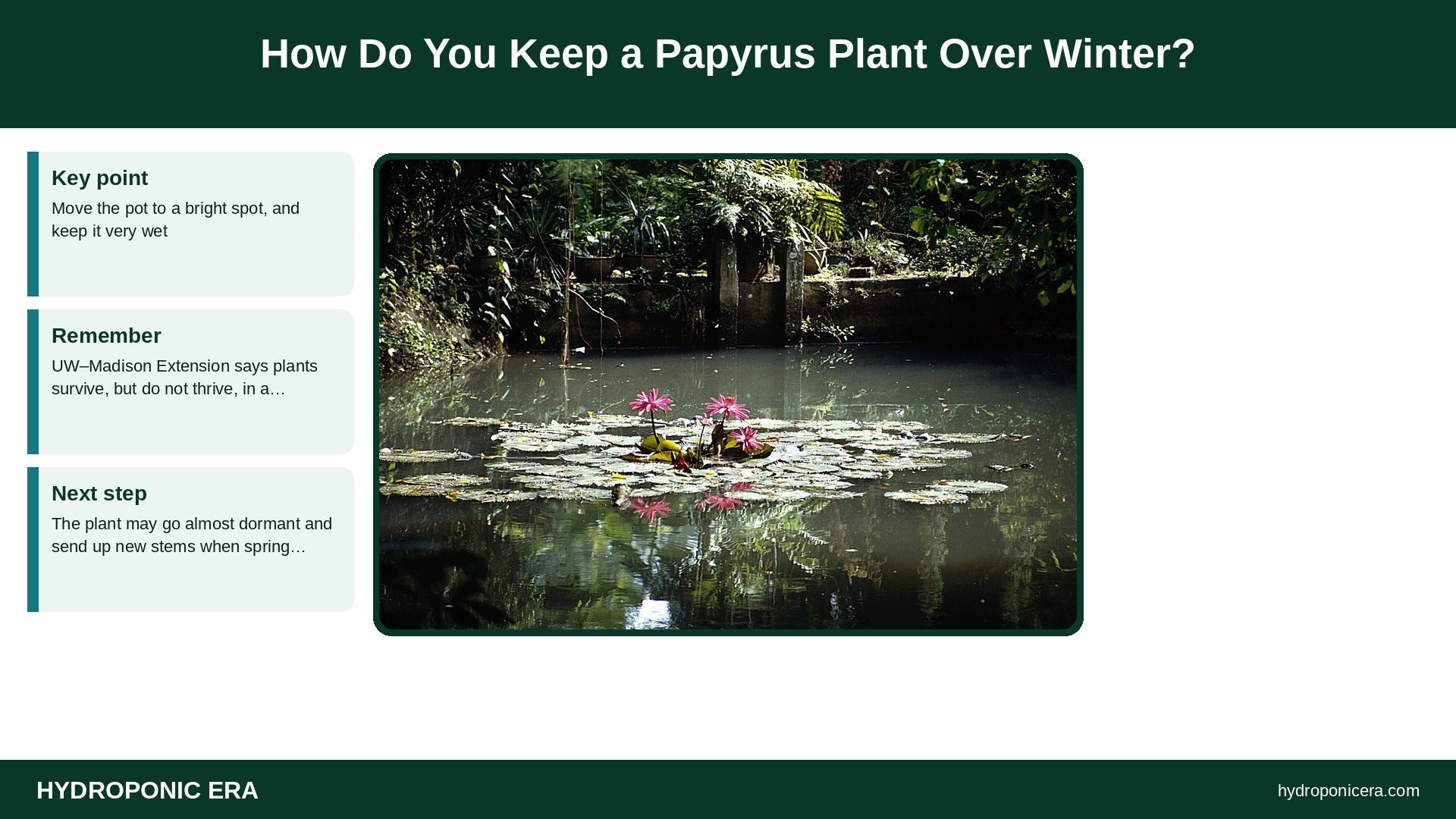
Move the pot to a bright spot, and keep it very wet. UW–Madison Extension says plants survive, but do not thrive, in a bright window or greenhouse if kept moist, ideally in a deep saucer with 1–2 inches (2.5–5 cm) of water. The plant may go almost dormant and send up new stems when spring returns.
Do not let the rhizomes freeze. Cut brown, old stems close to the base with sharp pruners.
How Do You Divide and Propagate a Papyrus Plant?
Divide the rhizomes in spring with a sharp knife, and replant each piece with a few stems. UF/IFAS adds a trick: bend a stem so the leaves stay underwater, and it will put out new roots. A bigger clump gives more plants, but it also fills the pot quickly, so division also keeps plants healthy.
Because it is vigorous, papyrus becomes potbound quickly, so check the pot every season. See our guide to growing media for options that stay stable in water.
Is a Papyrus Plant Good for a Pond?
Yes, for a medium or large water feature in sun. It adds height behind lilies and shorter marginal plants. Keep it in a container so it does not crowd others, as UF/IFAS advises. For a smaller feature, choose a dwarf form. Add shade from water lilies and consider mosquito fish where they are legal.
Is a Papyrus Plant Invasive?
It can be. NC State Extension notes that papyrus grows rapidly, has escaped cultivation in Florida, California, Louisiana and Hawaii, and can become invasive by clogging waterways. If you live in a warm region near natural water, keep the plant in a container, never let seed or pieces wash into ditches or ponds, and check with your state extension service about local rules.
In colder zones the winter kills the plant outdoors, so the risk is much lower, but containers are still the safest choice.
How Much Water and Light Does It Need?
NC State Extension says papyrus prefers full sun to partial shade and consistently moist, boggy soil, and tolerates standing water up to 6 inches (15 cm) deep. Give it shelter from wind, since the tall stems can be damaged. Indoors, a sunny window and a room around 60–65°F (16–18°C) suit it through winter.
Dieback in the center of an older clump looks unattractive, and dividing the plant fixes it.
Which Papyrus Plant Size Should You Buy?
Choose a papyrus plant by space. NC State lists ‘King Tut’ at 4–6 feet (1.2–1.8 m) tall, ‘Prince Tut’ at 18–30 inches (45–75 cm) and the dwarf ‘Nanus’ at 18–24 inches (45–60 cm). UW–Madison lists similar dwarf cultivars, including BABY TUT at 18–24 inches. A dwarf suits a bucket pond, a tub or a small patio, while a full-size plant needs a larger water feature.
Seed is another option. NC State says papyrus is propagated by division or by seed in spring, though division gives a mature clump faster.
What Problems Affect a Papyrus Plant?
- Brown foliage: usually inadequate water, says NC State Extension; cut old stems near the rhizome.
- Stunted growth: low light, cool nights or a crowded pot.
- Wilting: the pot dried out, so keep it wet.
- Cold damage: move indoors before 40°F (4°C).\nUL: Pests: mealybugs may appear, and airflow helps prevent fungal disease.
FAQ About Papyrus Plant
Is a papyrus plant hardy?
Only in USDA zones 9–12.
How tall does it get?
Typically 5–8 feet (1.5–2.4 m), up to 10 feet in Florida.
Can it grow indoors?
It survives in a bright spot with very moist soil in winter.
Does it need fertilizer?
Yes. UW–Madison says it can be fertilized heavily.
Is it a good pond plant?
Yes, in a pot, in sun.
Sources
- UW–Madison Division of Extension — Papyrus, Cyperus papyrus
- UF/IFAS Gardening Solutions — Papyrus
- NC State Extension Gardener Plant Toolbox — Cyperus papyrus
- Photo credits (Wikimedia Commons, edited with titles): Riserva Fiume Ciane-Saline 2024 h –papyrus by Cayambe (CC BY 4.0); Egyptian Museum – Papyrus in front pond by Daniel Mayer (CC BY-SA 4.0); RIBogorSeerose by Ziegler175 (CC BY-SA 4.0); Nelumno nucifera open flower – botanic garden adelaide2 by Peripitus (CC BY-SA 4.0)