
Do hydroponic farms need GAP certification? GAP certification is voluntary, but many retail and foodservice buyers require it. A USDA GAP audit verifies that produce is grown, packed, handled and stored to minimize microbial food safety hazards. From October 1, 2026, USDA charges $175 per hour for audit time. Ask your buyer which audit level they accept before you apply.
Key takeaway: GAP stands for Good Agricultural Practices. USDA’s Agricultural Marketing Service runs the audits, and indoor and hydroponic growers selling to stores often need one.
| USDA audit type | What it covers | Best for |
|---|---|---|
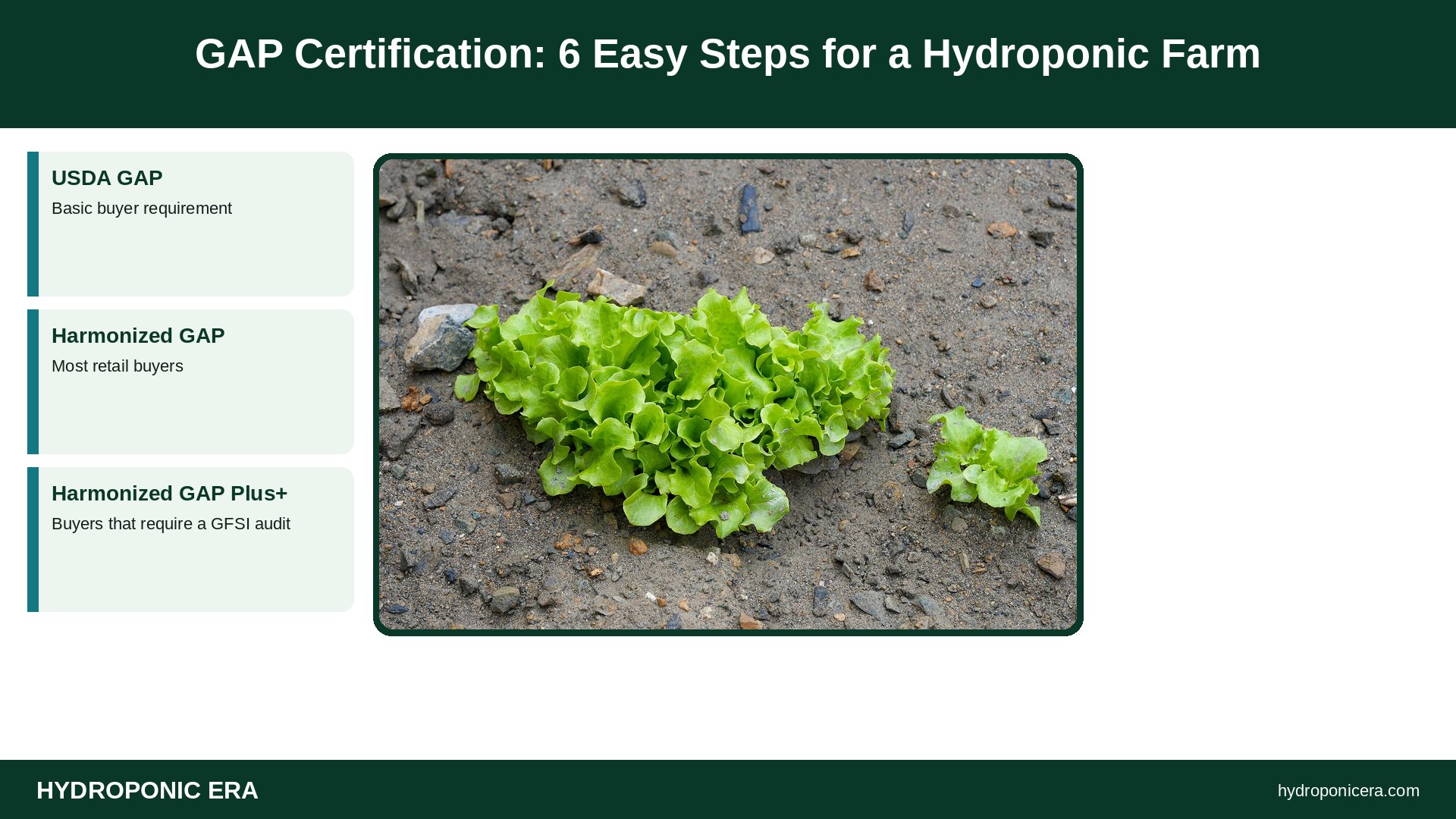
| USDA GAP | FDA recommendations and industry best practices | Basic buyer requirement |
| Harmonized GAP | Adds alignment with the Produce GAPs Harmonization Initiative and FSMA Produce Safety Rule | Most retail buyers |
| Harmonized GAP Plus+ | Adds GFSI technical equivalence; $250 yearly fee | Buyers that require a GFSI audit |
| GroupGAP | Growers certify together under one food safety system | Small farms and food hubs |
| Audit rate | $175 per hour, federal or state, from Oct 1, 2026 | Federal Register 91 FR 23233 |
What Is GAP Certification?
GAP certification shows a farm passed a voluntary food safety audit. USDA AMS explains that GAP audits verify fruits and vegetables are produced, packed, handled and stored to minimize microbial food safety hazards. Audits follow FDA guidance and industry practices. USDA performed GAP audits in 50 states in 2021, covering over 90 commodities.
Why Would a Hydroponic Farm Need GAP Certification?
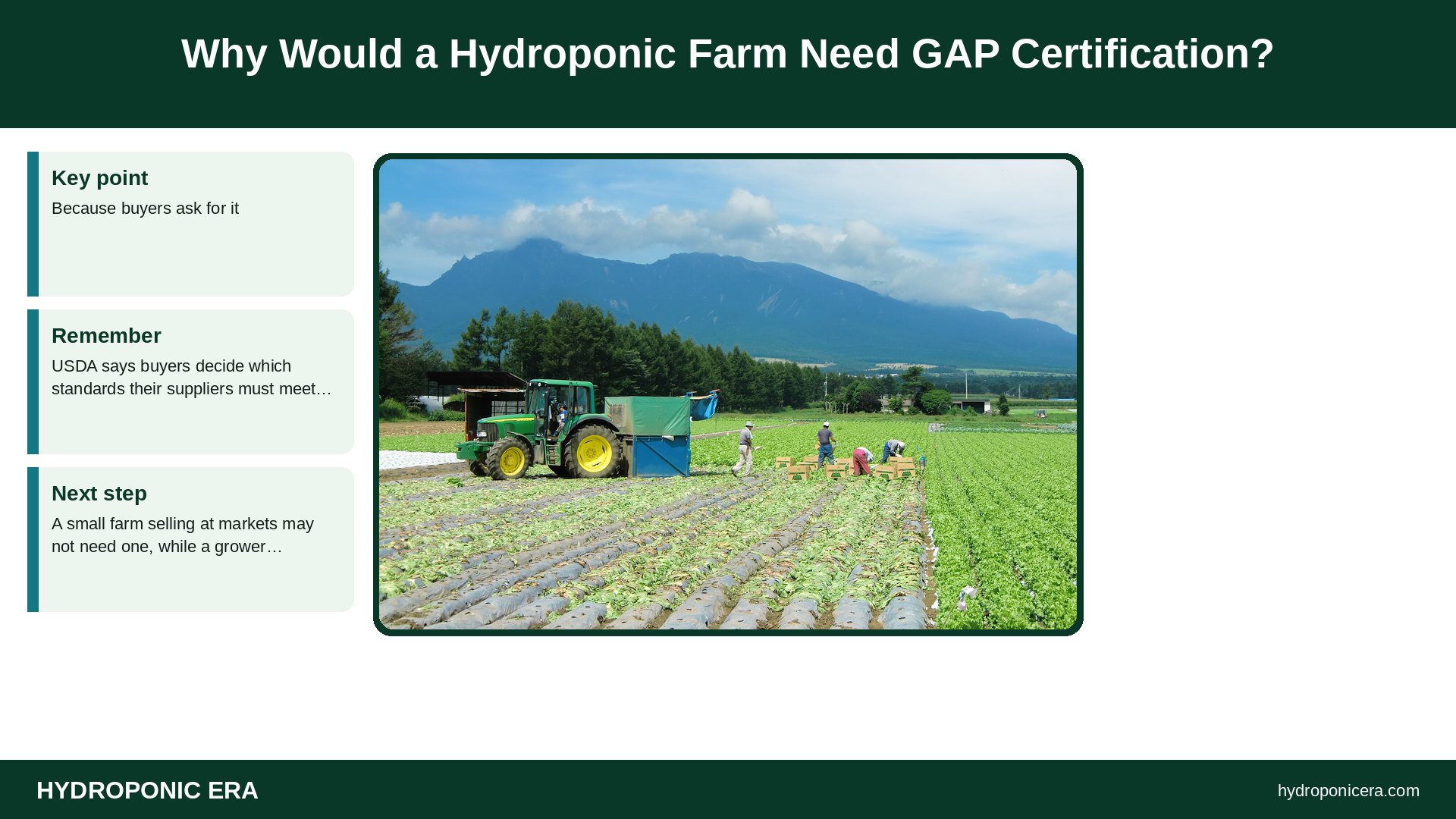
Because buyers ask for it. USDA says buyers decide which standards their suppliers must meet, and most large national and international buyers increasingly require an audit against a GFSI-recognized program. A small farm selling at markets may not need one, while a grower supplying grocery chains usually will.
Weigh this alongside your sales model in our guide to hobby vs commercial hydroponics.
Which GAP Audit Level Should You Choose?
Match the audit to your buyer. USDA describes three tiers: basic USDA GAP; Harmonized GAP, which also aligns with the Produce GAPs Harmonization Initiative and FSMA’s Produce Safety Rule; and Harmonized GAP Plus+, the only USDA GAP audit acknowledged as equivalent to GFSI requirements. Confirm acceptance with your buyer before scheduling.
How Do You Apply for a USDA GAP Audit?
The process is mostly paperwork. USDA AMS lists these steps on its GAP audit page for new applicants. Its local Specialty Crops Inspection Division office then confirms your request, explains procedures and schedules the audit.
- Set up a billing account with the SC-430 Vendor Form.
- Decide which audit your buyers require.
- Complete Request for Audit Service Form SC-237A.
- Complete Agreement for Participation Form SC-651.
- Pick the nearest Specialty Crops Inspection Division office.
- Send both forms to that office by email or fax.
- Wait for the office to confirm and schedule your audit.
How Much Does GAP Certification Cost?
You pay for actual audit time. USDA must fully recover its costs and charges for hours spent reviewing, approving, certifying and posting results. The Federal Register notice for 2026/2027 sets audit services for fresh fruits and vegetables at $175 per hour, federal or state, from October 1, 2026. Harmonized GAP Plus+ adds a $250 annual certification fee.
How Can Small Farms Lower GAP Certification Costs?
Share the work. USDA’s GroupGAP program lets farmers, food hubs and marketing groups of all sizes band together and pool resources to achieve USDA GAP certification. USDA also suggests coordinating audit dates with nearby producers to cut travel costs. Track every expense against your price floor with our wholesale vs retail pricing guide.
How Do You Prepare to Pass a GAP Audit?
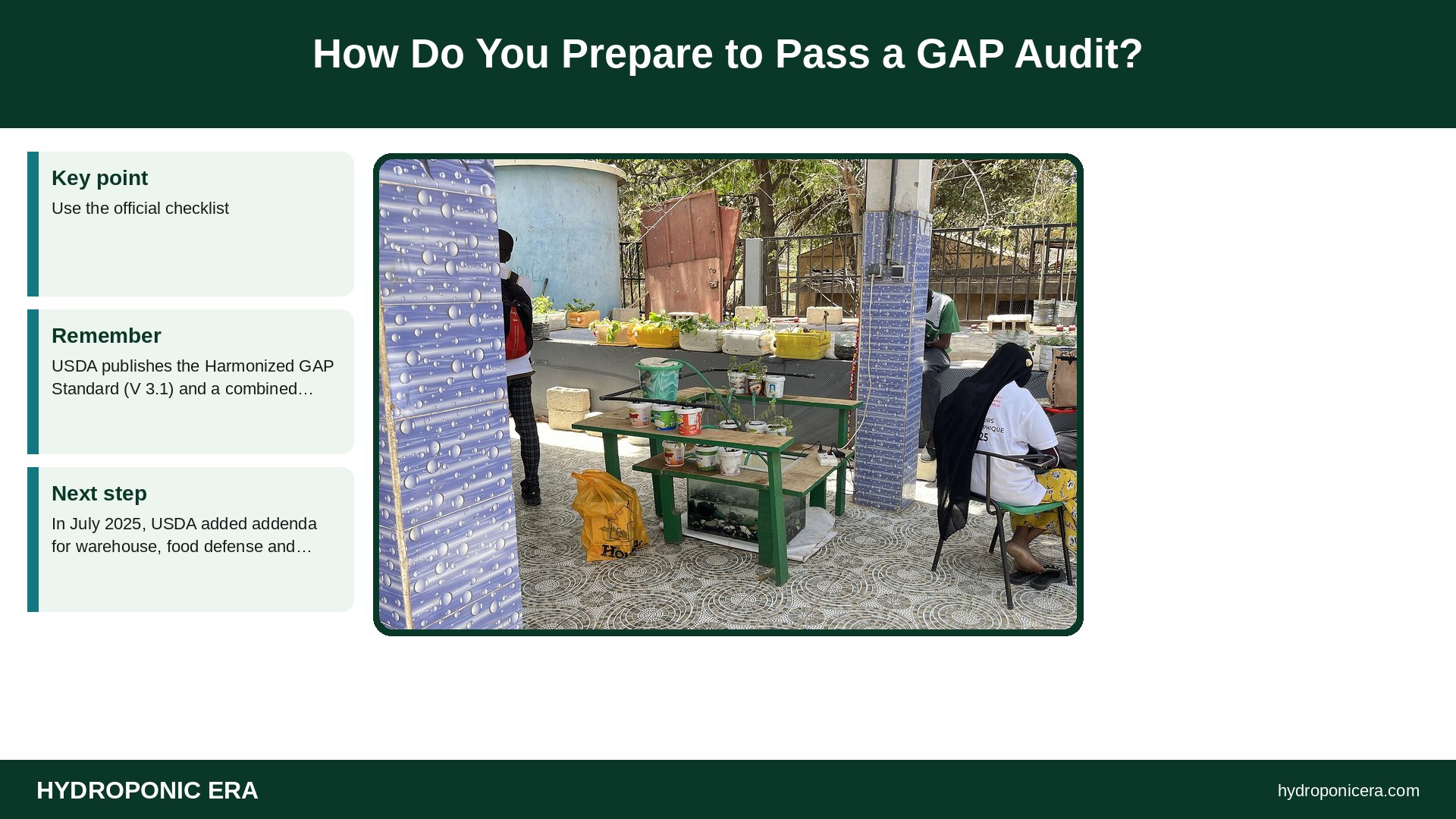
Use the official checklist. USDA publishes the Harmonized GAP Standard (V 3.1) and a combined checklist (V 6.2) as free downloads, so you can self-audit against every item before the auditor arrives. In July 2025, USDA added addenda for warehouse, food defense and integrated pest management to the Harmonized standards.
Our guide to selling produce: liability and food safety questions covers buyer paperwork.
Does GAP Certification Cover Aquaponics?
Yes, there is a path. USDA AMS lists GAPS for Aquaponic Operations among its resources and notes its aquaponics pilot moved to permanent policy. If you raise fish with plants, read our aquaponics food safety guide before your audit.
FAQ About GAP Certification
Is GAP certification required by law?
No, GAP audits are voluntary; buyers often require them.
Who performs USDA GAP audits?
Trained federal and federal-state agriculture employees.
What is GFSI?
An industry network that benchmarks food safety certification programs.
What is the cheapest route for small growers?
GroupGAP, which pools costs across growers.
What does Harmonized GAP Plus+ cost extra?
A $250 annual certification fee.
Sources
- USDA Agricultural Marketing Service — Good Agricultural Practices (GAP) Audits
- USDA AMS — Harmonized GAP
- USDA AMS — Harmonized GAP Plus+ Questions and Answers
- USDA AMS — GroupGAP Food Safety Program
- Federal Register — 2026/2027 Rates Charged for AMS Services
- Photo credits (Wikimedia Commons, edited with titles): Lettuce Closeup Greenhouse Phuktal Zanskar Jun24 A7CR 00442 by This Photo was taken by Timothy A. Gonsalves. Feel free to use my photos, but pl (CC BY-SA 4.0); Lettuce harvest in Nobeyama by On-chan (CC BY-SA 3.0); Ennis – Market Place – Farmers’ Market – Vegetable Stand – geograph.org.uk – 3038450 by Joseph Mischyshyn (CC BY-SA 2.0); AQUAPONIE by Hopeballa (CC BY-SA 4.0)