
Is a microgreens kit worth it? A good microgreens kit is worth it for beginners if it includes untreated seed, shallow trays with and without drainage holes, a clean medium such as coir or a fiber mat, and clear seeding rates. Skip kits with treated seed or no instructions. Most crops in a kit are ready in about 8–12 days.
Key takeaway: A microgreens kit just bundles seed, trays and a growing medium. Utah State and Penn State show you can grow microgreens with simple household items, so a kit mainly saves shopping time. Judge kits by seed quality, tray design, medium and refill cost.
| Microgreens kit part | What to look for | Source |
|---|---|---|
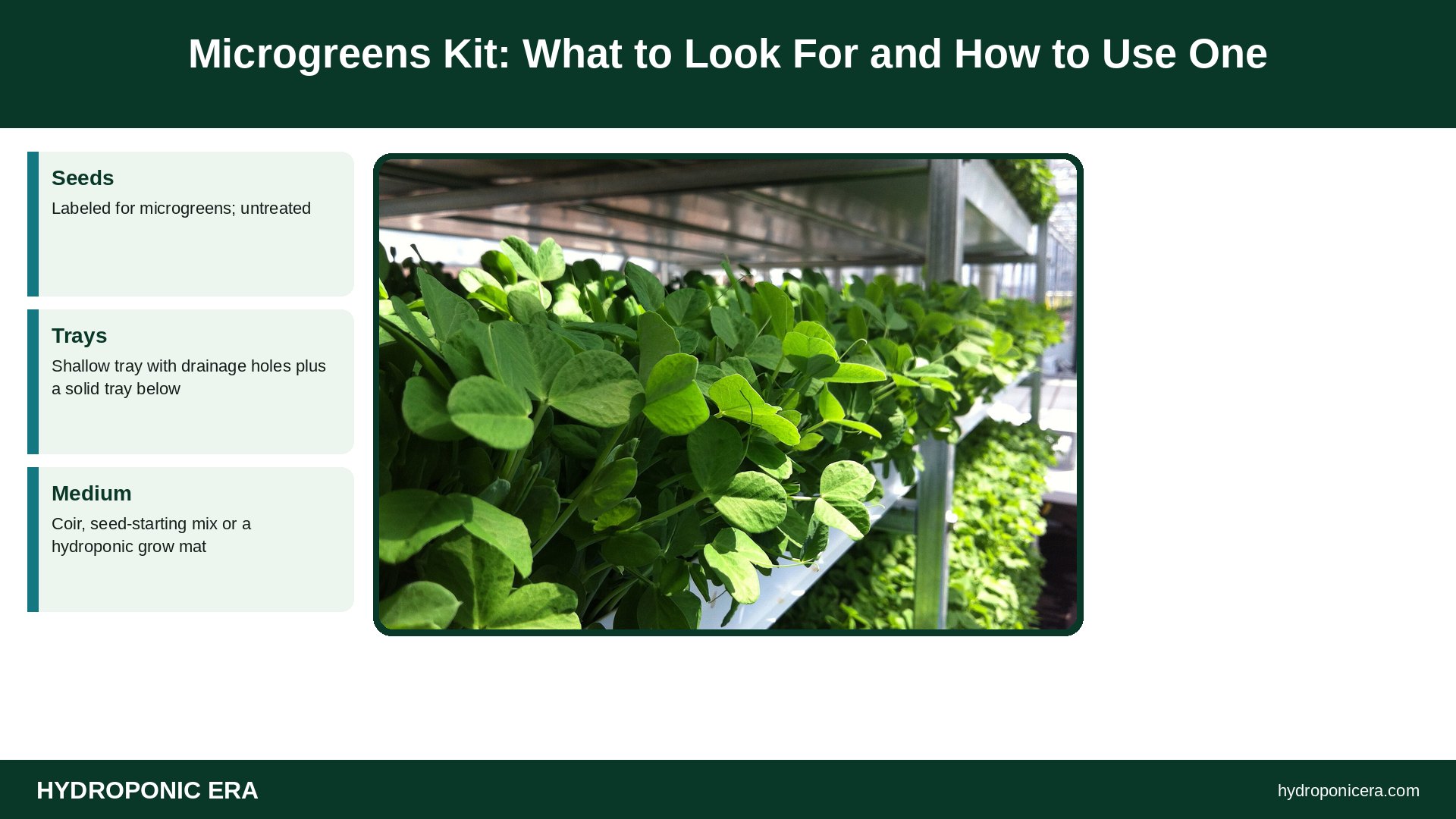
| Seeds | Labeled for microgreens; untreated | Utah State, Virginia Tech |
| Trays | Shallow tray with drainage holes plus a solid tray below | Utah State, Penn State |
| Medium | Coir, seed-starting mix or a hydroponic grow mat | Utah State, Penn State |
| Cover | Second tray or lid for the dark period | Utah State |
| Instructions | Seed amount, soak and dark time per crop | Utah State |
| Extras | Spray bottle, scissors; light optional | Penn State |
What Comes in a Microgreens Kit?
Most microgreens kits include one or more trays, a growing medium, several seed varieties and instructions. Penn State Extension lists the basics you need: seeds, drinking water, a growing medium or mat, trays, a small scale or measuring spoons, a spray bottle, a pitcher and scissors. Some larger kits add a humidity lid, a small grow light or a self-watering base.
How Do You Choose a Good Microgreens Kit?
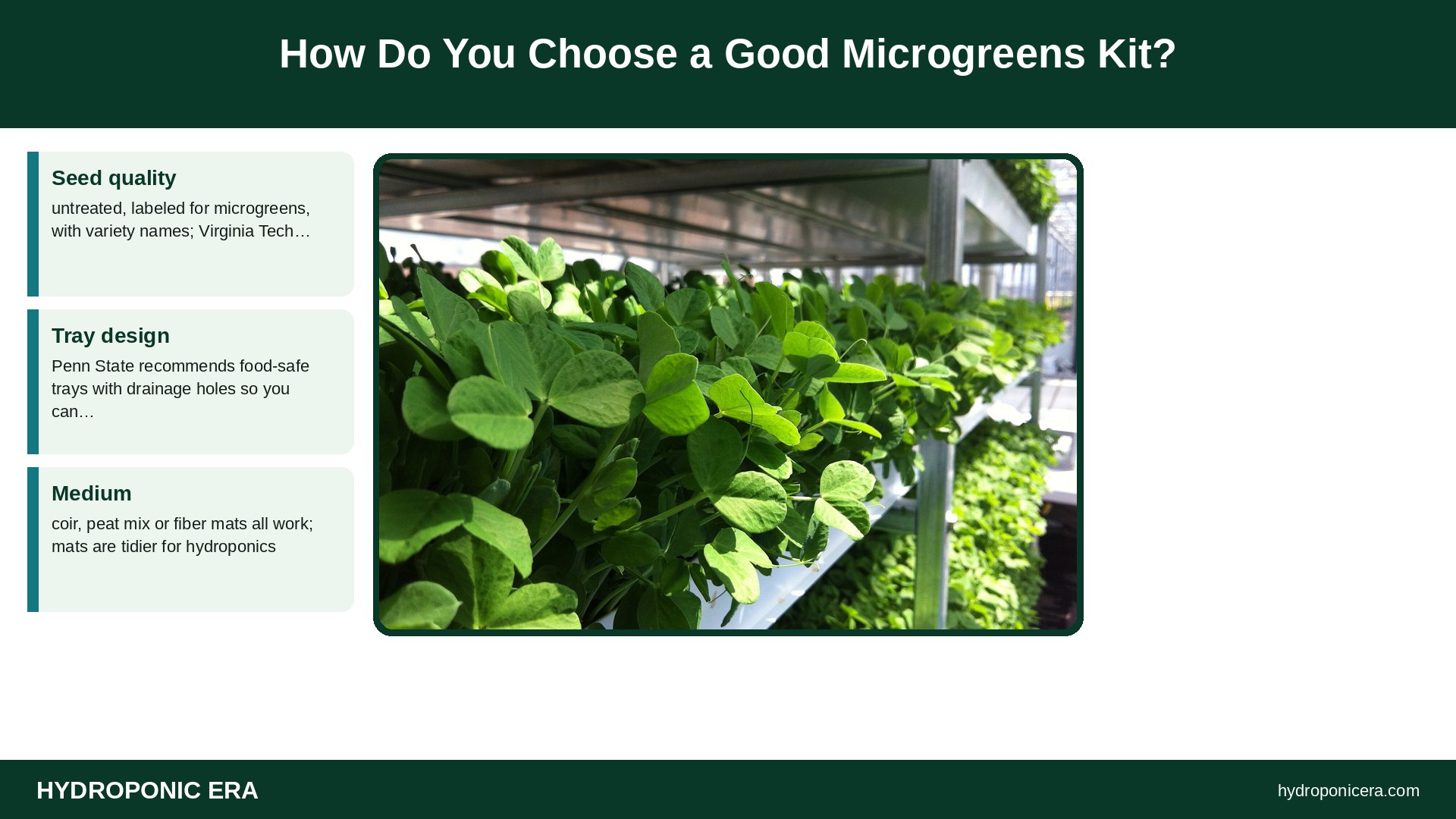
- Seed quality: untreated, labeled for microgreens, with variety names; Virginia Tech Extension warns ordinary garden seed is often pesticide-treated.
- Tray design: Penn State recommends food-safe trays with drainage holes so you can water from below.
- Medium: coir, peat mix or fiber mats all work; mats are tidier for hydroponics.
- Clear seeding rates: grams or spoons per tray for each crop.
- Refills: can you buy seed and mats separately at fair prices?
- Beginner crops: radish, broccoli, kale, arugula, pea or sunflower.
Which Microgreens Are Best in a Starter Kit?
Fast, forgiving crops make the best first kit. Utah State University Extension’s table shows arugula ready in 6–8 days, broccoli, kale and radish in 8–12 days, pea in 8–10 days and sunflower in 9–10 days. Basil takes 12–16 days and cilantro 21–28 days, so they are better saved for a second round.
| Crop | Seed per 1020 tray | Presoak | Harvest |
|---|---|---|---|
| Arugula | 0.35 oz (10 g) | No | 6–8 days |
| Broccoli | 1 oz (28 g) | No | 8–12 days |
| Radish | 1.5 oz (42 g) | No | 8–12 days |
| Pea | 5.3 oz (150 g) | 6 hours | 8–10 days |
| Sunflower | 1.7 oz (48 g) | 12 hours | 9–10 days |
Source: Utah State University Extension, Table 1. Smaller kit trays need proportionally less seed.
How Do You Use a Microgreens Kit Step by Step?
- Wash the trays and your hands.
- Pre-moisten the medium until it feels like a wrung-out sponge (Utah State).
- Soak large seeds such as pea or sunflower if the kit says so.
- Spread seed evenly over the surface; do not bury it.
- Cover and weight with the lid or second tray for the dark period.
- Uncover once roots grip the medium and shoots stand up.
- Give light: a bright window or grow light; Utah State runs 18 hours on.
- Water from below and keep a gentle fan running.
- Harvest with clean scissors once the first true leaves show, or sooner.
Our hydroponic microgreens guide goes deeper on mats and lighting.
Should You Pick a Mat or Soil-Style Microgreens Kit?
Both work. Penn State Extension notes that growers use peat-based mixes, coconut coir and mats made from natural fibers such as hemp or synthetic ones such as rockwool, and that the medium changes how often you water. Mat kits are cleaner indoors and suit hydroponic growers, since you water with plain water or a weak nutrient solution. Coir or peat kits hold more moisture, so they forgive a missed watering, but they are messier and need composting after harvest.
| Kit medium | Pros | Cons |
|---|---|---|
| Hemp or jute mat | Clean, light, compostable | Dries faster; watch moisture |
| Coconut coir | Holds water well; forgiving | Messier; must be rinsed and wetted |
| Peat-based mix | Familiar; good for larger seeds | Can stay wet and grow mold |
Do You Need a Grow Light With a Microgreens Kit?
Not always. Penn State Extension says sunlight through a window is generally enough, and a south-facing window gives the most. If shoots lean hard toward the glass, look pale or stretch, add a light. Utah State notes that in winter, daylight can drop to about 8 hours, so many growers use a simple LED with a timer. See best grow lights for hydroponics.
Microgreens Kit vs DIY Setup: Which Is Cheaper?
A DIY setup usually costs less over time. Penn State notes you can find most items at home or in any household store, and recycled food containers work if they are clean, food-safe and drained. Utah State’s table shows seed costs per tray from under a dollar for arugula to around two dollars for basil when seed is bought in bulk. Kits charge for convenience and branded refills.
| Option | Upfront | Ongoing | Best for |
|---|---|---|---|
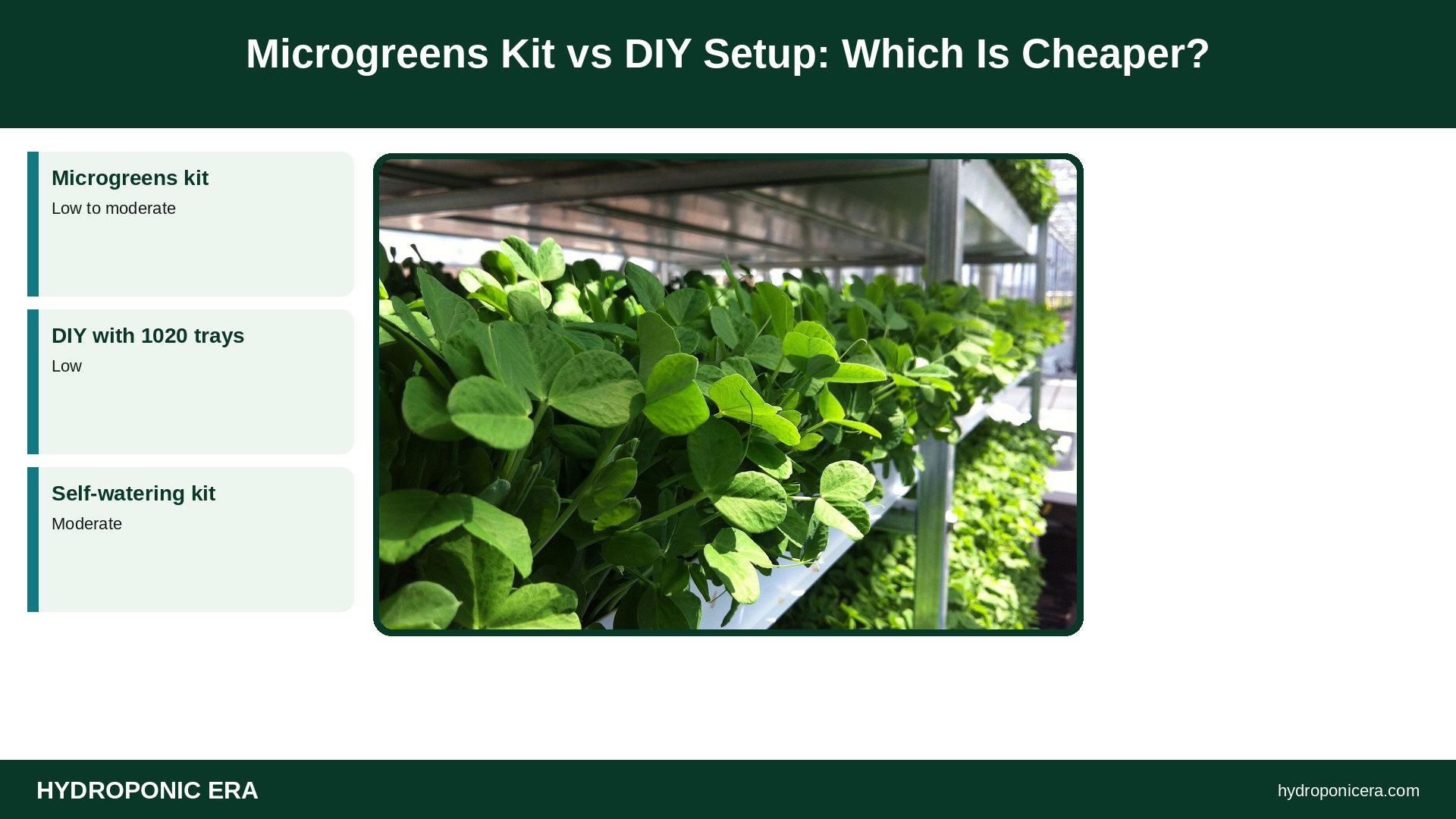
| Microgreens kit | Low to moderate | Higher refill cost | Trying microgreens once |
| DIY with 1020 trays | Low | Lowest with bulk seed | Regular harvests |
| Self-watering kit | Moderate | Mats and seed pods | Hands-off growers |
Why Do Microgreens Kits Fail?
- Mold: overwatering or poor airflow; Penn State advises watering only when needed and allowing drainage.
- Patchy growth: uneven seeding or old seed.
- Leggy, pale shoots: too little light after uncovering.
- Hulls stuck on leaves: no weight during germination.
- Collapsed seedlings: wet, warm media; see our damping-off guide.
How Do You Harvest and Store Kit Microgreens?
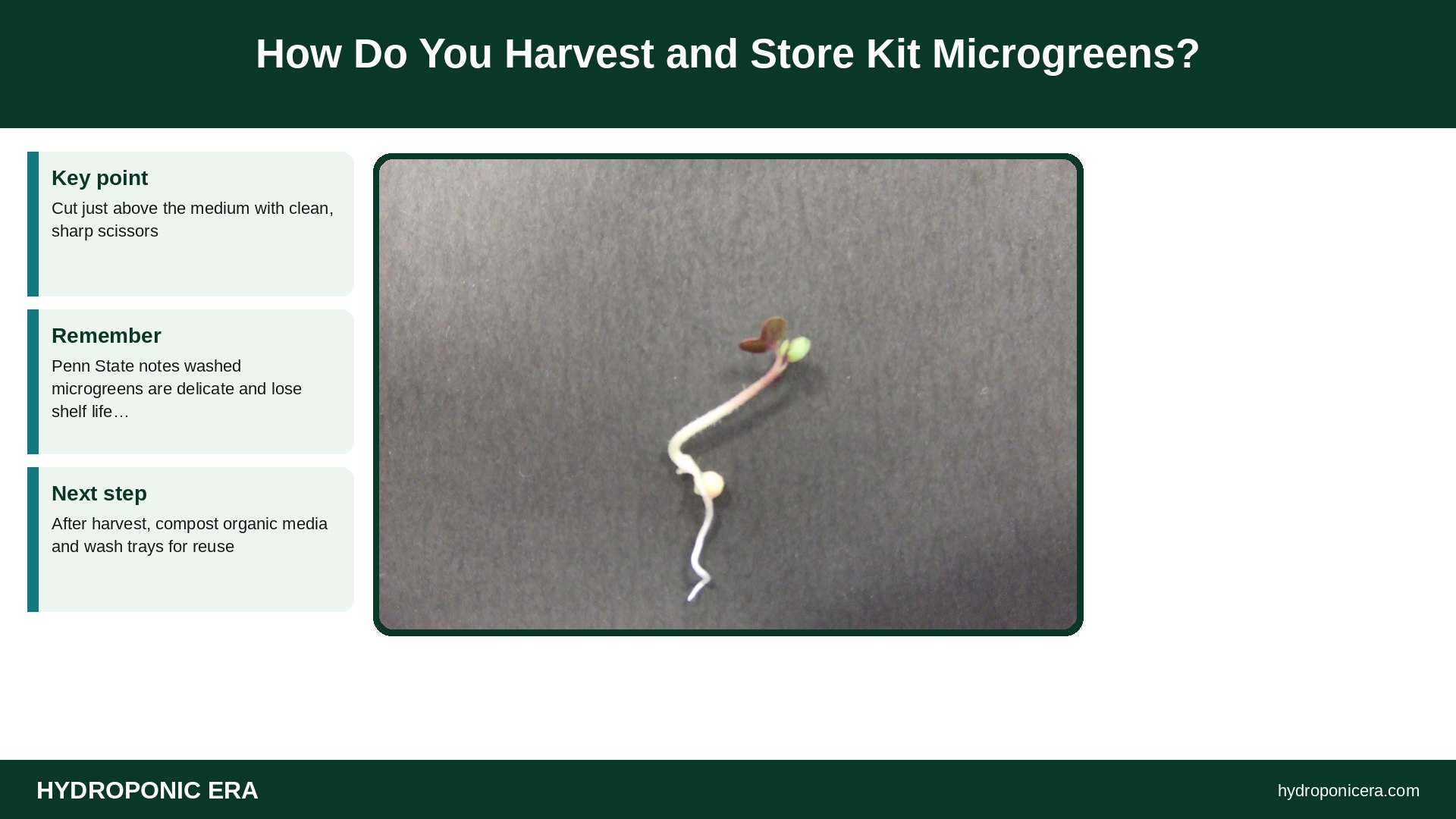
Cut just above the medium with clean, sharp scissors. Penn State notes washed microgreens are delicate and lose shelf life quickly, so you can bag them unwashed in the fridge and wash right before eating. After harvest, compost organic media and wash trays for reuse. Most microgreens do not regrow well, so reseed for the next crop.
FAQs
Can kids use a microgreens kit?
Yes, with adult help for soaking, cutting and cleanup.
How many harvests does a kit give?
It depends on how many seed packs and mats it includes.
Can I reuse kit trays?
Yes. Wash and sanitize between crops.
Do kits need soil?
No. Many use coir or fiber mats with water only.
Where should I keep a microgreens kit?
Somewhere warm, bright and out of drafts, such as a kitchen counter near a window or under a light.
Can I add nutrients?
Usually not needed for a short crop on a mat.
Sources
- Utah State University Extension — Grow Your Own Microgreens
- Penn State Extension — A Step-By-Step Guide for Growing Microgreens at Home
- Virginia Cooperative Extension — Sprouting Seeds for Food
- Photo credits (Wikimedia Commons, edited with titles): Lufa Farms Microgreens in Trays by Lufa Farms (CC BY-SA 2.0); Lufa Farms Microgreens in Trays by Lufa Farms (CC BY-SA 2.0); Lufa Farms Microgreens in Trays by Lufa Farms (CC BY-SA 2.0); Mustard seedling by Tess Watson from Edinburgh, Scotland, UK (CC BY 2.0); Dwarf sunflower seedling by Hildabast (CC0)