
Can you root petunia cuttings in water? Yes. Petunia cuttings in water often root in about two to three weeks. Take a 3–4 in (8–10 cm) non-flowering tip, remove the lower leaves and flower buds, and stand it in clean water in bright, indirect light at about 70°F (21°C). Pot it up once roots reach about 1 in (2.5 cm).
Key takeaway: Many popular trailing petunias, such as Supertunia types, produce few or no seeds and are grown from cuttings, so cuttings are the best way to keep a favorite variety. Commercial growers root them in media under warm, humid conditions, but water rooting works well at home for a few plants.
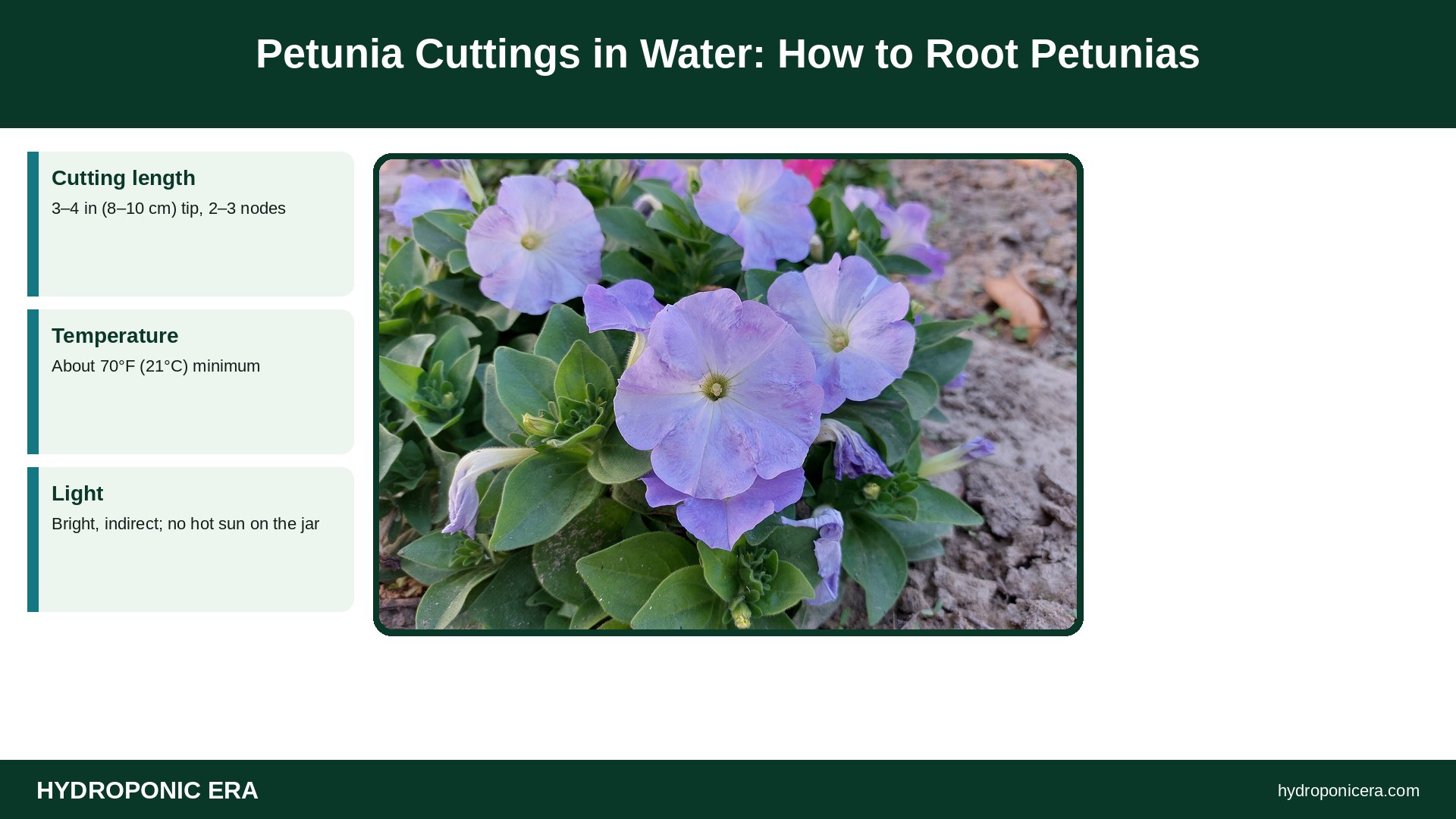
| Factor | Target for petunia cuttings in water |
|---|---|
| Cutting length | 3–4 in (8–10 cm) tip, 2–3 nodes |
| Temperature | About 70°F (21°C) minimum |
| Light | Bright, indirect; no hot sun on the jar |
| Rooting time | About 10 days to 3 weeks |
| When to pot | Roots about 1 in (2.5 cm) |
Why Grow Petunias From Cuttings?
Cuttings make exact copies of the parent, which matters for petunias. A North Carolina Flower Growers’ Bulletin article notes that Supertunia petunias are vegetatively propagated because they produce few if any seeds. Rooting petunia cuttings in water lets you save a favorite color over winter and make free plants for next spring.
- True to type: seed from hybrids may not match the parent.
- Fast: cuttings bloom sooner than seedlings.
- Overwintering: keep a few small plants indoors instead of a big pot.
- Also works for calibrachoa: “million bells” root the same way.
When Is the Best Time to Start Petunia Cuttings in Water?
Take petunia cuttings from late spring through late summer, while plants are actively growing. For overwintering, take them in late summer before the first frost, when stems are still healthy. Choose bright green, non-flowering shoots; flowering stems spend energy on blooms instead of roots.
Avoid stems with aphids, sticky residue or yellow, mottled leaves, since cuttings carry pests and viruses with them. Our guide to quarantining new plants and clones explains how to keep problems out of your indoor setup.
How Do You Root Petunia Cuttings in Water Step by Step?
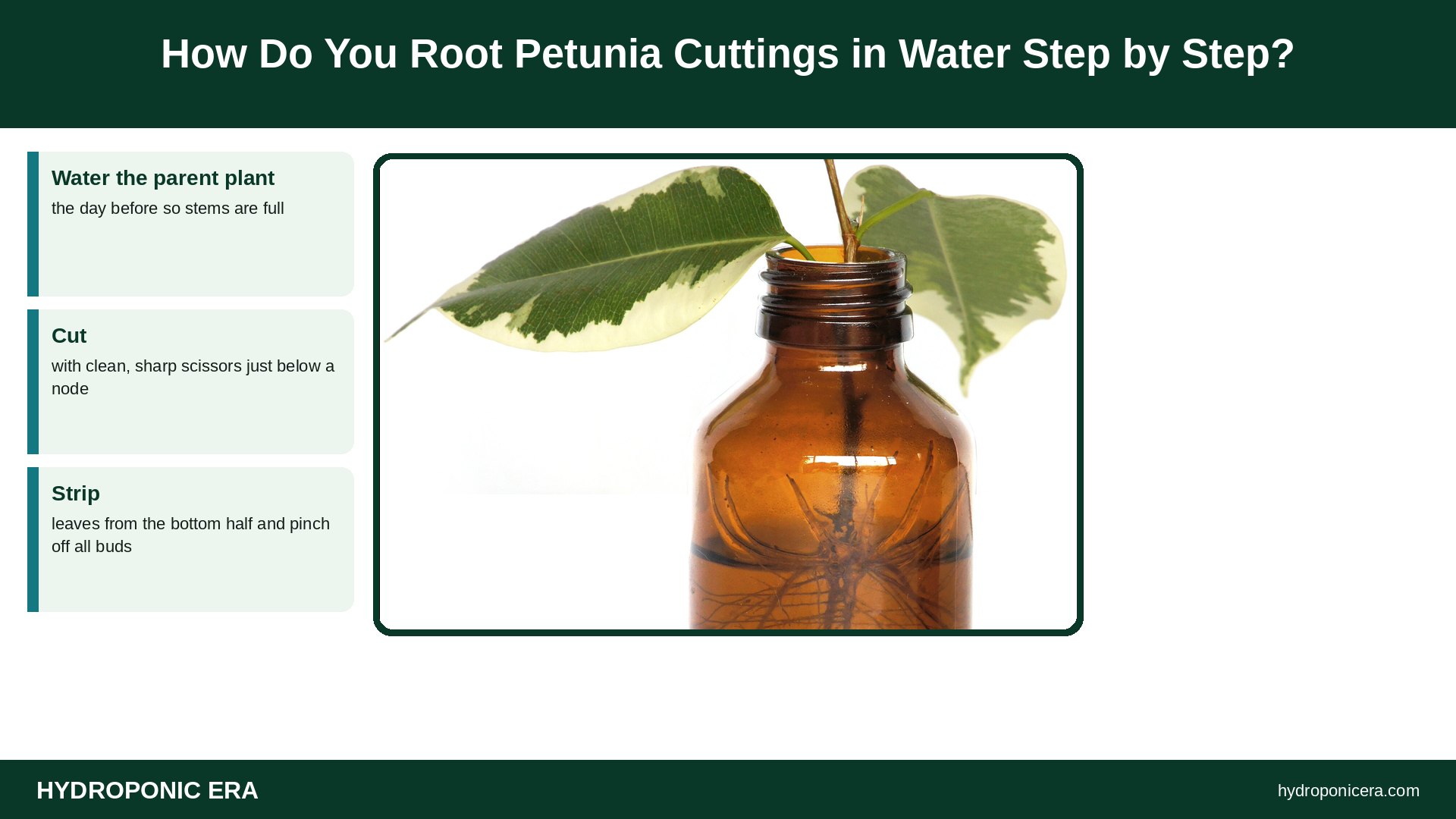
To root petunia cuttings in water, cut a 3–4 in (8–10 cm) tip just below a node, strip the bottom leaves and any buds, and set it in a narrow glass so one or two bare nodes sit under water. Keep the jar warm and in bright, indirect light, and change the water every few days.
- Water the parent plant the day before so stems are full.
- Cut with clean, sharp scissors just below a node.
- Strip leaves from the bottom half and pinch off all buds.
- Fill a jar with room-temperature water; a narrow neck holds stems upright.
- Insert so bare nodes are underwater and no leaves touch the water.
- Place in bright, indirect light at about 70°F (21°C).
- Refresh water every two to three days; petunia stems rot quickly in stale water.
- Pot up when roots reach about 1 in (2.5 cm).
How Long Do Petunia Cuttings Take to Root?
Petunia cuttings in water usually show roots in one to three weeks. The NC Flower Growers’ Bulletin reports that fast-rooting cultivars are ready to transplant in about 10–14 days in commercial propagation, while slow cultivars take about 17–24 days. Home results vary with warmth and light, so expect a similar range.
To speed up petunia cuttings in water, remember the same source recommends rooting at a minimum of 70°F (21°C) with bottom heat. A heat mat under the jar, set low, can help in a cool house. Keep the jar off cold glass windowsills in fall, where nights can drop well below 60°F (16°C).
Should You Root Petunias in Water or Soil?
Both work. Petunia cuttings in water let you watch roots form, but water roots are brittle and must adjust to soil. Rooting directly in moist seed-starting mix or perlite under a humidity dome skips that step. Growers warn against over-misting, which slows rooting and invites Botrytis gray mold and bacterial disease.
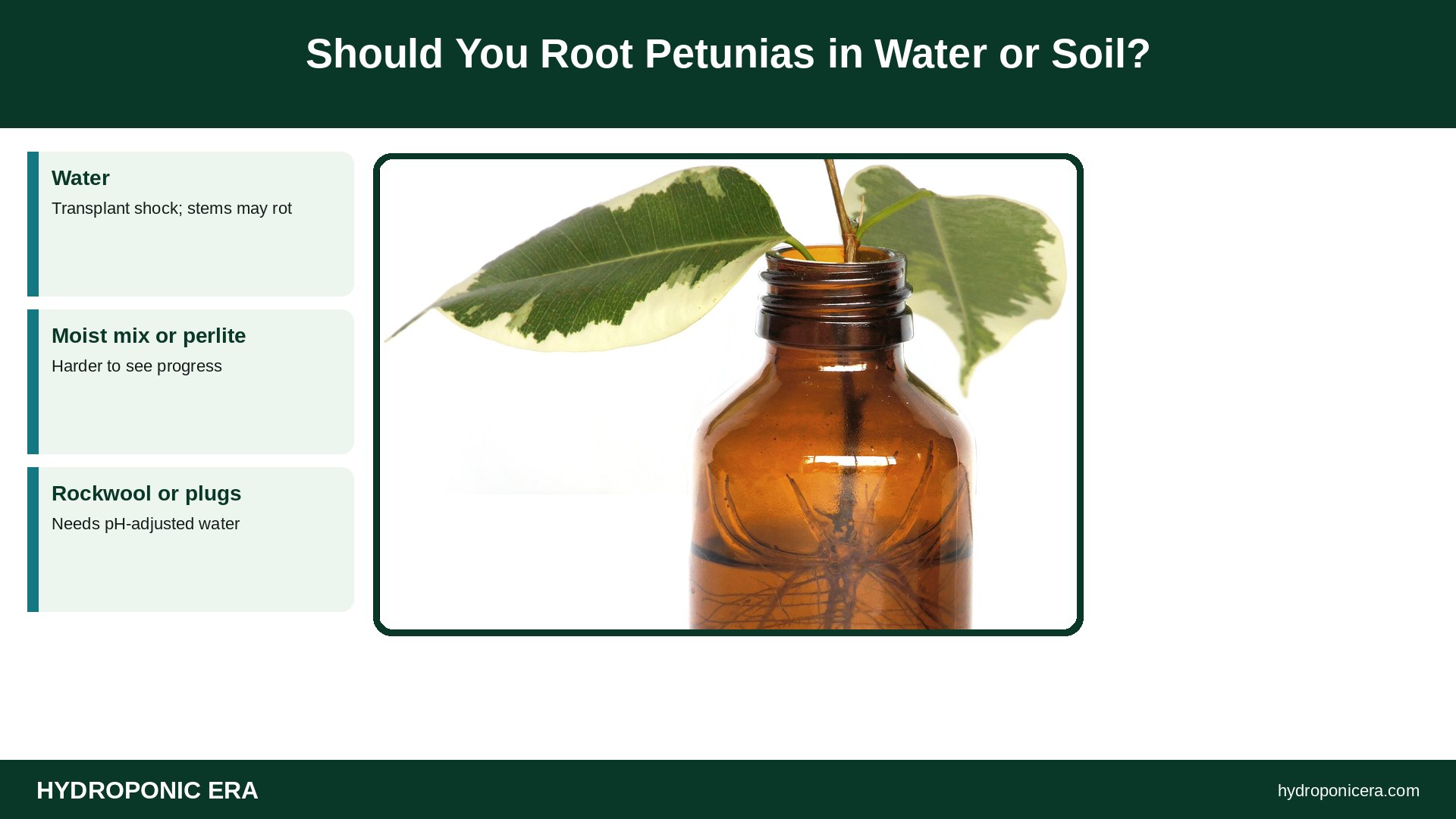
| Method | Pros | Cons |
|---|---|---|
| Water | Easy, visible roots | Transplant shock; stems may rot |
| Moist mix or perlite | Stronger roots, no extra transplant | Harder to see progress |
| Rockwool or plugs | Clean, good for hydroponics | Needs pH-adjusted water |
For media methods see our perlite guide and humidity dome guide.
Why Are My Petunia Cuttings Wilting or Rotting?
Petunia cuttings in water wilt when they lose water faster than they absorb it, usually from heat, sun or too many leaves. They rot when water is warm and stale or the stem is damaged. Trim leaves, move the jar out of sun, change water often, and recut any soft, brown stem above the damage.
- Wilting on day one: normal; most recover overnight in a cool spot.
- Slimy brown stem: rot; recut and use a clean jar.
- Gray fuzzy mold: Botrytis; remove affected leaves and add airflow.
- Yellow leaves after potting: petunias need plenty of iron; the NC bulletin notes their high iron requirement.
How Do You Care for Petunia Cuttings in Water After Rooting?
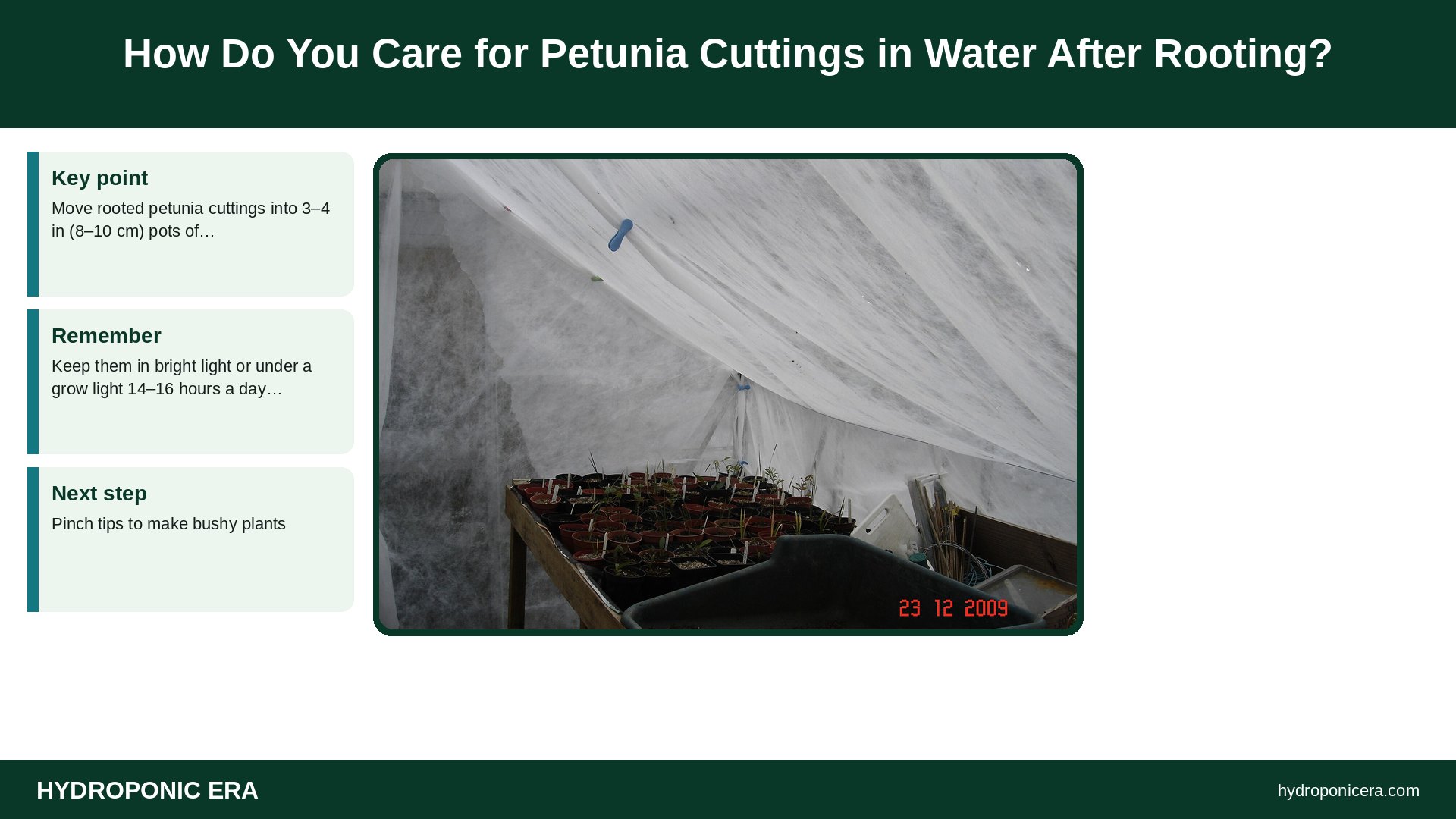
Move rooted petunia cuttings into 3–4 in (8–10 cm) pots of well-drained potting mix. Keep them in bright light or under a grow light 14–16 hours a day, water when the top feels dry, and start a balanced fertilizer at half strength once new leaves appear. Pinch tips to make bushy plants.
Petunias like slightly acidic conditions; the NC bulletin advises keeping substrate pH around 5.5–6.0. If leaves turn pale yellow with green veins, see our pH control guide.
FAQ About Petunia Cuttings in Water
Can I overwinter petunias from cuttings?
Yes. Root cuttings in late summer and grow them indoors in bright light until spring.
Do petunia cuttings need rooting hormone?
Not usually. Some commercial growers use it on slow cultivars.
Can wave petunias be grown from cuttings?
Wave petunias are usually sold as seed, but cuttings root too. Patented varieties may not be propagated for sale, so check the tag.
Can I root calibrachoa the same way?
Yes. Calibrachoa cuttings are handled much like petunias.
How many cuttings should I start?
Start a few extra, since some may rot.
Sources
- N.C. State University, NC Flower Growers’ Bulletin — Success with Vegetative Petunias and Calibrachoa
- University of Vermont Extension — More, Please: Propagating Houseplants
- N.C. State Extension — Plant Propagation by Stem Cuttings
- University of Minnesota Extension — Calibrachoa
- Photo credits (Wikimedia Commons, edited with titles): Petunia flowers in BD by Anik Sarker (CC BY-SA 4.0); Ficus cuttings with roots in a bottle, White background by Biusch (CC BY-SA 3.0); Ficus cuttings with roots in a bottle, White background by Biusch (CC BY-SA 3.0); Fleece lined greenhouse potting tray and seed pots – Flickr – peganum by peganum from Small Dole, England (CC BY-SA 2.0)