
Are water beads good for plants? Water beads for plants work as a short-term decorative medium for cut stems or hardy cuttings, but they are a poor long-term growing medium. They hold water but give roots little air and no nutrients. They are also a serious swallowing hazard for young children, so keep them out of homes with kids.
Key takeaway: If you use water beads for plants, choose plants that tolerate wet roots, change and rinse the beads often, feed lightly, and keep everything far from children and pets. For real growth, clay pebbles or perlite are better choices.
| Question | Short answer |
|---|---|
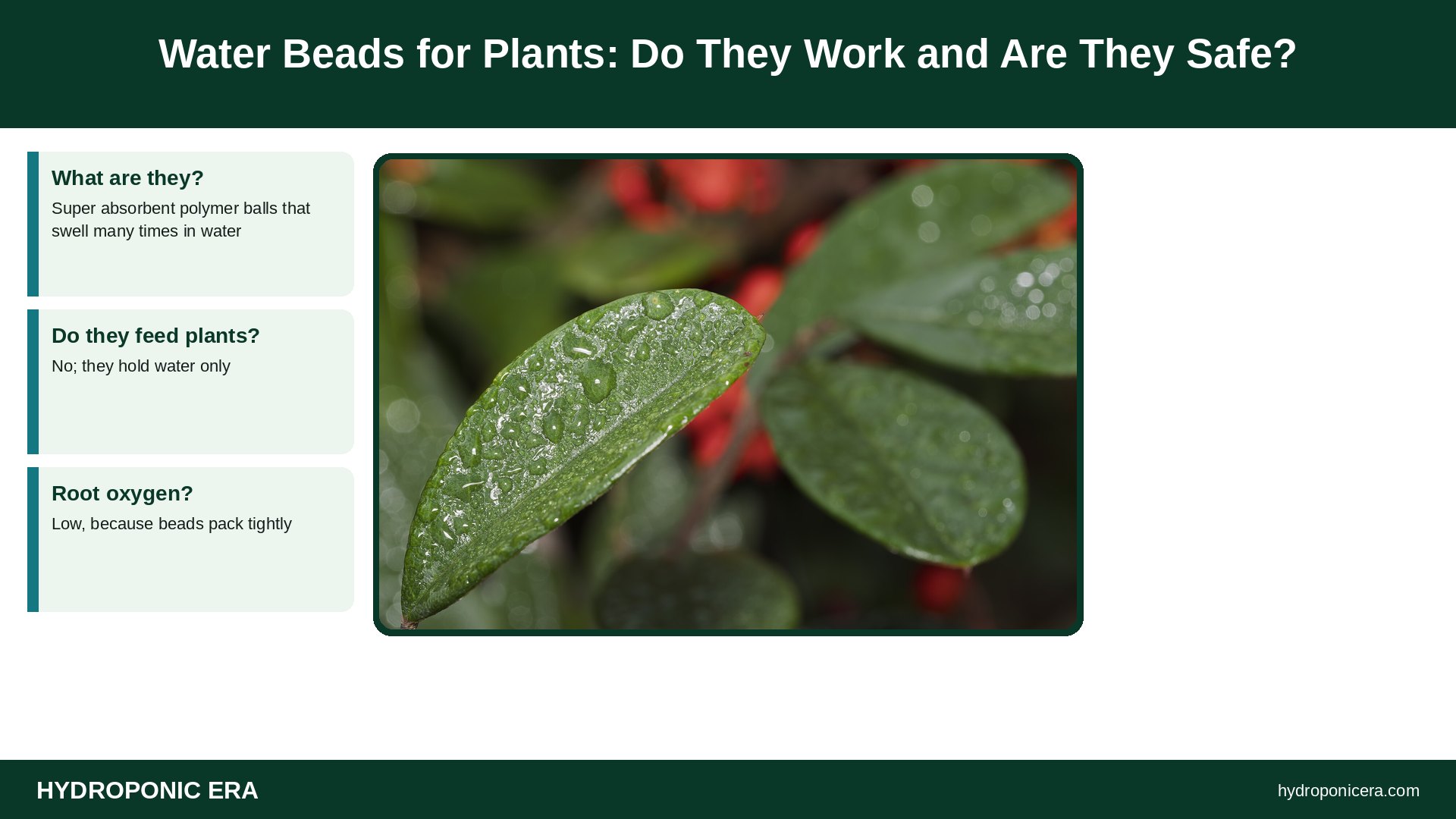
| What are they? | Super absorbent polymer balls that swell many times in water |
| Do they feed plants? | No; they hold water only |
| Root oxygen? | Low, because beads pack tightly |
| Best use | Short-term displays of cuttings, lucky bamboo, cut flowers |
| Main risk | Swallowing by children; beads keep growing inside the body |
What Are Water Beads for Plants?
Water beads for plants are small balls of super absorbent polymer, often polyacrylamide or polyacrylate. The U.S. Consumer Product Safety Commission says they can grow up to 100 times their original size in water. They are sold as vase fillers, “soil-free” plant gel and kids’ sensory toys.
A related product, hydrogel crystals mixed into potting soil, has been used by nurseries to reduce transplant stress. Washington State University horticulturist Linda Chalker-Scott notes these gels break down within about five years, faster with fertilizer salts, so any benefit is temporary.
Are Water Beads for Plants Safe for Kids and Pets?
No, not around young children. The CPSC warns that water beads look like candy, can be deadly if swallowed, and keep growing inside the body, causing blockages that may need surgery. A federal safety standard for water bead toys took effect March 12, 2026, but plant and vase beads may fall outside it.
- Keep beads away from any home or classroom with children age 3 and under.
- Store dry beads in a sealed container out of reach.
- Clean spills right away; dry beads are pinhead-sized and roll.
- Emergency: call Poison Help at 800-222-1222 and seek care if a child may have swallowed one.
- Pets: dogs and cats can also swallow beads; call your vet promptly.
Can Plants Grow Long-Term in Water Beads?
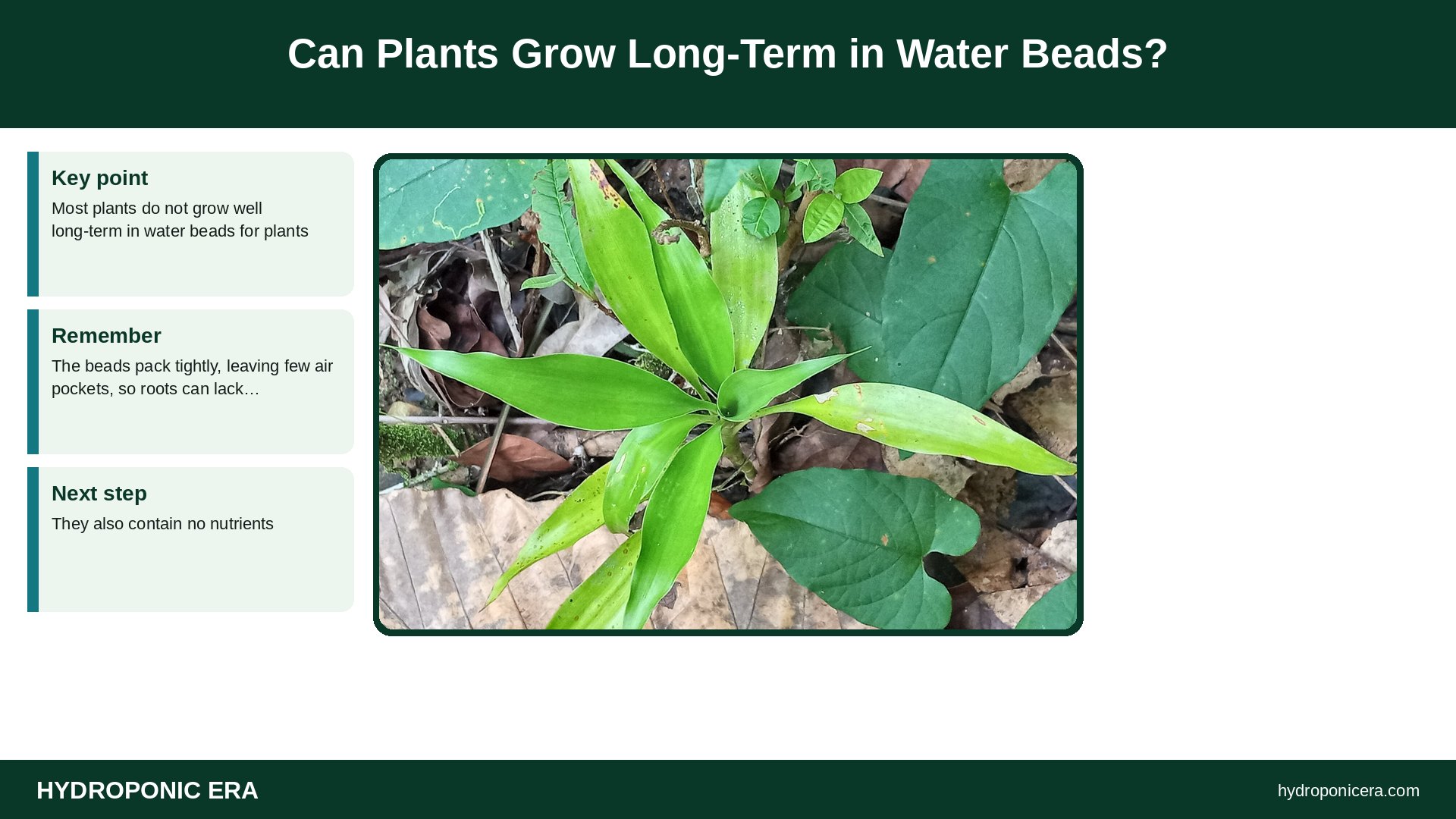
Most plants do not grow well long-term in water beads for plants. The beads pack tightly, leaving few air pockets, so roots can lack oxygen and may rot. They also contain no nutrients. Some tough water-tolerant plants survive for months, but growth usually slows compared with soil or a true hydroponic medium.
Roots need both water and air. Our dissolved oxygen guide explains why oxygen at the root zone matters so much in water-based growing.
Which Plants Can Go in Water Beads?
Choose plants that already handle wet roots. Lucky bamboo, pothos, philodendron, spider plant cuttings and many cut flowers are the most forgiving in water beads for plants. Avoid succulents, cacti, herbs you plan to eat and anything prone to root rot, such as most flowering annuals.
| Good short-term choices | Poor choices |
|---|---|
| Lucky bamboo (Dracaena sanderiana) | Succulents and cacti |
| Pothos and philodendron cuttings | Edible herbs and greens |
| Spider plant offsets | Orchids |
| Cut flowers in a vase | Plants with soil still on the roots |
See our guides to lucky bamboo in water and pothos in water for simpler setups.
How Do You Use Water Beads for Plants Safely?
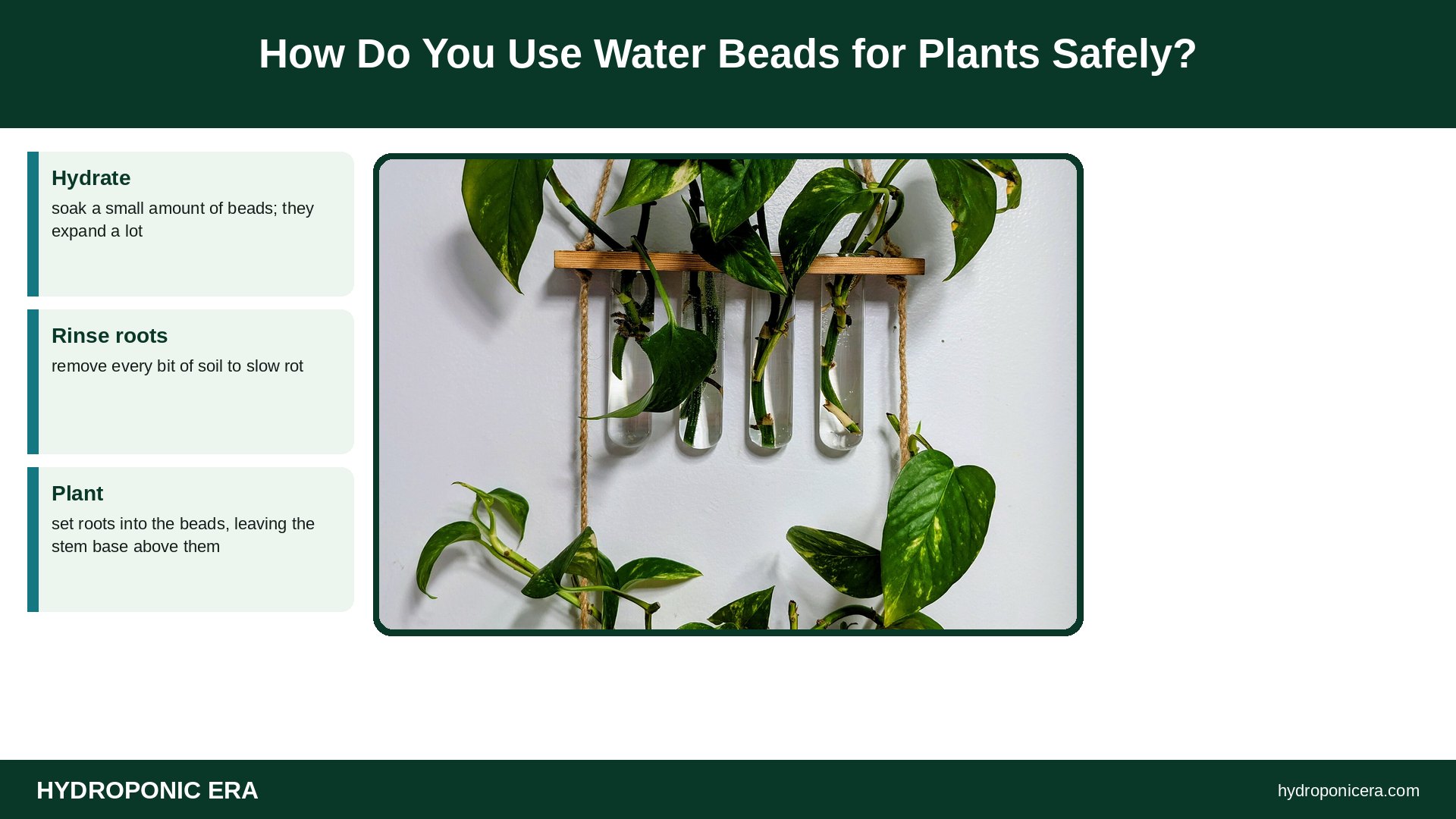
To use water beads for plants, hydrate them in distilled or filtered water for several hours, rinse them, and fill a clear vase. Wash all soil off the roots, nestle the plant in, and keep a small layer of water at the bottom. Rinse the beads every week or two and replace them if they smell or cloud.
- Hydrate: soak a small amount of beads; they expand a lot.
- Rinse roots: remove every bit of soil to slow rot.
- Plant: set roots into the beads, leaving the stem base above them.
- Add water: keep about 1 in (2.5 cm) at the bottom.
- Feed lightly: add a quarter-strength liquid fertilizer once a month.
- Clean: rinse beads in a strainer every one to two weeks.
- Dispose: bag used beads in the trash; never pour them down drains.
Why Are Plants in Water Beads Rotting?
Rot in water beads for plants usually comes from low oxygen, old beads and leftover soil on the roots. Brown, mushy roots and a sour smell are signs. Remove the plant, trim soft roots, wash the vase, use fresh beads or switch to plain water or clay pebbles, and keep the vase out of direct sun.
- Cloudy or smelly beads: bacteria growth; replace them.
- Green film: algae from light; move to indirect light.
- Yellow leaves: often low nutrients or root damage.
- Fungus gnats: moist surfaces attract them; let the top dry slightly.
How Long Can Plants Stay in Water Beads?
Treat water beads for plants as a display that lasts weeks to a few months, not years. Cuttings of pothos or lucky bamboo can stay green for a while, but roots formed in beads are weak in soil. Plan to move plants into soil, clay pebbles or a proper Kratky jar once you see slow growth or pale leaves.
- Weeks 1–4: cuttings settle; watch for any soft stems.
- Months 1–3: rinse beads and feed lightly; check roots for brown tips.
- After that: repot into a medium with air spaces for steady growth.
What Are Better Alternatives to Water Beads?
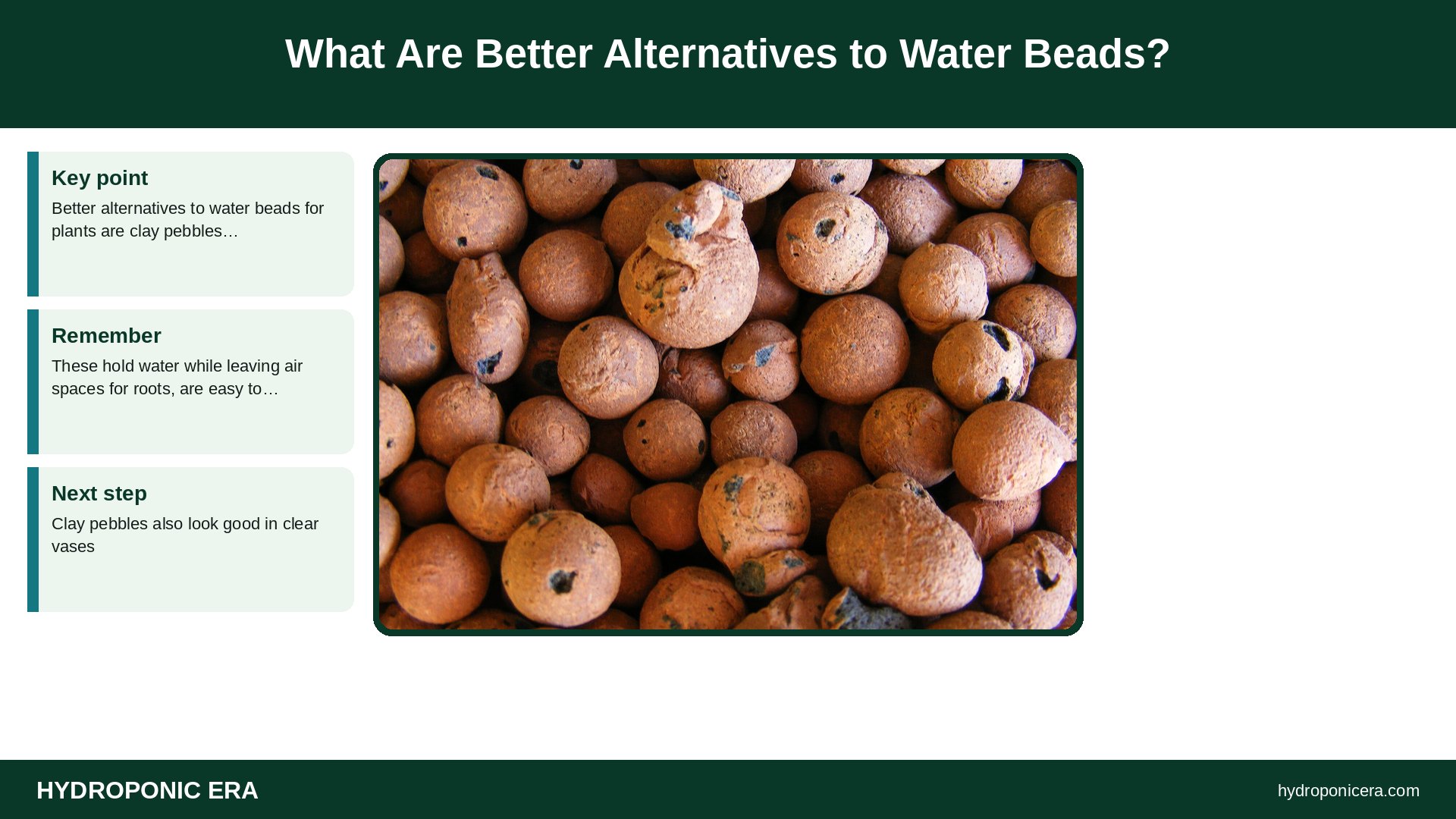
Better alternatives to water beads for plants are clay pebbles (LECA), perlite, pumice or plain water in a dark jar. These hold water while leaving air spaces for roots, are easy to rinse and reuse, and don’t carry the same choking hazard. Clay pebbles also look good in clear vases.
Compare options in our clay pebbles guide and growing media guide.
FAQ About Water Beads for Plants
Do water beads provide nutrients?
No. Add a weak fertilizer if plants stay in beads more than a few weeks.
Can I reuse water beads?
You can rinse and reuse clean beads for a short time, but replace them if they smell or break.
Are water beads the same as hydrogel soil crystals?
They are similar polymers. Soil crystals are mixed into potting soil instead of used alone.
Can water beads go in a fish tank?
No. They can harm fish and filters.
Are biodegradable water beads safer?
Any bead that swells can still be a hazard if swallowed. Keep them away from kids.
Sources
- U.S. Consumer Product Safety Commission — Water Beads Information Center
- U.S. Consumer Product Safety Commission — New Federal Water Beads Safety Standard Takes Effect (2026)
- Washington State University (Chalker-Scott) — The Myth of Polyacrylamide Hydrogels
- Photo credits (Wikimedia Commons, edited with titles): Water droplets on a late cotoneaster (Cotoneaster coriaceus) leaf, Jardim da Fundação Calouste Gulbenkian, Lisbon, Portugal julesvernex2 by Jules Verne Times Two (CC BY-SA 4.0); Dracaena sanderiana 132158060 by Beah Vega (CC BY 4.0); Pothos plant on water by Joli Rumi (CC BY-SA 4.0); Hydroton by Lucis (CC BY-SA 3.0)