
What is a propagation box? A propagation box is a clear, lidded container that holds high humidity around unrooted cuttings so they don’t dry out before roots form. Fill it with damp perlite or a 50:50 perlite–peat or coir mix, keep air near 65–75°F (18–24°C), give bright indirect light, and vent it every few days.
Key takeaway: Cuttings have no roots, so they cannot replace water lost through their leaves. A propagation box slows that loss. Get humidity, warmth, light, a clean airy medium and a little ventilation right, and most soft houseplant and herb cuttings root in a few weeks.
| Propagation box factor | Target | Source |
|---|---|---|
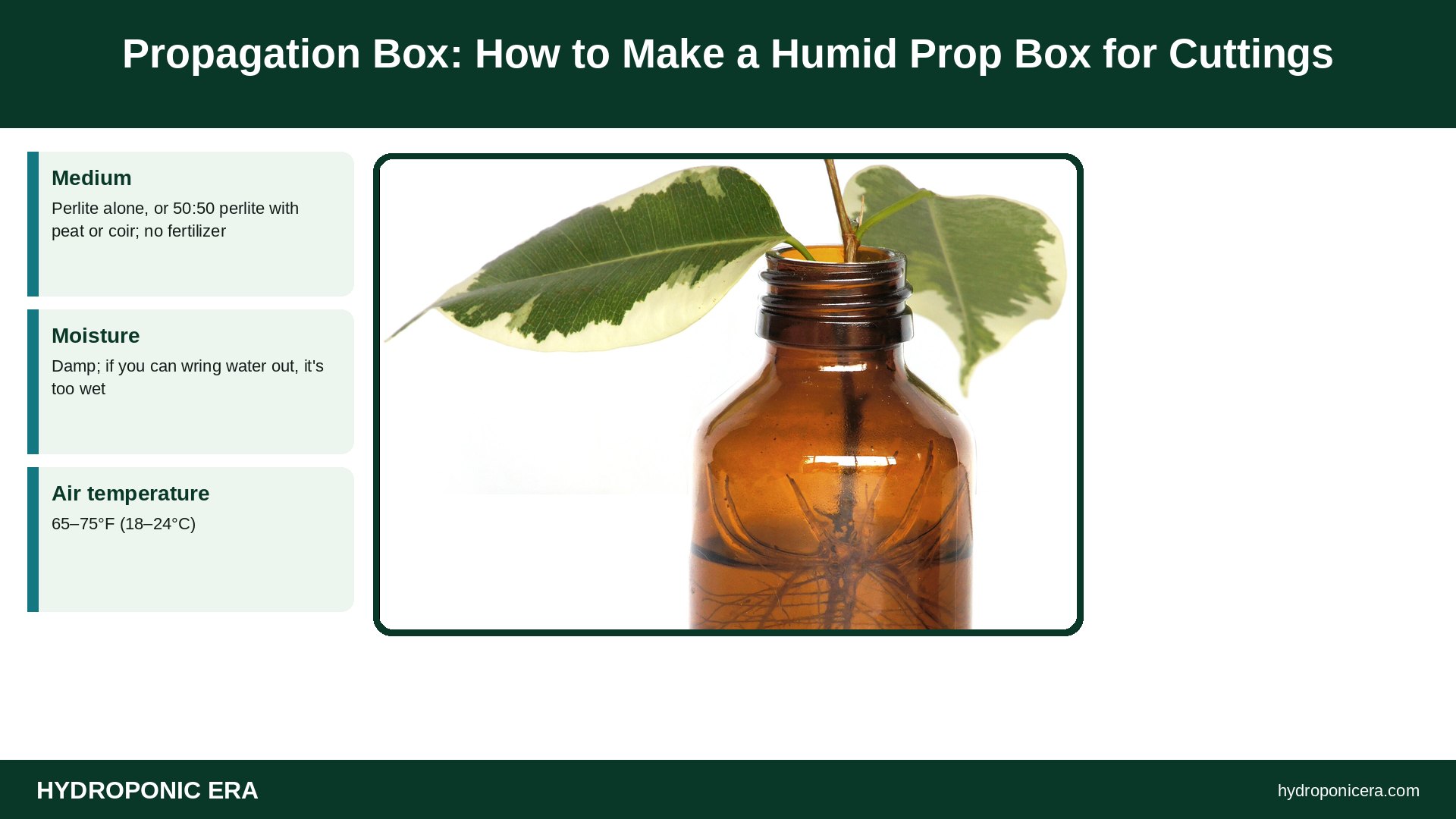
| Medium | Perlite alone, or 50:50 perlite with peat or coir; no fertilizer | NC State (Buncombe), Virginia Tech |
| Moisture | Damp; if you can wring water out, it’s too wet | NC State (Buncombe) |
| Air temperature | 65–75°F (18–24°C) | Iowa State |
| Medium temperature | 75–80°F (24–27°C) with a heat mat | Iowa State |
| Light | 4–6 hours bright indirect; no direct sun | Iowa State, Virginia Tech |
| Humidity sign | Condensation on the lid or sides | NC State (Buncombe) |
Why Do Cuttings Need a Propagation Box?
Virginia Tech Extension explains that a cutting must rely on its limited water reserves until roots form, because the cut surface cannot absorb water well; only roots and root hairs do that efficiently. High humidity around the leaves cuts water loss, buying time for roots. A propagation box does that cheaply, much like the mist beds nurseries use. NC State’s Buncombe County handout puts it simply: cuttings aren’t transpiring much and have no roots, so you only maintain humidity.
What Can You Use as a Propagation Box?
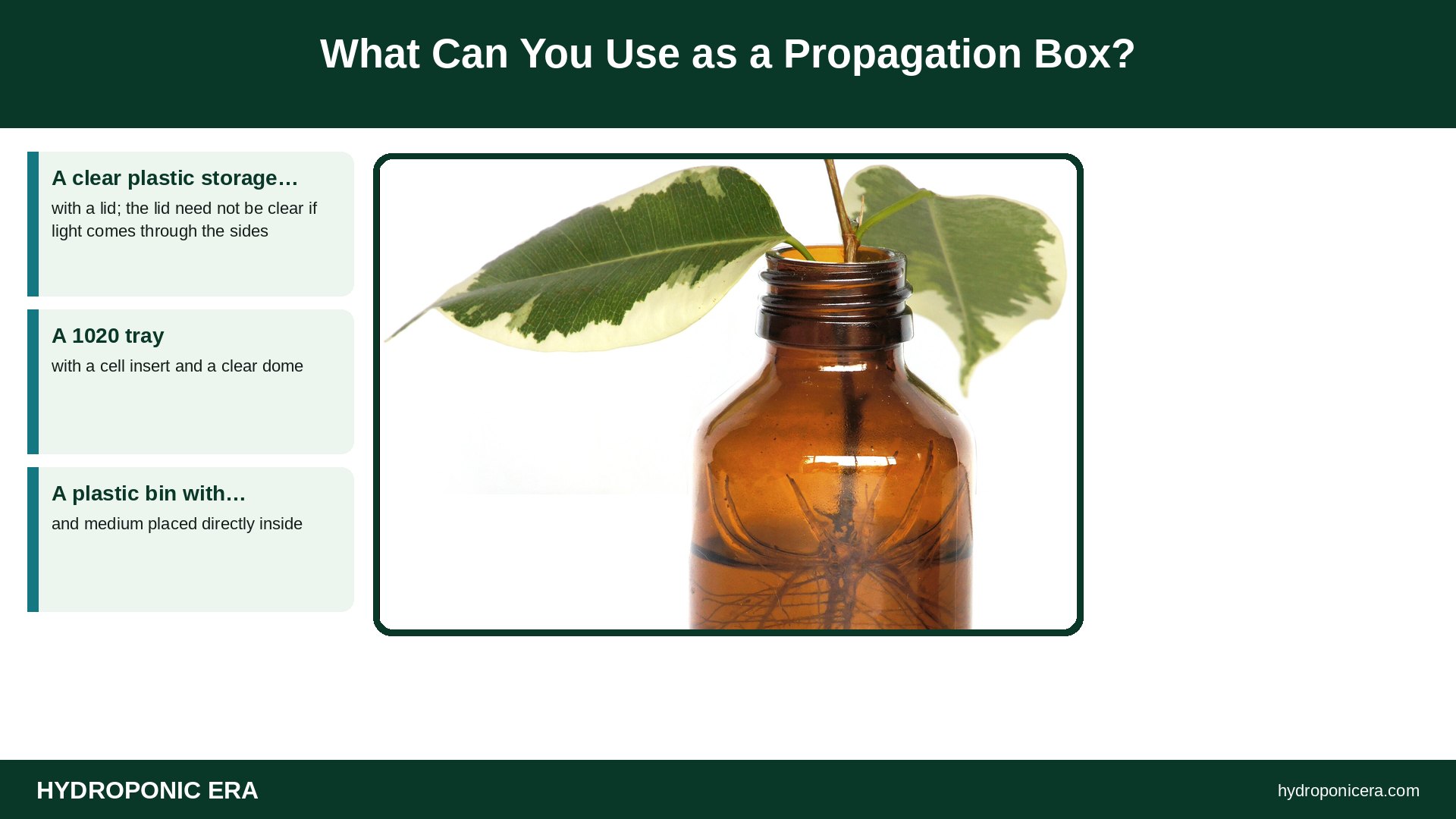
Nearly any clear, food-safe container works. NC State’s Buncombe County Extension handout lists several rooting chambers:
- A clear plastic storage bin with a lid; the lid need not be clear if light comes through the sides.
- A 1020 tray with a cell insert and a clear dome.
- A plastic bin with drainage holes and medium placed directly inside.
- Clear cups capped with a second cup, or a 1-liter bottle with the bottom cut off for tall cuttings.
For a dedicated setup, see our humidity dome and tent guide.
How Do You Make a Propagation Box Step by Step?
- Clean the container with soap and water, then a dilute bleach rinse, and rinse again.
- Add drainage holes if you will put medium directly in the bin.
- Prepare the medium: soak peat or coir, then mix with dry perlite 50:50, as the Buncombe handout suggests. It should feel damp, not dripping.
- Fill 2–3 inches (5–8 cm) deep, or use small pots or cells inside the box.
- Take cuttings with clean, sharp tools, usually 3–6 inches (8–15 cm) with a node or two below the medium.
- Dip in rooting hormone for slower species, then stick cuttings in pre-made holes.
- Close the lid and place in bright indirect light.
- Add a heat mat under the box if the room is cool.
- Vent briefly every day or two and check for mold.
What Medium Is Best for a Propagation Box?
| Medium | Pros | Watch out for |
|---|---|---|
| Perlite alone | Airy; low rot risk | Dries faster; dusty when dry |
| Perlite + peat 50:50 | Good aeration and moisture | Peat must be fully wetted |
| Perlite + coir 50:50 | Similar to peat mix | Buy a reputable, rinsed coir |
| Coarse sand | Cheap; drains well | Heavy; use builder’s sand, not play sand |
| Sphagnum moss | Holds moisture well | Can stay too wet |
Virginia Tech Extension stresses that rooting media should be clean, porous and low in fertilizer, because excess fertility can damage new roots. Hydroponic growers can also use rockwool or foam plugs; see Oasis cubes for propagation.
How Much Light and Heat Does a Propagation Box Need?
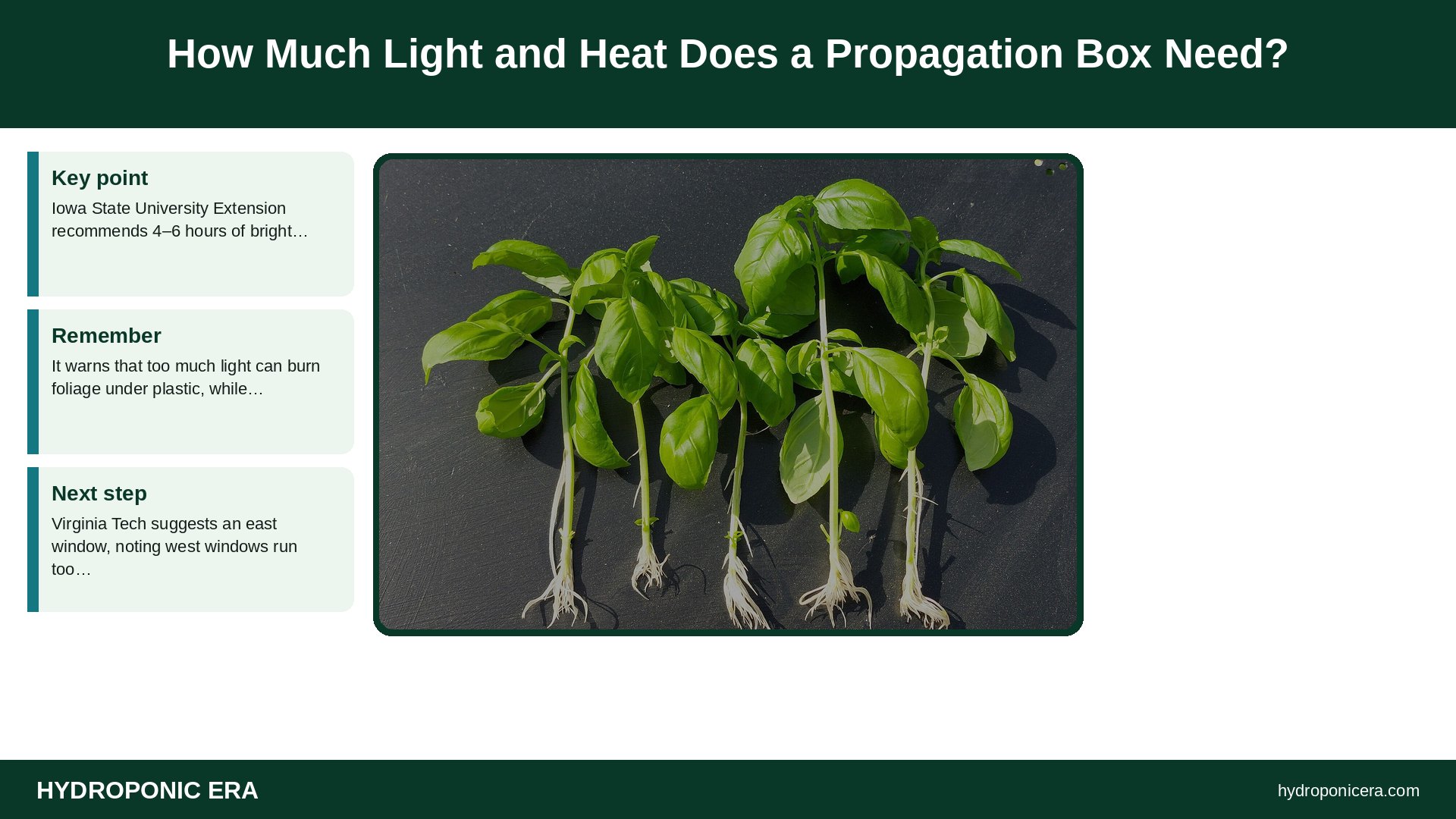
Iowa State University Extension recommends 4–6 hours of bright indirect light, air at 65–75°F (18–24°C), and a heat mat to raise the medium to 75–80°F (24–27°C). It warns that too much light can burn foliage under plastic, while too little slows rooting and lets cuttings rot. Virginia Tech suggests an east window, noting west windows run too warm, south too bright and north too dim. Under LEDs, keep the fixture well above the lid so the box does not overheat. Our heat mats and humidity domes guide covers thermostat use.
How Often Should You Vent and Water a Propagation Box?
Water rarely. The Buncombe handout says not to water again unless the medium feels dry, since you are maintaining humidity, not watering plants. Light condensation on the lid means humidity is good. Vent for a few minutes every day or two to refresh air; Virginia Tech notes air circulation discourages fungal growth. If water drips constantly or mold appears, vent longer and remove any rotting cuttings right away.
When Do You Take Cuttings Out of a Propagation Box?
Most soft cuttings root in 2–6 weeks, depending on species and warmth. Check by tugging gently: resistance means roots. Then harden them off. The Buncombe handout suggests moving rooted cuttings to a 4-inch (10 cm) pot, keeping them covered a few more days if roots are scanty, and feeding at half strength once potted. Open the lid a bit more each day for about a week so new plants adjust to room humidity.
Propagation Box vs Humidity Dome: Which Is Better?
Both do the same job. A humidity dome sits on a 1020 tray and suits many small cuttings or seedlings in cells. A propagation box made from a deep storage bin gives more headroom for tall cuttings like pothos vines, roses or tomato suckers, and it holds humidity longer between ventings. Many growers use a dome for seed starts and a bin for cuttings.
What Are Common Propagation Box Problems?
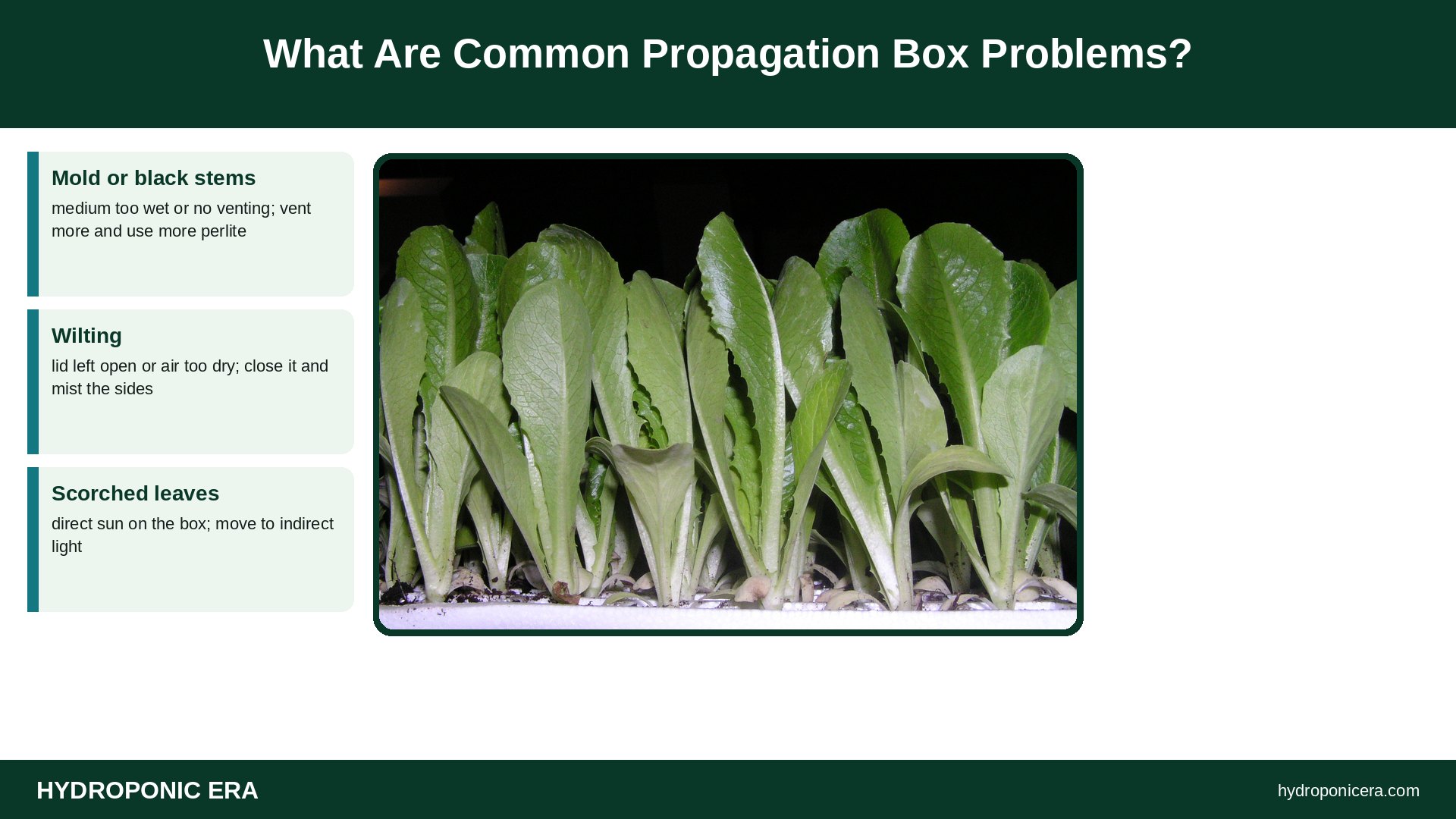
- Mold or black stems: medium too wet or no venting; vent more and use more perlite.
- Wilting: lid left open or air too dry; close it and mist the sides.
- Scorched leaves: direct sun on the box; move to indirect light.
- No roots after weeks: too cool or a hard-to-root species; add bottom heat and rooting hormone.
- Leaves dropping: often normal for big-leaf cuttings; trim large leaves in half.
For water and hydroponic cloning methods, read hydroponic cuttings and cloning.
FAQs
Does a propagation box need holes?
Only if medium sits directly in it; otherwise use pots inside.
Can I root cuttings in water instead?
Yes for easy species, but Virginia Tech notes water-grown roots can suffer more transplant shock.
Do I need a heat mat?
Not in a warm room, but bottom heat speeds rooting.
Can I use a grow light?
Yes, kept far enough away that the box stays cool.
Should I fertilize cuttings?
No. Wait until roots form and plants are potted.
Sources
- NC State Extension, Buncombe County — Propagation from Cuttings handout
- Iowa State University Extension — How to Propagate Houseplants by Stem Tip Cuttings
- Virginia Cooperative Extension — Propagation by Cuttings, Layering and Division
- Mississippi State University Extension — How to Propagate Plants from Cuttings
- Photo credits (Wikimedia Commons, edited with titles): Ficus cuttings with roots in a bottle, White background by Biusch (CC BY-SA 3.0); Ficus cuttings with roots in a bottle, White background by Biusch (CC BY-SA 3.0); Basilikum (Ocimum basilicum) Stecklinge — Josef Schlaghecken by Schlaghecken Josef (CC BY-SA 4.0); Lettuce Plugs by Apapac at English Wikipedia (Public domain); Fleece lined greenhouse potting tray and seed pots – Flickr – peganum by peganum from Small Dole, England (CC BY-SA 2.0)