
What are the best microgreen seeds? Choose untreated microgreen seeds sold specifically for microgreens or sprouting. Easy starters are radish, broccoli, kale, arugula, pea and sunflower. Utah State University suggests about 1–1.5 oz (28–42 g) of most small seeds per 10×20 in (25×50 cm) tray, 5.3 oz (150 g) of pea, and harvest in roughly 8–12 days.
Key takeaway: The right microgreen seeds are clean, untreated, fresh and bought in bulk once you know what you like. Start with fast brassicas, then add peas and sunflowers that need soaking, and save slow crops like basil and cilantro for later.
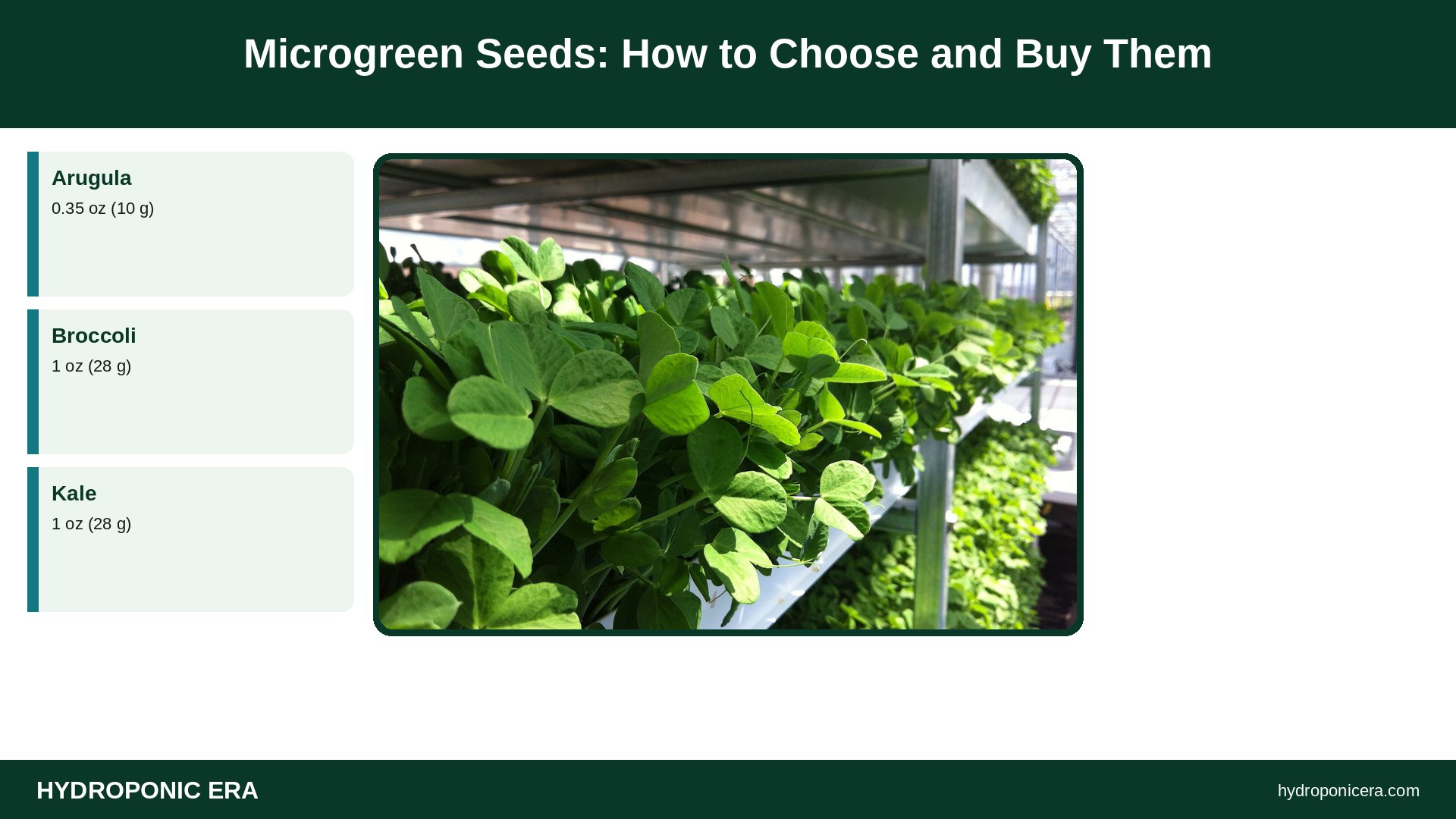
| Microgreen seeds | Seed per 1020 tray | Presoak | Harvest | Flavor |
|---|---|---|---|---|
| Arugula | 0.35 oz (10 g) | No | 6–8 days | Peppery |
| Broccoli | 1 oz (28 g) | No | 8–12 days | Mild broccoli |
| Kale | 1 oz (28 g) | No | 8–12 days | Strong, nutty |
| Radish | 1.5 oz (42 g) | No | 8–12 days | Nutty, spicy |
| Pea | 5.3 oz (150 g) | 6 hours | 8–10 days | Sweet pea |
| Sunflower | 1.7 oz (48 g) | 12 hours | 9–10 days | Nutty, sweet |
| Basil | 1 oz (28 g) | No | 12–16 days | Intense basil |
| Cilantro | 1 oz (28 g) | No | 21–28 days | Cilantro |
Source: Utah State University Extension, “Grow Your Own Microgreens” (Table 1).
What Makes Good Microgreen Seeds?
Good microgreen seeds are untreated, clean, fresh and suited to fast, dense sowing. Utah State University Extension advises choosing seeds labeled for microgreens. Virginia Tech Extension warns that ordinary garden seed is often coated with pesticides or fungicides, which are not meant to be eaten, so never use treated seed for microgreens or sprouts.
- Untreated: no colored coating or fungicide label.
- Labeled for microgreens or sprouting: sold as food-crop seed.
- High germination: look for a recent test date or pack date.
- Clean: few broken seeds, chaff or debris.
Which Microgreen Seeds Are Easiest for Beginners?
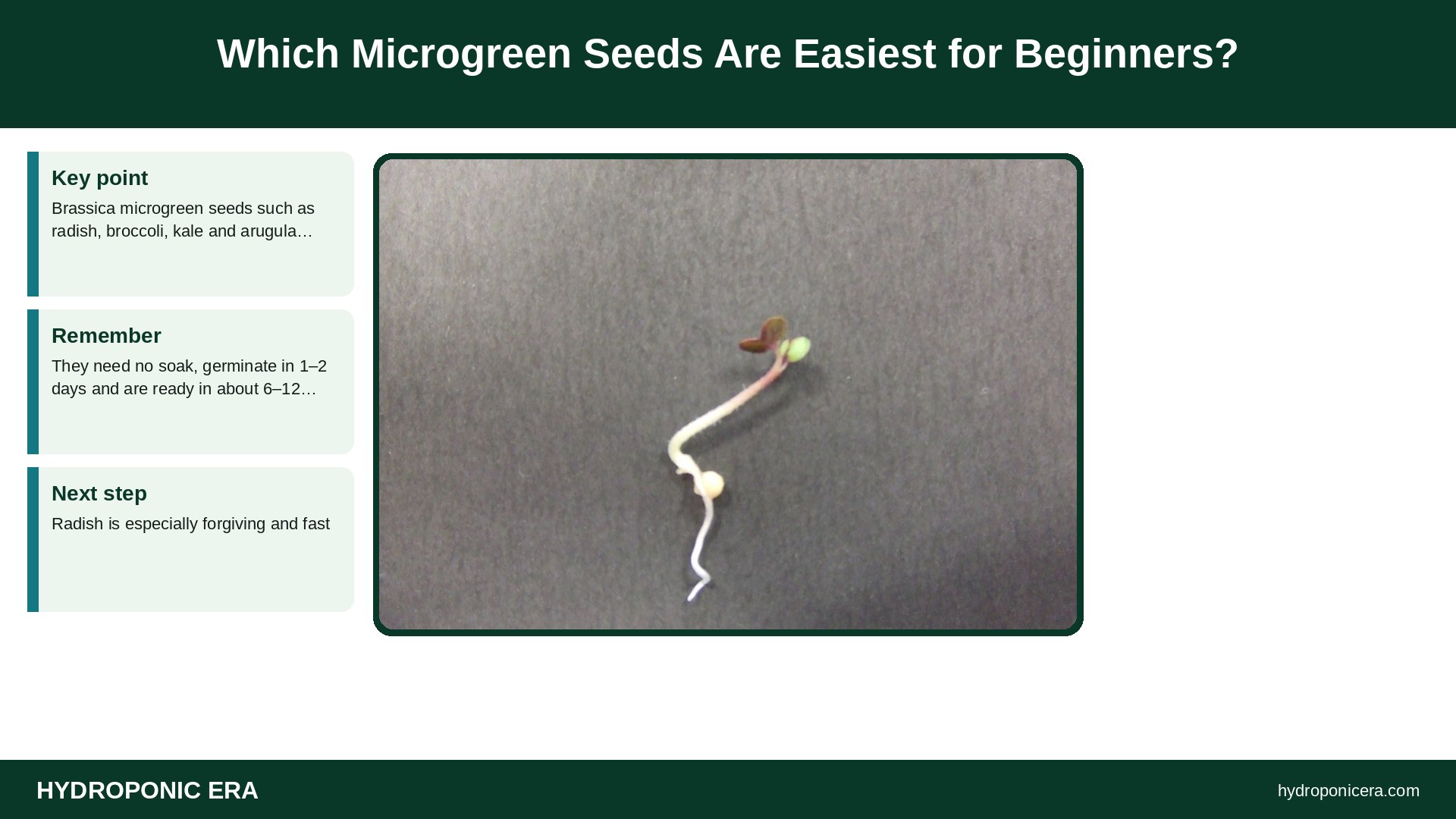
Brassica microgreen seeds such as radish, broccoli, kale and arugula are the easiest. They need no soak, germinate in 1–2 days and are ready in about 6–12 days, per Utah State. Radish is especially forgiving and fast. Pea and sunflower are also popular but need a soak and more seed per tray. Basil and cilantro are slower and fussier, so try them once you have a routine.
How Much Microgreen Seed Do You Need per Tray?
For a standard 10×20 in (25×50 cm) “1020” tray, Utah State lists about 1 oz (28 g) for most brassicas, 1.5 oz (42 g) for radish, 1.7 oz (48 g) for sunflower and 5.3 oz (150 g) for pea. Penn State Extension suggests weighing seed for your tray once, then using that measured spoon or cup amount going forward. For smaller trays, scale by area: a 10×10 in (25×25 cm) tray needs about half.
Do Microgreen Seeds Need Soaking?
Most small microgreen seeds do not. Penn State Extension notes that most microgreen seeds need no treatment, but larger or hard-shelled seeds germinate faster after an 8–12 hour soak, with a rinse or two. Utah State lists 6 hours for pea and 12 hours for sunflower. Never soak mucilaginous seeds such as basil, chia or most mustard; they gel and are spread dry on a moist surface.
How Do You Grow Microgreen Seeds Step by Step?
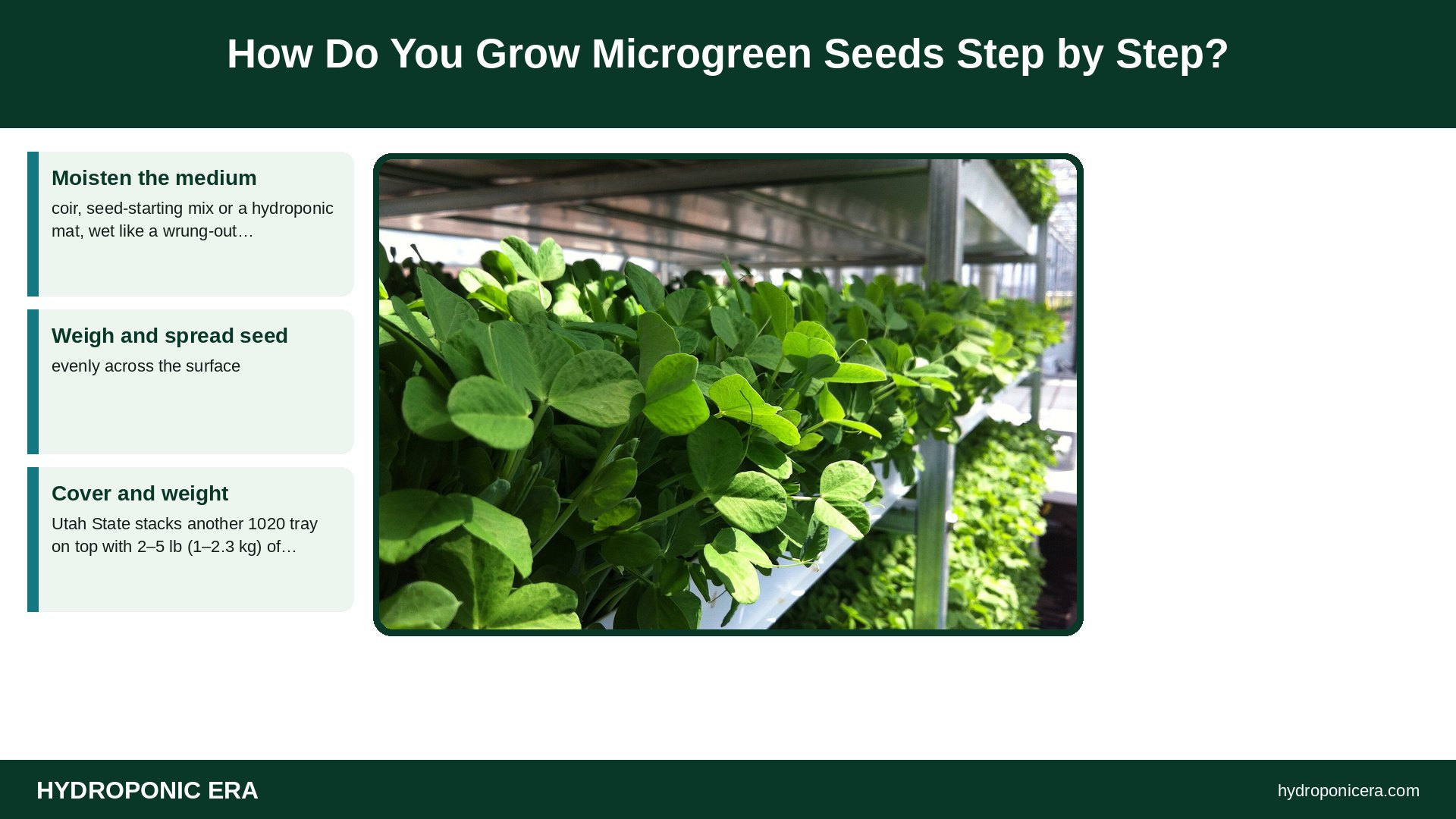
- Moisten the medium: coir, seed-starting mix or a hydroponic mat, wet like a wrung-out sponge (Utah State).
- Weigh and spread seed evenly across the surface.
- Cover and weight: Utah State stacks another 1020 tray on top with 2–5 lb (1–2.3 kg) of weight.
- Keep dark for the listed covered time, often 1–4 days.
- Uncover and light: Utah State runs lights 18 hours on, 6 off.
- Water from below and keep a gentle fan running.
- Harvest with clean scissors once the first true leaves appear, or sooner.
Our hydroponic microgreens guide covers mats, trays and lighting in detail.
How Do You Test Microgreen Seeds Before Sowing?
A quick germination test saves a wasted tray. Count out 20 seeds, place them on a damp paper towel, fold it, and seal it in a plastic bag at room temperature. Check after 2–4 days for fast brassicas, or about a week for slower herbs. If 18 of 20 sprout, germination is about 90%, which is good for dense sowing. If fewer than about 15 sprout, sow a little heavier or buy fresher seed. Write the result and date on the bag so you know how each batch performs over time.
Which Microgreen Seeds Work Best on Hydroponic Mats?
Small, fast microgreen seeds such as broccoli, kale, radish, arugula and mustard root well into hemp, jute or other fiber mats with water only. Penn State Extension notes that growers use peat mixes, coir, and natural or synthetic fiber mats, and that the medium affects how often you water. Large seeds like pea and sunflower also grow on mats but need a soak, weight during germination and steady moisture. Mucilaginous seeds such as basil cling to a moist mat surface and should be sown dry.
Where Should You Buy Microgreen Seeds?
Buy from seed companies that sell dedicated microgreen or sprouting lines and list germination rates. Small packets let you test flavors; once you have favorites, bulk bags of 1 lb (454 g) or more cut cost sharply. Utah State’s table, priced at the 5-pound rate, shows seed cost per tray ranging from well under a dollar for arugula to nearly two dollars for basil or purple radish. Store seed cool, dry and dark in a sealed container to keep germination high.
Microgreen Seeds vs Sprouting Seeds: Are They the Same?
Often, yes. Many seeds sold for sprouting work as microgreens, and vice versa. The difference is how you grow them: sprouts grow in water in a jar and are eaten whole, while microgreens grow on a medium under light and are cut above the root. Mucilaginous seeds like basil and most mustard only work as microgreens. If you want both, read how to grow sprouts in a jar.
What Problems Come From Poor Microgreen Seeds?
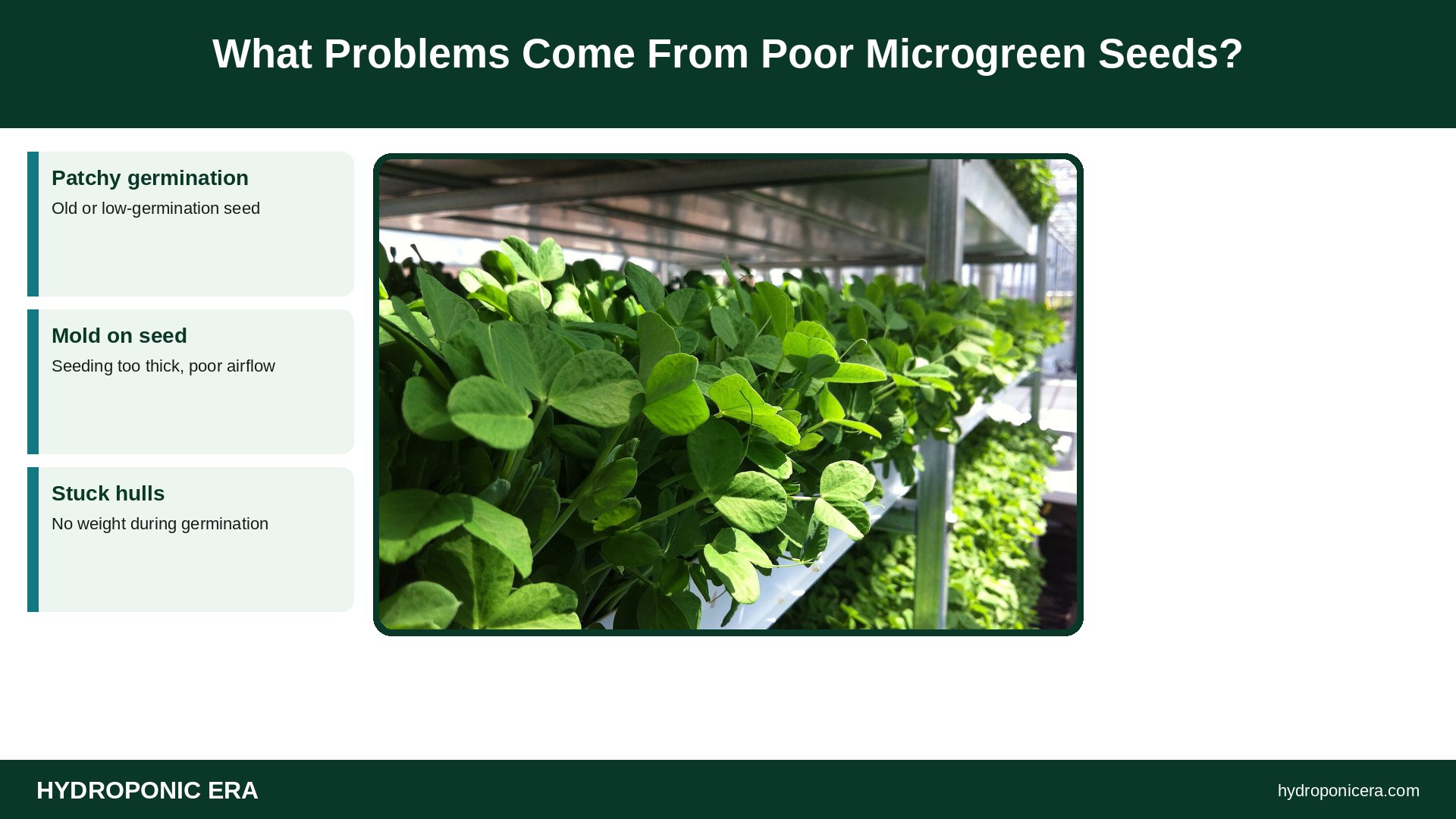
| Problem | Seed-related cause | Fix |
|---|---|---|
| Patchy germination | Old or low-germination seed | Buy fresh; do a paper-towel test |
| Mold on seed | Seeding too thick, poor airflow | Use listed rates; add a fan |
| Stuck hulls | No weight during germination | Weight the cover tray |
| Seedlings collapse | Damping-off in wet media | See our damping-off guide |
FAQs
Can I use garden seed packets for microgreens?
Only if untreated. Treated seed is not for eating.
Do microgreen seeds need light to germinate?
No. Most germinate in the dark under a cover.
How long do microgreen seeds last?
Germination drops with age; store cool and dry and test old seed first.
Are organic microgreen seeds better?
Organic is a choice; untreated and clean matter most.
Can I regrow microgreens after cutting?
Most do not regrow well; reseed a new tray.
Sources
- Utah State University Extension — Grow Your Own Microgreens
- Penn State Extension — A Step-By-Step Guide for Growing Microgreens at Home
- Virginia Cooperative Extension — Sprouting Seeds for Food
- Sprout People — Mustard Sprouts (mucilaginous seed note)
- Photo credits (Wikimedia Commons, edited with titles): Lufa Farms Microgreens in Trays by Lufa Farms (CC BY-SA 2.0); Mustard seedling by Tess Watson from Edinburgh, Scotland, UK (CC BY 2.0); Lufa Farms Microgreens in Trays by Lufa Farms (CC BY-SA 2.0); Lufa Farms Microgreens in Trays by Lufa Farms (CC BY-SA 2.0); Dwarf sunflower seedling by Hildabast (CC0)