
Rosemary cuttings in water can root, but more slowly and less reliably than soft herbs like basil. Take 4–6 inch (10–15 cm) green, flexible, flower-free tips in late spring or summer, strip the lower 2–3 inches (5–8 cm) of leaves, and stand them in clean water with a node or two submerged. Change the water every few days and keep them in bright, indirect light. Expect several weeks for roots, and pot them up once roots are 1–2 inches (2.5–5 cm) long. Extension sources generally prefer rooting rosemary in a light, well-drained mix such as perlite or sand, where roots typically form in 2–6 weeks.
Key takeaway: Use new green growth, not brown woody stems. Take 2–3 times more rosemary cuttings in water than you need, because even in ideal conditions only part of them root; N.C. Cooperative Extension expects 30–50% success in soil mixes.
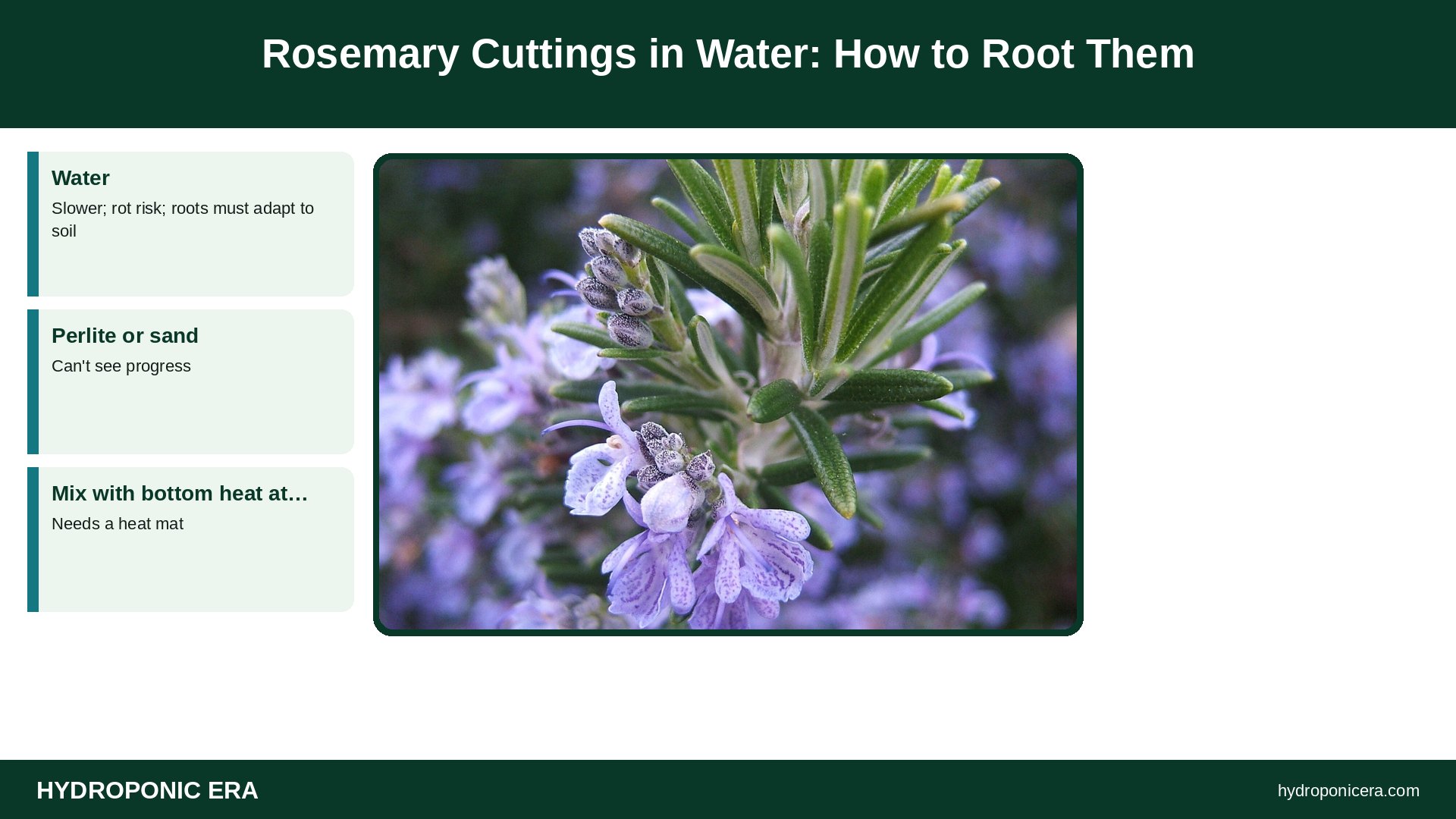
| Method | Typical rooting time | Pros | Cons |
|---|---|---|---|
| Water | Several weeks | You can watch roots form | Slower; rot risk; roots must adapt to soil |
| Perlite or sand | 2–6 weeks | Recommended by extension; sturdier roots | Can’t see progress |
| Mix with bottom heat at 70–75°F (21–24°C) | 10–20 days | Fastest (Penn State) | Needs a heat mat |
| Seed | Slow, irregular germination | Cheap | Up to 3 years to harvest size (UW–Madison) |
Why Propagate Rosemary From Cuttings?
University of Wisconsin–Madison Extension says rosemary seed propagation isn’t recommended because germination is very irregular and slow, and it can take up to three years to grow plants large enough for a good harvest. Cuttings from established plants are the best method. Penn State Extension adds that named cultivars don’t stay true to type from seed, so cuttings are the only way to copy a variety you like.
Rosemary, now often listed as Salvia rosmarinus, is a woody Mediterranean shrub in the mint family. That woodiness is why it roots more slowly than soft-stemmed herbs.
When to Take Rosemary Cuttings for Water Rooting
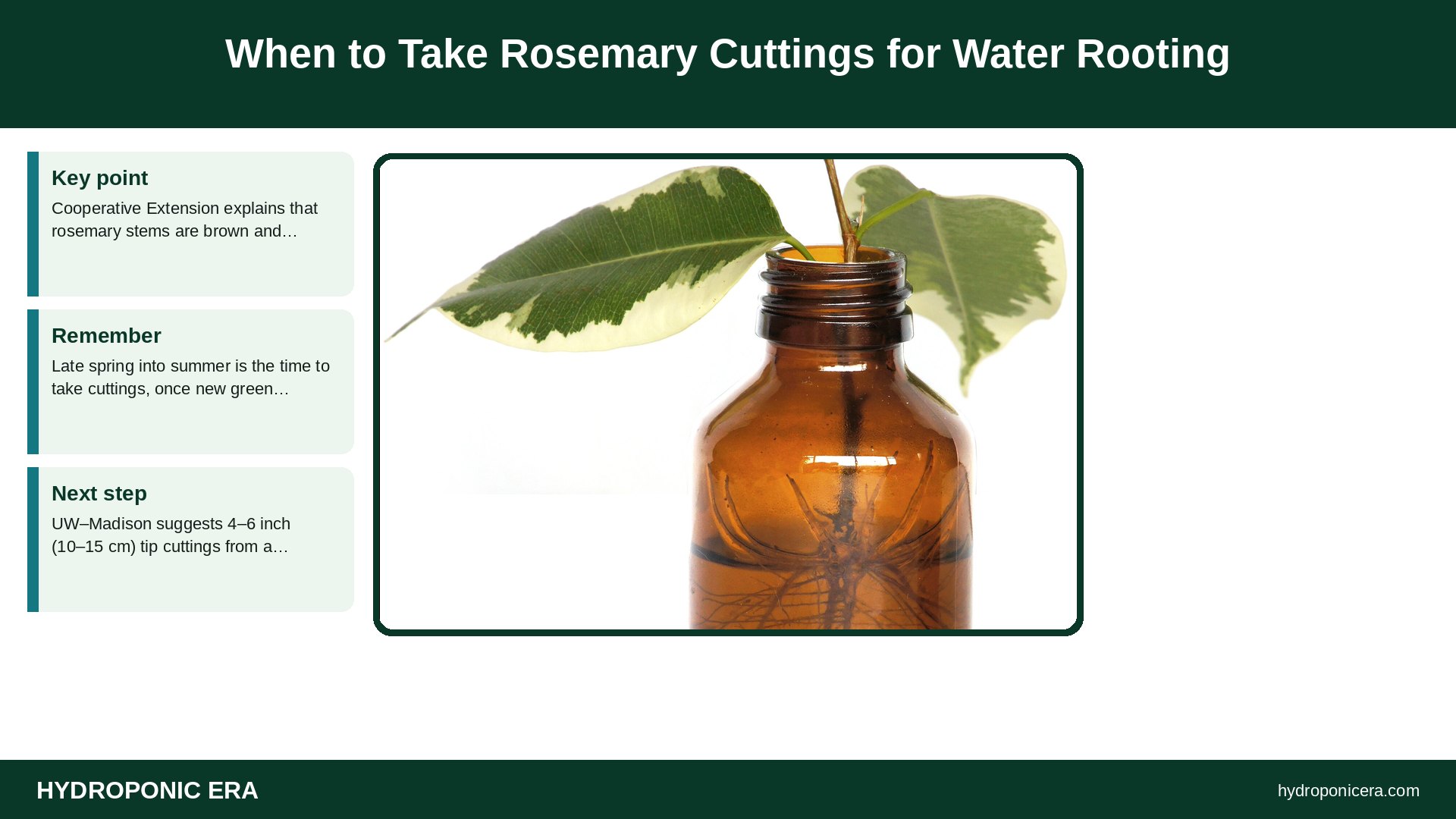
N.C. Cooperative Extension explains that rosemary stems are brown and woody in winter, then put on green, flexible new growth in spring. Late spring into summer is the time to take cuttings, once new green stems are long enough to snip 3–8 inches (8–20 cm). UW–Madison suggests 4–6 inch (10–15 cm) tip cuttings from a flower-free shoot in late spring to early summer. Montana State University Extension lists rosemary among plants that root well from softwood cuttings, taken after budbreak but before tissues fully mature.
How to Root Rosemary Cuttings in Water
- Choose healthy green tips. Pick straight, flower-free stems with soft green bark. N.C. Extension stresses avoiding flowers.
- Cut quickly. N.C. Extension notes that detaching the tip is stressful, so the faster you process it, the better its chance of survival.
- Cut below a node. Snip just under a node, where leaves attach; N.C. Extension explains this helps stimulate roots by altering hormone signals.
- Strip the bottom leaves. Leave only the top 1–2 inches (2.5–5 cm) leafy so no leaves sit underwater.
- Place in water. Use a clean glass or jar of room-temperature water with at least one node submerged. An opaque jar keeps roots dark, as MSU Extension suggests.
- Bright, sheltered light. N.C. Extension recommends a bright but sheltered spot, not full sun or wind.
- Change the water. Every few days, or right away if it turns cloudy.
- Be patient. Rosemary cuttings in water are slower than basil. Discard any cutting whose stem turns black or slimy.
Rooting in Perlite or Sand Instead
If water results are poor, switch to a medium. UW–Madison recommends perlite until roots form and says rooting hormone can improve speed. Penn State recommends a 6-inch (15 cm) tip, rooting hormone and a sterile, well-aerated soilless mix with bottom heat at 70–75°F (21–24°C), with rooting in 10–20 days. N.C. Extension uses sand, perlite or seed-starting mix in a pot at least 3 inches (8 cm) deep, covered with a clear plastic bag as a mini greenhouse, with roots in 4–6 weeks. For humidity setups, see humidity domes for cuttings.
Transplanting Rosemary Cuttings From Water to Soil
MSU Extension advises transplanting water-rooted cuttings once roots reach 1–2 inches (2.5–5 cm) to reduce transplant shock. Don’t wait for a huge mass of water roots. Pot into a fast-draining mix, such as potting soil with added perlite, as N.C. Extension suggests. Keep it lightly moist for the first week or two, then let it dry between waterings.
Water is the biggest long-term threat. Penn State warns that rosemary is prone to root rot, that overwatering causes it, and that browning tips are a sign. Overwatering is especially deadly in pots brought indoors for winter.
Can You Grow Rosemary Hydroponically After Rooting?
Yes, with care. Rosemary prefers a drier root zone than most hydroponic herbs, so choose a well-drained media system like ebb and flow or drip with clay pebbles rather than deep water. Keep the crown above the water line and give strong light. Our full guide covers it: how to grow rosemary hydroponically. For cloning setups, see hydroponic cuttings and cloning.
Troubleshooting Rosemary Cuttings in Water
- Stem rots at the waterline: Dirty water or too deep a soak. Recut, rinse and change water more often.
- No roots after several weeks: If rosemary cuttings in water stall, the stem was too woody or flowering. Take fresh green tips.
- Leaves drop: Too much heat or direct sun. Move to bright shade.
- Dies after potting: Overwatering or transplanting too late. Use a gritty mix and pot up early.
- Powdery mildew: Penn State lists it as a common problem; improve airflow.
Tips for Better Success With Rosemary Cuttings in Water
- Take 2–3 times more cuttings than you need, as N.C. Extension advises.
- Try several rosemary cuttings in water and several in perlite side by side to see which works best for your plant.
- Use stems from a healthy, well-watered mother plant.
- Check that a variety isn’t patented before propagating it, as MSU Extension reminds readers.
Water vs. Medium: Which Should You Choose?
Choose rosemary cuttings in water if you want a simple, low-cost experiment on a windowsill and enjoy seeing roots form. Choose perlite, sand or a soilless mix if you need dependable results, since every extension source we reviewed recommends a medium. A practical approach is to split your batch: put half of the rosemary cuttings in water and half in perlite under a clear bag, then keep whichever group roots first. Label each container with the date so you can track how long your plant’s cuttings take, and use that timing for next season.
FAQs
Do rosemary cuttings in water really root?
Yes, but slowly; perlite or sand is more reliable.
How long do rosemary cuttings take to root?
About 2–6 weeks in media, and often longer in water.
Should I use rooting hormone?
It helps; UW–Madison says it can improve rooting speed.
Can I root woody rosemary stems?
Rarely; use green, flexible new growth.
What percentage of cuttings root?
N.C. Extension expects about 30–50% in soil mixes.
Why is my rosemary cutting turning black?
It’s rotting; change water more often and recut above the damage.
Sources
- N.C. Cooperative Extension, Chatham County Center — Propagating Rosemary
- University of Wisconsin–Madison Extension — Rosemary, Salvia rosmarinus
- Penn State Extension — Herb Garden Plants: Rosemary
- Montana State University Extension — Cloning at Home: A Practical Guide to Propagating Plants from Stem Cuttings
- Photo credits (Wikimedia Commons, edited with titles): Rosmarinus officinalis133095382 by THOR (CC BY 2.0); Ficus cuttings with roots in a bottle, White background by Biusch (CC BY-SA 3.0); Click & Grow Smart Garden 27 by Janar Raidla (CC BY-SA 4.0); Basil plant in a pot 02 by Netha Hussain (CC BY-SA 4.0); Plant of mint 2025 by Learner eyes (CC BY-SA 4.0)