
What is the best seed starting mix? The best seed starting mix is a sterile, fine-textured soilless blend of peat or coco coir with perlite or vermiculite. It holds moisture, drains well and carries no weed seeds or damping-off fungi. Garden soil and coarse potting mix are poor choices for tiny seeds.
Key takeaway: A good seed starting mix is fine, light, sterile and low in nutrients. Pick one made from peat or coir with perlite or vermiculite, skip anything with soil, compost or manure, and begin dilute feeding once true leaves appear. Potting mix can work for large seeds.
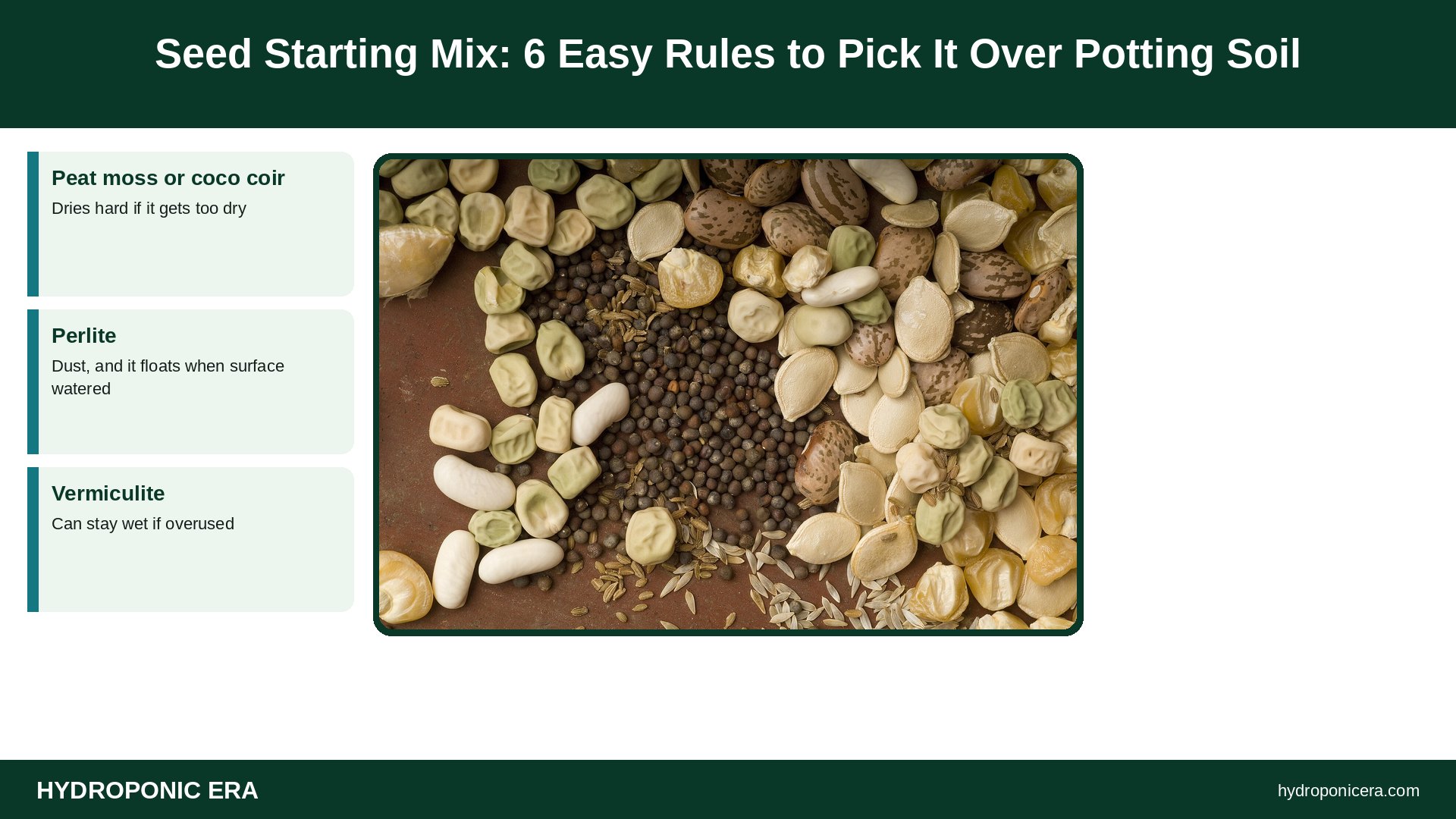
| Ingredient | What it does | Watch out for |
|---|---|---|
| Peat moss or coco coir | Holds water, gives fine texture | Dries hard if it gets too dry |
| Perlite | Adds air and drainage | Dust, and it floats when surface watered |
| Vermiculite | Holds water and some nutrients | Can stay wet if overused |
| Compost or garden soil | Adds nutrients and biology | Pathogens and weed seeds, poor drainage |
What Is a Seed Starting Mix?
A seed starting mix is a fine, soilless blend made to germinate seeds and grow young seedlings. Most are based on peat moss or coco coir, mixed with perlite or vermiculite for air and water control. The texture is fine so small seeds make good contact, and it is sold sterile to reduce disease.
Rutgers Cooperative Extension and the University of Maine both recommend a sterile, soilless mix rather than soil from the garden for starting seeds indoors. The reason is simple. Garden soil packs down in a tray, drains poorly and may carry fungi that cause damping off in seedlings.
Why Choose a Seed Starting Mix Over Potting Soil?
A seed starting mix is finer, lighter and cleaner than most potting soil, so seeds stay evenly moist without rotting. Potting mix is coarser and often holds fertilizer, which can burn tiny roots. Michigan State University notes that potting mix can still work for larger seeds such as squash or beans.
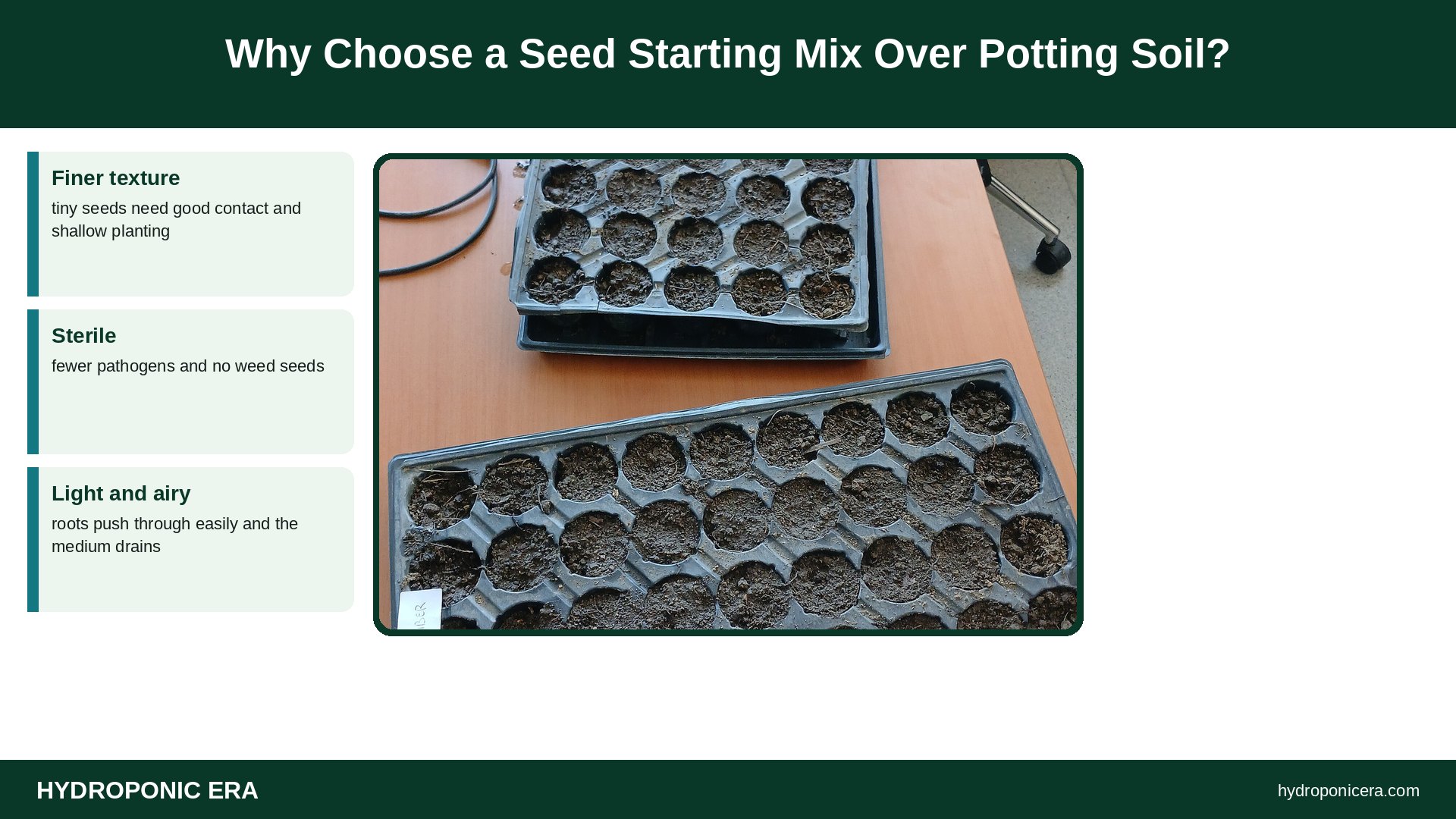
- Finer texture: tiny seeds need good contact and shallow planting.
- Sterile: fewer pathogens and no weed seeds.
- Light and airy: roots push through easily and the medium drains.
- Low nutrients: seedlings need little feed in the first weeks.
For more on media, see our guide to growing media for hydroponics and the comparison of perlite and vermiculite.
What Should You Look for When Buying a Seed Starting Mix?
Read the label. A good bag lists peat or coir with perlite or vermiculite and says it is sterile or pasteurized. Avoid bags that include soil, compost, manure or heavy fertilizer, since those raise disease risk and salt. Oklahoma State Extension also compares soilless media by moisture and air properties.
- Look for peat moss or coco coir as the base.
- Check for perlite or vermiculite for aeration.
- Skip ingredients such as topsoil, compost, bark chunks or manure.
- Choose a mix that feels light, fluffy and evenly moist, not dusty and not soggy.
- Buy a fresh bag and keep it closed so it stays clean.
Coir-based blends are a good option if you want to avoid peat, and our guide to coco coir in hydroponics explains how to buffer and handle it. If you prefer plugs, see peat pellets.
How Do You Use a Seed Starting Mix?
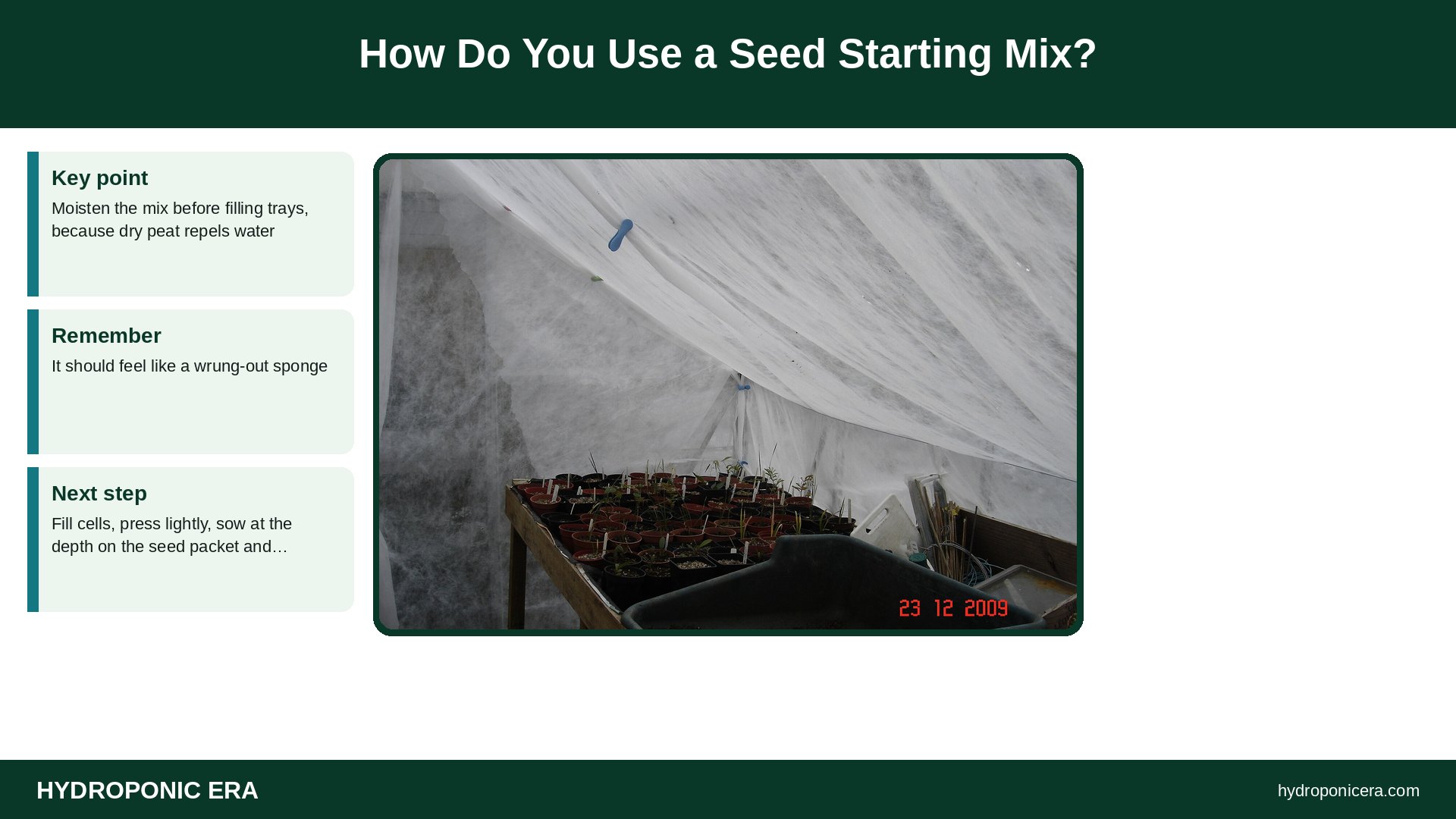
Moisten the mix before filling trays, because dry peat repels water. It should feel like a wrung-out sponge. Fill cells, press lightly, sow at the depth on the seed packet and cover the tray with a vented dome until seeds sprout. Then bottom water so the surface stays gentle.
- Pour the mix into a clean tub and add warm water a little at a time.
- Squeeze a handful. It should clump without dripping.
- Fill clean cells or trays and tap them to settle the mix.
- Sow seeds at the depth on the packet and lightly cover.
- Label the tray, add a vented dome and keep it near 70°F (21°C).
Does a Seed Starting Mix Need Fertilizer?
Most commercial seed starting mix is nutrient-light, so seedlings usually need a dilute feed once true leaves form. Seeds carry their own energy for germination, so feeding earlier gains nothing. Start with a dilute solution and increase gradually. Our guide to nutrients for hydroponic seedlings gives a simple schedule.
If seedlings turn pale after a couple of weeks, they are likely running out of nutrients. If the tips burn or growth stalls, the mix may hold too much salt or the feed is too strong. Test the runoff if you can, as explained in EC and TDS in hydroponics.
Can You Make Your Own Seed Starting Mix?
Yes, a basic homemade seed starting mix is equal parts peat or coir with perlite or vermiculite, wetted before use. This is a common recipe. The weak point is sterility, since ingredients from different sources may carry pathogens, so use clean, new components and sanitized containers.
Do not add garden soil or compost. If you want a few nutrients, add them later through dilute feed rather than putting them into the mix. For many growers, a commercial bag costs little and saves the trouble.
What Problems Point to a Poor Mix?
Several common seedling problems trace back to the medium rather than the seed. Watch for these signs and adjust the mix, the watering or the tray before you blame the seed packet.
| Symptom | Likely medium problem | What to try |
|---|---|---|
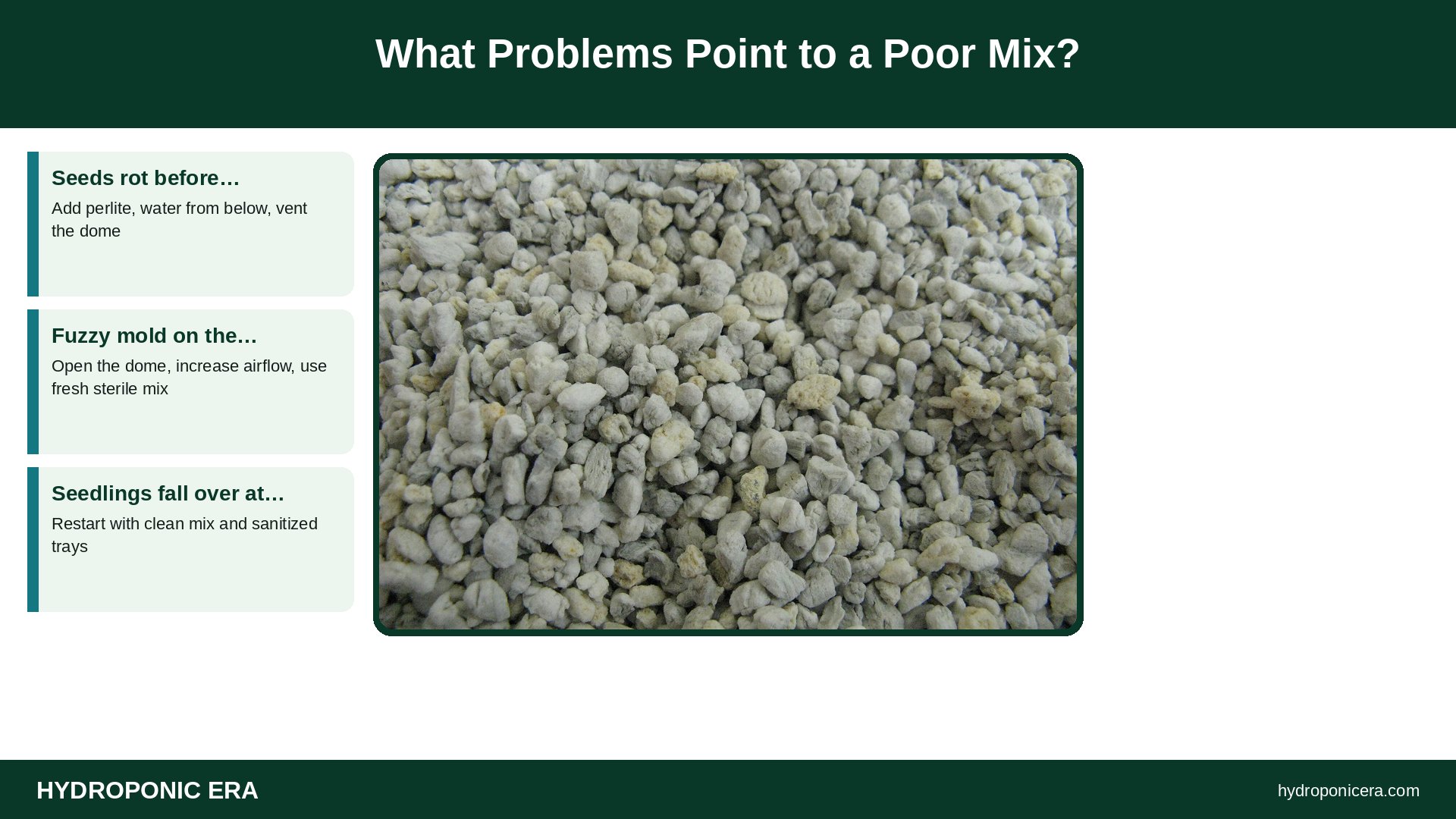
| Seeds rot before sprouting | Too wet, poor drainage | Add perlite, water from below, vent the dome |
| Fuzzy mold on the surface | Constant moisture, contaminated mix | Open the dome, increase airflow, use fresh sterile mix |
| Seedlings fall over at the base | Damping-off pathogens | Restart with clean mix and sanitized trays |
| Weeds appear in the tray | Garden soil or compost in the mix | Switch to a sterile soilless blend |
| Tray dries out within a day | Mix too coarse or dry peat | Pre-moisten and use a finer blend |
Fixing the medium is often enough. If the trouble continues, check light, temperature and air movement, since those matter as much as the mix.
FAQ About Seed Starting Mix
Can I use potting soil as a seed starting mix?
You can for large seeds, but fine seed starting mix is safer for small seeds and young seedlings.
Is seed starting mix sterile?
Most bagged products are, and the label should say so. Garden soil and compost are not.
Do I need to fertilize a seed starting mix?
Not until true leaves appear. Then use a dilute, balanced feed.
Can I reuse seed starting mix?
It is safer to use fresh mix, because old mix may carry disease, though clean mix can be used as a soil amendment.
What is the difference between seed starting mix and potting mix?
Seed starting mix is finer and low in nutrients. Potting mix is coarser and often contains fertilizer.
Sources
- Rutgers Cooperative Extension — Starting seeds indoors (FS787)
- University of Maine Cooperative Extension — Starting seeds indoors (bulletin 2751e)
- Oklahoma State University Extension — Which soilless media is best for your situation?
- Michigan State University Extension — Potting soils and seed starting mixes for your garden
- Photo credits (Wikimedia Commons, edited with titles): Vegetable seeds by Oregon State University (CC BY-SA 2.0); Pepper and tomato seedling trays at Boğaziçi University 2026 by Furkan Akkurt (CC BY-SA 4.0); Fleece lined greenhouse potting tray and seed pots – Flickr – peganum by peganum from Small Dole, England (CC BY-SA 2.0); Perlite1 by KENPEI (CC BY-SA 3.0)
1 thought on “Seed Starting Mix: 6 Easy Rules to Pick It Over Potting Soil”