
Can you propagate string of turtles in water? Yes. String of turtles in water roots from 2–3 inch (5–8 cm) stem pieces with a bare node or two dipped in clean water and the leaves kept dry. Keep the glass at 68–75°F (20–24°C) in bright, indirect light and refresh the water weekly. Small roots usually form within a few weeks; pot the cutting before the stem softens.
Key takeaway: String of turtles in water works best with short stems, dry leaves and quick potting. This slow-growing peperomia rots if the stems sit in stale water too long.
| Fact | Detail | Source |
|---|---|---|
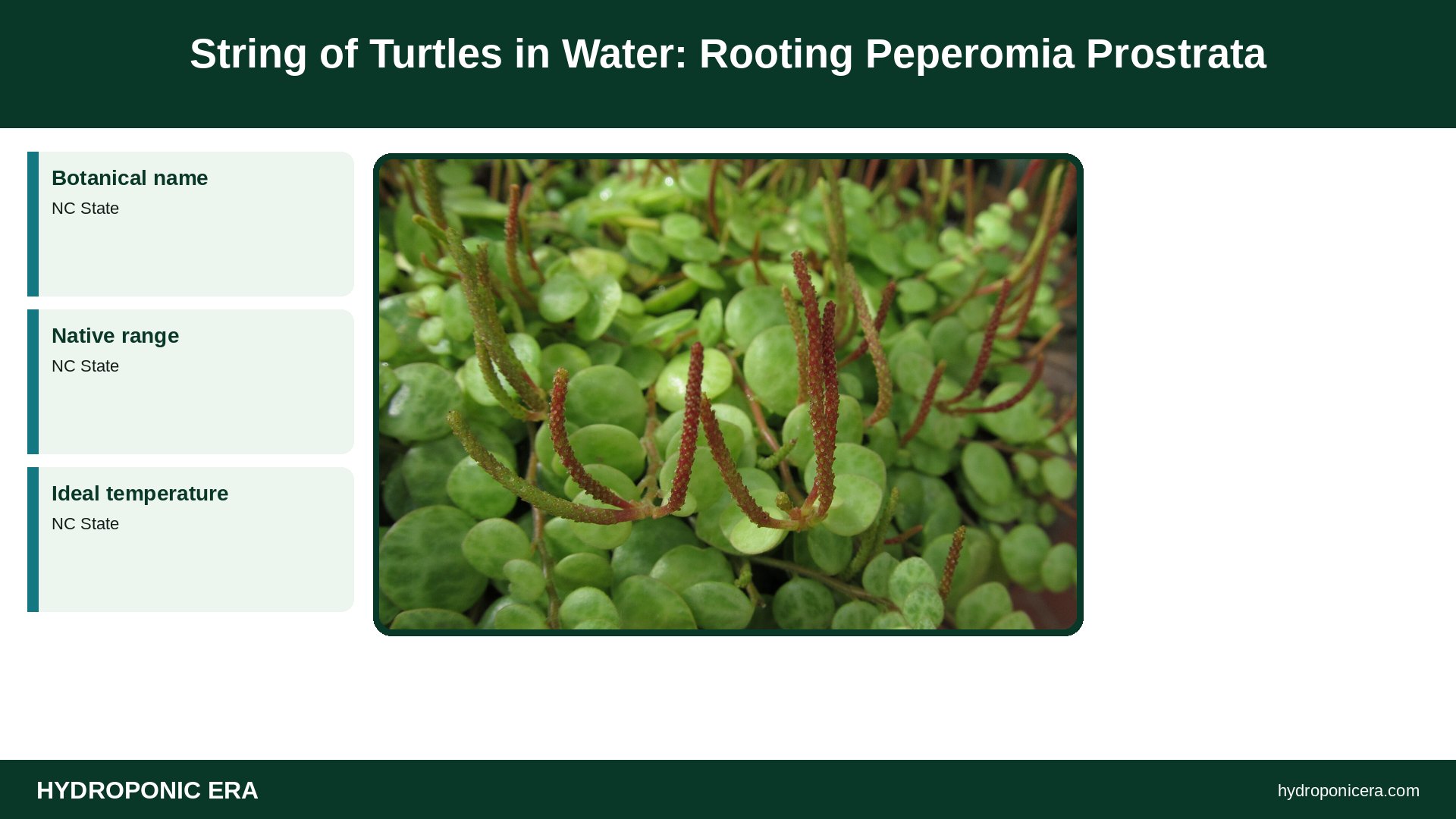
| Botanical name | Peperomia prostrata | NC State |
| Native range | Wet tropical areas of Ecuador | NC State |
| Ideal temperature | 68–75°F (20–24°C) | NC State |
| Mature stem length | About 12 in (30 cm) | NC State |
| Pets | Listed as non-toxic for cats and dogs | NC State |
Does String of Turtles in Water Really Root?
Yes. Peperomias are among the plants Texas A&M AgriLife lists for tip cuttings, and it notes that many houseplants also root from leaf cuttings. String of turtles grows from thin, trailing stems with tiny succulent leaves, and each node can push out roots. The challenge is scale: the stems are delicate and slow growing, so cuttings have little stored energy. Clean water and warmth make the biggest difference for string of turtles in water.
How Do You Take Cuttings for String of Turtles in Water?
- Choose healthy strands with firm, plump leaves in spring or early summer.
- Cut 2–3 inches (5–8 cm) with clean scissors just below a node.
- Remove the lowest one or two leaves to expose bare nodes.
- Take several cuttings, since a fuller pot needs many strands.
- Let cuts dry for a few hours so the ends seal slightly.
How Do You Root String of Turtles in Water Step by Step?
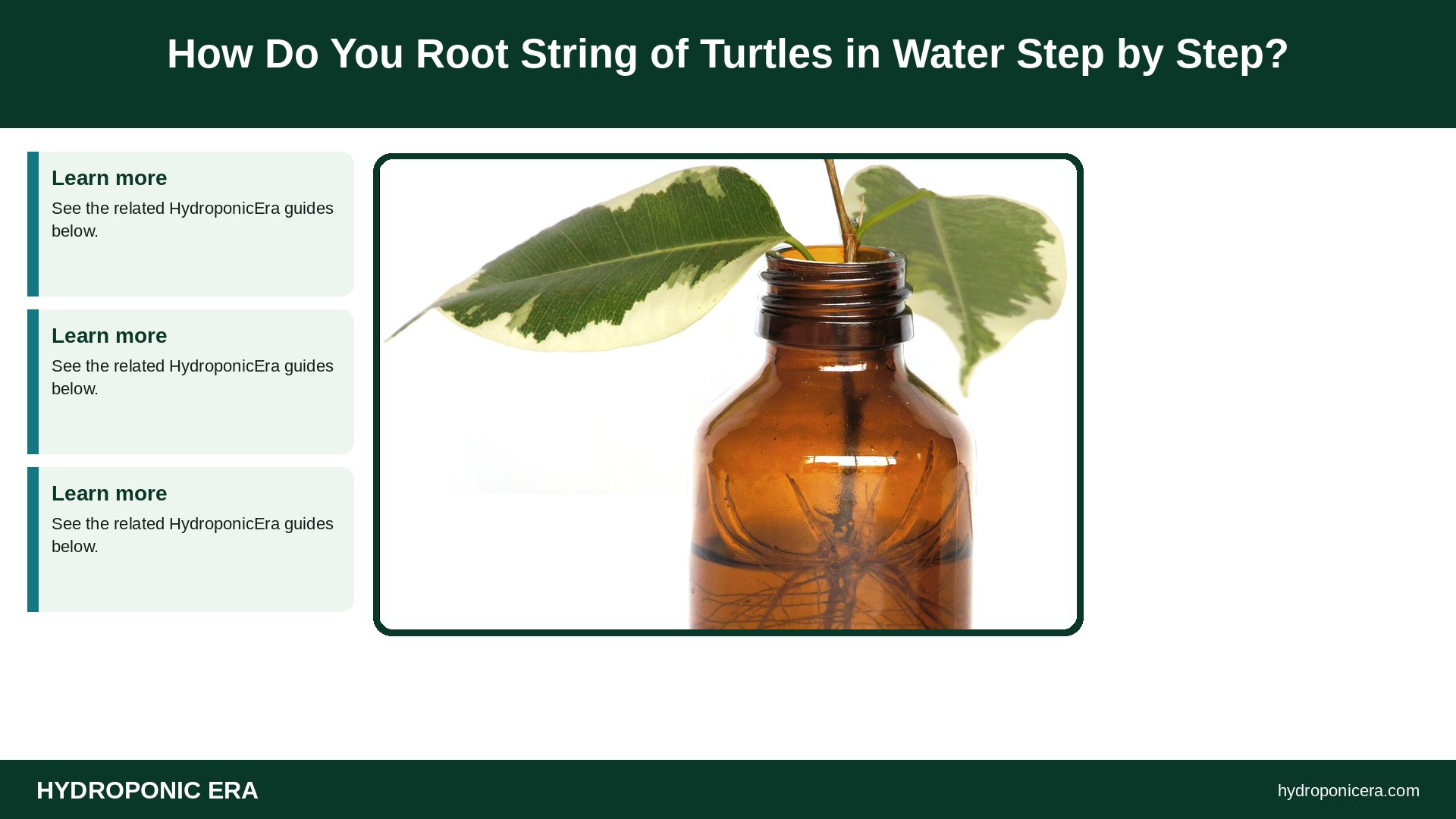
- Fill a small, narrow glass or test tube with room-temperature water.
- Lower the bare nodes into the water; keep all leaves above it.
- Cover the top with plastic wrap and poke stems through to hold them in place.
- Set the glass in bright, indirect light, away from cold drafts.
- Keep it near 68–75°F (20–24°C), the range NC State prefers for this plant.
- Replace the water weekly or whenever it turns cloudy, as Vermont Extension advises.
- Pot when roots are about ½–1 inch (1–2.5 cm) long.
How Long Does String of Turtles in Water Take to Root?
Usually a few weeks, sometimes longer. This is a slow grower, and Vermont Extension notes rooting can take days or weeks, sometimes months. Warmth speeds it up; Penn State recommends a rooting temperature of 75–80°F (24–27°C) for houseplant cuttings in general. A heat mat under the glass helps in winter.
Can You Root a Single String of Turtles Leaf?
Sometimes. NC State lists leaf cutting as the propagation strategy for this species, and Texas A&M lists peperomia among leaf-cutting plants. A single turtle leaf is tiny, though, so it’s slower than a stem piece. Lay leaves with a bit of petiole on moist mix rather than in water, where they tend to rot.
Why Is My String of Turtles in Water Rotting?
- Leaves underwater: Succulent leaves turn mushy quickly when submerged.
- Stale water: Bacteria build up; change it weekly.
- Cold room: Below the 68°F (20°C) mark, rooting slows and rot wins.
- Too long in water: Delicate stems weaken over time.
Trim above any soft section and restart in fresh water. Our pythium root rot guide explains why warm, stagnant water breeds rot.
When Should You Move String of Turtles in Water to Soil?

As soon as roots are ½–1 inch (1–2.5 cm) long. Illinois Extension notes roots formed in water are often weak and adapt less easily to potting mix, so earlier potting helps. Use a small, shallow pot with drainage and a light mix with added perlite. NC State says the plant prefers evenly moist soil but suffers from overwatering, and it does well pot-bound, so don’t oversize the container.
What Supplies Do You Need for String of Turtles in Water?
- Small glass, propagation tube or shot glass
- Clean, sharp scissors
- Plastic wrap or a mesh lid to keep leaves dry
- Room-temperature, dechlorinated water
- Shallow pot, light potting mix and perlite
- Optional heat mat for cool rooms
Is String of Turtles in Water Different From Other Peperomias?
The method is the same, but the scale is smaller. Upright peperomias give you thick 3–4 inch (8–10 cm) stems with plenty of stored water, while string of turtles offers wiry stems a few inches long. That means less margin for error: use the smallest container that holds the stems upright, change water on schedule and pot sooner. Expect slower top growth, too, because NC State describes the plant as slow growing.
How Much Light Does String of Turtles in Water Need?
NC State says it thrives in bright, indirect light and tolerates low light, but leaf color fades in low light. Direct afternoon sun can scorch the tiny leaves, especially on a glass windowsill. An east window or a few feet from a south window works well. Under LEDs, see our grow lights guide.
How Do You Keep Humidity Up for String of Turtles?
NC State notes this plant prefers average to higher humidity and suggests a humidifier or a tray of wet pebbles. For rooting, a clear cup or bag loosely over the glass holds humidity around the leaves. Vent it daily to prevent mold.
How Do You Make a Full Pot From Cuttings?
Root ten or more strands at once. Pot them together around the rim, then lay extra strands across the surface with nodes touching the mix so they root in place. Pinch long strands occasionally to encourage branching. Because the plant is slow, a full basket can take a season or more.
What Pests Affect String of Turtles?

NC State says it’s usually resistant to insects and diseases but recommends monitoring for mealybugs, spider mites, aphids, scale and whiteflies. Inspect stems before cutting so you don’t carry pests into the jar. Overwatering can cause root rot, per NC State.
Is String of Turtles Safe for Pets?
NC State tags Peperomia prostrata as non-toxic for cats and dogs, which makes it a good choice for pet homes. Still, keep jars where pets can’t knock them over.
FAQs
Is string of turtles a succulent?
It has succulent leaves, and NC State lists it as a succulent vine in the pepper family.
Can string of turtles live in water permanently?
It’s not recommended; delicate stems weaken and rot over time.
Do I need rooting hormone?
No, but it can speed rooting slightly.
Why are my turtle leaves losing their pattern?
Low light dulls the marbling.
How fast does string of turtles grow?
Slowly; NC State lists mature stems around 12 inches (30 cm).
Sources
- North Carolina State Extension — Peperomia prostrata (String of Turtles)
- Texas A&M AgriLife Extension — Propagating Foliage & Flowering Plants
- University of Illinois Extension — Houseplant Propagation
- Penn State Extension — Propagating Houseplants
- University of Vermont Extension — More, Please: Propagating Houseplants
- Photo credits (Wikimedia Commons, edited with titles): Peperomia prostrata, Phipps Conservatory, 2024-08-24 by Cbaile19 (CC0); Ficus cuttings with roots in a bottle, White background by Biusch (CC BY-SA 3.0); Peperomia obtusifolia, Conservatorio botánico, Fort Wayne, Indiana, Estados Unidos, 2012-11-12, DD 01 by Diego Delso (CC BY-SA 3.0); Perlite1 by KENPEI (CC BY-SA 3.0); Basilikum (Ocimum basilicum) Stecklinge — Josef Schlaghecken by Schlaghecken Josef (CC BY-SA 4.0)