
Can you propagate schefflera in water? Yes. Schefflera in water roots from a 4–6 inch (10–15 cm) semi-woody tip cutting with two or three leaves and at least one node underwater. Keep it warm, around 75–80°F (24–27°C), in bright, indirect light and change the water weekly. Roots usually appear within several weeks; pot the cutting when they reach 1–2 inches (2.5–5 cm).
Key takeaway: Schefflera in water roots reliably from tip cuttings with a node. Trim big leaves, avoid direct sun and keep the jar warm for the fastest roots.
| Method | Source support | Best use |
|---|---|---|
| Tip cutting in water | Texas A&M lists schefflera tip cuttings | Easy home propagation |
| Stem or leaf-bud cuttings in mix | Illinois Extension | Many plants from one stem |
| Air layering | Illinois and Penn State | Tall, leggy plants |
| Seed | NC State | Rare indoors; slow |
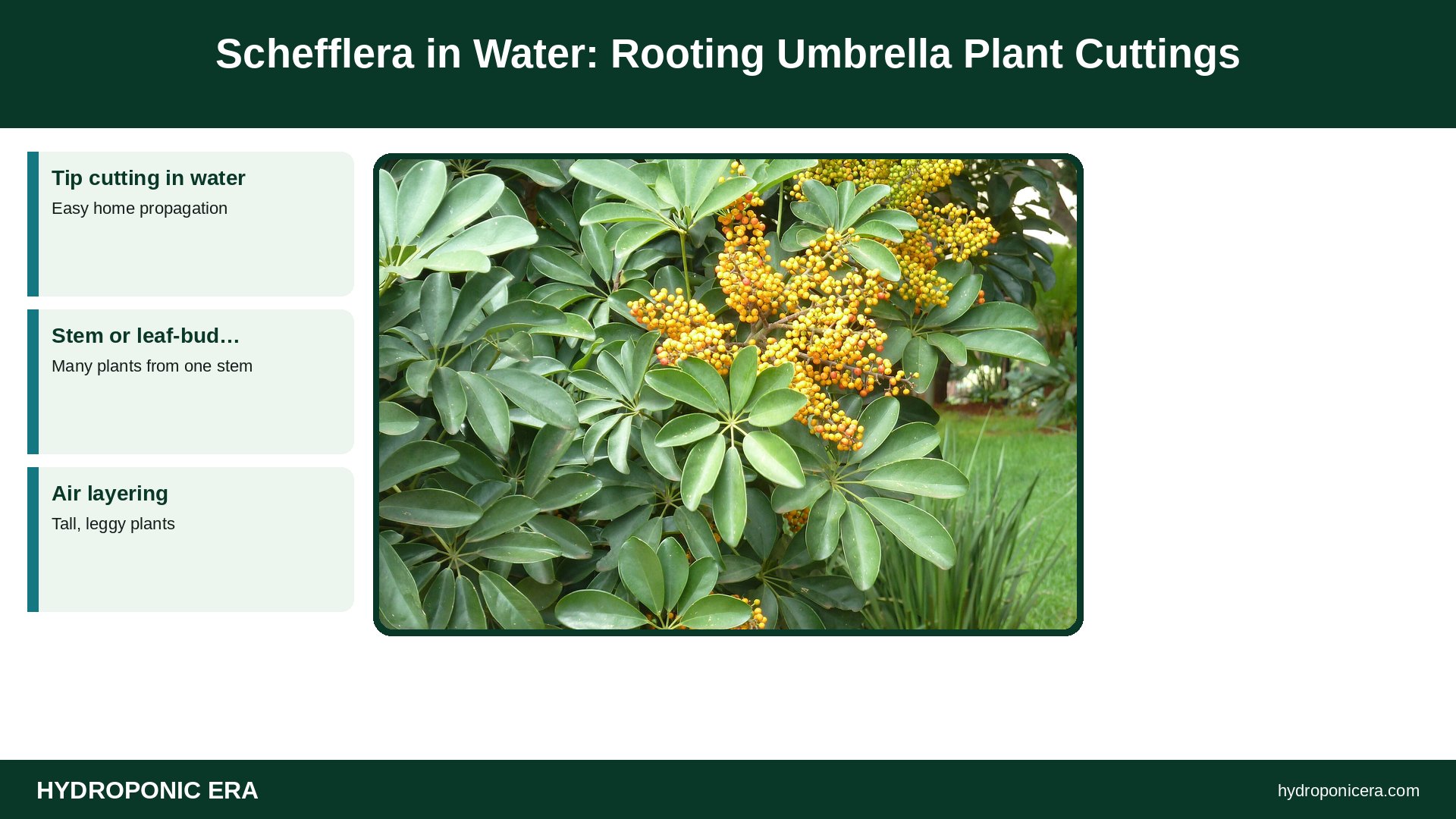
Does Schefflera in Water Root Easily?
Yes, it’s one of the more forgiving woody houseplants. Texas A&M AgriLife lists schefflera among plants propagated by tip cuttings. Illinois Extension lists stem cuttings, leaf-bud cuttings and air layering, and NC State Extension lists stem cuttings and seed for the dwarf umbrella tree (Schefflera arboricola, now often listed as Heptapleurum arboricola). Penn State Extension notes dwarf schefflera is easily propagated by air layering too. Water rooting just shows you the process in a clear jar.
Which Types of Schefflera in Water Root Best?
- Dwarf umbrella tree (S. arboricola): Grows 4–6 feet (1.2–1.8 m) indoors, per NC State; small tip cuttings root well.
- Umbrella tree (S. actinophylla, formerly Brassaia): Larger leaves; trim leaflets to reduce water loss.
- Variegated cultivars like ‘Gold Capella’ and ‘Dazzle’: Root more slowly because pale tissue makes less energy.
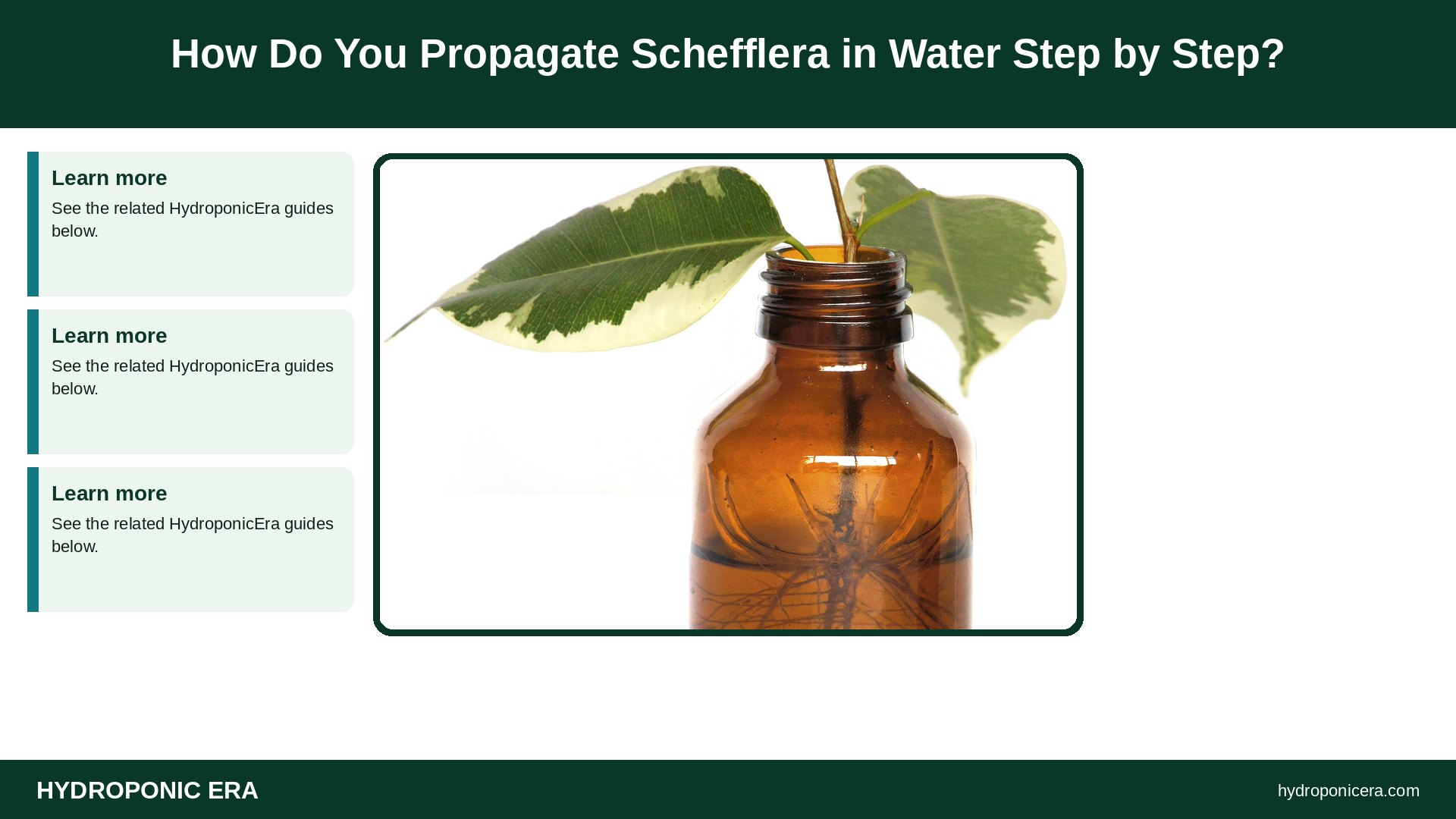
How Do You Propagate Schefflera in Water Step by Step?
- Wear gloves. NC State says the sap can irritate people.
- Pick a healthy, semi-woody stem in spring or summer.
- Cut 4–6 inches (10–15 cm) just below a node with clean pruners. Penn State suggests 3–6 inch (8–15 cm) tip cuttings for houseplants.
- Remove lower leaves so one or two nodes are bare.
- Trim large leaflets by half to cut water loss.
- Place the bare nodes in water, leaves above the rim.
- Keep warm. Illinois Extension recommends rooting media at 75–80°F (24–27°C).
- Give bright, indirect light. NC State says bright, direct light burns schefflera leaves indoors.
- Change the water weekly; Texas A&M says rooting water must stay clean and aerated.
How Long Does Schefflera in Water Take to Root?
Expect several weeks. White bumps form at the nodes first, then lengthen into roots. Vermont Extension says roots can take days or weeks, sometimes months, so be patient, especially in winter. Penn State recommends rooting media at 75–80°F (24–27°C) for the best results. Pot promptly once roots form, since Illinois warns not to wait too long to transplant cuttings.
Why Is My Schefflera in Water Dropping Leaves?
- Water stress: Cuttings lose water through leaves before they have roots; trim leaves and raise humidity.
- Cold: NC State says schefflera can go outside only when temperatures stay above 60°F (16°C); keep cuttings warmer than that.
- Direct sun: Scorched, dropping leaves.
- Rot: Soft, dark stem base; cut above it and refresh water.
- Sudden moves: Pick a spot and leave the jar there.
A humidity dome reduces leaf drop for woody cuttings.
When Should You Move Schefflera in Water to Soil?
Pot it when roots are 1–2 inches (2.5–5 cm). NC State recommends a well-drained potting medium rich in organic matter and watering by letting the soil dry, then soaking thoroughly. It also notes leaves drop if soil is too wet or too dry, so consistency matters.
- Use a small pot with drainage holes.
- Keep the mix lightly moist for the first two weeks.
- Then switch to the dry-then-soak rhythm.
What Is the Best Jar Setup for Schefflera in Water?
A narrow, opaque or tinted jar works best. Narrow necks hold cuttings upright, and darker glass slows algae. Fill it so nodes sit 1–2 inches (2.5–5 cm) under the surface and leaves stay dry. Vermont Extension advises replacing water with fresh, room-temperature water whenever it turns cloudy. Set the jar on a warm shelf, never on a cold windowsill in winter.
| Setting | Target |
|---|---|
| Cutting length | 3–6 in (8–15 cm) |
| Nodes underwater | 1–2 |
| Rooting temperature | 75–80°F (24–27°C) |
| Light | Bright, indirect |
| Water change | Weekly or when cloudy |
Can Schefflera Live in Water Permanently?
It can survive in water for a long time but won’t thrive like a potted plant. If you keep it in water, add a weak, complete fertilizer at about quarter strength, change the water every one to two weeks and give it support as it grows. Semi-hydro in clay pebbles is a sturdier long-term option. See our guide to hydroponic nutrients for dosing basics.
How Do You Air Layer Schefflera Instead?
Air layering roots a branch while it’s still attached. Penn State describes wrapping a wounded stem with moist sphagnum moss and plastic, then cutting below the new roots and planting immediately. It’s best for tall, leggy plants because the parent feeds the branch until roots form, so even large sections succeed.
What Pests Attack Schefflera in Water?
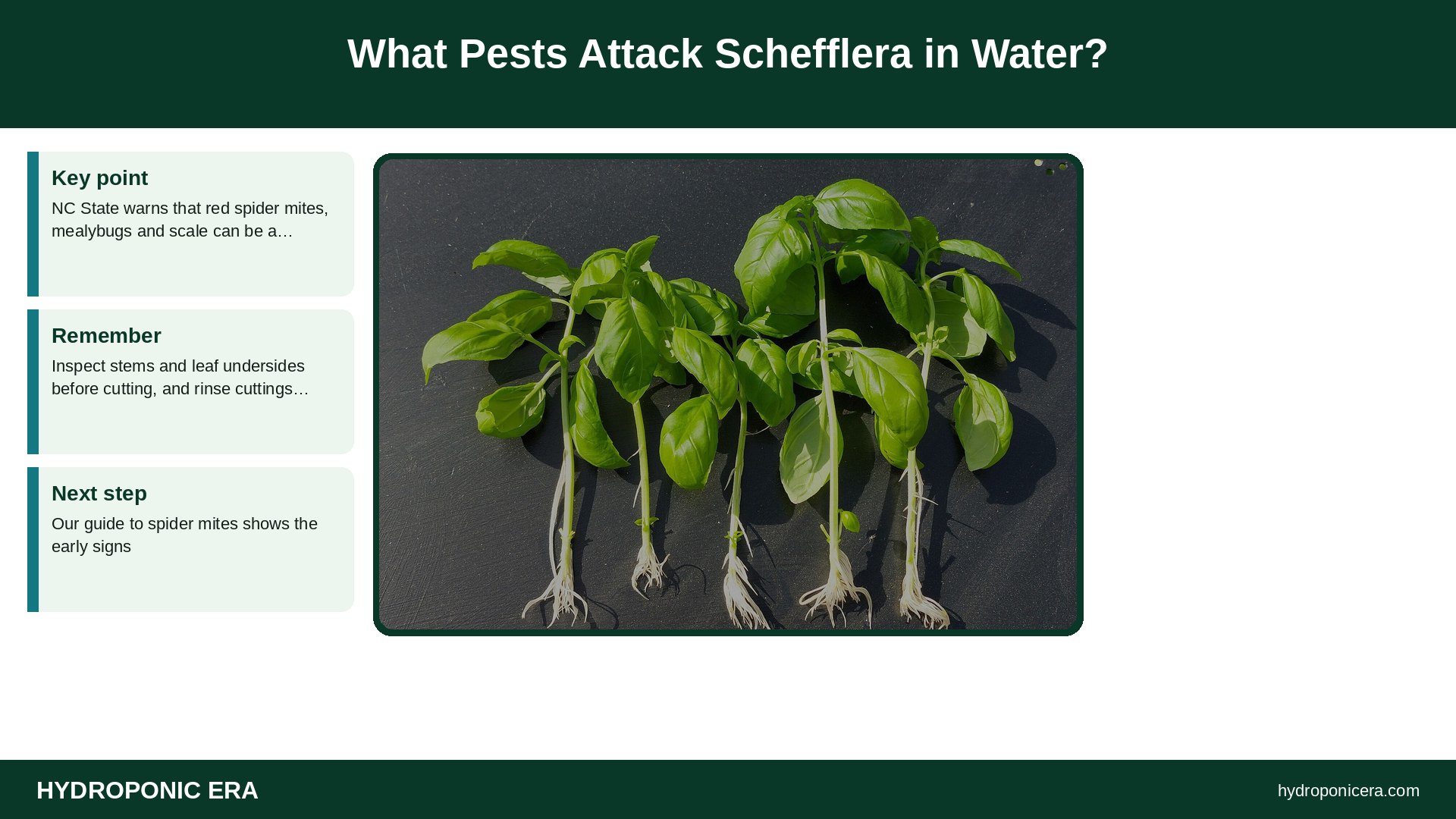
NC State warns that red spider mites, mealybugs and scale can be a serious problem. Inspect stems and leaf undersides before cutting, and rinse cuttings under lukewarm water if you spot pests. Our guide to spider mites shows the early signs.
How Much Light Does Schefflera in Water Need?
NC State suggests a south, west or east exposure with filtered light, such as through a sheer curtain, for 3–4 hours daily, and warns that bright direct light indoors burns the leaves. Raise humidity with a tray of wet pebbles, keeping the pot above the waterline, as NC State recommends.
Is Schefflera Toxic?
Yes. NC State says all parts are seriously toxic to dogs and cats, causing intense mouth and throat irritation, drooling, difficulty swallowing and vomiting if chewed. Keep cuttings and jars away from pets.
How Do You Prune a Leggy Schefflera for Cuttings?
Pruning and propagation go together. Cut leggy stems back to just above a node in spring; the plant usually pushes new shoots below the cut, making it bushier. Every removed tip can become a cutting, so you lose nothing. Dwarf types are popular for shaping into compact shrubs. Take only the top portion of tall stems and keep at least a third of the foliage on the parent plant.
FAQs
Do schefflera cuttings need rooting hormone?
No, but Penn State notes hormone can speed rooting.
Can I root a single schefflera leaf?
A leaf alone rarely becomes a plant. Include a node, as in leaf-bud cuttings.
How many cuttings per jar?
Two or three, with leaves not touching.
Will my schefflera branch after cutting?
Often; new shoots form below the cut.
Can I use tap water for schefflera in water?
Usually; let chlorinated water stand overnight.
Sources
- North Carolina State Extension — Schefflera arboricola (Dwarf Umbrella Tree)
- Texas A&M AgriLife Extension — Propagating Foliage & Flowering Plants
- University of Illinois Extension — Houseplant Propagation
- Penn State Extension — Propagating Houseplants
- University of Vermont Extension — More, Please: Propagating Houseplants
- Photo credits (Wikimedia Commons, edited with titles): Schefflera arboricola, vrugte, a, Pretoria by JMK (CC BY-SA 3.0); Ficus cuttings with roots in a bottle, White background by Biusch (CC BY-SA 3.0); 2008-09-20 Thermometer reading by Ildar Sagdejev (Specious) (CC BY-SA 4.0); Basilikum (Ocimum basilicum) Stecklinge — Josef Schlaghecken by Schlaghecken Josef (CC BY-SA 4.0); Spathiphyllum wallisii hydroponically grown by Kephalian (CC BY-SA 4.0)