
Can tomato early blight affect hydroponic tomatoes? Yes. Tomato early blight can appear in hydroponics because the Alternaria fungi that cause it survive on seed, transplants and plant debris, not only in soil. University of Minnesota Extension says spores need free water or relative humidity of 90% or more to infect. Indoors, the fix is dry leaves, good airflow, clean transplants and prompt removal of spotted leaves.
Key takeaway: Tomato early blight makes brown leaf spots with target-like rings, starting on older, lower leaves. Hydroponics removes soil splash, the main outdoor source, but humid grow rooms and infected seedlings can still bring it in. Prevention through humidity control and sanitation beats treatment.
| Factor | What sources report | Source |
|---|---|---|
| Cause | Alternaria tomatophila and A. solani (A. linariae) | UMN; NC State |
| Spot size | Up to 1/2 inch (13 mm), concentric rings | UMN Extension |
| Favored temperature | 59–80°F (15–27°C); optimum 82–86°F (28–30°C) | UMN Extension |
| Infection needs | Free water or RH of 90%+ | UMN Extension |
| Sources | Debris, seed, transplants, nightshade weeds | UMN; UC IPM |
| First symptoms | Older, lower leaves | UMN; UC IPM |
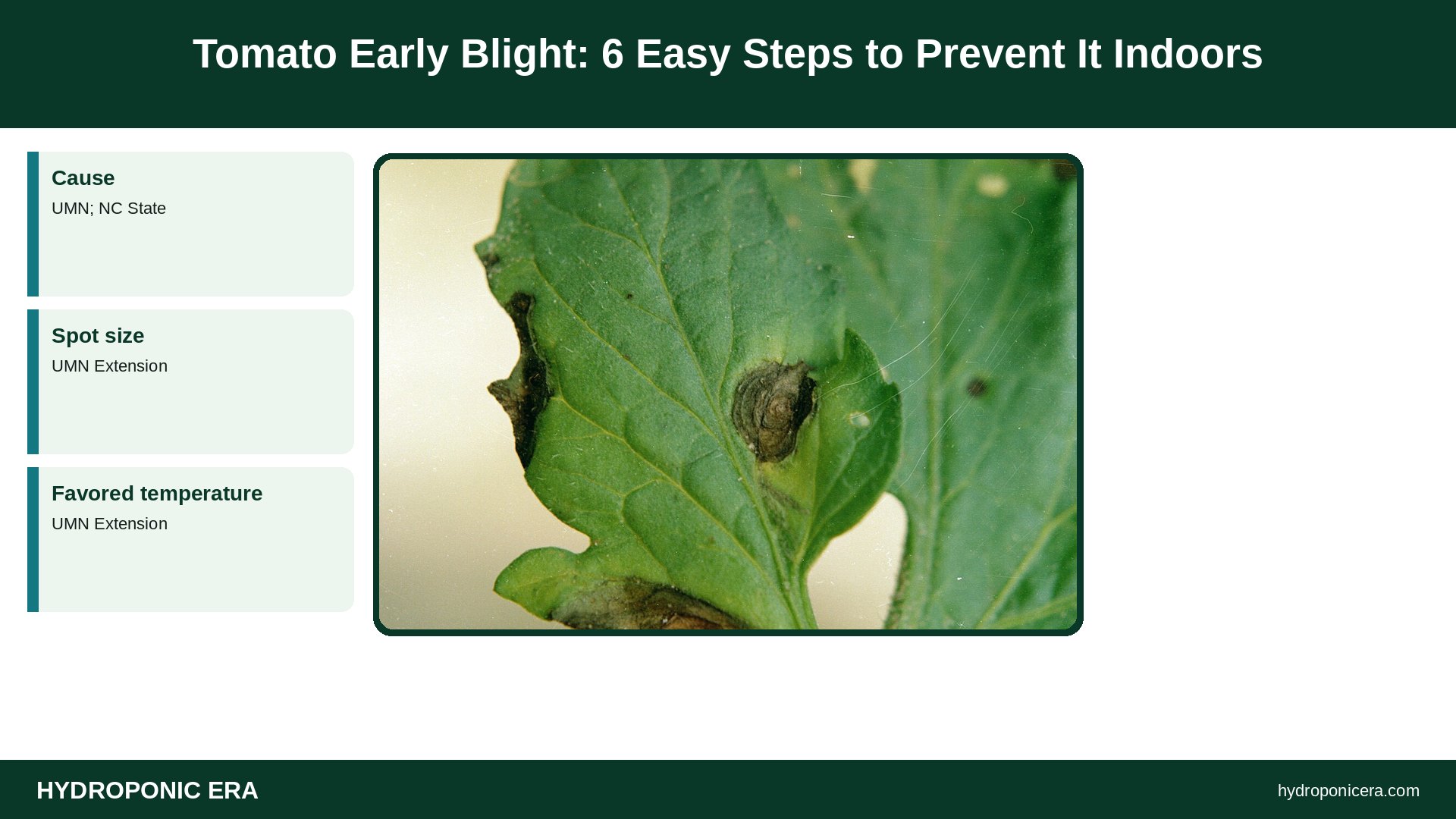
What Is Tomato Early Blight?
Tomato early blight is a fungal leaf, stem and fruit disease caused by Alternaria species. University of Minnesota Extension names Alternaria tomatophila and Alternaria solani, and NC State lists Alternaria linariae. These fungi also infect potatoes, peppers and nightshade weeds. UMN calls it one of the most common tomato diseases, often causing heavy defoliation.
Lower leaves are attacked first. UC IPM describes small black or brown spots about 0.25–0.5 inch (6–12 mm) across, leathery and often with a concentric ring pattern. Fruit spots are sunken and dry, frequently near the calyx end.
How Do You Identify Tomato Early Blight in Hydroponics?
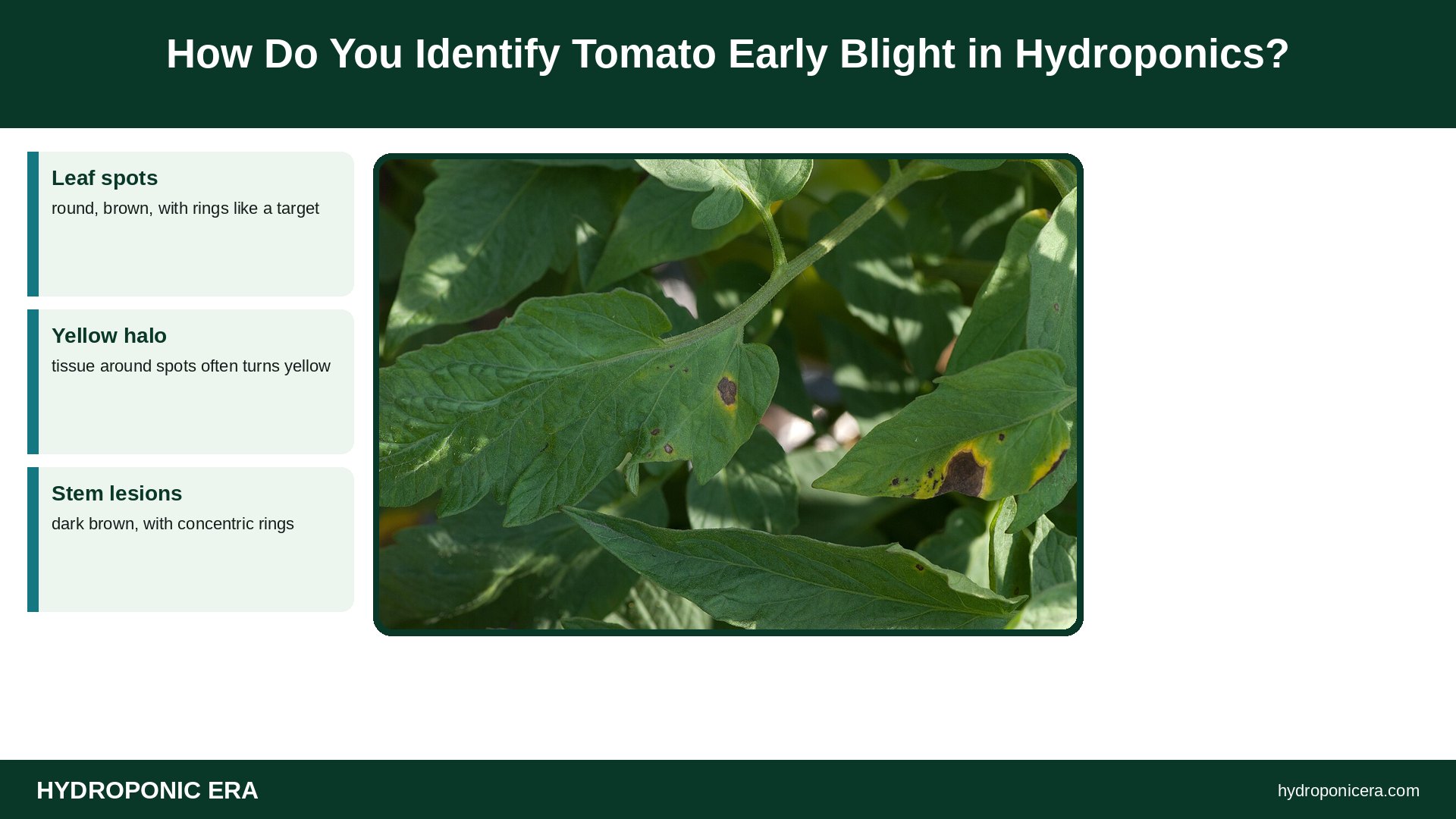
Identify tomato early blight by brown spots with target-like concentric rings on older leaves, often with a yellow halo. UMN says spots grow up to 1/2 inch (13 mm) and infected leaves yellow, brown and drop. In hydroponics the pattern is the same; it simply starts wherever leaves stay wet longest.
- Leaf spots: round, brown, with rings like a target.
- Yellow halo: tissue around spots often turns yellow.
- Stem lesions: dark brown, with concentric rings.
- Fruit spots: leathery and black near the stem end.
Compare with other tomato leaf problems in our guides to tomato leaf mold and hydroponic tomato yellow leaves.
How Does Tomato Early Blight Get Into a Hydroponic System?
Tomato early blight reaches hydroponic systems through infected seed, transplants, plant debris, hands and tools. UMN says the pathogen survives on tomato seed and may be introduced on transplants, and spores spread by wind, human contact and equipment. Once present, warm humid air and wet leaves let it spread from plant to plant.
Spores germinate between 47 and 90°F (8–32°C) and need free water or high humidity, according to UMN. Leaf spots can appear in as little as five days. That is why dense canopies with poor airflow are the highest-risk spots in a grow room.
How Do You Prevent Tomato Early Blight in Hydroponics?
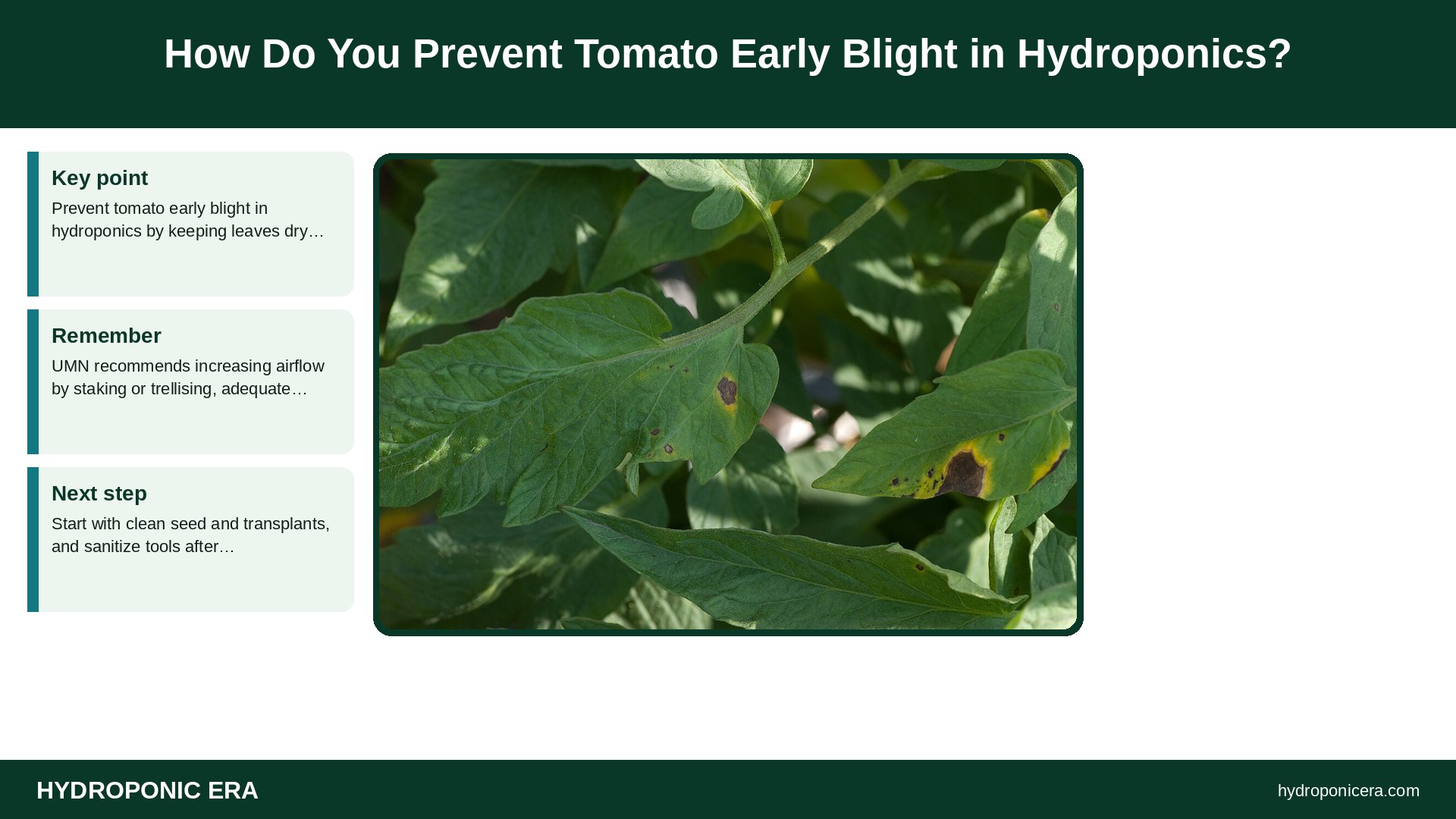
Prevent tomato early blight in hydroponics by keeping leaves dry, humidity below the 90% danger zone, and plants well spaced and pruned. UMN recommends increasing airflow by staking or trellising, adequate spacing, and pruning bottom leaves. Start with clean seed and transplants, and sanitize tools after touching infected plants.
- Buy clean seed and inspect transplants before they enter the room.
- Prune lower leaves so air moves under the canopy.
- Run fans and a dehumidifier so leaves dry quickly.
- Never wet foliage; feed only at the root zone.
- Sanitize pruners and wash hands between plants.
- Choose tolerant varieties when available.
Our guides to humidity and VPD in indoor hydroponics and hydroponic tomato pruning cover the two most important controls.
How Do You Treat Tomato Early Blight on Hydroponic Plants?
Treat tomato early blight by removing spotted leaves early and fixing the humidity that allowed it. UMN says you can remove up to one-third of a plant’s leaves when you catch it early, but no more. Bag infected leaves and keep them out of the grow room. UMN also notes tomato plants tolerate a lot of early blight without losing much yield.
| Action | Why it helps | Source |
|---|---|---|
| Remove spotted leaves | Cuts spore load | UMN Extension |
| Limit removal to 1/3 of leaves | Keeps plant productive | UMN Extension |
| Sanitize tools | Stops spread by hands and tools | UMN Extension |
| Labeled fungicide if needed | Protects new growth | UC IPM; NC State |
UC IPM lists options such as fixed copper and Bacillus subtilis among products for early blight; always check that a product is labeled for greenhouse or indoor tomatoes and follow the label.
Which Hydroponic Conditions Raise Tomato Early Blight Risk?
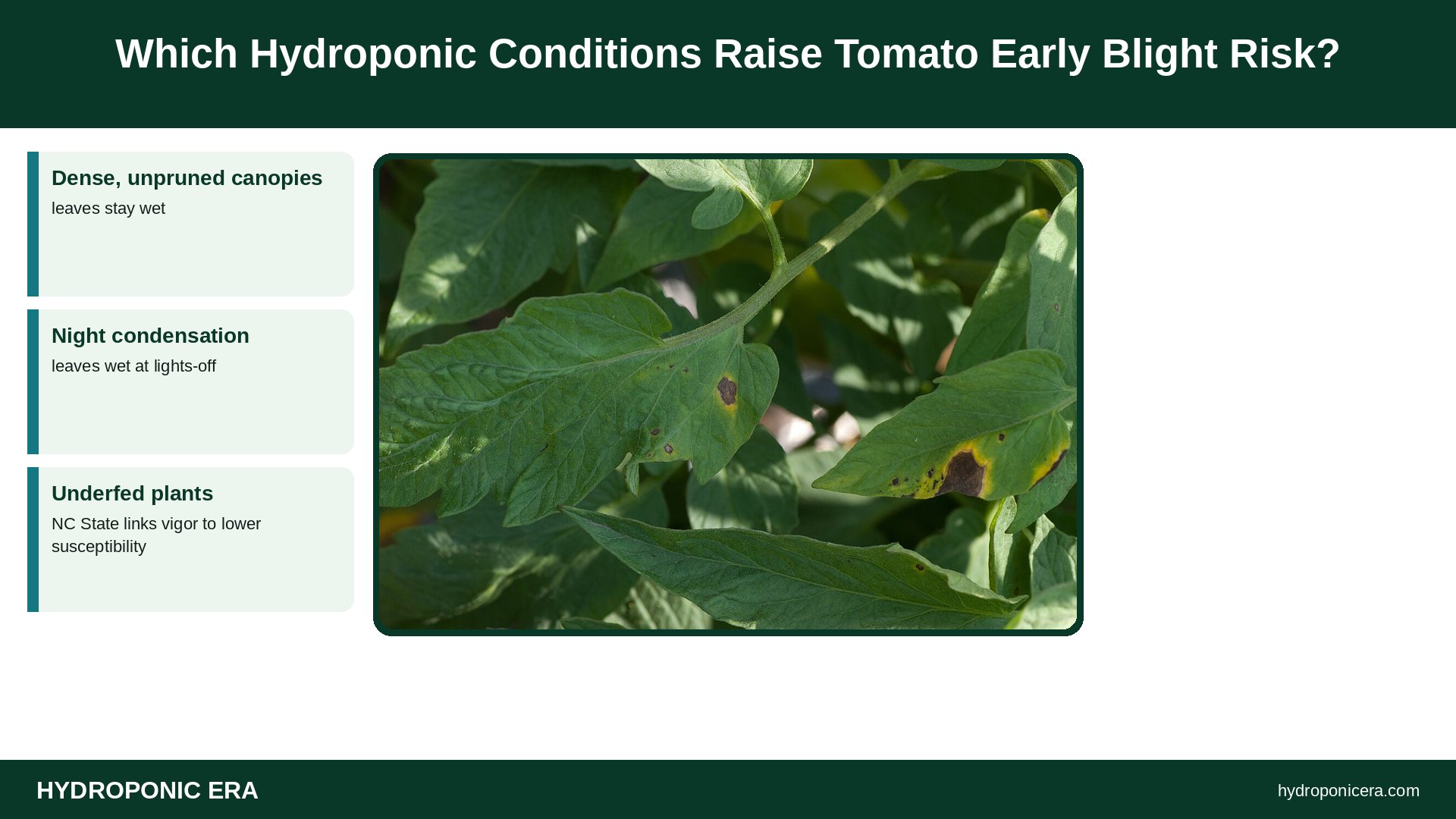
The highest tomato early blight risk comes from warm, humid rooms where leaves stay wet. UMN gives an optimum of 82–86°F (28–30°C), with disease developing from 59–80°F (15–27°C) and spreading in heavy dew or 90%+ humidity. Weak plants are also more susceptible; NC State says good fertility and plant vigor reduce susceptibility.
- Dense, unpruned canopies: leaves stay wet.
- Night condensation: leaves wet at lights-off.
- Underfed plants: NC State links vigor to lower susceptibility.
- Leaf debris on floors: keeps spores in the room.
Can Tomato Early Blight Affect Peppers and Potatoes in the Same Room?
Yes. UMN says the early blight pathogens can infect tomatoes, potatoes, peppers and several nightshade weeds. If you grow peppers or potatoes near tomatoes in the same grow room or greenhouse, inspect them too. Keep infected tomato leaves away from other nightshade crops and clean tools before moving between them.
UC IPM notes the fungus survives on residue of infected tomatoes, potatoes and nightshade weeds, so clear all plant debris between crops, including dropped leaves under benches and inside trays. This single habit removes the most common carryover source in a hydroponic tomato room.
FAQ About Tomato Early Blight
Can tomato early blight spread through the nutrient solution?
The main spread is by spores in air, water splash, hands and tools, not root uptake.
Is tomato early blight common in hydroponics?
It is less common than outdoors because soil splash is removed, but humid rooms can still get it.
Can I eat tomatoes from plants with early blight?
Unspotted fruit is fine to eat; discard fruit with lesions.
What is the difference between early and late blight?
Early blight makes ringed spots on old leaves; late blight makes large, greasy blotches that spread fast.
Does pruning help tomato early blight?
Yes. UMN says pruning lower leaves helps prevent spores reaching leaves.
Sources
- University of Minnesota Extension — Early blight in tomato and potato
- UC Statewide IPM Program — Tomato early blight
- NC State Extension — Early blight of tomato
- Photo credits (Wikimedia Commons, edited with titles): Alternaria solani – leaf lesions by Clemson University – USDA Cooperative Extension Slide Series (CC BY 3.0 us); Early blight on tomato leaves (7871930010) by Dwight Sipler from Stow, MA, USA (CC BY 2.0)