
Quick Answer
white leaf residue means separating hard-water spray spots and dried nutrient film from true powdery mildew before you spray fungicides. Rub, magnify, and check patterns: mineral residue wipes; mildew is living fungal growth on leaf surfaces. Pair with powdery mildew, hard water/RO, salt crust, photo diagnosis, humidity/VPD, and airflow.
Key takeaways for white leaf residue
- White residue leaves hydroponics is a practical home-hydro workflow—not filler.
- Wipe test first—residue moves; mildew structure stays fungal.
- Hard-water mist and foliar sprays leave white rings under LEDs.
- Powdery mildew loves dense, still, humid leaf layers—not just “white stuff.”
- Prefer university/extension sources over forum myths.
- Wrong spray wastes time and can stress edible leaves.
- Original ops card keeps White residue leaves hydroponics decisions consistent.
- White residue leaves hydroponics fails when growers skip the boring checks.
Related HydroponicEra guides

Why This Matters

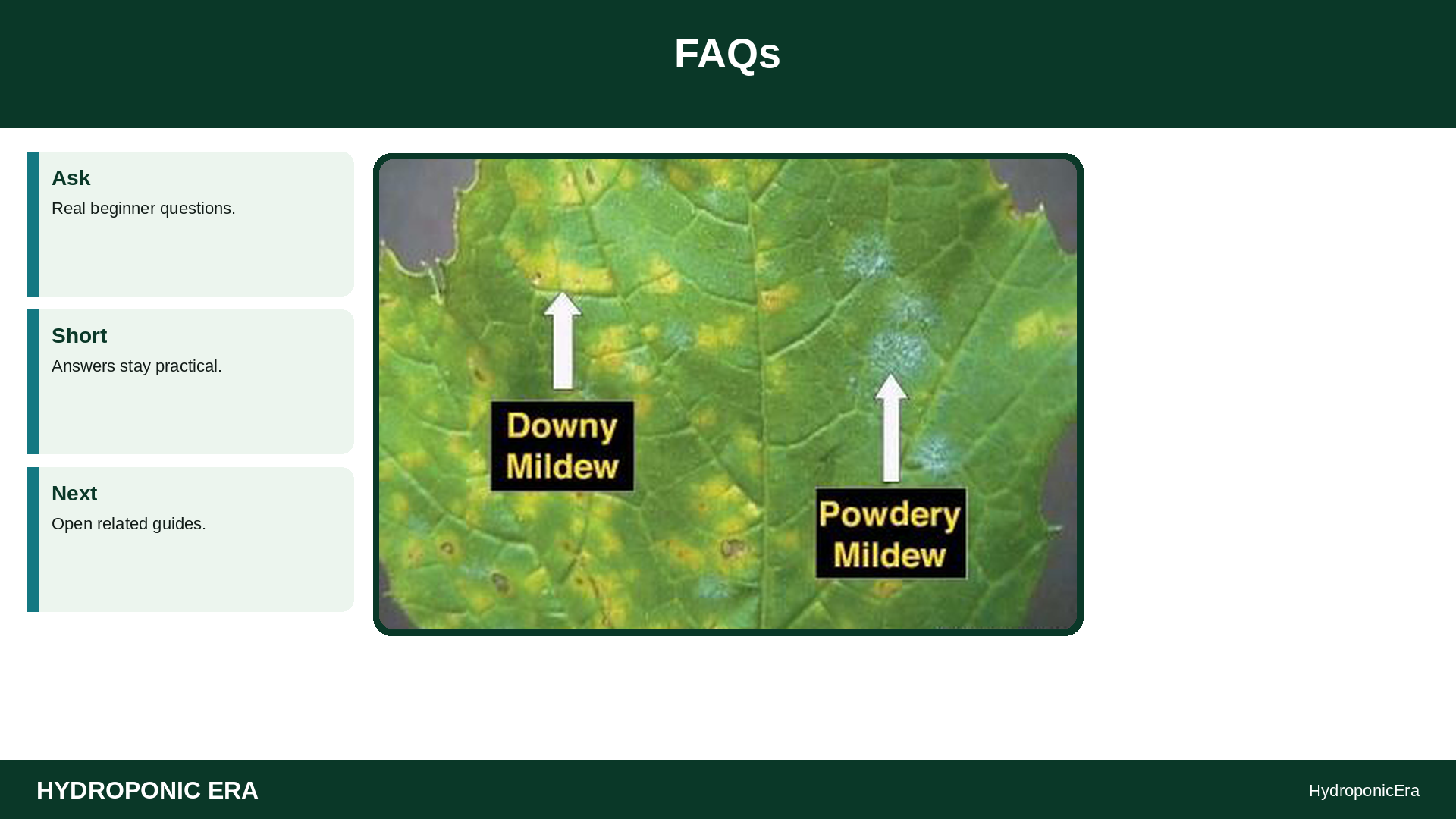
white leaf residue lookalike triage stops fungicide panic over mineral spots. Extension disease pages describe powdery mildew as a real fungal problem with characteristic colonies; irrigation/water-quality materials explain mineral content in water that can leave deposits when misted or splash-dried on foliage.
Home hydro adds LED close-range viewing that makes every fleck dramatic. Use a differential checklist before treatment.
Comparison / Decision Table
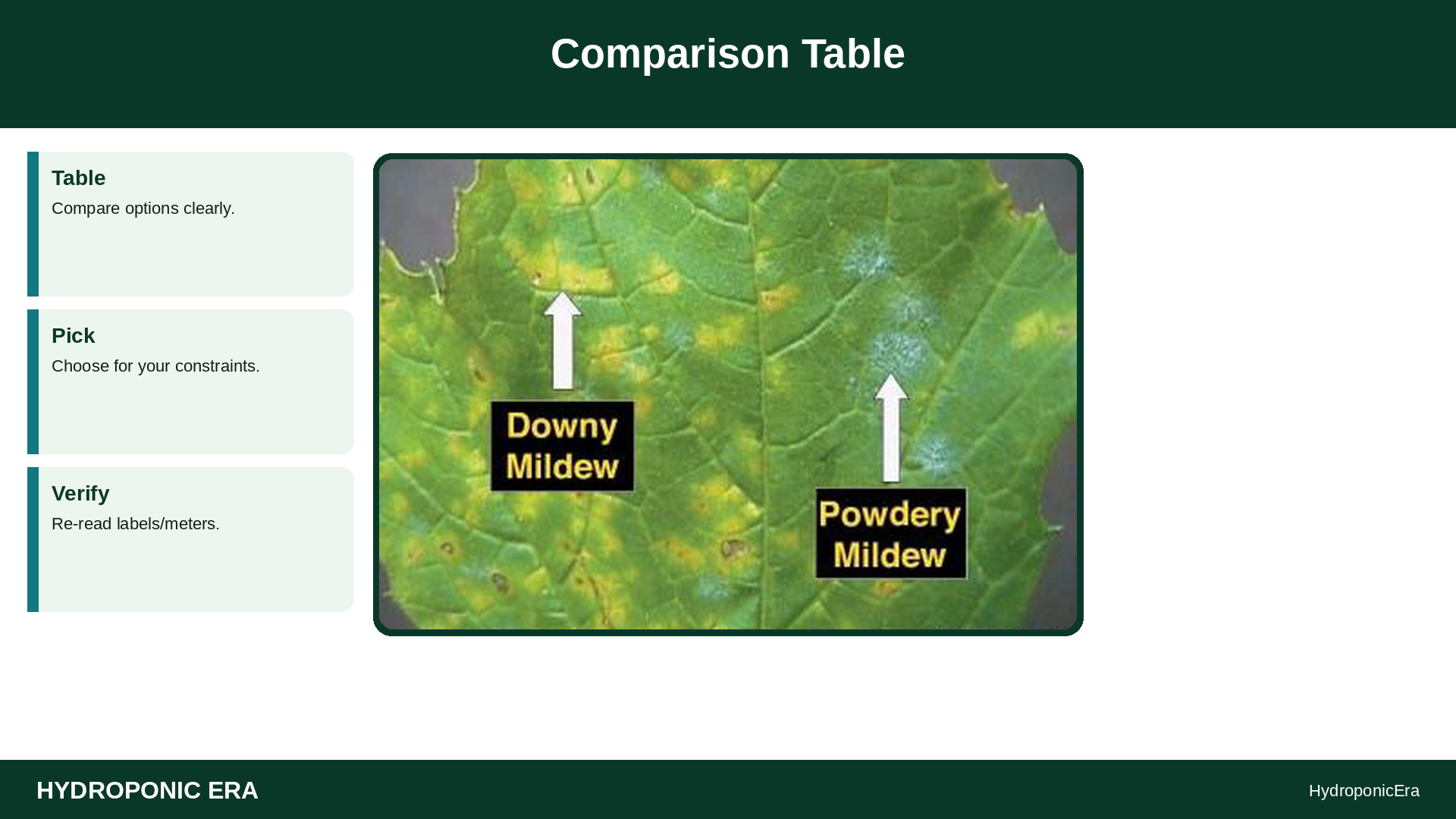
| Lookalike | Wipe / feel | Pattern |
|---|---|---|
| Hard-water / spray residue | Wipes off; gritty/filmy | Droplet rings, upper surfaces after mist |
| Nutrient salt film | Wipes; may taste salty (do not make a habit) | Near splash, media collar, leaf drip |
| Powdery mildew | Does not wipe like chalk dust alone; fungal texture | Patches on leaf; can spread; often both faces over time |
| Dust / pollen / media fines | Wipes; no colony growth | Near fans, rockwool dusting, open windows |
Step-by-Step Workflow
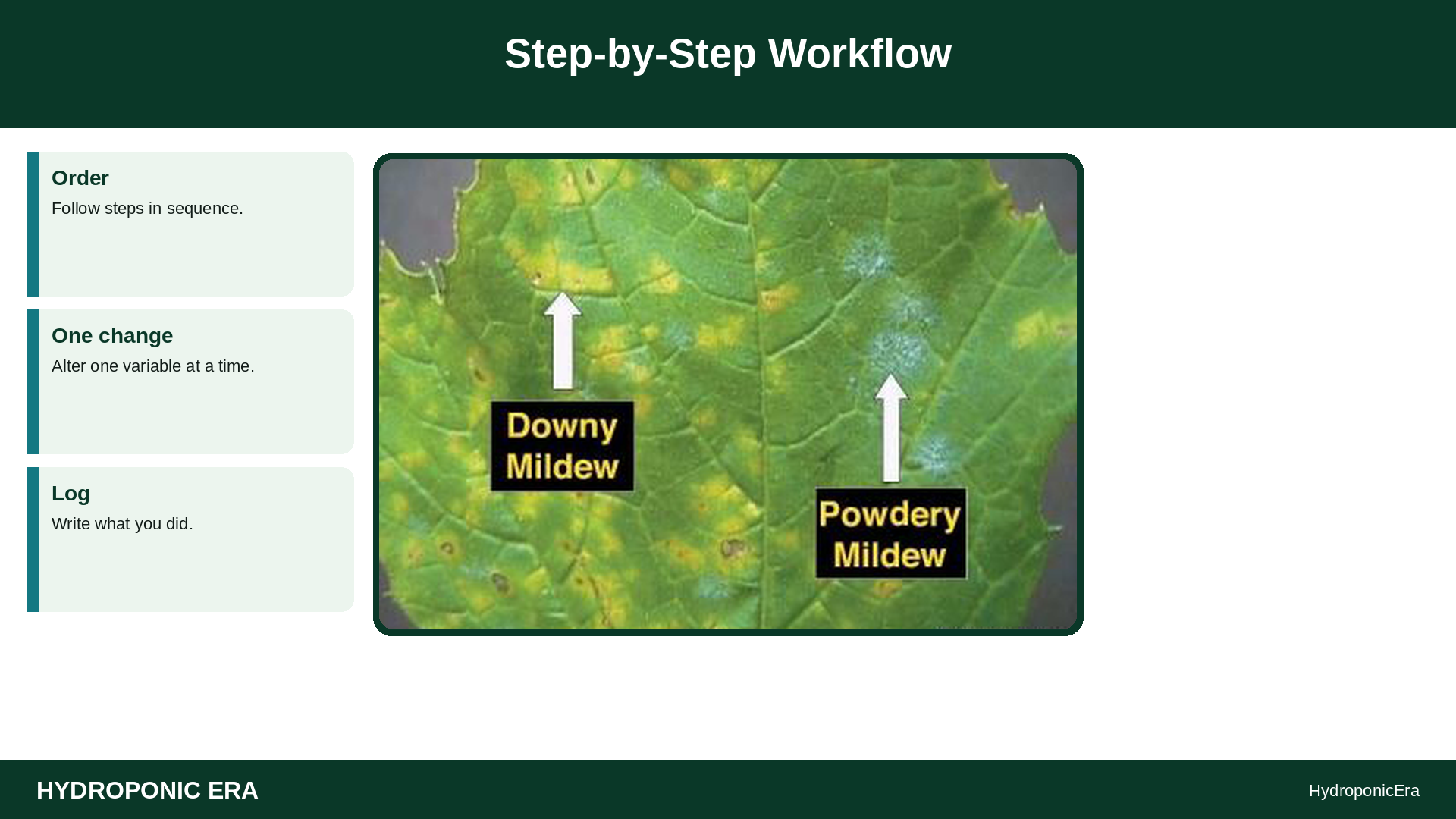
- Do a wipe test with a clean damp cloth on a small area.
- Photograph under consistent light before and after wipe.
- Check humidity, leaf wetness, and airflow around dense canopies.
- Inspect lower leaves and shaded layers for true colonies.
- If residue: switch to finer water for foliar work; reduce splash; clean leaves gently.
- If mildew: cultural controls first—airflow, spacing, remove worst leaves—then labeled options if needed.
- Do not confuse media salt crust on pebbles with leaf mildew.
- Quarantine heavily infected plants from clean tents when practical.
- Avoid blasting edible leaves with harsh random chemicals.
- Log the diagnosis so next white fleck is faster.
Key Variables
| Variable | Effect | Link |
|---|---|---|
| Water hardness | Spray spots | hard water, RO |
| Humidity / still air | Mildew pressure | VPD, fans |
| Splash / foliar habit | Residue load | mixing, clean |
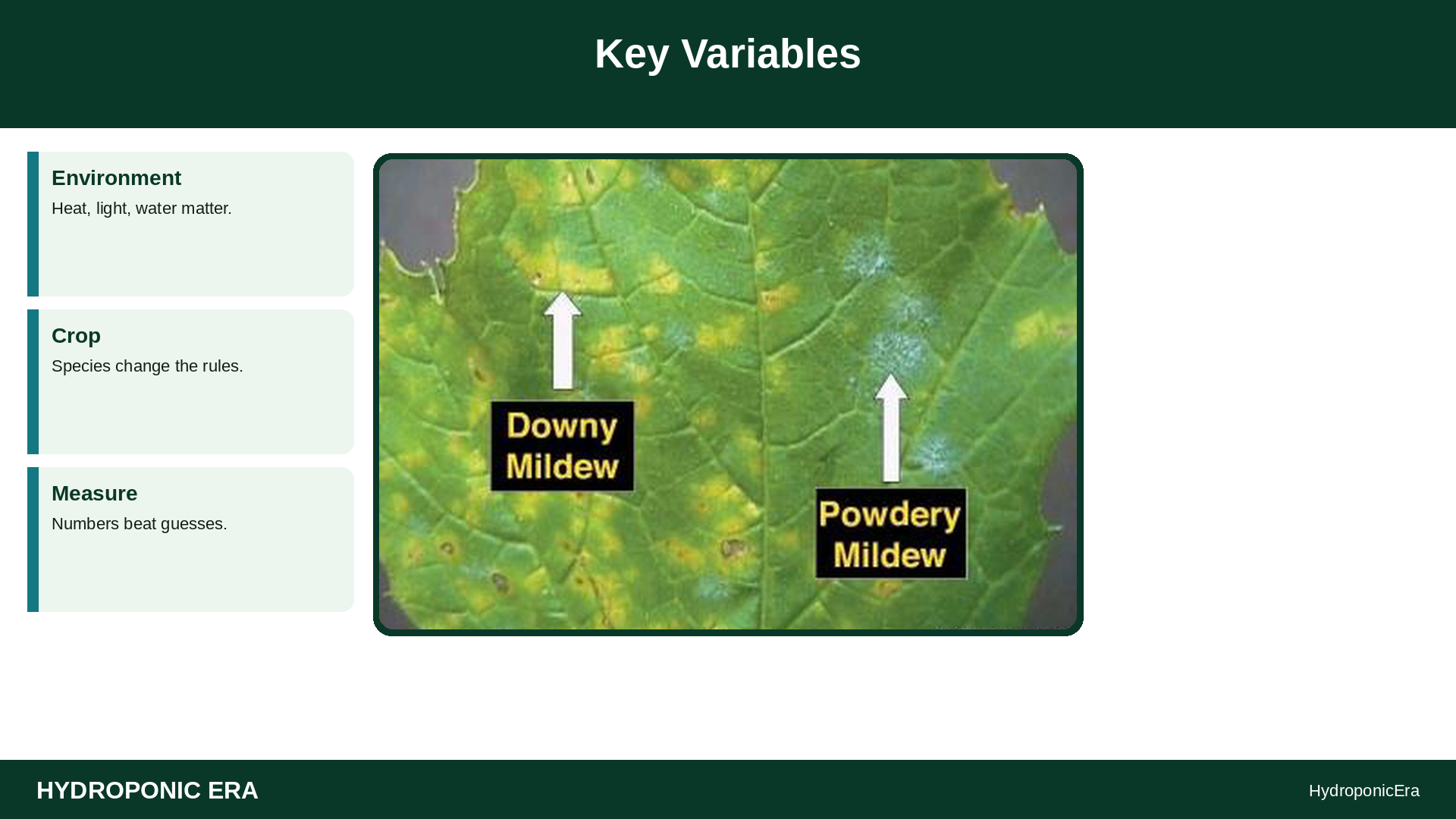
| Canopy density | Microclimate for PM | spacing |
Common mistakes with white leaf residue

- Spraying fungicide on hard-water rings
- Ignoring wipe tests
- Calling every white speck “PM” in group chats
- Misting with hard tap under strong LEDs daily
- Zero airflow in a packed tent
- Confusing pebble salt crust with leaf disease
Troubleshooting
| Signal | Action |
|---|---|
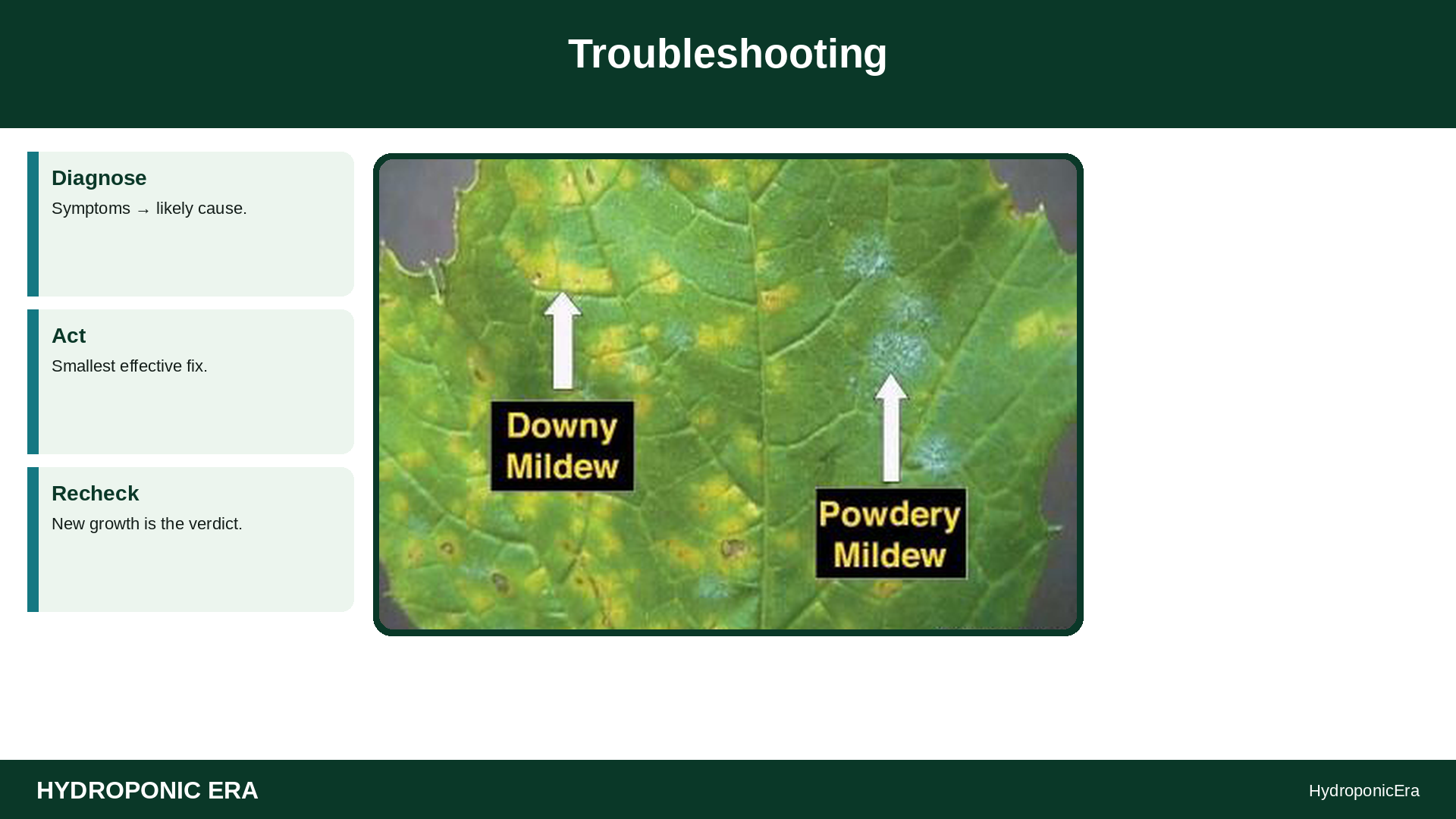
| Wipes clean, droplet rings | Residue protocol—water quality + less mist |
| Spreading patches, no wipe-off | Treat as PM cultural path |
| Only after foliar feed | Review spray water and drying |
| White on media only | See salt-crust guide |
Practical Framework

Lookalike card: Wipe test | Photo | Pattern | Humidity/airflow | Treat cause class.
Closing practice for white residue leaves hydroponics: chalky water marks are not automatic fungus—prove it.
What to Check Before You Spray White Spots on Leaves
- Wipe test done?
- Photos saved?
- Hardness of spray water known?
- Airflow/humidity checked?
- PM vs residue decided?
- Food-safe handling considered?
Photo Protocol for Lookalikes
Shoot a close-up, wipe a small patch, then shoot again. Residue that vanishes is not a fungicide emergency. True powdery mildew colonies persist as fungal growth and often spread into shaded leaf layers when humidity and still air stack.
Hard tap mist under LEDs is a classic residue factory. Switch foliar spray water quality, reduce unnecessary misting, and improve drying with airflow rather than inventing a disease outbreak.
When Both Appear
You can have mineral spots and mildew in the same tent. Treat the classes separately: clean water habits for residue, cultural humidity/spacing controls for mildew, and only then consider labeled options appropriate for edible crops.

Practice & Field Notes
Keep a “wipe kit” with clean cloths near the tent. Thirty seconds of wipe testing saves days of wrong sprays. Photograph both sides of leaves; mildew often colonizes where airflow is worst. Residue rings track droplet edges after misting with mineral-rich water.
If you must foliar feed, use appropriate water quality, spray when lights are gentler, and ensure drying. Pair cultural mildew pressure control with humidity/VPD, spacing, and fans rather than perfume-only thinking.
Media-collar white crust is a different article—see salt crust—do not treat pebbles with leaf fungicides.
Scenario Walkthrough
White flecks appear after you foliar-sprayed with tap water under LEDs. Wipe test clears rings. Diagnosis: residue. Switch spray water, reduce mist frequency, improve drying. Do not start a fungicide regimen for mineral spots.
Second case: white patches spread on lower leaves in a humid still corner and fail the wipe test. Treat as powdery mildew culture: airflow, spacing, remove worst leaves, humidity control—then labeled options if your crop and local rules allow. Keep edible-crop caution high.
Key Limits & Honest Scope
Wipe tests and pattern reading are practical differentials, not a substitute for lab pathology when a crop is commercially critical. For home edible gardens, cultural controls and honest diagnosis prevent most wrong sprays.
Hard-water chemistry varies by municipality—test or use RO for foliar work if spots are chronic. Mildew pressure varies by species and climate; basil and cucurbits often need vigilance. Always follow label law if you use any fungicide product, and prefer prevention via airflow and humidity management.
Do not diagnose from a single blurry social photo. Your wipe test and canopy microclimate notes beat anonymous IDs.
Review Cadence
Revisit this guide after any major equipment or climate change. Log what you measured, what you changed, and what new growth did within a week. Share the checklist with anyone who helps water the system so diagnosis stays consistent. Internal links in the Related section keep you inside the HydroponicEra cluster instead of random search loops. Prefer extension sources in the Sources list when advice conflicts with forum lore.
If symptoms span multiple articles, solve hydraulics and climate before micronutrient folklore. Steady meters, clean probes, and dated notes are the authority tools available to home growers without a lab.
FAQs about white leaf residue
Can residue hurt plants?
Heavy films can shade or irritate; usually less urgent than true PM spread.
Is milk spray needed?
Do not treat residue with disease folklore—diagnose first.
RO water help?
Often for foliar misting if tap spots badly.
Lower leaf white fuzz?
Higher suspicion for PM—inspect carefully.
Algae on lids vs leaves?
Different surfaces—still fix light leaks on reservoirs.
Extension PM pages?
Use university disease sheets—not anonymous photos alone.
Extended Home-Grower Walkthrough
Use this extended walkthrough as a second pass after the Quick Answer. Walk the system with a notebook: write the date, crop, EC, pH, reservoir temperature, and one observation about roots or leaves. Change only one control at a time when a problem appears. If last week’s fix did not show in new growth, revert and try the next smallest lever. Keep university and extension principles in mind—oxygen, sanitation, and measured nutrition beat product stacking.
Photograph the canopy and the reservoir surface weekly. Dated photos settle arguments about algae, tip burn, or stretch faster than memory. When a helper waters for you, leave a one-page card with do-not-touch items and the exact top-off rule. Store calibration sachets next to the meters so “I will calibrate later” stops being the default. Review timers after any power event. Confirm air stones still roar. Confirm drains still drain.
At the end of the week, score the cycle 1–5 for ease and plant quality. Low scores should trigger a sanitation or climate review before you buy new hardware. Link neighboring HydroponicEra guides when the symptom matches a cluster page. Prefer labeled procedures over improvisation under stress. Healthy boring routines are the real upgrade path for home hydroponics.
Keep white leaf residue on your ops card so helpers follow one standard.
Keep white leaf residue on your ops card so helpers follow one standard.
Keep white leaf residue on your ops card so helpers follow one standard.
Keep white leaf residue on your ops card so helpers follow one standard.
Keep white leaf residue on your ops card so helpers follow one standard.
Keep white leaf residue on your ops card so helpers follow one standard.
Keep white leaf residue on your ops card so helpers follow one standard.
Keep white leaf residue on your ops card so helpers follow one standard.
Keep white leaf residue on your ops card so helpers follow one standard.
Keep white leaf residue on your ops card so helpers follow one standard.
Keep white leaf residue on your ops card so helpers follow one standard.
Keep white leaf residue on your ops card so helpers follow one standard.
Keep white leaf residue on your ops card so helpers follow one standard.
Keep white leaf residue on your ops card so helpers follow one standard.
Keep white leaf residue on your ops card so helpers follow one standard.
Sources
- Wisconsin Horticulture / Extension — Powdery mildew
- Penn State Extension — A Water Quality Toolkit for Greenhouse and Nursery Production
- Oklahoma State University Extension — Understanding Your Irrigation Water Test Report
- Penn State Extension — Interpreting Irrigation Water Tests
- Oklahoma State University Extension — Hydroponics
- Michigan State University Extension — Water quality considerations for greenhouse and nursery crops