
Quick Answer
chlorosis after reservoir change means pale growth after a “perfect” reset often traces to pH/chelate availability, temperature shock, mix-order mistakes, transplant/root disturbance, or simply waiting for new growth—not instant proof you bought the wrong brand. Pair with yellow leaves, iron deficiency, chelates, iron precipitation, mixing order, and transplant shock.
Key takeaways for chlorosis after reservoir change
- Yellow leaves after nutrient change is a practical home-hydro workflow—not filler.
- New yellow after a change is a timed diagnosis, not a brand witch hunt.
- Check pH and mix order before adding iron on top of iron.
- Temperature and root handling during dumps stress plants.
- Prefer university/extension sources over forum myths.
- Judge recovery on new leaves over 3–7 days.
- Original ops card keeps Yellow leaves after nutrient change decisions consistent.
- Yellow leaves after nutrient change fails when growers skip the boring checks.
Related HydroponicEra guides

Why This Matters
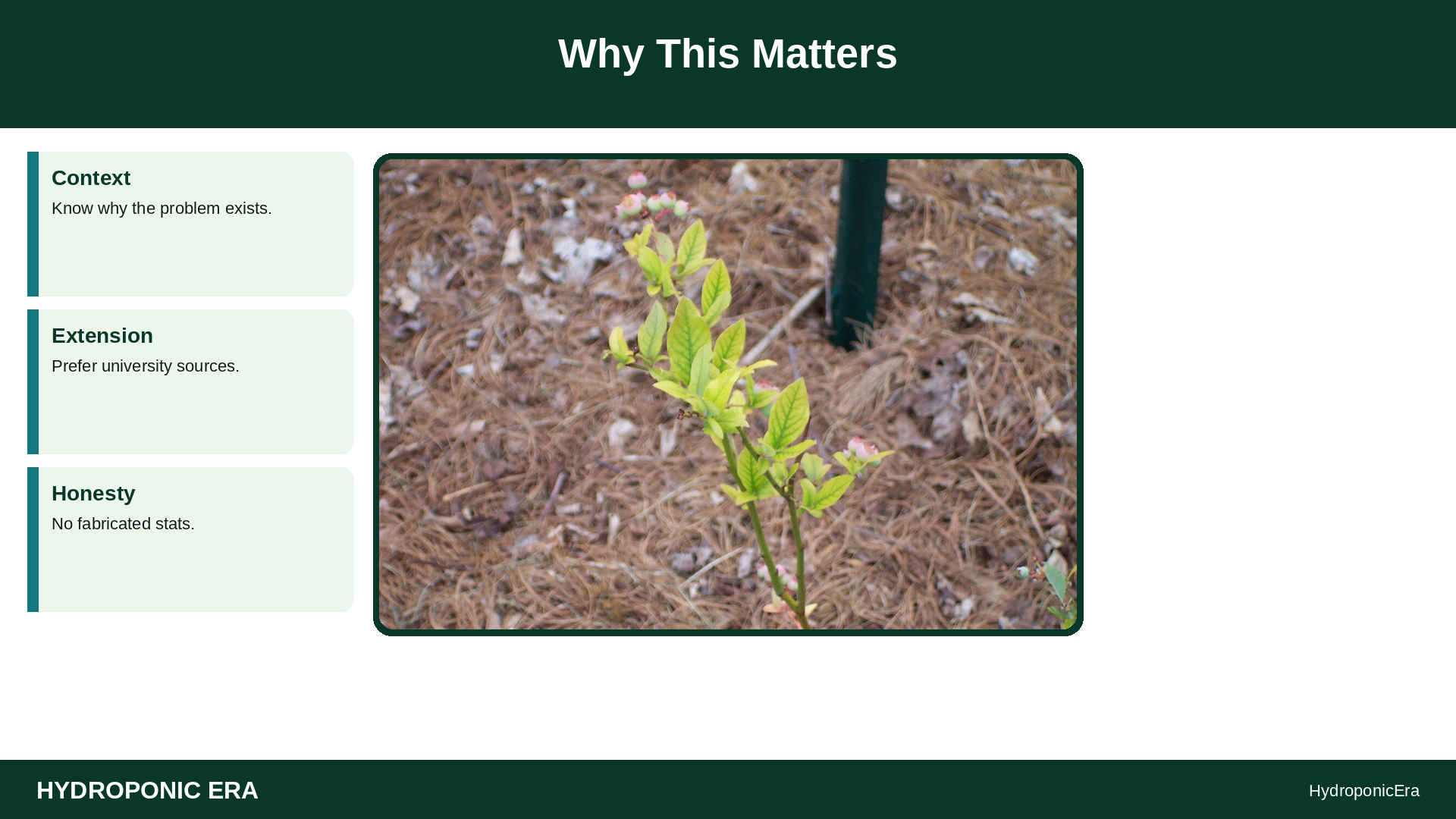
chlorosis after reservoir change is a post-reset chlorosis timeline. Penn State and Oklahoma State nutrition/EC–pH materials stress correct solution management; iron deficiency and chelate pages explain availability when pH drifts. Home growers often dump, remix fast, swing pH hard, chill or heat roots, then panic at pale tops.
Order of checks beats stacking micros.
Comparison / Decision Table
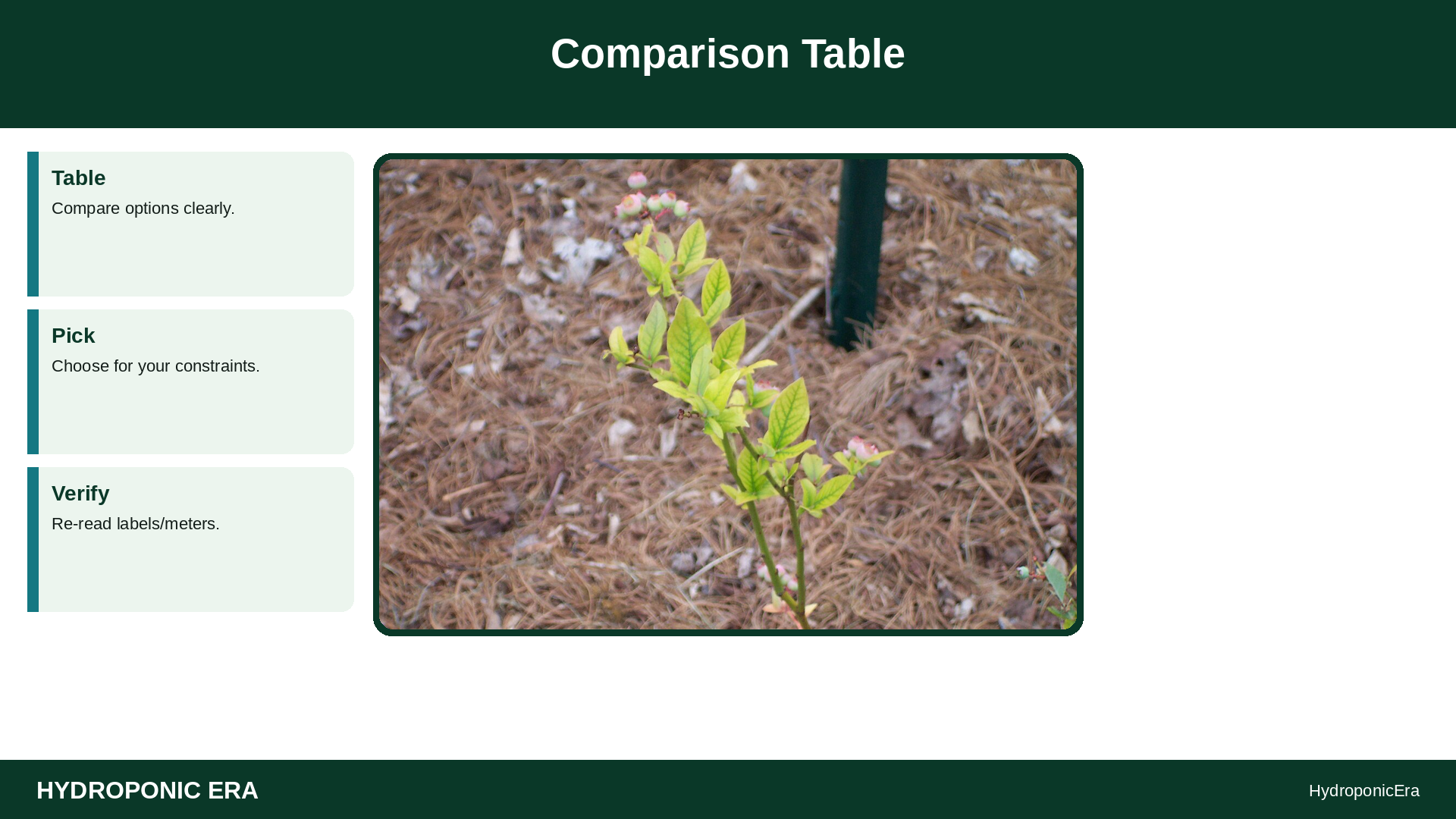
| Order | Check | Why |
|---|---|---|
| 1 | pH + meter calibration | Fe availability window |
| 2 | Mix order / precipitate in tank | Nutrients may not be dissolved as assumed |
| 3 | Solution temperature | Cold shock / uptake stall |
| 4 | Root handling / transplant stress | Pale from shock, not missing Fe fairy dust |
Step-by-Step Workflow
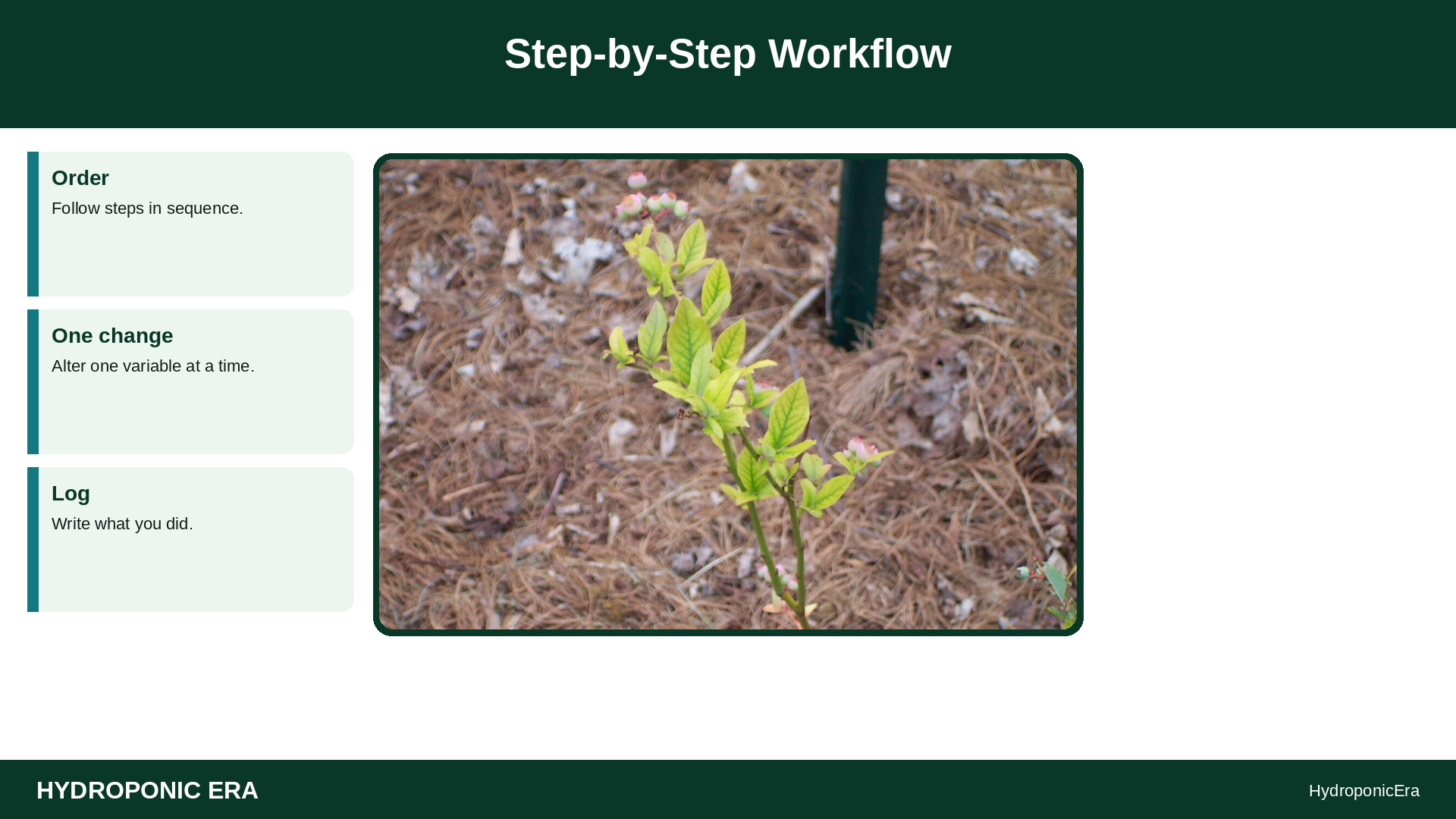
- Note when yellow appeared relative to the dump hour.
- Calibrate pH/EC; measure the new solution.
- Inspect for cloudy precipitate or rusty sediment after pH adjust.
- Confirm mix order (A/B, micros, adjusters) was followed.
- Match solution temperature closer to prior root-zone comfort.
- Avoid stacking multiple Fe products the same day.
- If plants were pulled hard during clean, treat as transplant recovery.
- Keep light moderate until turgor and color stabilize.
- Photograph new growth daily—old leaves may not re-green fully.
- Only then consider targeted micro correction vs another full reset.
Key Variables
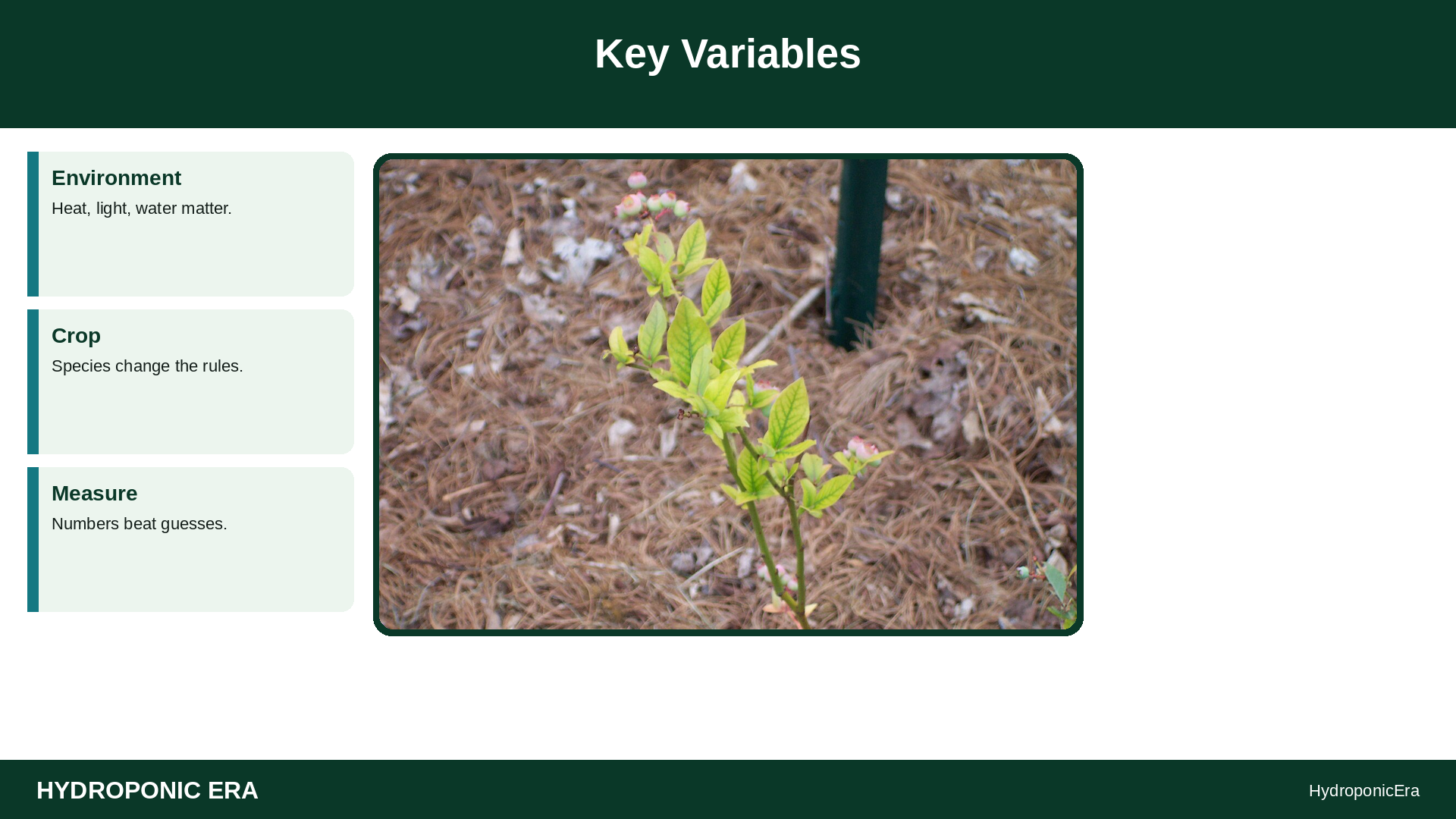
| Variable | Effect | Link |
|---|---|---|
| pH | Micro availability | pH, chelates |
| Mix chemistry | Precipitation lockouts | mixing, Fe ppt |
| Temp shock | Temporary pale stall | res temp, temp uptake |
| Root disturbance | Shock chlorosis | transplant |
Common mistakes with chlorosis after reservoir change
- Adding Fe, Mn, and seaweed within an hour of a harsh pH dump
- Skipping calibration after cleaning probes in the sink
- Ice-cold refill into tropical basil roots
- Blaming the brand while pH sits at 7.2
- Expecting old yellow leaves to turn jungle green overnight
Troubleshooting
| Signal | Action |
|---|---|
| New leaves yellow, pH high | pH + chelate path |
| Rusty sediment after adjust | Fe precipitation triage; remix clean |
| Wilt + pale after rough clean | Shock recovery; gentle light |
| Only one plant pale | Local root/flow issue—see uneven growth |
Practical Framework
Post-change card: Clock the yellow | pH/EC true? | Precipitate? | Temp OK? | New growth verdict.
Closing practice for yellow leaves after nutrient change: the reset is only perfect if chemistry and roots agree.
What to Check When Plants Pale Right After a Reservoir Reset
- Yellow timing logged?
- pH calibrated measure?
- Tank clarity checked?
- Mix order confirmed?
- Res temp reasonable?
- Fe stacking avoided?
The 72-Hour Post-Reset Watch
Pale tops within hours of a dump often scream pH, precipitate, or temperature shock—not a moral failure of the fertilizer brand. Measure, look for rusty sediment after harsh adjusters, and keep solution temperature from icing tropical herbs. See iron precipitation and chelates before stacking Fe products.
If you manhandled roots while scrubbing, treat the event like transplant shock: gentler light, stable moisture/oxygen, patience for new leaves.
When a Second Dump Is Justified
Cloudy precipitate, wrong mix order, or septic smells justify remixing clean. Yellow alone with sane pH/EC usually does not. Double dumps without diagnosis compound stress.
Practice & Field Notes
Timestamp the dump and the first pale note. If yellow shows within an hour of a violent pH crash, think chemistry availability and precipitation. If yellow shows after a rough scrub with cold refill, think shock. If only newest leaves bleach while pH sits high, think Fe availability and chelate form.
Keep a mixing card on the wall: water → equalize → A → B → micros as directed → adjust pH gently while circulating. Breaking order invites the “perfect recipe, pale plants” trap. See mixing and the yellow-leaves hub for broader context.
Judge recovery on leaves that emerge after the fix. Painting old chlorotic tissue green is not how plants work.
Scenario Walkthrough
You dump at noon, refill ice-cold, crash pH with a heavy Down slug, and by evening new leaves look pale. Order: calibrate meter, confirm pH, inspect for precipitate, warm the solution toward prior norms, avoid stacking Fe. By day three, new leaves should tell you if chemistry and temperature are honest.
If yellow is limited to plants you yanked hard while cleaning, treat shock: stable oxygen, moderate light, patience. Link yellow leaves and iron only after the post-reset order is clean.
Key Limits & Honest Scope
Post-reset chlorosis timing is a diagnostic frame. It does not claim every pale leaf after a dump is iron deficiency. pH, precipitation, temperature, and root disturbance are the first honest checks because they are common and measurable.
Chelate forms differ in pH windows—read labels. Stacking three Fe products after a harsh acid dump often worsens precipitation loops. See iron precipitation and chelates.
Old leaves may never fully re-green. Plan evaluations on leaves that emerge after corrections, typically over several days, not overnight magic.
Review Cadence
Revisit this guide after any major equipment or climate change. Log what you measured, what you changed, and what new growth did within a week. Share the checklist with anyone who helps water the system so diagnosis stays consistent. Internal links in the Related section keep you inside the HydroponicEra cluster instead of random search loops. Prefer extension sources in the Sources list when advice conflicts with forum lore.
If symptoms span multiple articles, solve hydraulics and climate before micronutrient folklore. Steady meters, clean probes, and dated notes are the authority tools available to home growers without a lab.
FAQs about chlorosis after reservoir change
Should I immediately dump again?
Usually no—diagnose; double dumps compound stress.
Old leaves stay yellow?
Common—watch new growth.
Is it always iron?
Often pH/availability—not always empty Fe.
Organics after reset cloudy?
Different haze class—see cloudy solution guide.
Seedlings worse after change?
Gentler EC and temps for soft roots.
Link to yellow hub?
Yes—use the yellow-leaves guide for broader causes.
Extended Home-Grower Walkthrough
Use this extended walkthrough as a second pass after the Quick Answer. Walk the system with a notebook: write the date, crop, EC, pH, reservoir temperature, and one observation about roots or leaves. Change only one control at a time when a problem appears. If last week’s fix did not show in new growth, revert and try the next smallest lever. Keep university and extension principles in mind—oxygen, sanitation, and measured nutrition beat product stacking.
Photograph the canopy and the reservoir surface weekly. Dated photos settle arguments about algae, tip burn, or stretch faster than memory. When a helper waters for you, leave a one-page card with do-not-touch items and the exact top-off rule. Store calibration sachets next to the meters so “I will calibrate later” stops being the default. Review timers after any power event. Confirm air stones still roar. Confirm drains still drain.
At the end of the week, score the cycle 1–5 for ease and plant quality. Low scores should trigger a sanitation or climate review before you buy new hardware. Link neighboring HydroponicEra guides when the symptom matches a cluster page. Prefer labeled procedures over improvisation under stress. Healthy boring routines are the real upgrade path for home hydroponics.
Keep chlorosis after reservoir change on your ops card so helpers follow one standard.
Keep chlorosis after reservoir change on your ops card so helpers follow one standard.
Keep chlorosis after reservoir change on your ops card so helpers follow one standard.
Keep chlorosis after reservoir change on your ops card so helpers follow one standard.
Keep chlorosis after reservoir change on your ops card so helpers follow one standard.
Keep chlorosis after reservoir change on your ops card so helpers follow one standard.
Keep chlorosis after reservoir change on your ops card so helpers follow one standard.
Keep chlorosis after reservoir change on your ops card so helpers follow one standard.
Keep chlorosis after reservoir change on your ops card so helpers follow one standard.
Keep chlorosis after reservoir change on your ops card so helpers follow one standard.
Keep chlorosis after reservoir change on your ops card so helpers follow one standard.
Keep chlorosis after reservoir change on your ops card so helpers follow one standard.
Keep chlorosis after reservoir change on your ops card so helpers follow one standard.
Keep chlorosis after reservoir change on your ops card so helpers follow one standard.
Keep chlorosis after reservoir change on your ops card so helpers follow one standard.
Sources
- Oklahoma State University Extension — Electrical Conductivity and pH Guide for Hydroponics
- Penn State Extension — Hydroponics Systems and Principles of Plant Nutrition
- University of Florida IFAS — CV265: Fertilizer Management for Greenhouse Vegetables
- Penn State Extension — Hydroponics Systems: Nutrient Solution Programs and Recipes
- Michigan State University Extension — Hydroponics as an agricultural production system
- University of Florida IFAS — HS1265: Nitrogen Fertilization of Hydroponic Leafy Greens