
Here’s how to grow catnip indoors: sow seed or plant a division in a pot with drainage and well-drained mix, give it a sunny south or west window or grow lights for 14–16 hours a day, water when the mix starts to dry, and pinch often. Keep it out of your cat’s reach until it’s established.
| Question | Quick answer |
|---|---|
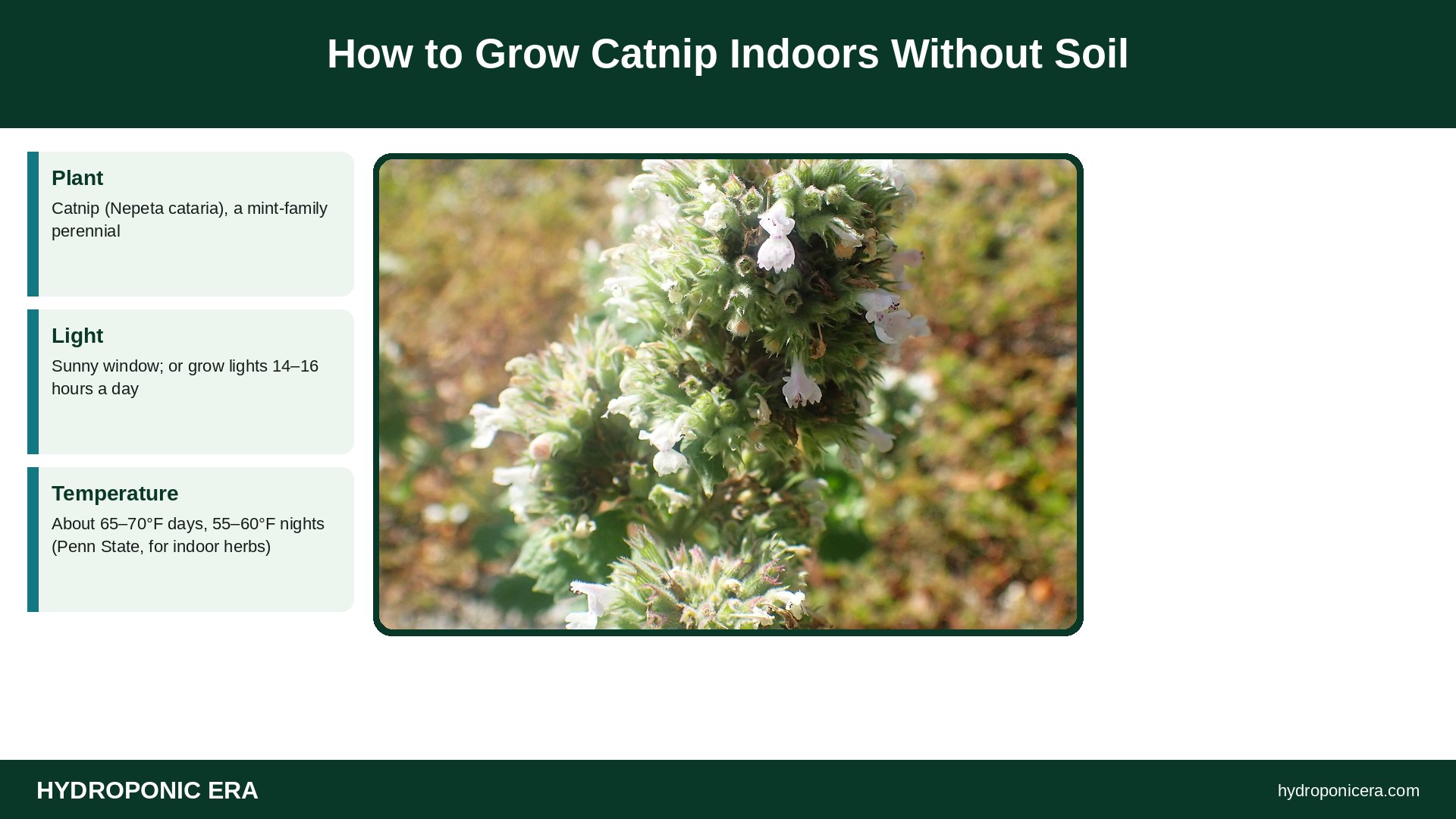
| Plant | Catnip (Nepeta cataria), a mint-family perennial |
| Light | Sunny window; or grow lights 14–16 hours a day |
| Temperature | About 65–70°F days, 55–60°F nights (Penn State, for indoor herbs) |
| Soil | Well-drained; 2 parts soilless mix to 1 part perlite (UMD) |
| Start from | Seed sown a few weeks before last frost, or division |
| Pet note | ASPCA lists catnip as toxic to cats; it can cause vomiting and diarrhea |
Can You Grow Catnip Indoors?

Yes. UConn’s Home & Garden Education Center says catnip, given a sunny window, “is perfectly happy to be grown as a houseplant.” University of Wisconsin–Madison Extension describes it as a vigorous but short-lived herbaceous perennial in the mint family that can be grown in containers. Like most mints, it’s fairly easy to grow, which makes learning how to grow catnip indoors a good beginner project.
Catnip can reach 3 feet tall and wide under ideal conditions outdoors (Wisconsin), but regular pinching keeps an indoor pot compact.
What Does Catnip Need Indoors?
| Need | Target | Source |
|---|---|---|
| Light | Full sun; at least 5 hours from a south or west window | Wisconsin, UMD |
| Grow lights | 14–16 hours a day in winter | UMD, Penn State |
| Fluorescent distance | 6–12 inches above plants | Penn State |
| Temperature | 65–70°F day, 55–60°F night | Penn State |
| Container | Drainage hole; well-drained mix | Penn State, UMD |
| Feeding | Low-dose water-soluble fertilizer about every 2 weeks | Penn State |
Penn State warns that herbs without enough light become thin and spindly, with smaller leaves and less aroma. Light is the biggest factor in how to grow catnip indoors. See grow lights for beginners.
How to Grow Catnip Indoors Step by Step

- Choose a container. Use a pot with a drainage hole. UMD suggests 2 parts soilless potting mix to 1 part perlite.
- Start plants. Wisconsin says catnip is readily propagated by seed sown indoors a few weeks before the last frost, or by dividing established plants. UConn notes it’s easily grown from seed.
- Give it sun. Place it in a south or west window. Rotate the pot often so each side gets light (Penn State).
- Add light in winter. Run grow lights 14–16 hours a day.
- Water when it starts to dry. Penn State says to water the mix when it starts to dry out. Wisconsin notes established catnip is fairly drought tolerant.
- Pinch regularly. Pinching promotes more compact, less weedy growth (Wisconsin).
- Protect it from cats. Wisconsin suggests caging plants or growing them in hanging baskets until they’re big enough.
Follow those seven steps and you’ve covered how to grow catnip indoors from start to harvest.
What Humidity and Airflow Does Indoor Catnip Need?
Penn State says indoor herbs need a balance: air that’s too dry makes leaves dry out, while too much humidity can lead to root rot and fungal issues. Homes with forced-air heat tend to be dry in winter. UMD suggests misting indoor herbs or grouping them on a tray of moist pebbles, and keeping them away from drafts, dry heat vents and temperature extremes. Getting this balance right is an underrated part of how to grow catnip indoors.
Should Indoor Catnip Go Outside in Summer?
It can. UMD notes perennial herbs often do better if moved outdoors for summer and brought back in before frost. Wisconsin lists catnip as hardy in zones 3a–9b, so it also thrives in a garden bed if you’d rather keep a backup plant outside.
How Do You Keep Cats From Destroying It?
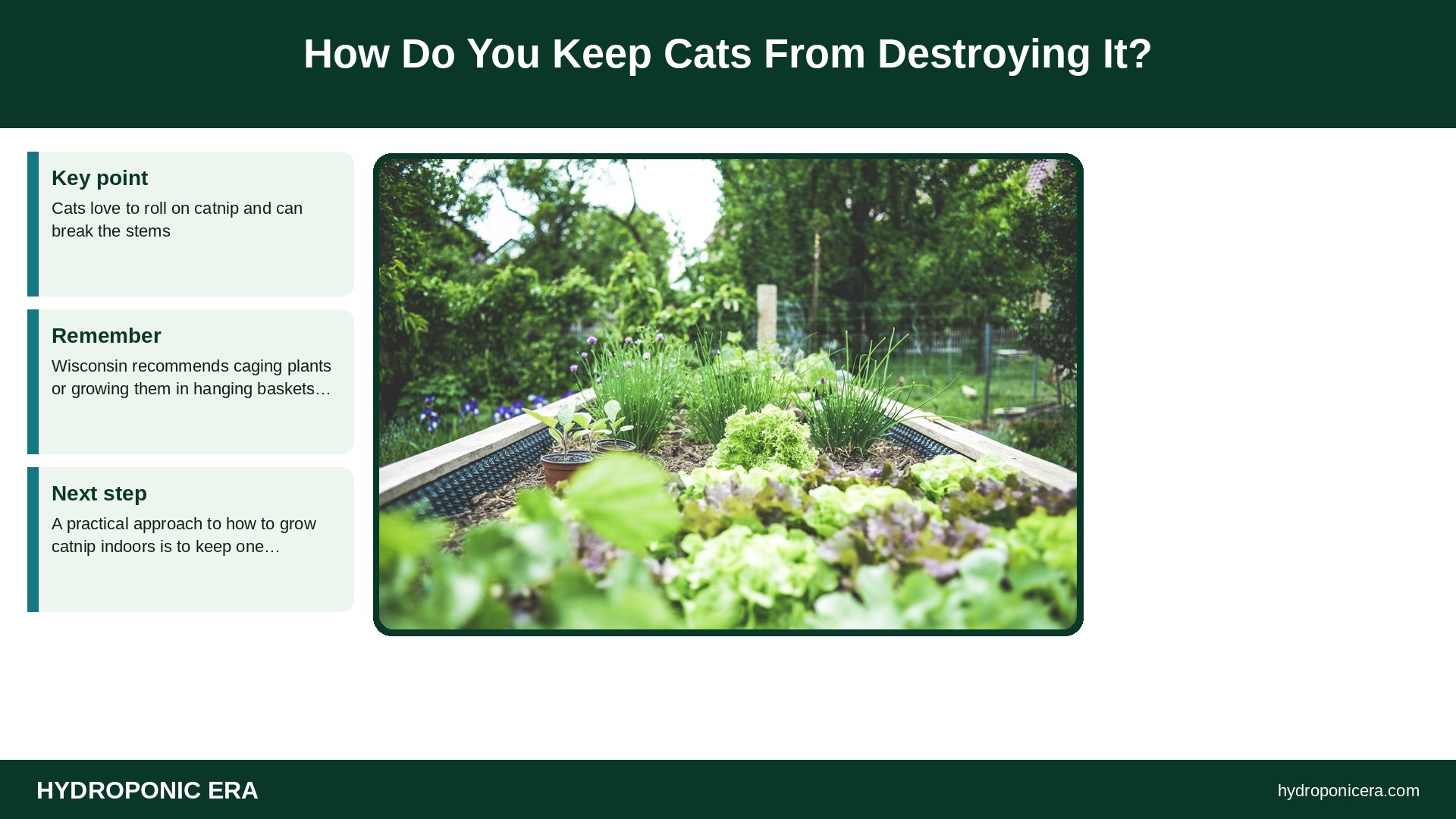
Cats love to roll on catnip and can break the stems. Wisconsin recommends caging plants or growing them in hanging baskets to keep them out of reach. A practical approach to how to grow catnip indoors is to keep one “nursery” pot out of reach and offer cut sprigs to your cat.
UConn explains that bruising the leaves releases nepetalactone, the compound cats respond to. Typical reactions include rubbing, rolling, licking, chewing and vocalizing. For most cats the effect lasts 5–15 minutes, and kittens usually don’t respond until they’re about 6 months old. Some cats show no interest at all.
Is Catnip Safe for Cats?
Use it in moderation. The ASPCA lists catnip as toxic to cats: many cats love it, but it can cause vomiting and diarrhea, and it makes some cats sedated and others stimulated. UConn advises watching your cat after exposure, noting that anxious or nervous cats may not enjoy it. If you suspect a problem, call ASPCA Animal Poison Control at (888) 426-4435 or your veterinarian.
How Do You Harvest and Store Catnip?
- Timing: UConn says the essential oil is most concentrated before flowering.
- Drying: Dry leaves on screens in a warm, dark place (UConn).
- Storage: Because the oils dissipate quickly from dried leaves, UConn recommends storing them in the freezer.
- Flowers: Remove flowers after blooming if you don’t want self-seeding (UConn). Wisconsin says shearing after flowering promotes repeat blooming.
Harvesting regularly is part of how to grow catnip indoors well, because it keeps plants bushy.
What Mistakes Happen When You Grow Catnip Indoors?

| Mistake | Result | Fix |
|---|---|---|
| Low light | Spindly, weak, less aromatic | South or west window, or grow lights |
| Soggy mix | Root rot and fungal problems | Drainage hole; water when it starts to dry |
| Pot within cat reach | Broken stems, flattened plant | Hanging basket or cage |
| Never pinching | Leggy, weedy growth | Pinch tips regularly |
| Overfeeding | Weaker aroma (Penn State) | Low dose every 2 weeks |
Pest problems indoors are usually fungus gnats or aphids; Penn State suggests yellow sticky traps for gnats and trimming off aphid-infested stems. Avoiding these mistakes is the core of how to grow catnip indoors successfully.
FAQs: How to Grow Catnip Indoors
Is it easy to learn how to grow catnip indoors?
Yes. Catnip is a mint-family herb that’s fairly easy to grow. Light is the main challenge indoors.
How much light is needed for how to grow catnip indoors?
Full sun is best. Aim for a south or west window with at least 5 hours of sun, or grow lights for 14–16 hours a day.
Can I use hydroponics for how to grow catnip indoors?
Catnip is in the mint family, so the approach in our hydroponic mint guide is a useful starting point. Soil-based pots are the method extension sources describe.
Is catnip the same as catmint?
Not exactly. Wisconsin notes several Nepeta species are called catmints; showier ornamental catmints have less enticing leaves for cats.
Why doesn’t my cat react to catnip?
UConn says some cats show no interest, possibly a heritable trait, and kittens usually don’t respond until about 6 months old.
Related HydroponicEra Guides
Sources
- University of Wisconsin–Madison Extension — Catnip, Nepeta cataria
- UConn Home & Garden Education Center — Catnip Anyone? (PDF)
- Penn State Extension — Growing Herbs Indoors
- University of Maryland Extension — Growing Herbs in Containers and Indoors
- ASPCA — Catnip (Toxic and Non-Toxic Plants)
- Photo credits (Wikimedia Commons, edited with titles): Nepeta cataria kz06 by Krzysztof Ziarnek, Kenraiz (CC BY-SA 4.0); Nepeta cataria, 2021-07-04, Bethel Park, 03 by Cbaile19 (CC0)